
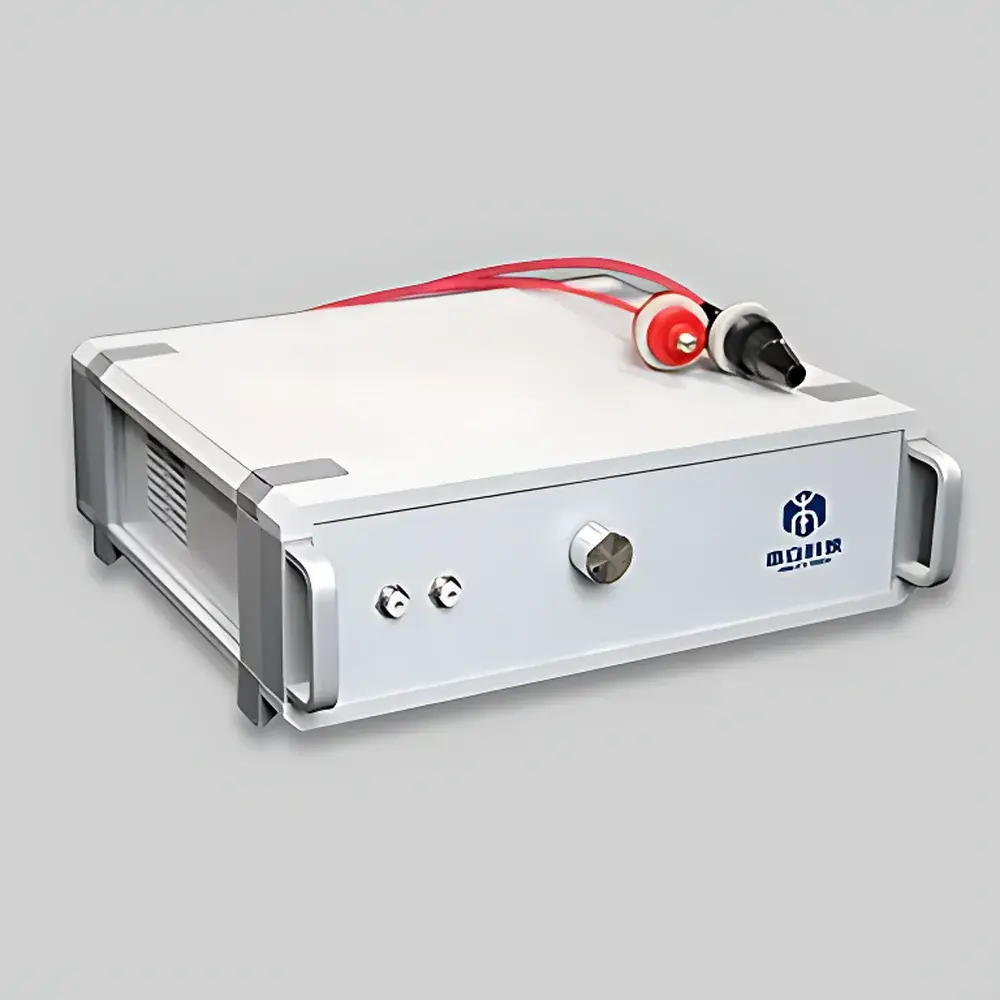
Ability Technology LTP-ICP-OES Low-Temperature Plasma Capture Optical Emission Spectrometer
| Brand | Ability Technology |
|---|---|
| Origin | Beijing, China |
| Manufacturer Type | Manufacturer |
| Product Category | Domestic |
| Model | LTP-ICP-OES |
| Instrument Type | Full-Spectrum Direct-Reading |
| Detection Limit (As, Sb, Pb, Sn, Se, Hg, Cd) | <1 µg/L |
| Repeatability (RSD) | ≤5.0% |
| Stability (RSD, 4h) | ≤5.0% |
| Wavelength Range | 200–350 nm |
| Optical Resolution | ≤1.35 nm |
Overview
The Ability Technology LTP-ICP-OES is a specialized low-temperature plasma capture optical emission spectrometer engineered for ultra-trace elemental analysis of heavy metals in aqueous matrices. Unlike conventional inductively coupled plasma optical emission spectrometers (ICP-OES), this instrument integrates a hydrogenation-based sample introduction system with a dual-stage plasma capture and excitation architecture. Sample solutions are first converted into volatile hydride species (e.g., AsH3, HgH2, CdH2) via sodium borohydride reduction under controlled acidic conditions. These hydrides are then swept into an oxygen-rich low-temperature plasma zone where they are physically trapped on reactive surfaces or within transient plasma confinement regions. A subsequent hydrogen-enriched (1% H2 in Ar) discharge pulse thermally releases and atomizes the captured species, followed by electronic excitation and characteristic line emission in the UV–VIS range (200–350 nm). This sequential capture–release–excitation mechanism significantly enhances analyte residence time and signal-to-background ratio, enabling sub-part-per-trillion detection capability for key hydride-forming elements.
Key Features
- Hydride generation-integrated sample introduction with automated gas–liquid separation and flow control
- Dual-plasma configuration: O2-stabilized low-temperature capture zone followed by H2-enhanced excitation discharge
- Full-spectrum direct-reading CCD detector with 2048 × 512 pixel array and thermoelectric cooling (–15 °C)
- Optical resolution ≤1.35 nm across the 200–350 nm spectral window, optimized for As I 193.7 nm, Se I 196.0 nm, Cd I 228.8 nm, Hg I 253.6 nm, Pb I 220.3 nm, and Sn I 283.9 nm
- Integrated internal standard correction using Sc or Y lines to compensate for plasma fluctuation and nebulization drift
- Robust mechanical design with vibration-damped optical bench and sealed purge chamber for argon/oxygen/hydrogen gas management
Sample Compatibility & Compliance
The LTP-ICP-OES is validated for use with acid-preserved (HNO3, 1–2% v/v) aqueous samples including drinking water, wastewater, soil leachates, and biological digests (EPA Method 200.9, ISO 17294-2:2016 compliant workflows). It supports 5 mL sample volume per analysis with no channel-specific limitations—enabling true simultaneous multi-element quantification without wavelength switching delays. The system meets core performance criteria outlined in ASTM D5673 (Standard Test Method for Determination of Metals in Water by ICP-OES) and aligns with QA/QC requirements for GLP and ISO/IEC 17025-accredited laboratories. All calibration, blank, and QC data are timestamped and stored with full audit trail metadata in accordance with FDA 21 CFR Part 11 principles.
Software & Data Management
Control and data acquisition are managed via Ability’s proprietary SpectraLink™ 4.2 software suite, running on Windows 10 IoT Enterprise. The interface provides real-time spectral visualization, peak deconvolution using iterative least-squares fitting, and automatic interference correction for spectral overlaps (e.g., Fe II 259.9 nm near Cd I 260.7 nm). Quantitative reports include method-defined uncertainty propagation, recovery calculations for spiked standards, and RSD validation per element across triplicate analyses. Raw spectral files (.spc) and processed results (.csv, .pdf) are exportable; database integration supports SQL Server 2019 and Oracle 12c for enterprise-level LIMS connectivity.
Applications
- Regulatory monitoring of As, Hg, Cd, Se, Pb, and Sn in municipal drinking water per WHO Guidelines and EU Directive 2020/2184
- Environmental compliance testing of industrial effluents and landfill leachate under national discharge permits
- Quality control of pharmaceutical excipients and active pharmaceutical ingredients (APIs) per USP <851> and ICH Q2(R2)
- Geochemical screening of mine tailings and sediment pore waters for hydride-forming element mobility assessment
- Food safety surveillance of rice, seafood, and infant formula for inorganic arsenic and methylmercury precursors
FAQ
What hydride-forming elements can be reliably quantified with this instrument?
As, Se, Sb, Bi, Te, Pb, Sn, Cd, and Hg—subject to matrix-dependent hydride generation efficiency and interelement suppression effects.
Is external cooling water required for plasma operation?
No. The low-temperature plasma design eliminates the need for high-power RF generators or external chillers; only compressed air (for nebulizer) and high-purity argon (for plasma purge) are required.
Can the system be integrated into an existing laboratory automation platform?
Yes. RS-232, Ethernet TCP/IP, and OPC UA interfaces are supported for bidirectional communication with robotic samplers and central LIMS.
What is the typical analysis time per sample?
Approximately 90 seconds from injection to final report generation, including 30-second plasma stabilization, 45-second integration, and 15-second post-processing.
Does the instrument support isotope-ratio measurements?
No. The LTP-ICP-OES is configured for atomic emission intensity quantification only; it does not incorporate mass-resolving capability or isotopic discrimination optics.





