
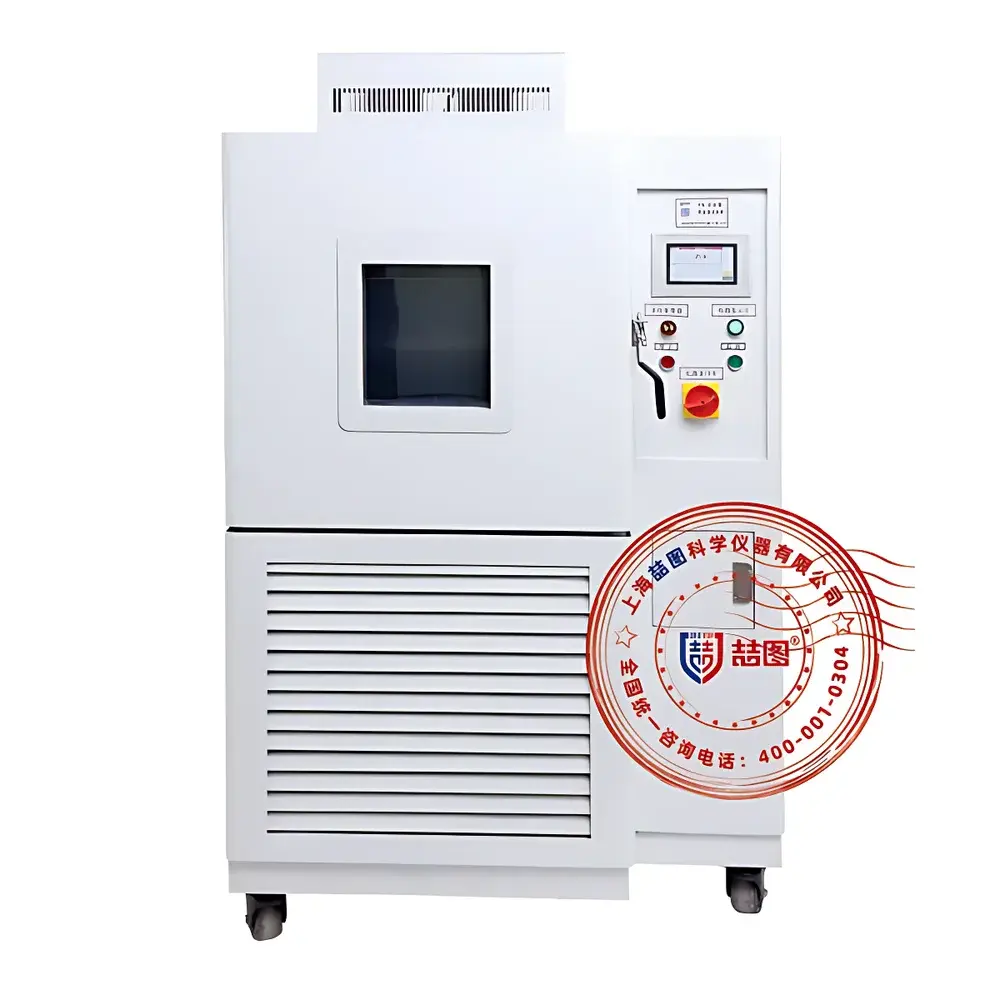
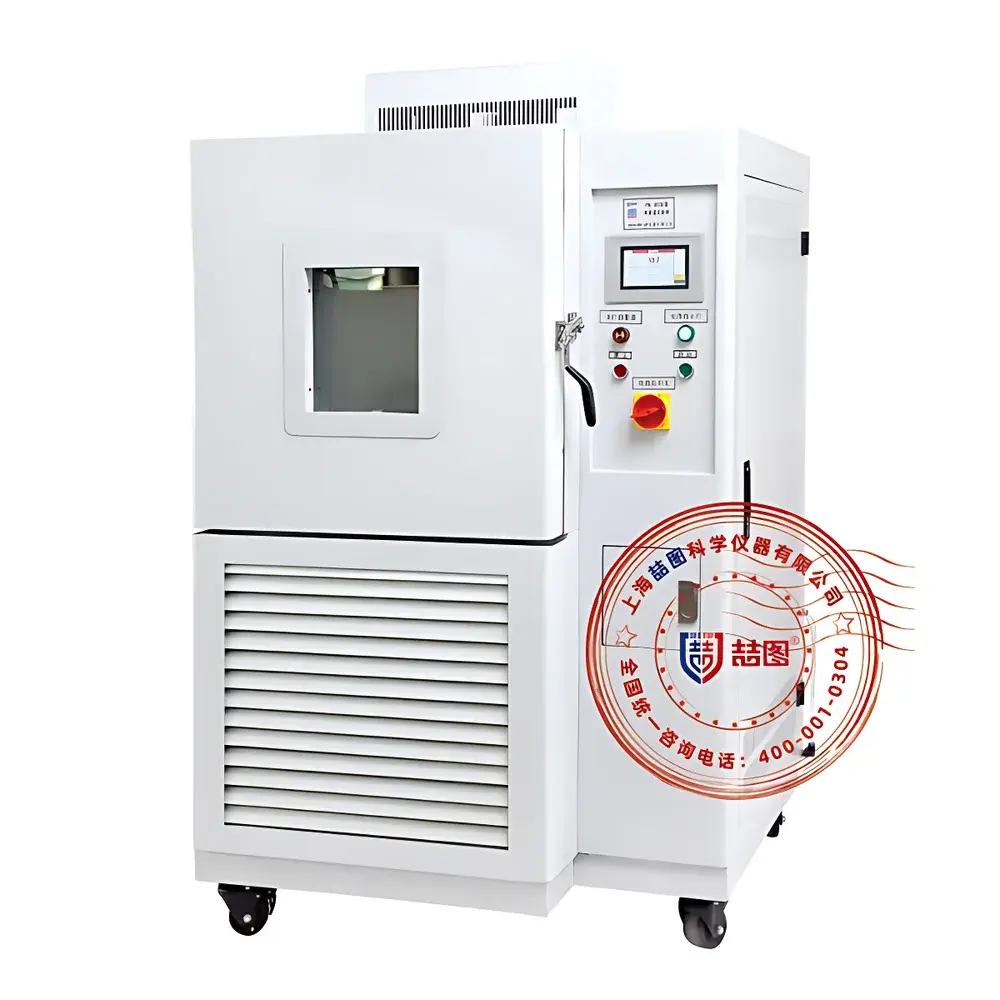
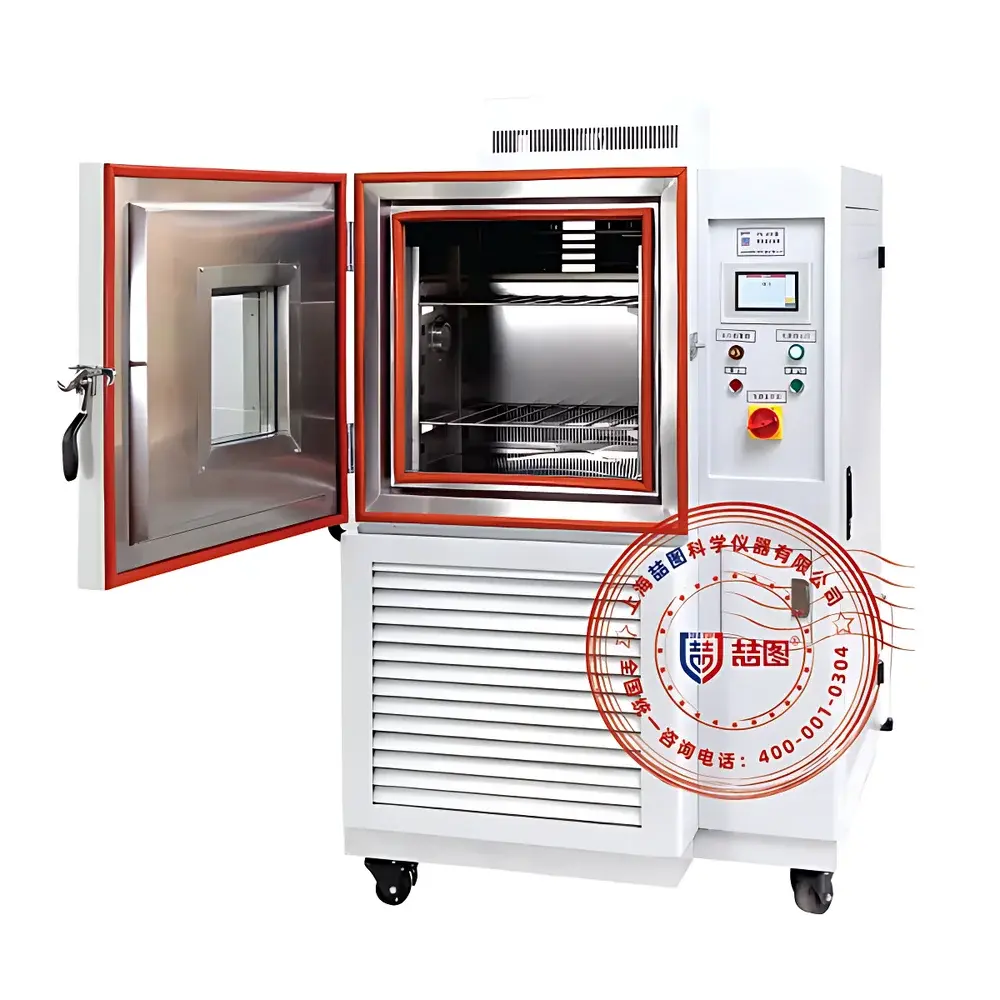
DRETOP THL-AH150 High-Low Temperature Cycling Test Chamber
| Brand | DRETOP |
|---|---|
| Origin | Shanghai, China |
| Manufacturer Type | Direct Manufacturer |
| Model | THL-AH150 |
| Temperature Range | −20 °C to +150 °C |
| Cooling Method | Hermetic Compressor-Based Refrigeration |
| Explosion-Proof | Standard (Non-Explosion-Proof) |
| Temperature Fluctuation | ±0.5 °C |
| Temperature Uniformity | ≤2 °C |
| Heating Rate | 1–3 °C/min (Adjustable) |
| Cooling Rate | 0.7–1 °C/min (Adjustable) |
| Internal Chamber Dimensions (W×D×H) | 500×500×600 mm |
| Control Interface | Full-Color Touchscreen with Programmable Logic |
Overview
The DRETOP THL-AH150 High-Low Temperature Cycling Test Chamber is an engineered environmental simulation system designed for precise, repeatable thermal stress testing under controlled alternating temperature conditions. Based on forced-air convection and dual-stage refrigeration architecture, the chamber replicates real-world thermal cycling profiles encountered during product lifecycle validation—particularly in reliability engineering, accelerated aging studies, and qualification testing per IEC 60068-2-14 (Test N: Change of Temperature) and MIL-STD-810H Method 501.5/502.5. Its operational envelope spans −20 °C to +150 °C, enabling evaluation of material integrity, solder joint fatigue, polymer dimensional stability, and electronic component functionality across extreme thermal transients. The unit complies with fundamental safety and electromagnetic compatibility requirements outlined in IEC 61000-6-2 (immunity) and IEC 61000-6-4 (emission), and supports traceability frameworks aligned with ISO/IEC 17025 and GLP-compliant laboratory practices.
Key Features
- Full-color 7-inch capacitive touchscreen HMI with intuitive drag-and-drop programming interface, supporting up to 1000 user-defined test programs, each comprising up to 100 sequential segments with independent ramp/soak parameters.
- Multi-language UI (English/Chinese toggle) with hierarchical password protection (administrator/operator/user levels) to enforce procedural control and prevent unauthorized parameter modification.
- Dual-layer tempered glass observation window with integrated anti-frost heating film and LED interior lighting—designed to maintain optical clarity during condensation-prone low-temperature phases while preventing moisture deposition on test specimens.
- Optimized air circulation system featuring high-efficiency centrifugal blower, nickel-chromium alloy heating elements, and a cascade refrigeration circuit utilizing hermetically sealed compressors and shared evaporator-condenser heat exchangers for stable sub-zero operation.
- Robust chamber construction with silicone rubber door gasketing rated for continuous operation from −70 °C to +150 °C; maintains internal pressure equilibrium and minimizes thermal leakage (<0.8 K/m²·K U-value).
- PID auto-tuning algorithm with adaptive learning capability—dynamically adjusts control coefficients based on load mass, thermal inertia, and ambient drift to sustain ±0.5 °C temperature fluctuation and ≤2 °C spatial uniformity (per ASTM E744 Annex A2 verification protocol).
Sample Compatibility & Compliance
The THL-AH150 accommodates standard industrial test specimens up to 30 kg total load, with two adjustable stainless-steel shelves (304 grade) and a 50 mm-diameter cable/port access port (standard) for powered or instrumented testing. It meets structural and operational prerequisites for compliance with IEC 60068-3-5 (guidance on test equipment), GB/T 10589–2008 (Chinese national standard for low-temperature test chambers), and JJF 1101–2019 (calibration specification for environmental test equipment). Optional RS485 Modbus RTU or USB 2.0 interfaces enable integration into centralized lab monitoring systems compliant with FDA 21 CFR Part 11 data integrity requirements when paired with validated software.
Software & Data Management
Onboard firmware logs timestamped temperature data at user-selectable intervals (1–600 seconds), storing ≥30 days of continuous records internally. Export formats include CSV and Excel-compatible .xls files via USB flash drive; optional PC-based DRETOP LabLink™ software (v3.2+) provides real-time remote monitoring, multi-chamber synchronization, statistical process control (SPC) charting, and audit-trail-enabled report generation—including calibration history, operator ID, and deviation alerts. All stored data conforms to ALCOA+ principles (Attributable, Legible, Contemporaneous, Original, Accurate, Complete, Consistent, Enduring, Available) for regulated environments.
Applications
- Electronics: Thermal cycling qualification of PCBAs, connectors, and semiconductor packages per JEDEC JESD22-A104D.
- Automotive: Validation of dashboard modules, battery management systems (BMS), and ADAS sensors under ISO 16750-4 thermal shock conditions.
- Aerospace: Environmental screening of avionics enclosures and composite fasteners per DO-160G Section 4.
- Materials Science: Evaluation of coefficient of thermal expansion (CTE), glass transition (Tg), and cold-flow behavior in elastomers and thermoplastics.
- Quality Assurance: In-process verification of incoming raw materials (e.g., adhesives, coatings, sealants) per ASTM D5229/D5229M.
FAQ
What is the maximum allowable sample mass for stable thermal performance?
For optimal temperature uniformity and control fidelity, the recommended maximum load is 30 kg—distributed evenly across both shelves.
Does the chamber support programmable humidity control?
No—the THL-AH150 is a dry-thermal cycling system only; humidity-capable variants (e.g., THL-H series) require separate configuration.
Can the unit operate unattended for extended durations?
Yes—equipped with power-loss recovery, automatic restart after brownout, and configurable alarm escalation (audible/visual/email via optional gateway), it supports 7×24 validation runs.
Is third-party calibration certification available?
DRETOP provides NIST-traceable factory calibration reports (including sensor linearity, uniformity mapping, and rate verification); ISO/IEC 17025-accredited field calibration is available through authorized partners.
What maintenance intervals are recommended for compressor longevity?
Compressor oil and refrigerant charge inspection every 24 months; air filter cleaning every 3 months; full system performance verification annually per manufacturer’s service manual TM-THL-2023.
Related Products



