
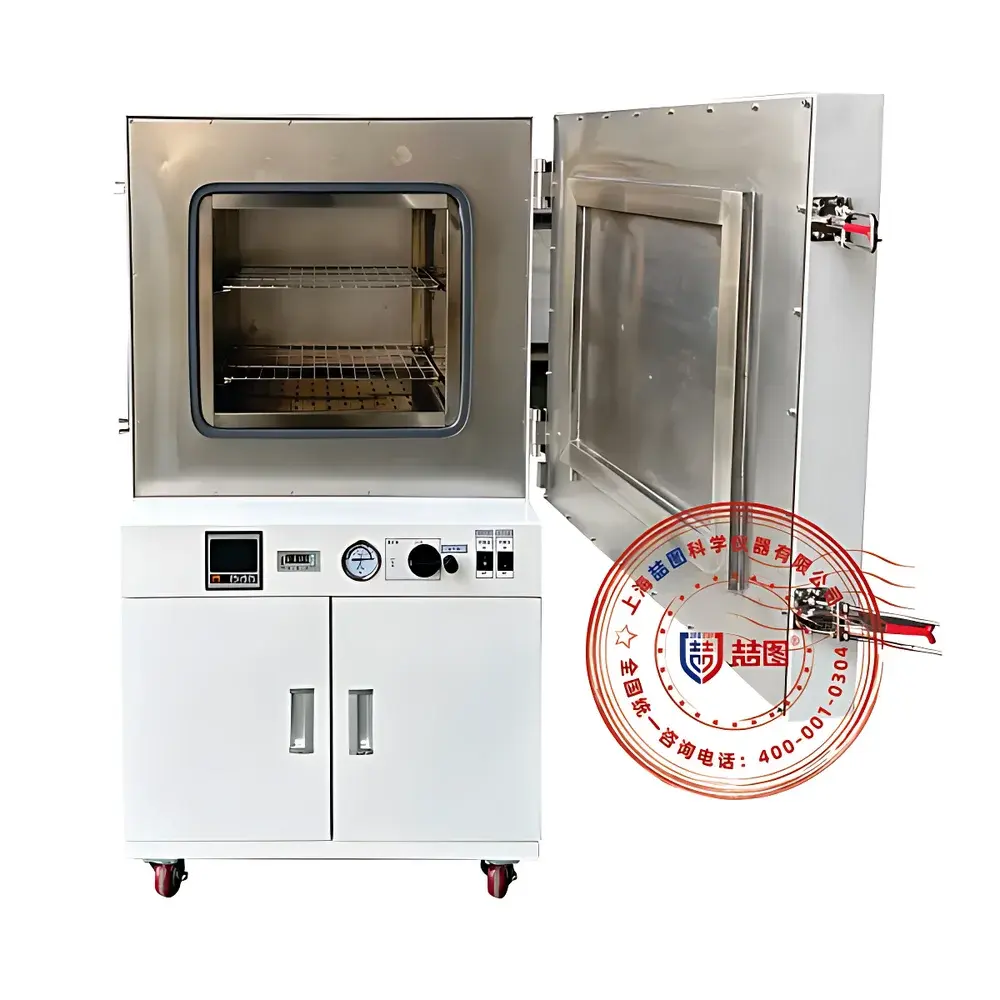
DRETOP UR6-90V High-Temperature Vacuum Drying Oven
| Brand | DRETOP |
|---|---|
| Origin | Shanghai, China |
| Manufacturer Type | Direct Manufacturer |
| Model | UR6-90V |
| Instrument Type | Vacuum Oven |
| Temperature Range | RT+10°C to 600°C |
| Temperature Uniformity | ±1°C |
| Temperature Fluctuation | ±1°C |
| Temperature Resolution | 0.1°C |
| Vacuum Degree | ≤133 Pa |
| Internal Chamber Dimensions | 450 × 450 × 450 mm (W×D×H) |
| Internal Material | Stainless Steel (AISI 304) |
| Heating Method | Forced Air Circulation |
| Working Environment Temperature | 5–40°C |
| Power Supply | AC 220 V / 380 V, 50 Hz |
Overview
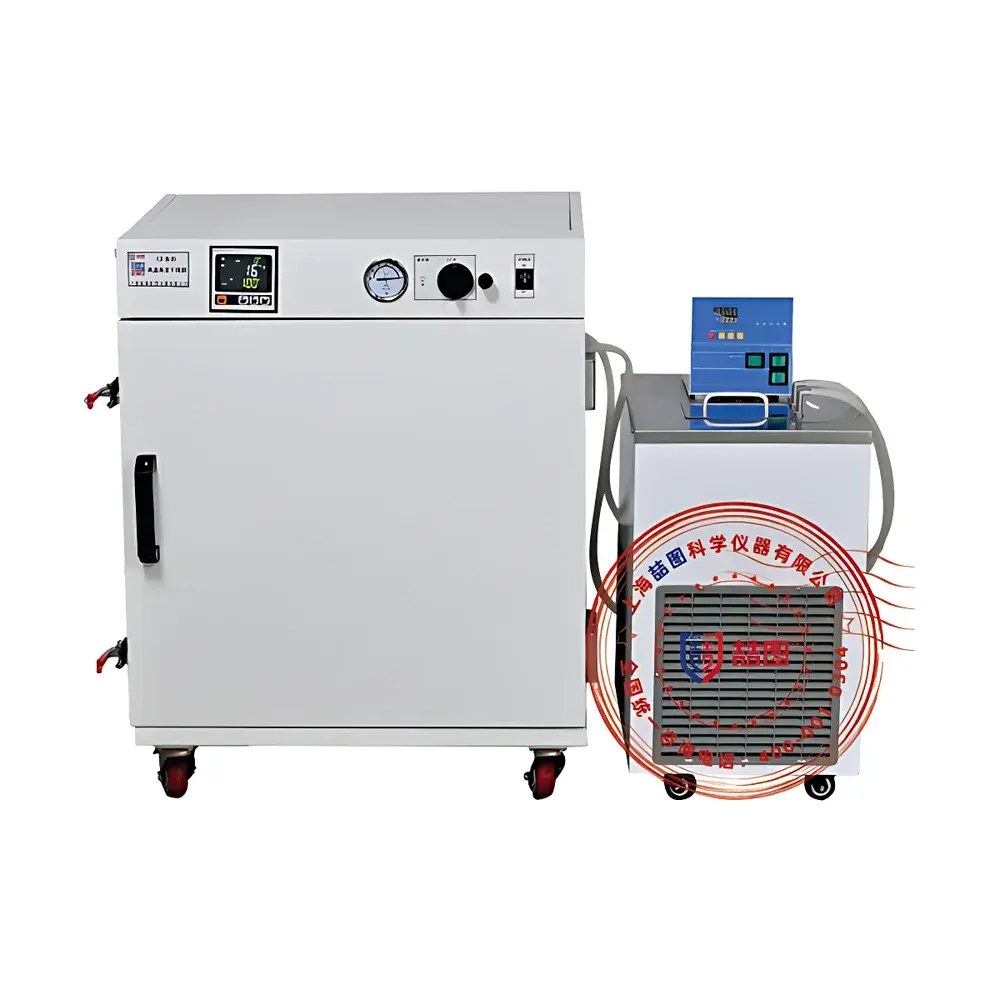
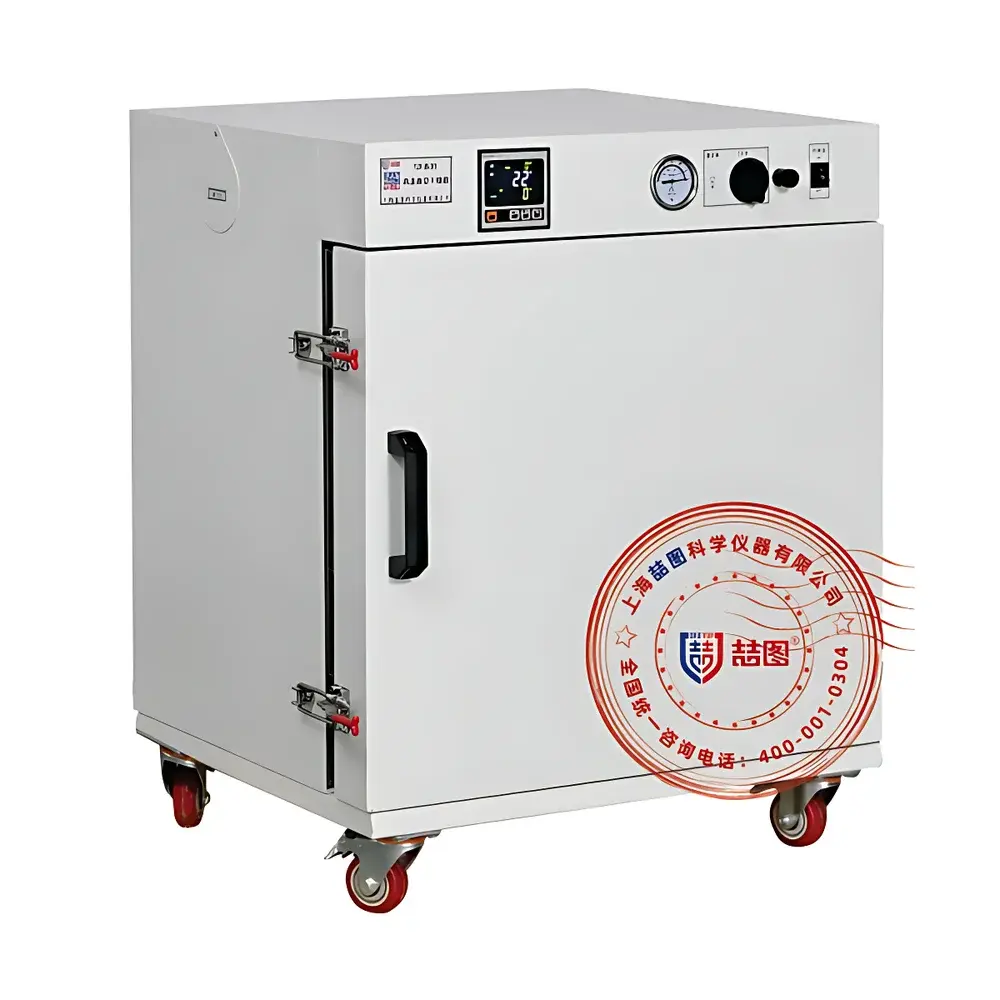
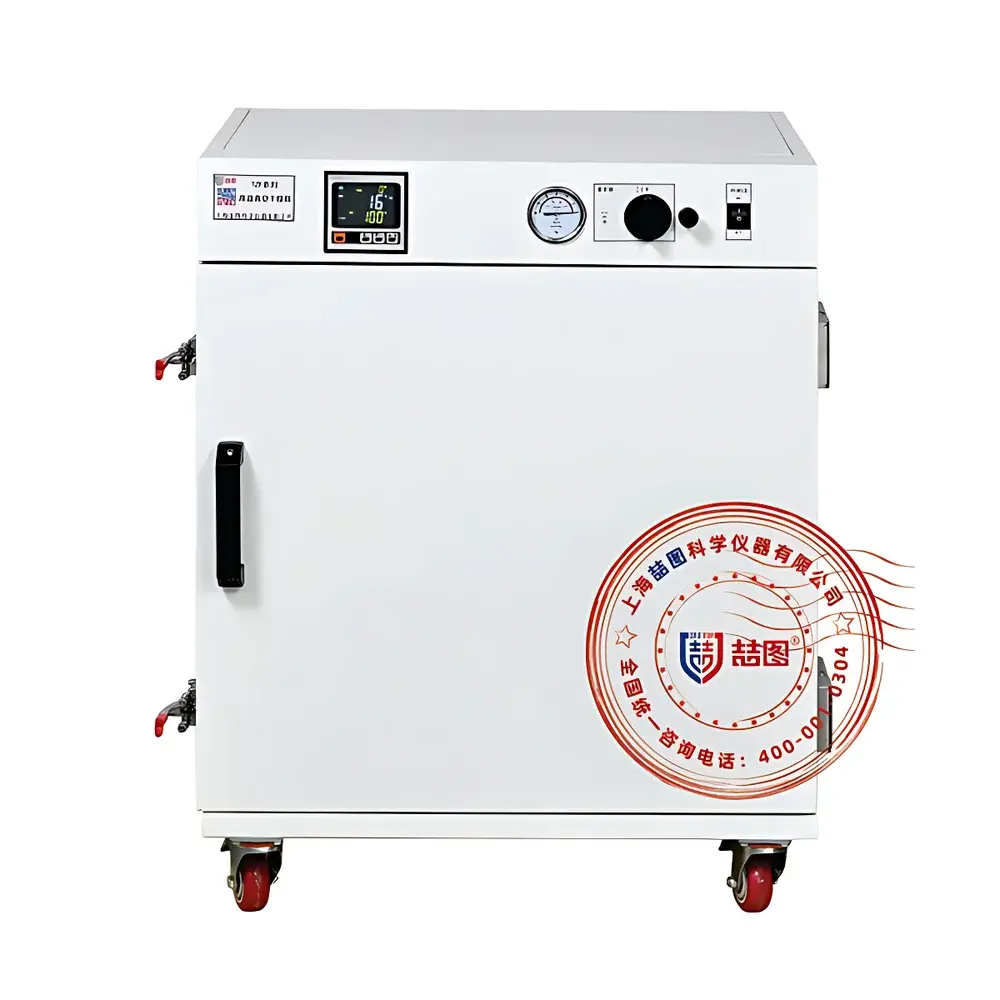
The DRETOP UR6-90V High-Temperature Vacuum Drying Oven is an engineered solution for thermal processing under controlled low-pressure environments. It operates on the principle of vacuum-assisted drying—reducing ambient pressure to lower the boiling point of volatile solvents and moisture, thereby enabling rapid, uniform, and oxidation-free dehydration or thermal treatment of sensitive materials. Designed for laboratory and pilot-scale applications in materials science, semiconductor fabrication, battery R&D, aerospace component conditioning, and electronic packaging, the UR6-90V supports precise thermal protocols up to 600°C while maintaining vacuum integrity ≤133 Pa. Its dual-chamber stainless steel construction, water-cooled door seal system, and argon-welded seams ensure long-term vacuum stability and resistance to thermal degradation—critical for repeatable high-temperature vacuum annealing, outgassing, and solvent-free curing processes.
Key Features
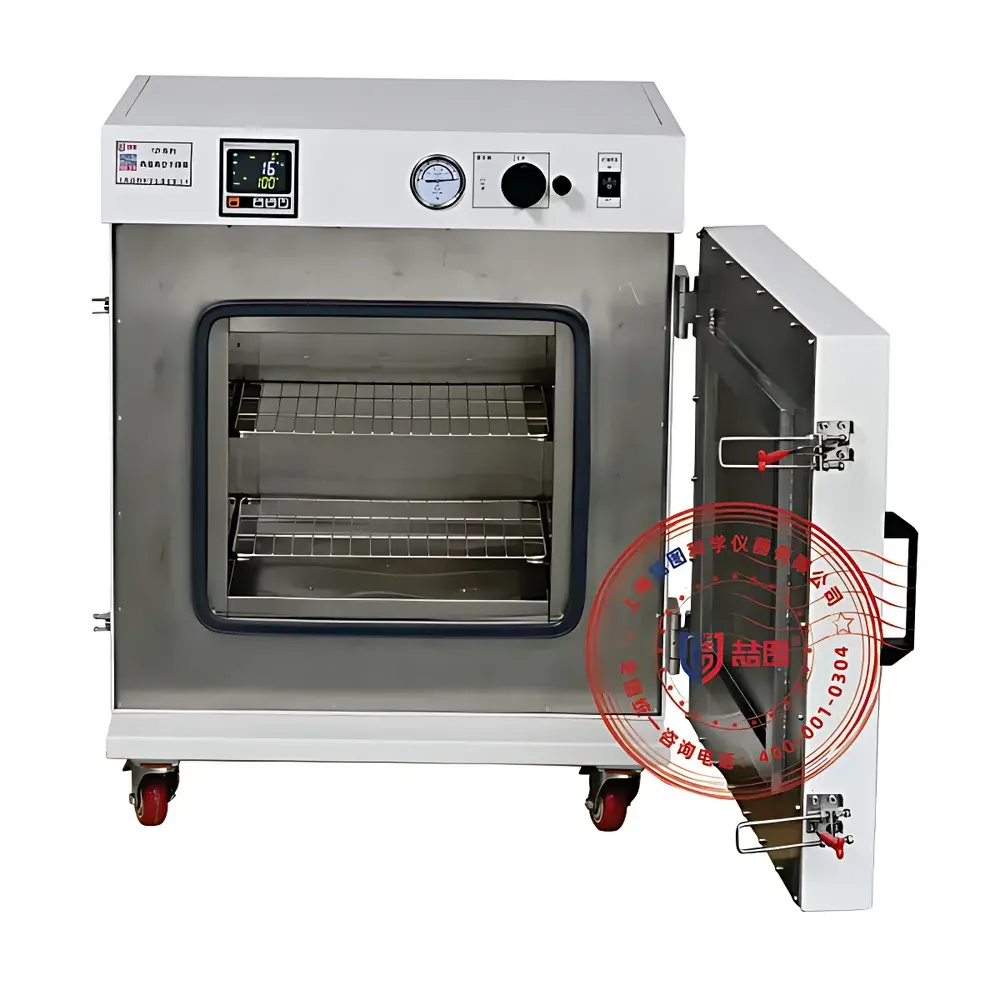
- Stainless steel (AISI 304) double-wall inner chamber with argon arc welding for optimal vacuum integrity and corrosion resistance.
- Water-cooled jacket integrated with high-temperature silicone door gasket to suppress thermal creep and extend seal service life.
- Forced-air circulation heating system ensures ±1°C temperature uniformity across the 90 L working volume (450 × 450 × 450 mm).
- Microprocessor-based PID temperature controller with 0.1°C resolution, real-time deviation alarm, and programmable ramp-soak profiles.
- Dual-stage rotary latch mechanism with reinforced compression seal guarantees consistent chamber sealing at elevated temperatures and deep vacuum.
- Tempered double-glazed observation window with anti-fog coating enables continuous visual monitoring without compromising vacuum or thermal insulation.
- Integrated safety architecture includes over-temperature cut-off, short-circuit protection, ground-fault detection, and power-loss data retention.
Sample Compatibility & Compliance
The UR6-90V accommodates powders, thin-film substrates, ceramic green bodies, lithium-ion electrode coatings, MEMS devices, and encapsulated optoelectronic assemblies. Its oxygen-free vacuum environment eliminates oxidative decomposition during high-temperature exposure—essential for processing air-sensitive catalysts, perovskite precursors, and metastable alloy phases. The system complies with general laboratory safety standards (IEC 61010-1) and supports GLP/GMP-aligned workflows through configurable audit trails (when paired with optional T-type color touchscreen controller). While not certified to ASTM E145 or ISO 17025 as a standalone unit, its temperature uniformity (±1°C), vacuum repeatability (≤133 Pa), and thermal stability meet typical validation requirements for process qualification in QC/QA labs serving electronics, energy storage, and advanced materials sectors.
Software & Data Management
The UR6-90V is available in two control configurations: S-type (separate digital vacuum gauge + LCD PID controller) and T-type (integrated 7-inch color touchscreen HMI with multi-segment programming, real-time graphing, and USB data export). The T-type variant supports password-protected user levels, event logging (start/stop time, vacuum hold duration, temperature setpoints), and CSV-formatted temperature/vacuum trend reports—facilitating compliance with FDA 21 CFR Part 11 when deployed in regulated environments. Optional RS485 Modbus RTU interface enables integration into centralized lab automation systems for remote monitoring and batch record generation.
Applications
- Thermal debinding and sintering of metal injection molded (MIM) parts under inert or vacuum conditions.
- Pre-bake and post-lamination drying of flexible printed circuit boards (FPCBs) to prevent microvoid formation.
- Moisture removal from solid-state electrolyte pellets prior to electrochemical cell assembly.
- Outgassing of optical components and vacuum chamber subassemblies to minimize residual gas contamination.
- Controlled pyrolysis of polymer-derived ceramics and carbon nanomaterial precursors.
- Stress-relief annealing of welded aerospace alloys without surface oxidation or scale formation.
FAQ
What is the maximum recommended operating temperature for continuous use?
The UR6-90V is rated for sustained operation at 600°C; however, prolonged exposure above 550°C may accelerate thermal aging of the door gasket and internal insulation. For optimal longevity, routine operation is advised between 100°C and 500°C.
Can this oven be purged with inert gas such as nitrogen or argon?
Yes—the chamber features dedicated gas inlet and outlet ports compatible with standard 6 mm OD stainless steel tubing, enabling controlled atmosphere operation alongside vacuum cycles.
Is the vacuum pump included in the standard configuration?
Yes—the system ships with a single-stage rotary vane vacuum pump, water-cooling circulation unit, carbon-steel acoustic enclosure, and J-type intermediate condensate trap. Q-type dual-stage cold trap is available as an option for high-moisture-load applications.
How is temperature calibration verified and maintained?
The unit includes a PT100 sensor port for third-party calibration verification. DRETOP provides factory calibration documentation traceable to NIST standards; users may perform periodic field checks using calibrated reference thermometers inserted via the auxiliary sensor port.
What maintenance intervals are recommended for vacuum integrity and thermal performance?
Door gasket inspection every 6 months; vacuum pump oil replacement every 500 operating hours; cleaning of condensate traps before each high-humidity run; annual verification of PID controller accuracy and vacuum gauge linearity.



