
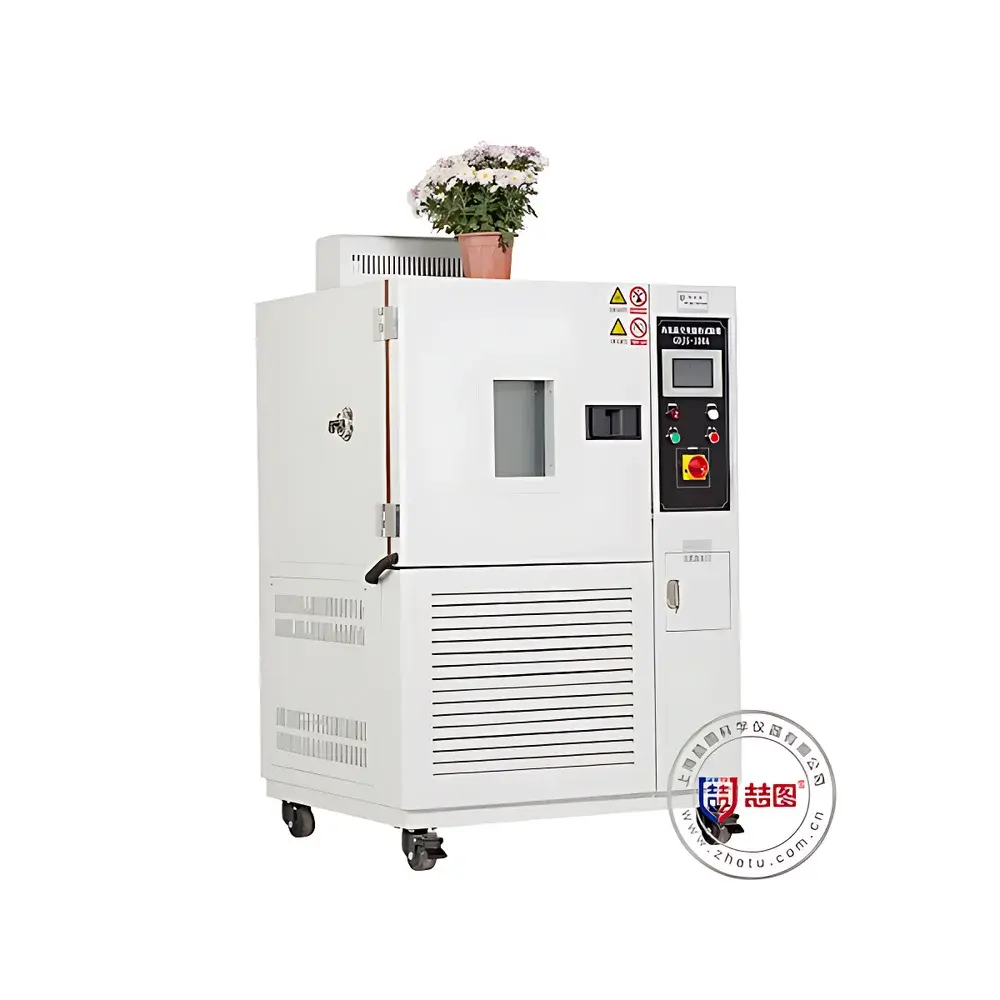
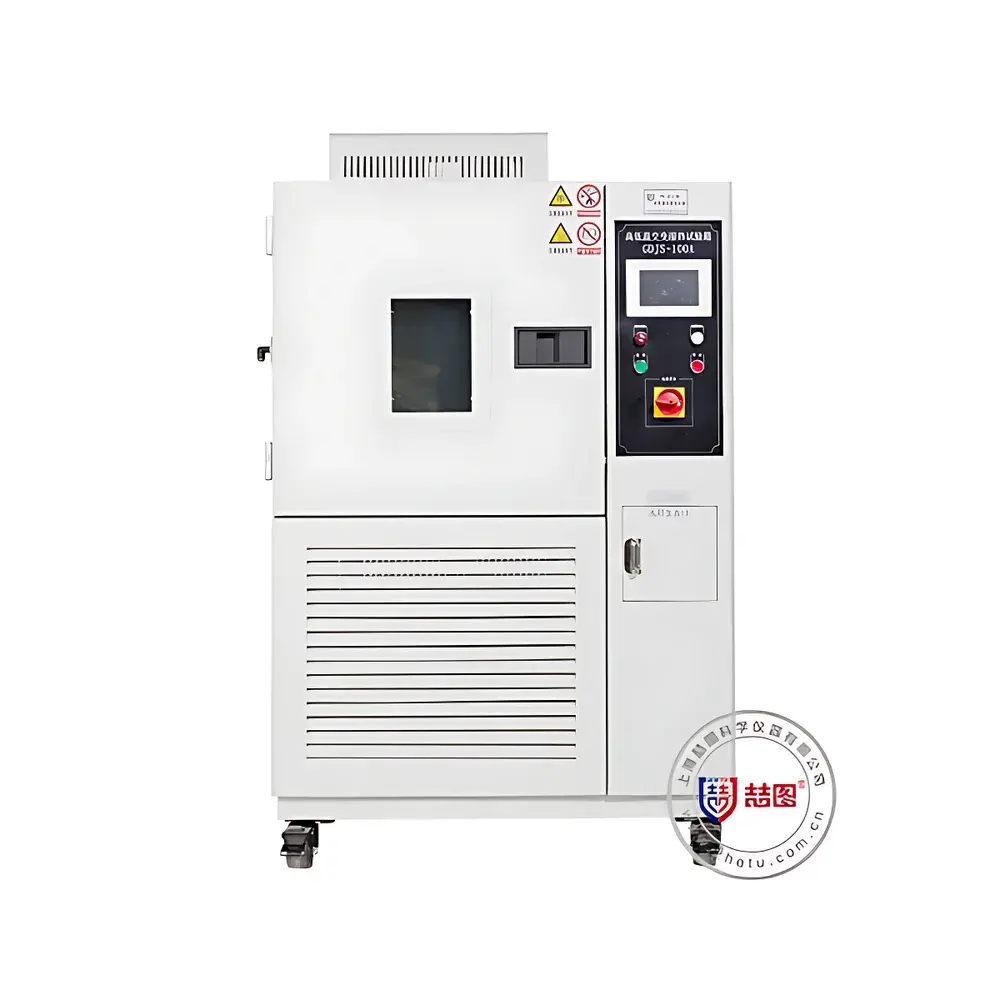
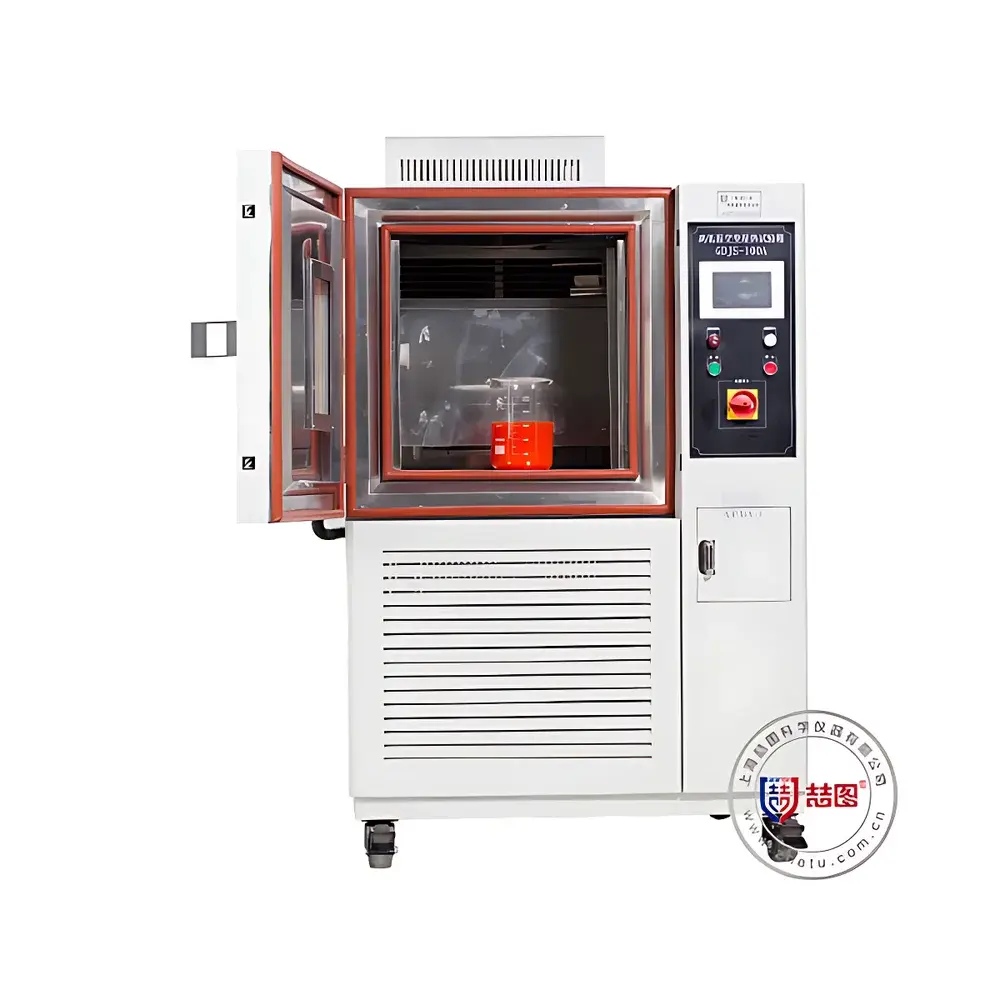
DRETOP THS-B150-II High-Low Temperature Environmental Test Chamber
| Brand | DRETOP |
|---|---|
| Origin | Shanghai, China |
| Manufacturer Type | Direct Manufacturer |
| Model | THS-B150-II |
| Temperature Range | -40 °C to +150 °C |
| Refrigeration Method | Compressor-based Cooling |
| Explosion-Proof Design | Standard (Non-Explosion-Proof) |
| Temperature Fluctuation | ±0.5 °C |
| Temperature Uniformity | ≤2 °C |
| Heating Rate | 1–3 °C/min (Adjustable) |
| Cooling Rate | 0.7–1 °C/min (Adjustable) |
| Internal Chamber Dimensions (W×D×H) | 500 mm × 500 mm × 600 mm |
| Control System | Full-Color Touchscreen Controller with 1000 Programmable Profiles (100 Segments/Profile) |
| Power Supply | AC 220 V / 50 Hz or AC 380 V / 50 Hz |
| Input Power | 5500 W / 5500 W |
| Chamber Volume | 150 L |
| Standard Accessories | Ø50 mm Test Port, 2 Adjustable Stainless Steel Shelves |
| Optional Interfaces | RS485, USB, Ethernet |
| Remote Monitoring | Cloud-enabled via Web Browser, iOS/Android App, and Desktop Client |
| Compliance | Designed for ASTM D4329, ISO 4892-2, IEC 60068-2-1, IEC 60068-2-2, MIL-STD-810G, and GB/T 2423 series environmental testing standards |
Overview
The DRETOP THS-B150-II High-Low Temperature Environmental Test Chamber is an engineered precision system designed for rigorous thermal stress evaluation of industrial components and materials under controlled, repeatable climatic conditions. Operating on a dual-mode thermodynamic principle—employing high-efficiency compressor-based refrigeration combined with NiCr alloy resistive heating—the chamber delivers stable, programmable temperature profiles across a wide operational range of –40 °C to +150 °C. Its architecture adheres to fundamental requirements of accelerated environmental testing: precise thermal inertia management, minimized thermal lag during transitions, and robust thermal field homogeneity. The chamber is not a general-purpose storage unit but a calibrated test platform intended for validation against internationally recognized environmental stress screening (ESS) protocols used in product qualification, reliability engineering, and quality assurance workflows.
Key Features
- Full-color 7-inch capacitive touchscreen controller with intuitive GUI, supporting up to 1000 multi-segment programs (100 steps per program), including ramp-soak-hold, cycling, and conditional branching logic.
- Multi-level user permission management with customizable access tiers (Administrator, Supervisor, Operator), password protection, and audit-trail-capable operation logging.
- Independent PID-controlled heating, cooling, and optional humidity subsystems—enabling simultaneous or sequential control without cross-interference and reducing thermal recovery time after door opening.
- Optimized forced-air circulation system featuring centrifugal blower with adjustable airflow velocity, low-turbulence duct design, and uniform heat distribution verified per IEC 60068-3-5.
- Double-layer tempered glass observation window with integrated anti-frost heater and LED interior lighting—preventing condensation-induced sample contamination and enabling real-time visual monitoring without thermal disturbance.
- Stainless steel 304 inner chamber with radius-rounded corners, removable shelves, and electrostatically coated carbon steel outer housing for corrosion resistance and long-term structural integrity.
- Comprehensive safety architecture: over-temperature cut-off, compressor overcurrent protection, fan failure detection, leakage current interruption, and automatic power recovery after grid interruption.
- Standard 50 mm diameter test port with silicone gasket—compatible with external power, signal, or pneumatic feedthroughs for in-situ electrical or mechanical testing under thermal stress.
- Energy-efficient operation using R404A/R134a blended refrigerant (non-ozone-depleting), variable-speed compressor drive, and intelligent duty-cycle optimization.
Sample Compatibility & Compliance
The THS-B150-II accommodates samples up to 150 L volume (500 × 500 × 600 mm internal dimensions), with load capacity optimized for electronic assemblies, automotive ECUs, LED modules, PCBs, polymer housings, and sensor packages. Its thermal performance meets the spatial uniformity (≤2 °C) and temporal stability (±0.5 °C fluctuation) criteria required by ISO 16750-4 (road vehicles), AEC-Q200 (passive components), and JEDEC JESD22-A104 (temperature cycling). The chamber supports both steady-state and dynamic profile execution per ASTM D4329 (plastics), IEC 60068-2-1 (cold), IEC 60068-2-2 (dry heat), and MIL-STD-810G Method 502.5. Optional humidity control (30–95% RH, ±3–5% RH deviation) extends applicability to combined temperature-humidity stress tests aligned with IEC 60068-2-30 and Telcordia GR-468-CORE.
Software & Data Management
Data acquisition and remote supervision are implemented via embedded Ethernet interface and cloud-connected firmware. The system generates timestamped CSV/Excel logs containing setpoint, actual temperature, runtime, alarm status, and event markers—fully compliant with GLP/GMP data integrity principles. All recorded data include operator ID, session metadata, and digital signature fields. Remote access is supported through HTML5-compliant browsers and native iOS/Android applications, enabling concurrent monitoring and control by up to five authenticated users. Role-based permissions govern data export, parameter modification, and profile upload/download. Firmware updates, configuration backup/restore, and real-time video streaming (via optional IP camera integration) are managed centrally through the DRETOP Cloud Console. Audit trails meet FDA 21 CFR Part 11 requirements for electronic records and signatures when configured with user authentication and system-generated timestamps.
Applications
- Thermal cycling qualification of printed circuit board assemblies (PCBAs) per IPC-9701.
- Accelerated life testing of lithium-ion battery cells and packs under extreme thermal gradients.
- Material coefficient of thermal expansion (CTE) characterization for encapsulants and adhesives.
- Pre-conditioning of optical sensors and MEMS devices prior to functional testing.
- Environmental stress screening (ESS) for aerospace avionics per MIL-STD-883 Method 1010.8.
- Validation of automotive infotainment units under simulated cabin temperature extremes.
- Reliability assessment of medical device enclosures exposed to sterilization and storage cycles.
- Testing of polymer-based consumer electronics housings for warpage, discoloration, and dimensional stability.
FAQ
What is the maximum allowable sample mass for thermal stability within the THS-B150-II chamber?
The chamber is rated for thermal load stability with typical non-metallic loads ≤15 kg; heavier or high-thermal-mass samples may require extended stabilization time and should be validated per IEC 60068-3-5.
Does the THS-B150-II support automated compliance reporting for ISO/IEC 17025 accredited laboratories?
Yes—when paired with DRETOP’s optional Validation Package (IQ/OQ documentation, traceable calibration certificates, and uncertainty budgets), the system supports full metrological traceability and report generation for ISO/IEC 17025 clause 5.10.
Can the controller log data at sub-second intervals for transient thermal analysis?
The standard sampling rate is 1 Hz; high-frequency logging (up to 10 Hz) is available via RS485 or Ethernet using third-party SCADA software with Modbus TCP or OPC UA drivers.
Is the THS-B150-II suitable for testing under vacuum or inert gas environments?
No—this model is designed for ambient-pressure air atmosphere only. For inert or low-pressure applications, consult DRETOP’s THS-V series vacuum-compatible chambers.
How is temperature uniformity verified and documented during factory acceptance testing (FAT)?
Each unit undergoes 9-point uniformity mapping per IEC 60068-3-5 using NIST-traceable PT100 probes; final FAT report includes spatial deviation heatmap and pass/fail certification against ≤2 °C specification.



