
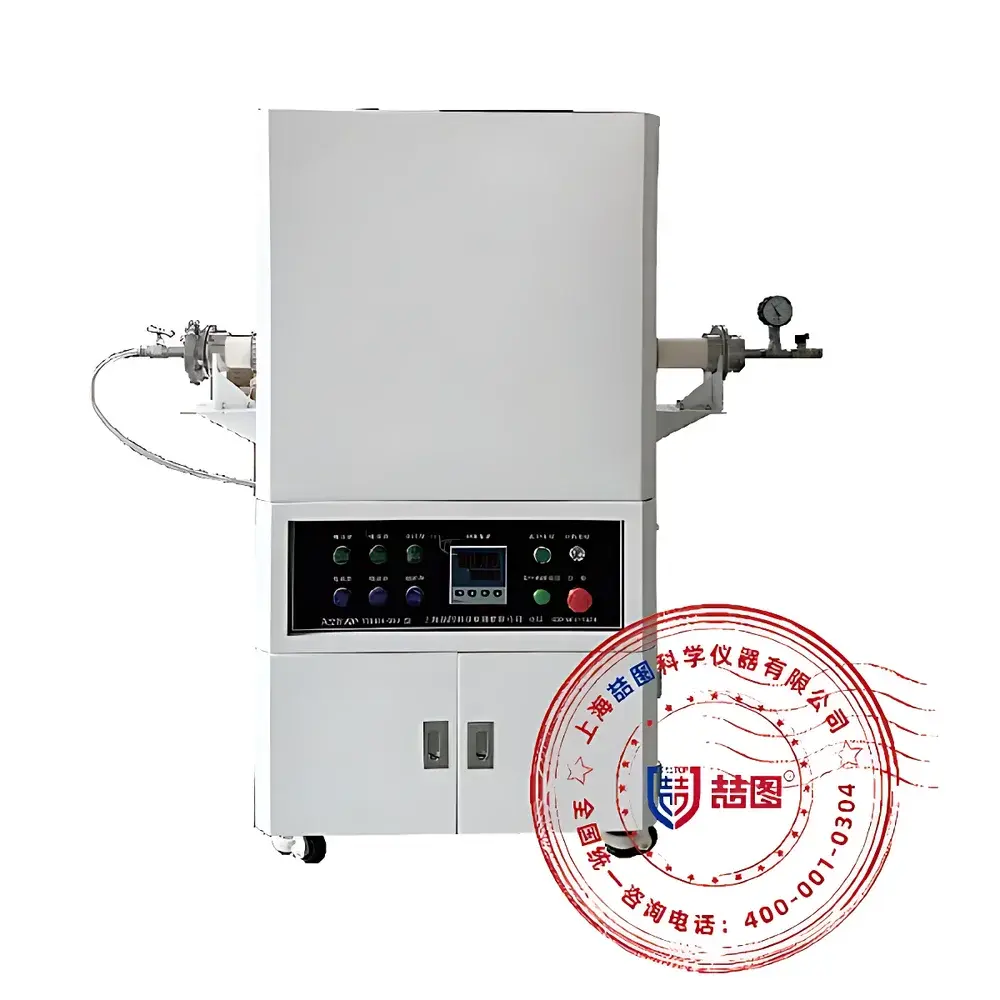
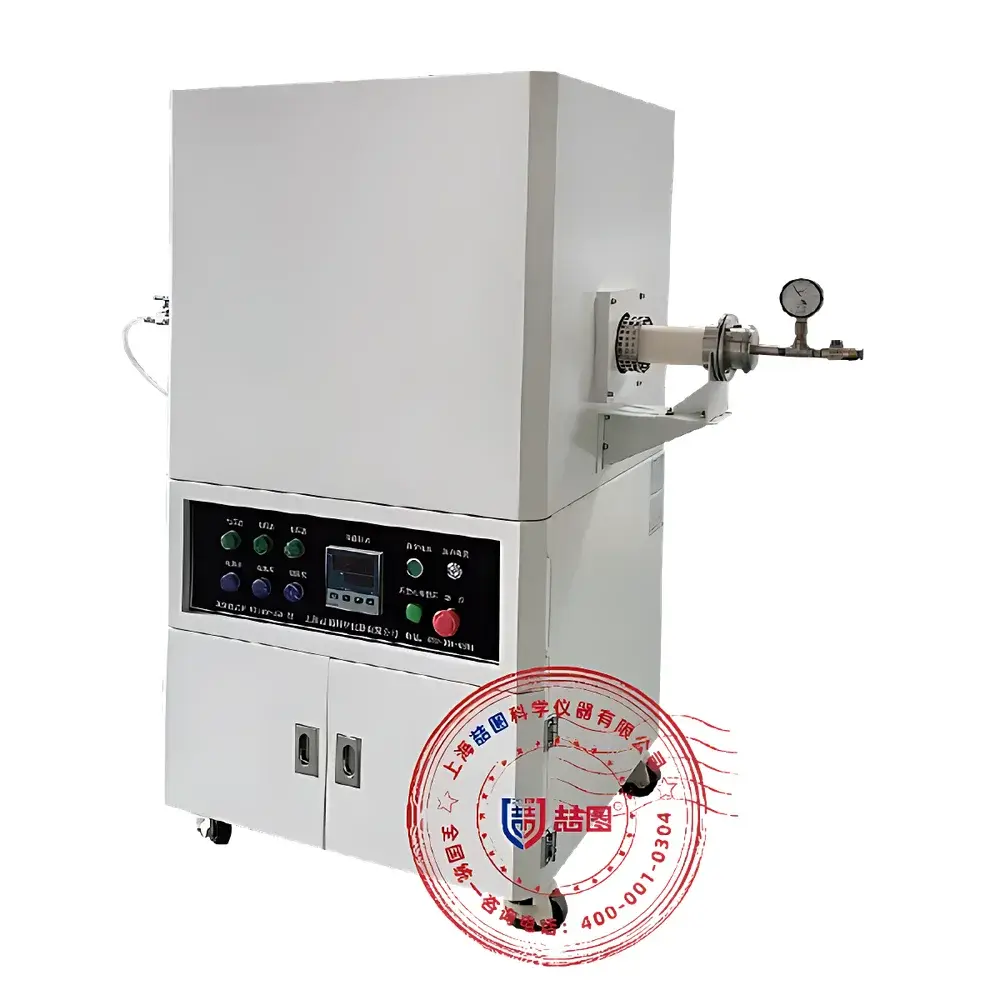
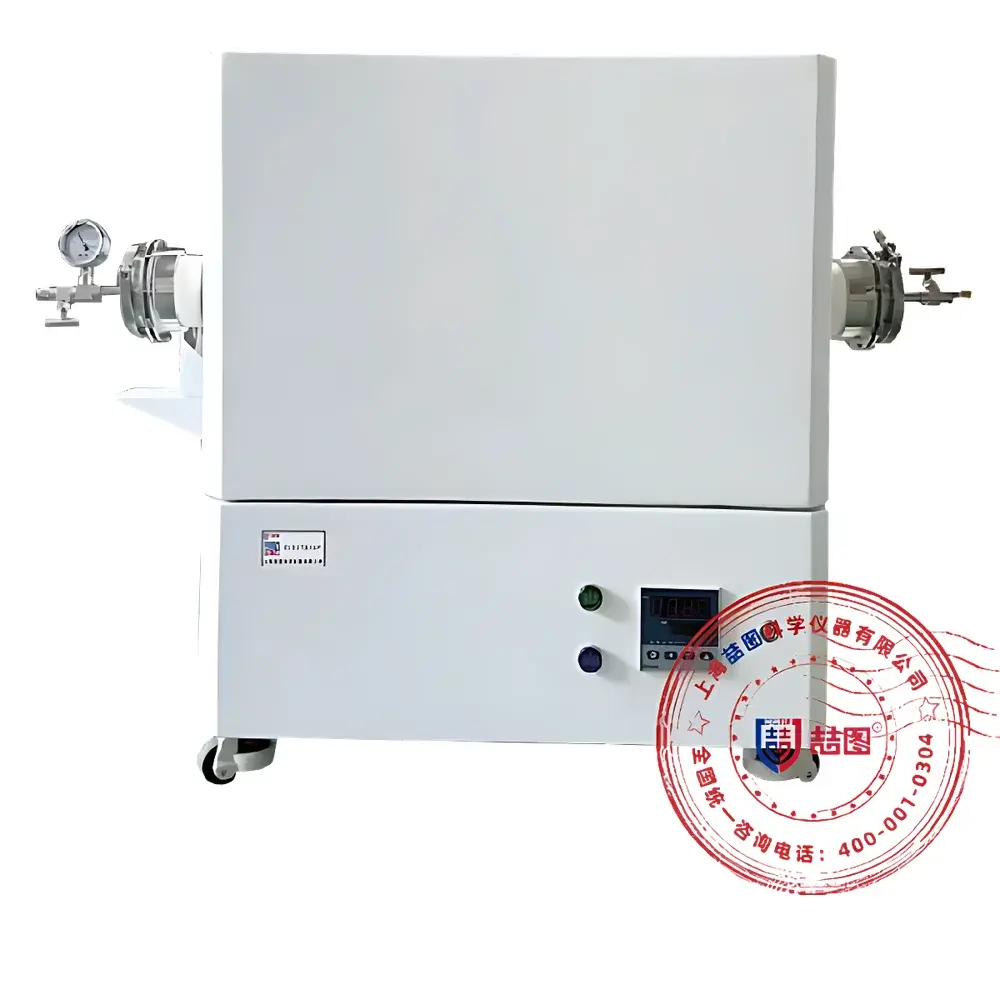
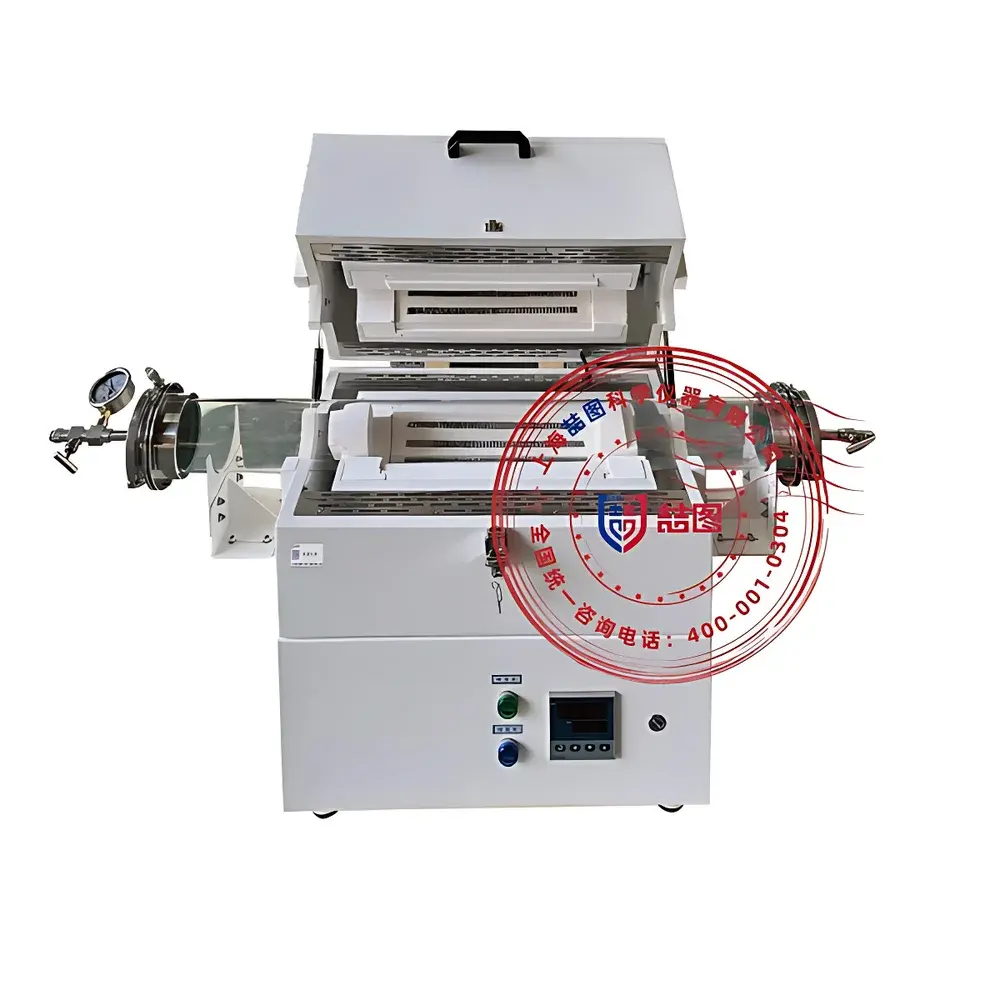
DRETOP GB17-1010C High-Temperature Vacuum & Atmosphere Tube Furnace
| Brand | DRETOP |
|---|---|
| Origin | Shanghai, China |
| Manufacturer Type | Direct Manufacturer |
| Instrument Type | Horizontal Tube Furnace |
| Maximum Temperature | 1700 °C |
| Heating Element | Silicon Molybdenum (MoSi₂) Rods |
| Internal Dimensions | 100 mm ID × 1000 mm L |
| Tube Diameter | 100 mm |
| Rated Power | 9 kW |
| Heating Rate | ≤15 °C/min up to 1000 °C |
| Control Method | Multi-Stage Programmable PID Controller |
| Insulation Material | Polycrystalline Mullite Fiber Vacuum-Formed Chamber |
| Vacuum Compatibility | Yes (KF-25/40 Flanges, Dual O-Ring Sealing) |
| Atmosphere Options | N₂, Ar, H₂, forming gas, or vacuum down to 10⁻³ mbar (with optional pump) |
| Safety Features | Over-Temperature Protection, Thermocouple Break Alarm, Auto-Heating Cut-off on Lid Opening, Ground Fault Circuit Interrupter (GFCI) |
Overview
The DRETOP GB17-1010C is a horizontally oriented, high-temperature vacuum and controlled-atmosphere tube furnace engineered for precision thermal processing in advanced materials research and industrial R&D environments. It operates on the principle of resistive heating via silicon molybdenum (MoSi₂) rods, delivering stable, uniform temperature profiles across a 1000 mm-long heating zone within a 100 mm internal diameter high-purity alumina tube. The furnace achieves a maximum operating temperature of 1700 °C—rated for continuous use up to 1600 °C—with programmable thermal ramps and holds essential for processes requiring strict thermal history control. Its dual-capability design supports both high-vacuum operation (down to 10⁻³ mbar with compatible pumping systems) and dynamic gas atmosphere control, enabling oxidation-sensitive synthesis, reduction annealing, chemical vapor deposition (CVD), sintering, and thermal decomposition under reproducible, contamination-minimized conditions.
Key Features
- High-temperature architecture: MoSi₂ heating elements ensure long service life and consistent performance at temperatures up to 1700 °C, with low thermal mass and rapid response to setpoint changes.
- Vacuum-integrated tube assembly: KF-40 stainless steel flanges with dual elastomeric O-ring seals provide robust vacuum integrity and leak-tight gas containment; side-mounted gas inlet/outlet ports support continuous purge or static atmosphere modes.
- Advanced thermal insulation: A vacuum-formed polycrystalline mullite fiber chamber minimizes radial heat loss, maintains axial temperature uniformity (±5 °C over 300 mm at 1600 °C), and reduces surface temperature to <60 °C at ambient conditions.
- Programmable process control: 30-segment PID controller with ramp-soak capability, real-time temperature logging, and user-defined safety limits—including automatic power cutoff upon lid opening and thermocouple failure detection.
- Modular mechanical design: Side-loading configuration accommodates long or fragile samples; optional tilting mechanism (±15°) facilitates gravity-assisted gas venting and powder handling during thermal cycling.
- Comprehensive electrical safety: Integrated GFCI protection, over-temperature cut-off, and rear-access maintenance panel comply with IEC 61000-6-3 (EMC) and IEC 61010-1 (safety) requirements for laboratory equipment.
Sample Compatibility & Compliance
The GB17-1010C is compatible with a broad range of sample forms—including powders, pellets, fibers, thin films, and small crucibles—within its 100 mm ID × 1000 mm L alumina tube. The furnace meets fundamental requirements for GLP-compliant thermal processing when used with validated thermocouples (Type S or B) and calibrated data loggers. While not inherently 21 CFR Part 11 compliant, its programmable controller supports audit-trail-ready configurations when paired with third-party software platforms that implement electronic signature, user access control, and change management protocols. Applications align with ASTM C1171 (sintering of advanced ceramics), ISO 8501-4 (thermal cleaning of metallic substrates), and USP (thermal sterilization validation methodology). Vacuum and inert-gas operation mitigates oxidation per ASTM E832-21 (standard specification for ultra-high purity gases in semiconductor processing).
Software & Data Management
The furnace integrates with DRETOP’s optional PC-based control suite (D-FurnaceLink™), which enables remote monitoring, multi-furnace synchronization, and CSV-exportable temperature/time datasets with timestamped event markers (e.g., gas flow initiation, vacuum pump activation, alarm triggers). All logged data include metadata such as operator ID, batch number, and program version—supporting traceability in regulated environments. The system supports Modbus RTU communication for integration into SCADA or MES platforms. Firmware updates are performed via USB interface, and configuration backups can be archived locally or to network drives. No cloud storage or telemetry is enabled by default, preserving data sovereignty per GDPR and CCPA requirements.
Applications
This furnace serves critical roles across multiple high-tech domains: synthesis of battery cathode/anode materials (e.g., LiCoO₂, Si-C composites) under argon; carbothermal reduction of metal oxides for nanoparticle production; annealing of graphene oxide films under low-pressure hydrogen; ceramic matrix composite (CMC) densification via pressureless sintering; metal injection molding (MIM) debinding and sintering cycles; precursor pyrolysis in carbon fiber manufacturing; and high-temperature calibration of thermocouples and radiation sensors. Its vacuum-atmosphere flexibility also supports research in solid-state ionics, thermoelectric material optimization, and catalytic material regeneration studies where residual oxygen partial pressure must remain below 10⁻⁶ atm.
FAQ
What vacuum level can the GB17-1010C achieve?
With an optional two-stage rotary vane pump, the system typically reaches 1–5 × 10⁻³ mbar. For lower base pressures (≤10⁻⁵ mbar), a turbomolecular pump with appropriate foreline trap is recommended.
Is the furnace suitable for hydrogen atmosphere operation?
Yes—when equipped with H₂-compatible fittings, leak-tested KF connections, and appropriate ventilation interlocks per NFPA 55 and CGA P-21 standards.
Can I use quartz tubing instead of alumina?
No—quartz is limited to ≤1100 °C and incompatible with MoSi₂ heating elements’ radiant profile above 1200 °C; high-purity alumina (99.7% Al₂O₃) is mandatory for rated 1700 °C operation.
Does the controller support custom PID tuning?
Yes—the embedded controller allows manual adjustment of P, I, and D parameters per segment, with auto-tune functionality available for initial stabilization.
What maintenance intervals are recommended?
Inspect O-rings and flange surfaces before each vacuum run; replace MoSi₂ elements after ~2000 hours at 1600 °C or if visible crystallization or sagging occurs; recalibrate thermocouples annually or per SOP-defined frequency.



