
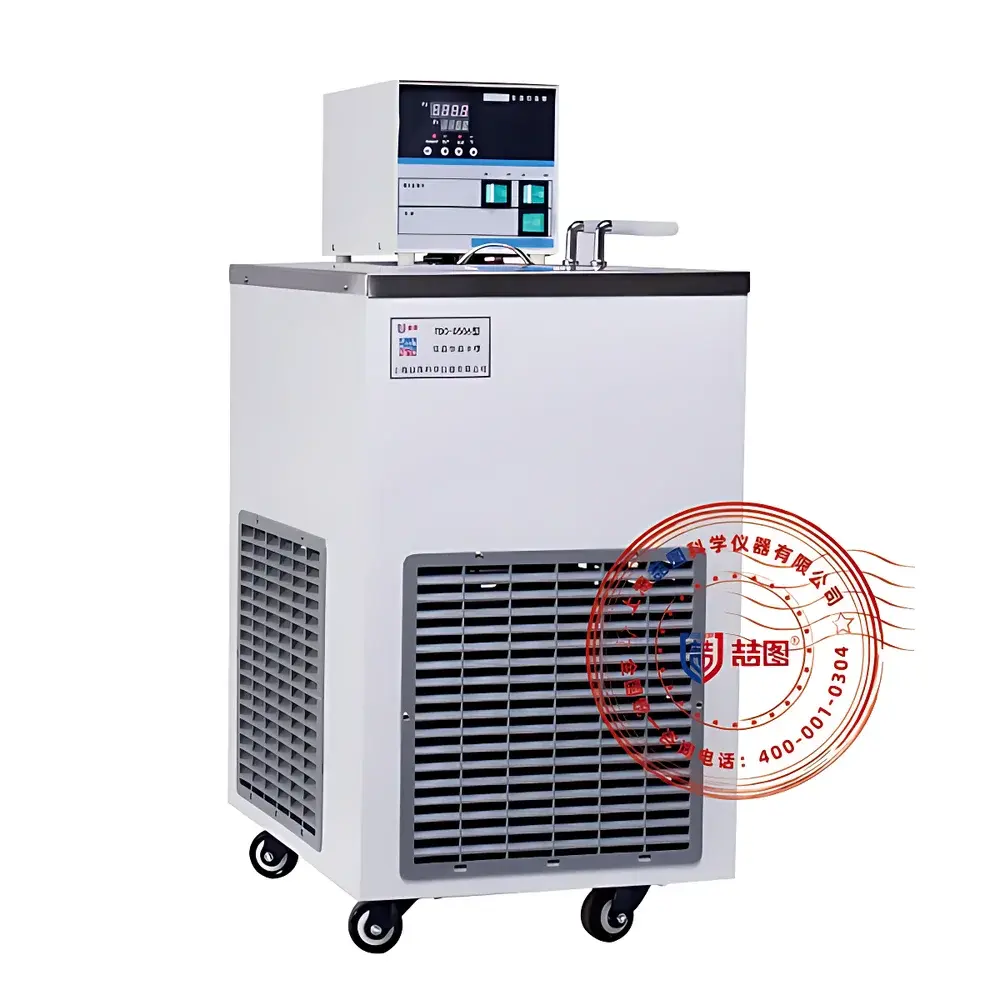
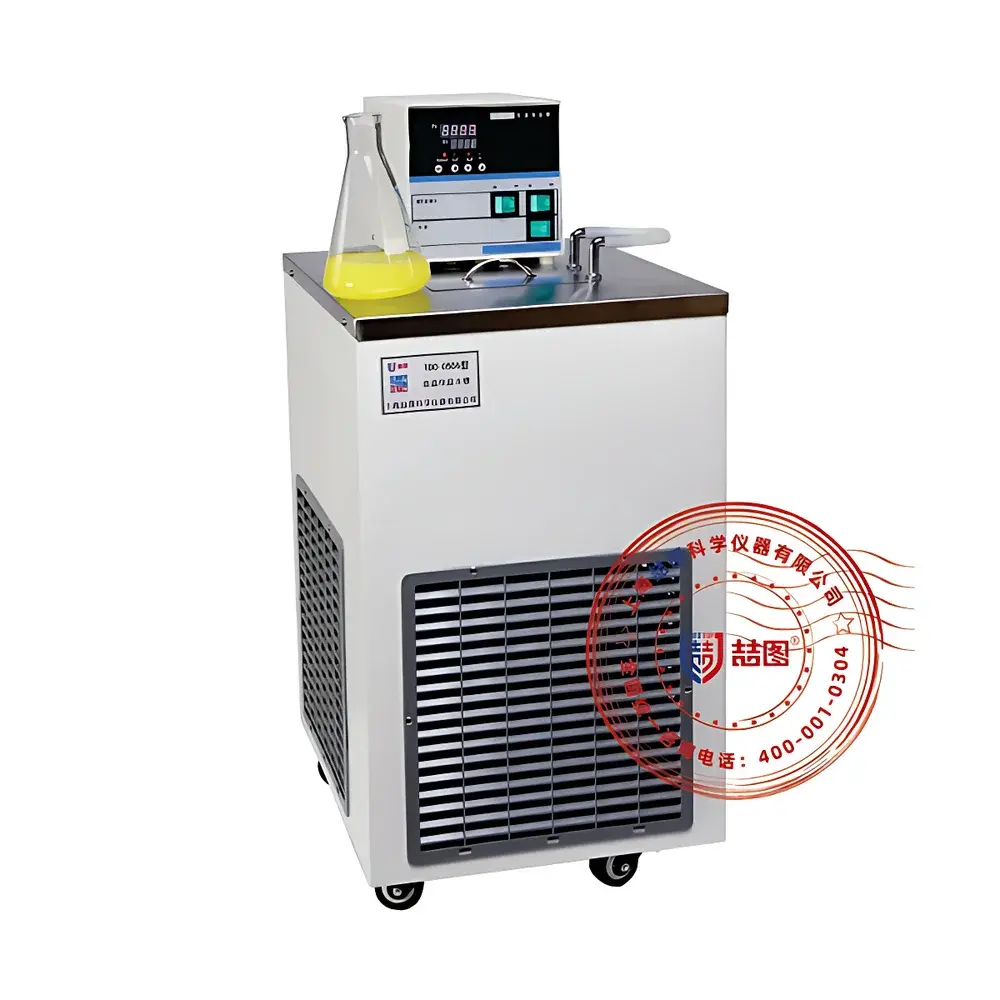
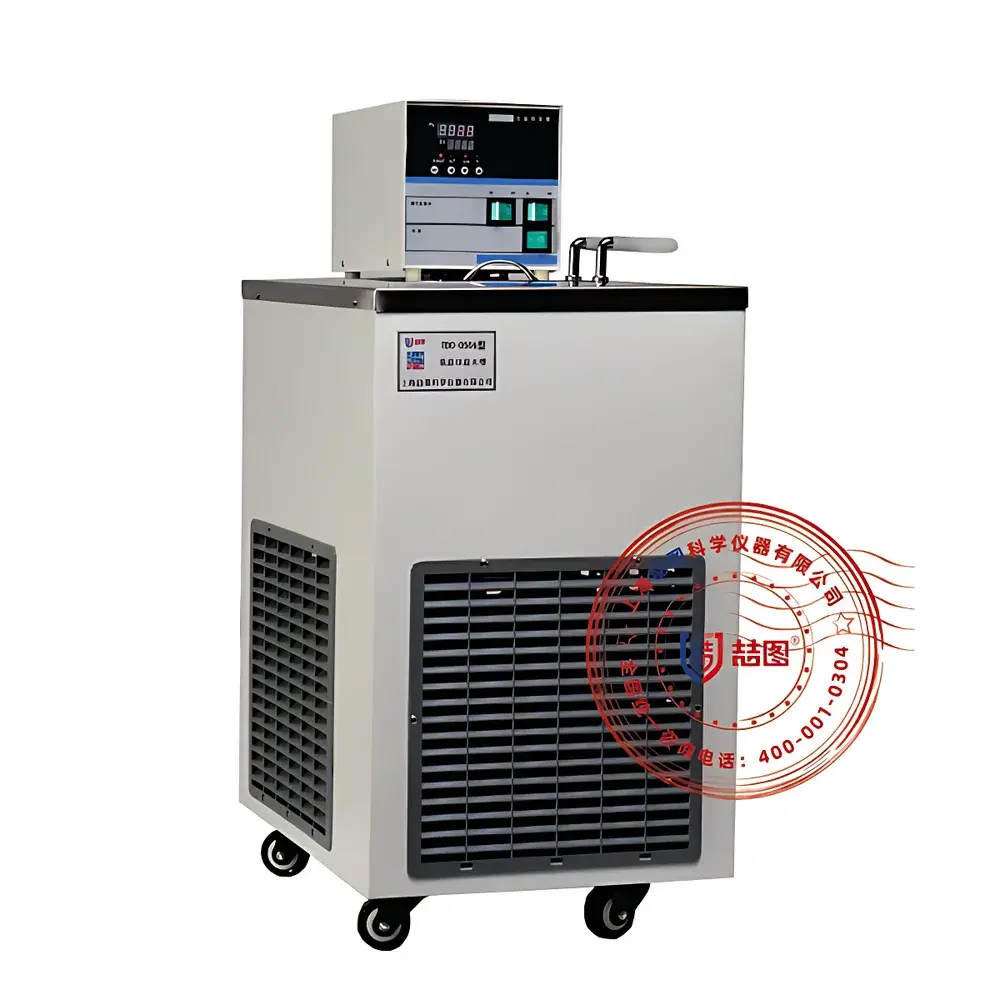
DRETOP TDC-0520 Low-Temperature Constant-Temperature Bath
| Brand | DRETOP |
|---|---|
| Origin | Shanghai, China |
| Manufacturer Type | Direct Manufacturer |
| Product Category | Domestic |
| Model | TDC-0520 |
| Instrument Type | Constant-Temperature Bath |
| Circulation Mode | Internal & External Circulation |
| Temperature Control | Refrigeration & Heating |
| Bath Volume | 20 L |
| Temperature Range | −5 °C to 100 °C |
| Temperature Stability | ±1 °C |
| Temperature Resolution | 0.1 °C |
| Power Supply | 220 V, 50 Hz |
Overview
The DRETOP TDC-0520 Low-Temperature Constant-Temperature Bath is a compact, benchtop-ready thermal control system engineered for precise and stable liquid temperature regulation across demanding laboratory and industrial applications. Designed around a dual-mode refrigeration–heating thermodynamic cycle, the unit integrates a hermetic compressor, high-efficiency condenser, PID-controlled electric heating element, and a low-heat-generation centrifugal circulation pump. This architecture enables accurate thermal management of external equipment—including reaction vessels, synthesis reactors, condensers, and analytical instrumentation—via either internal bath immersion or external closed-loop circulation. Its −5 °C to 100 °C operating range accommodates common heat-transfer media such as deionized water, ethylene glycol–water mixtures, and anhydrous ethanol (≥99.5%), with compatibility verified against standard stainless-steel (304) wetted parts and typical lab-grade container materials. The TDC-0520 meets foundational thermal stability requirements for routine QC testing, physical property characterization, and method development under ISO/IEC 17025-aligned environments.
Key Features
- Intuitive touch-panel interface with real-time LCD display and embedded PID temperature controller for rapid setpoint acquisition and minimal overshoot.
- Benchtop horizontal design (W400 × D280 × H180 mm) optimized for space-constrained labs; 20 L stainless-steel (304) tank with polished interior and removable drain valve for full fluid exchange.
- Dual-circulation capability: internal recirculation via integrated U-shaped multi-orifice flow path ensures uniform thermal distribution (±0.5 °C spatial uniformity); external circulation enabled via quick-connect inlet/outlet ports (G1/4″ BSP).
- Non-heat-generating centrifugal circulation pump eliminates parasitic thermal load—critical for maintaining bath temperature integrity during prolonged operation.
- Comprehensive safety architecture including over-temperature cut-off, low-level fluid detection, compressor overheat protection, current overload monitoring, and automatic power recovery after brownout events.
Sample Compatibility & Compliance
The TDC-0520 supports direct immersion of samples in compatible thermal fluids and indirect temperature control of externally connected apparatus. Its 304 stainless-steel bath chamber resists corrosion from aqueous solutions, glycol blends, and alcohols when used within specified concentration and temperature limits. For regulatory traceability, the system supports manual calibration logging per ASTM E74 and ISO 17025 clause 6.5. While not inherently 21 CFR Part 11 compliant, its analog control architecture allows integration into validated workflows where electronic records are maintained externally. It is routinely deployed in GLP-compliant quality control laboratories for viscosity standards verification, dissolution testing support, and thermal pre-conditioning of reference materials.
Software & Data Management
The TDC-0520 operates as a standalone instrument with no proprietary software dependency. All operational parameters—including setpoint, real-time bath temperature, and status flags—are accessible via the front-panel LCD. For data capture, users may connect a calibrated external temperature probe (e.g., Pt100 Class A) to a DAQ system or digital multimeter. Optional RS485 communication module (sold separately) enables Modbus RTU integration into SCADA or LIMS platforms for time-stamped temperature logging and alarm forwarding. Audit trails must be generated externally; the device itself does not store historical data or enforce user authentication.
Applications
- Temperature stabilization of rotary evaporators, jacketed reactors, and automated synthesizers in organic chemistry and process R&D.
- Calibration of thermometers, thermocouples, and RTDs using fixed-point references or certified liquid-in-glass standards.
- Controlled cooling/heating of chromatographic columns, detectors, and autosampler trays in HPLC and GC systems.
- Preconditioning of polymer melts, pharmaceutical excipients, and food emulsions prior to rheological or viscometric analysis.
- Environmental simulation for accelerated aging studies of electronic components and packaging materials per IEC 60068-2-1 and -2-2 protocols.
FAQ
What thermal fluids are recommended for operation at −5 °C?
Deionized water is unsuitable below 0 °C. Use a 1:2 (v/v) ethylene glycol–water mixture (freezing point ≈ −25 °C) or anhydrous ethanol (≥99.5%, freezing point −114 °C). Avoid tap water due to mineral scaling.
Can the TDC-0520 maintain ±0.1 °C stability over extended periods?
Its specified temperature stability is ±1 °C under standard ambient conditions (23 ±2 °C, <60% RH). For tighter stability, consider the TDC-0520U variant (±0.01 °C), which employs enhanced sensor redundancy and adaptive PID tuning.
Is external circulation compatible with glass condensers or PTFE-lined reactors?
Yes—provided connection fittings are chemically resistant and pressure-rated to ≤1.5 bar. Confirm seal compatibility (e.g., Viton or EPDM) with your selected thermal fluid.
How often should the bath fluid be replaced?
For deionized water: every 3 months. For 30% ethylene glycol solution: every 6 months. For anhydrous ethanol: replace immediately if discoloration or odor develops—indicative of oxidation or moisture ingress.
Does the unit include CE or UL certification?
The TDC-0520 complies with IEC 61010-1:2010 for laboratory electrical equipment. CE marking is applied for EU export; UL listing requires model-specific evaluation and is not included in standard configuration.



