
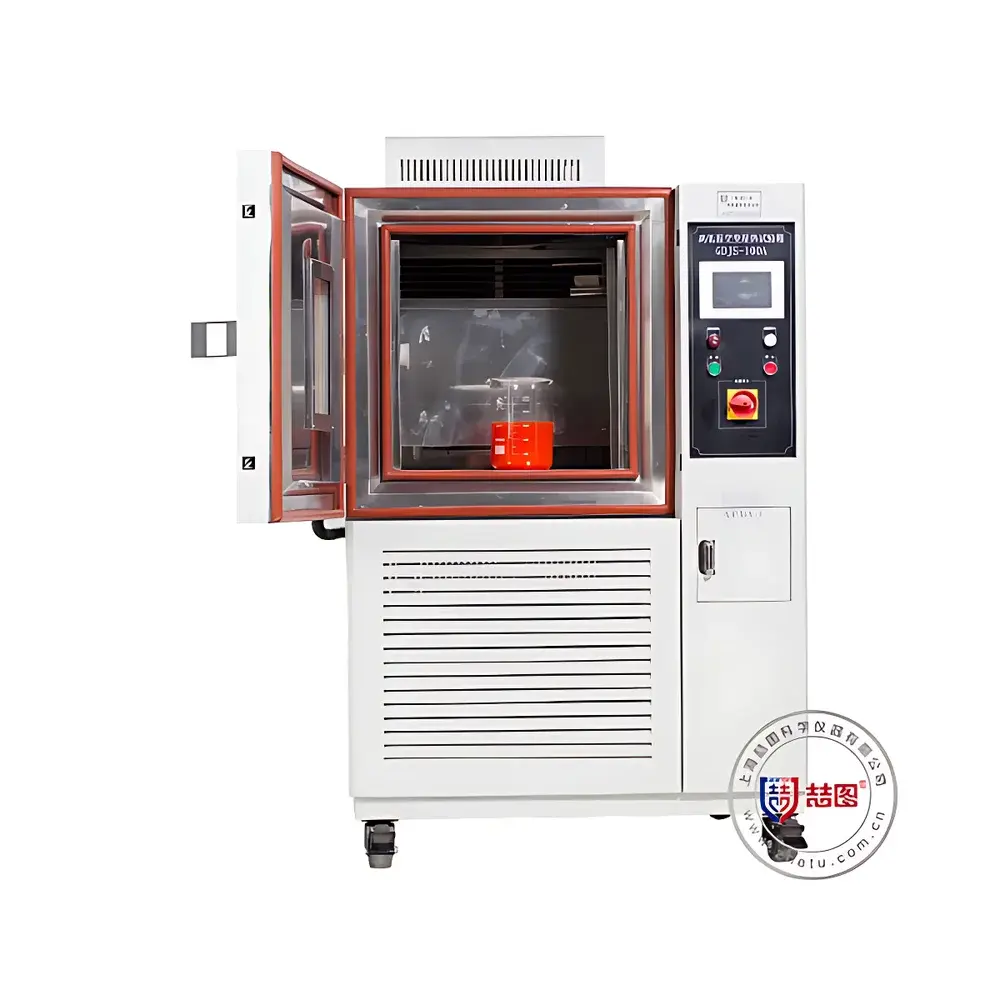
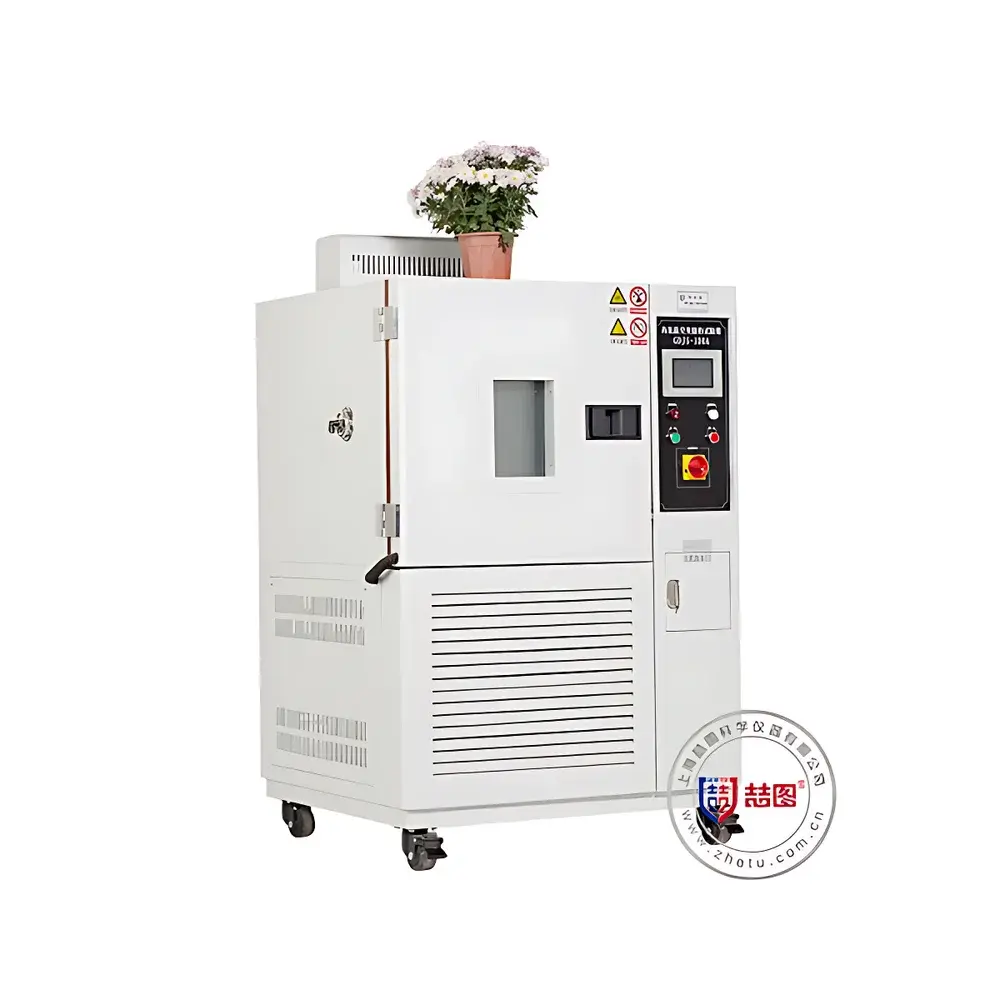
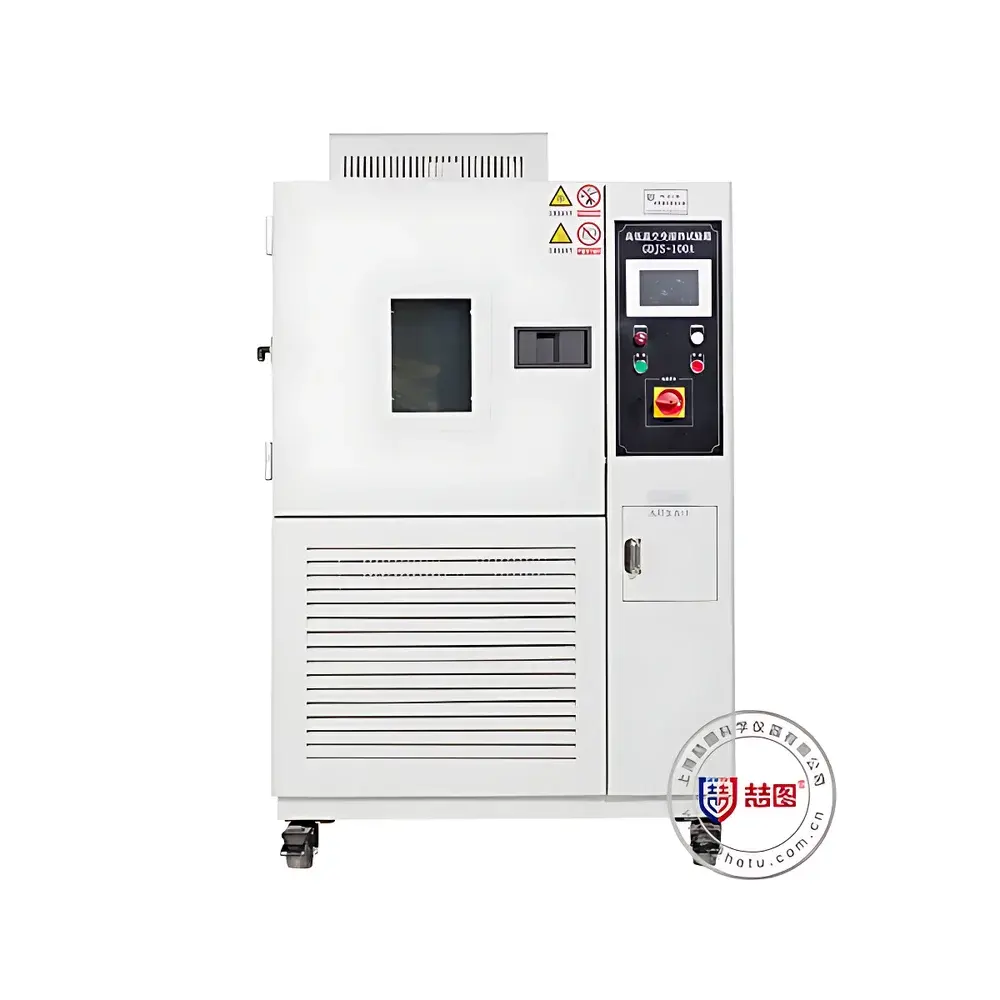
DRETOP THS-B100-II High-Low Temperature Environmental Test Chamber
| Brand | DRETOP |
|---|---|
| Origin | Shanghai, China |
| Manufacturer Type | Direct Manufacturer |
| Model | THS-B100-II |
| Temperature Range | -40 °C to +150 °C |
| Cooling Method | Compressor-based refrigeration |
| Explosion-Proof | Standard (non-explosion-proof) |
| Temperature Fluctuation | ±0.5 °C |
| Temperature Uniformity | ≤2 °C |
| Heating Rate | 1–3 °C/min (adjustable) |
| Cooling Rate | 0.7–1 °C/min (adjustable) |
| Internal Chamber Dimensions (W×D×H) | 500 mm × 400 mm × 500 mm |
| Chamber Volume | 100 L |
| Control Interface | Full-color capacitive touchscreen |
| Programmability | 1000 stored programs, up to 100 segments per program |
| Compliance | Designed for ASTM D4329, ISO 4892-2, IEC 60068-2-1, IEC 60068-2-2, GB/T 2423.1–2023 & GB/T 2423.2–2023 |
Overview
The DRETOP THS-B100-II High-Low Temperature Environmental Test Chamber is an engineered platform for precise, repeatable simulation of extreme thermal environments across industrial and R&D applications. Based on forced-air convection with independent heating and refrigeration circuits, the chamber employs a dual-stage compressor system (R404A/R23 cascade configuration for low-temperature models) and NiCr alloy heating elements to achieve stable thermal control from –40 °C to +150 °C. Its design adheres to fundamental principles of thermal dynamics and heat transfer validation—ensuring minimal thermal inertia during ramp transitions and high spatial uniformity under steady-state conditions. The chamber serves as a core tool for accelerated environmental stress screening (ESS), qualification testing per MIL-STD-810H Method 502.7, and reliability validation in accordance with JEDEC JESD22-A104E (Temperature Cycling) and A119B (Thermal Shock). It is widely deployed in QC laboratories for electronics, automotive components, LED modules, medical devices, and aerospace subassemblies where thermal robustness directly correlates with field performance and service life.
Key Features
- Full-color 7-inch capacitive touchscreen HMI with multilingual UI (English/Chinese), password-protected hierarchical access control (up to 10 user accounts with customizable permission levels)
- Advanced programmable logic: 1000 user-defined test profiles, each supporting up to 100 time-temperature (and optional humidity) segments with slope/ramp, soak, and loop functions
- Independent PID-controlled heating, cooling, and (optional) humidification systems—minimizing cross-interference and enabling faster stabilization
- Optimized airflow architecture: triple-blade centrifugal fan with variable-frequency drive, asymmetric wind tunnel design, and rear-mounted air distribution plenum for ≤2 °C temperature uniformity (per IEC 60068-3-5)
- Dual-layer heated anti-fog tempered glass observation window with integrated LED lighting—prevents condensation and enables real-time visual monitoring without thermal disturbance
- Stainless steel 304 interior (fully welded, radius-rounded corners), electrostatically sprayed cold-rolled steel exterior, silicone rubber door gasket rated for –70 °C to +180 °C operation
- Comprehensive safety suite: over-temperature cut-off (dual independent sensors), compressor high-pressure/low-pressure protection, fan failure detection, phase-loss monitoring, and earth leakage circuit interruption
- Standard 50 mm diameter test port (with brass plug and silicone seal) for power, signal, or pneumatic feedthrough during live-device testing
- Energy-efficient operation: inverter-driven compressor, auto-defrost cycle management, and power-on recovery function compliant with IEC 62040-4
Sample Compatibility & Compliance
The THS-B100-II accommodates samples up to 100 L volume with two adjustable stainless steel shelves (load capacity: 15 kg per shelf, uniformly distributed). Its internal geometry supports standard test fixtures—including PCB carriers, automotive harness mounts, and optical sensor holders—without obstructing airflow. The chamber meets structural and operational requirements of ISO/IEC 17025-accredited laboratories when used with documented calibration procedures traceable to NIST or CNAS-certified standards. It supports compliance workflows for FDA 21 CFR Part 11 (with optional electronic audit trail module), GLP, and GMP environments through configurable event logging, user authentication, and data integrity safeguards. All thermal performance specifications—including temperature fluctuation (±0.5 °C), uniformity (≤2 °C), and ramp rates—are verified per ASTM E744 and validated using calibrated PT100 probes per ISO/IEC 17025 Clause 6.5.
Software & Data Management
The embedded controller records timestamped temperature (and optional humidity) data at user-selectable intervals (1–600 seconds), storing up to 3 years of continuous logs internally. Data export is supported via USB 2.0 (CSV/Excel-compatible format) or RS485 Modbus RTU for integration into LIMS or MES platforms. Optional cloud connectivity enables secure remote access via TLS 1.2–encrypted web interface or native iOS/Android application—supporting real-time parameter adjustment, alarm push notifications, historical trend replay, and firmware OTA updates. Audit trails capture all operator actions (login/logout, program edits, manual overrides) with immutable timestamps and user IDs—satisfying ALCOA+ data governance principles. Exported reports include metadata such as calibration status, sensor ID, environmental conditions during test execution, and digital signatures for regulatory submission readiness.
Applications
- Electronics: Thermal cycling of PCBAs, semiconductor packages, and display modules per JEDEC JESD22-A104E
- Automotive: Validation of ECUs, sensors, and lighting systems per ISO 16750-4 and SAE J2380
- Medical Devices: Biocompatibility material stability testing per ISO 10993-12 and packaging integrity evaluation per ISO 11607-1
- Aerospace: Component qualification under MIL-STD-810H thermal shock and storage profiles
- Research & Development: Material coefficient of thermal expansion (CTE) studies, polymer aging kinetics, and battery cell thermal runaway preconditioning
- Quality Assurance: Incoming inspection of raw materials, supplier audit support, and production line environmental stress screening
FAQ
What is the maximum sample weight the THS-B100-II can accommodate without compromising temperature uniformity?
The chamber supports up to 30 kg total load (distributed across two shelves), provided samples do not exceed 70% of internal volume and maintain ≥50 mm clearance from walls, ceiling, and floor.
Does the unit comply with international electromagnetic compatibility (EMC) standards?
Yes—certified to IEC 61326-1:2013 (industrial environment) for emission and immunity, including ESD, radiated RF, and fast transient burst testing.
Can the THS-B100-II be integrated into a centralized lab automation system?
Yes—via Modbus TCP/IP (optional Ethernet module) or OPC UA gateway; compatible with LabVIEW, MATLAB Instrument Control Toolbox, and Siemens Desigo CC.
Is on-site calibration and IQ/OQ/PQ documentation available?
DRETOP provides factory calibration certificates (traceable to NIM, China); full validation protocol packages (IQ/OQ/PQ) and on-site commissioning services are available under separate service agreement.
What maintenance intervals are recommended for long-term reliability?
Compressor oil and refrigerant analysis every 24 months; air filter replacement every 6 months; annual verification of sensor accuracy and door seal integrity per manufacturer’s PM checklist.



