
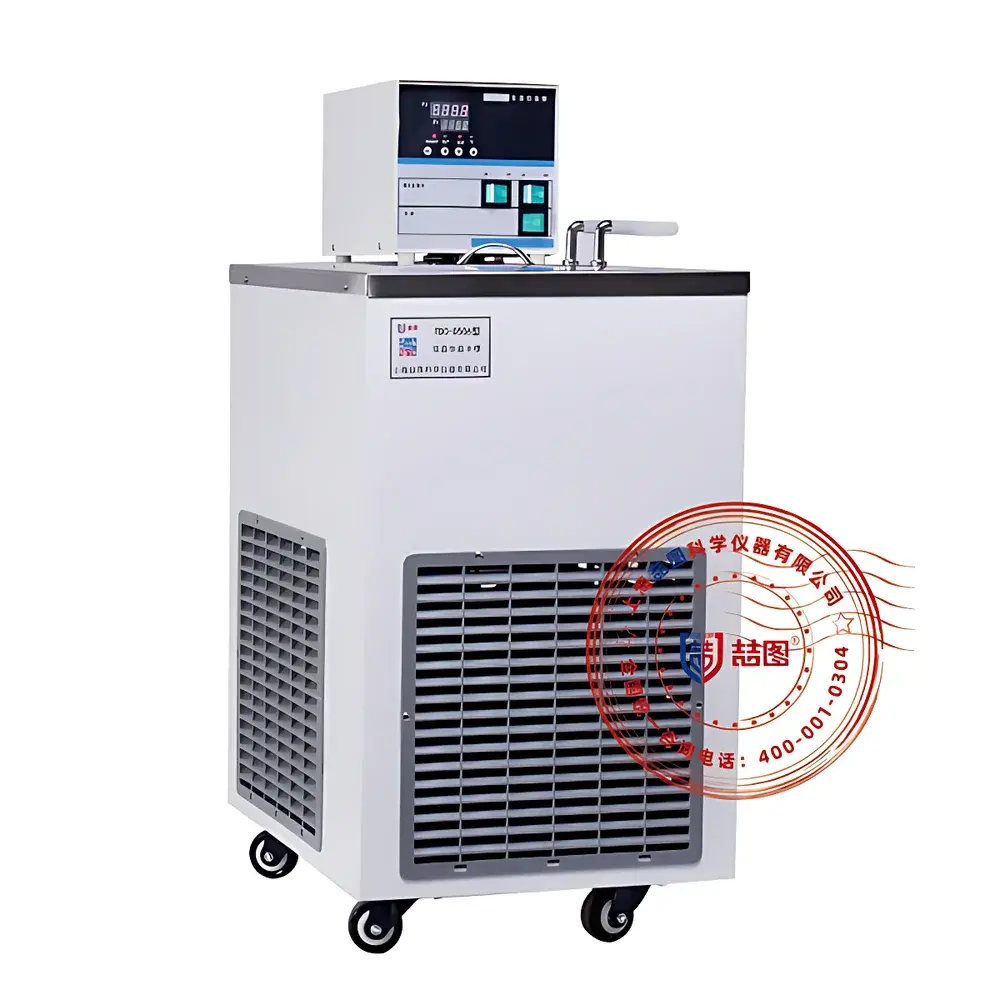
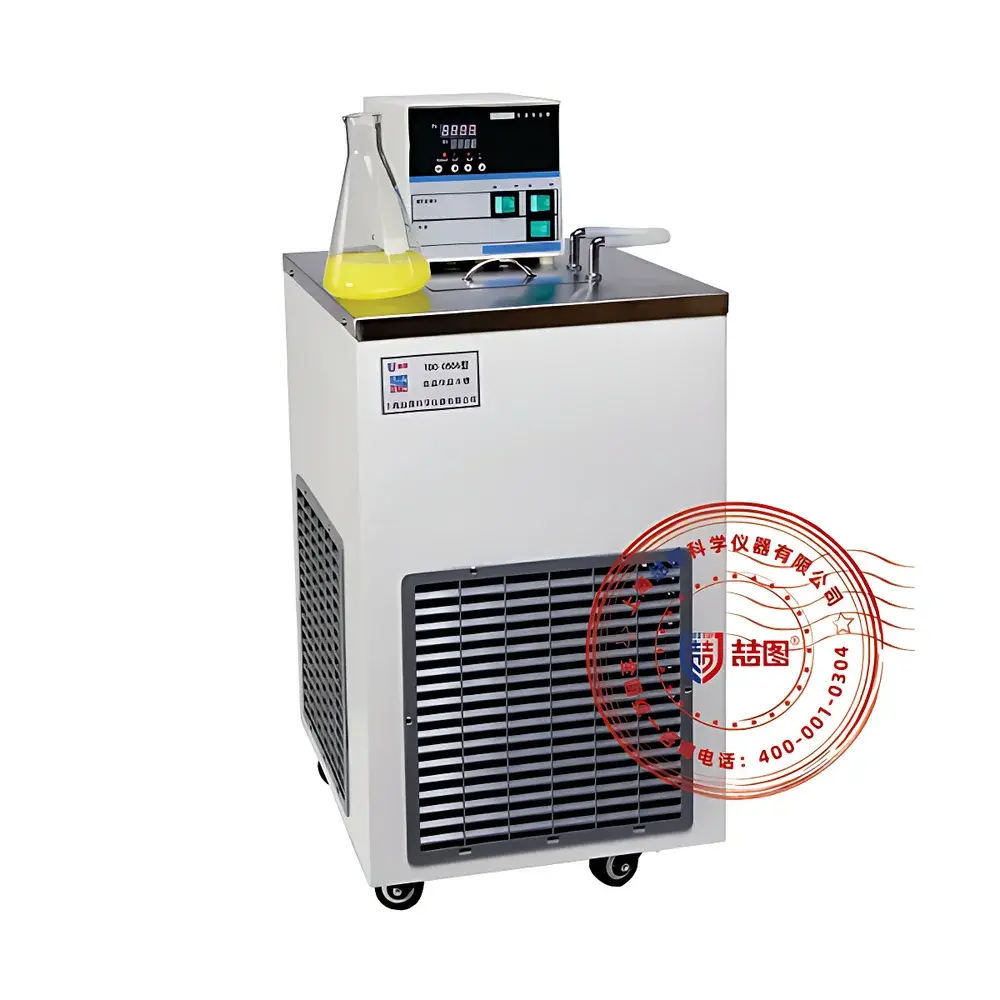
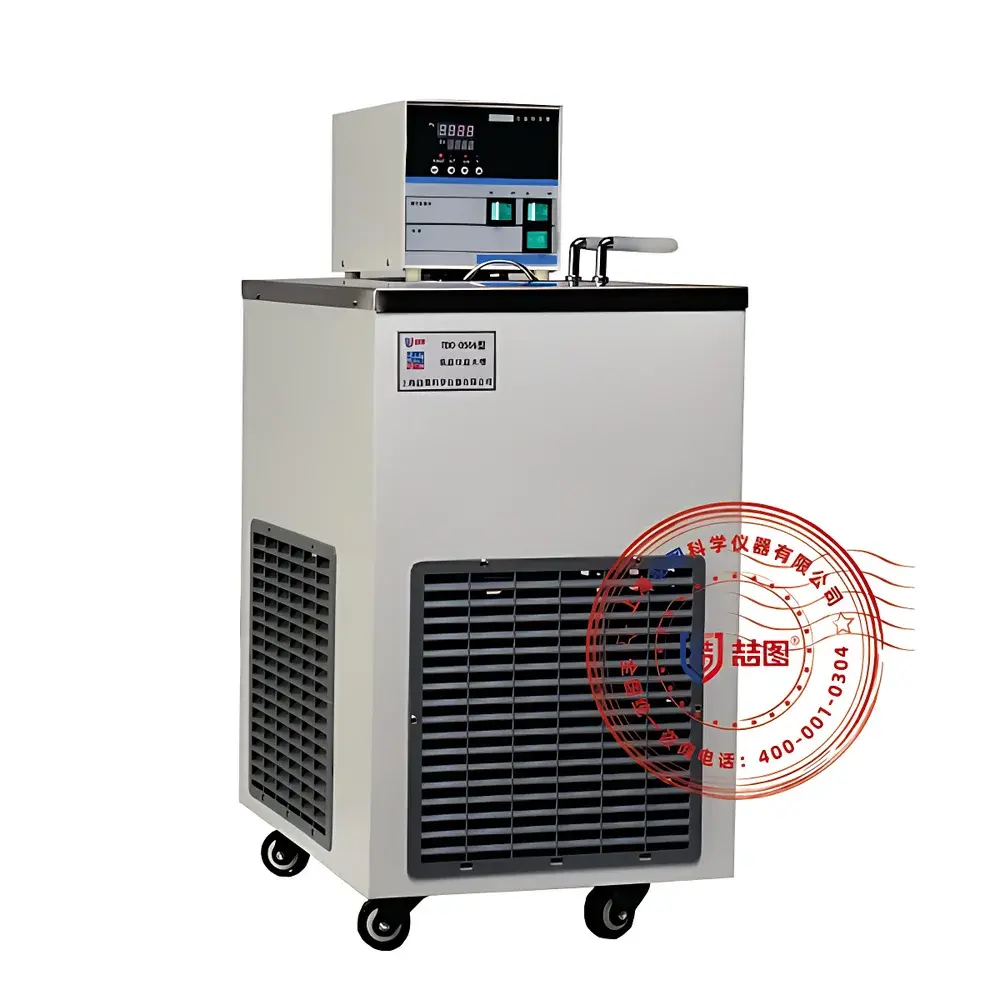
DRETOP TDC-0550 Low-Temperature Constant-Temperature Bath
| Brand | DRETOP |
|---|---|
| Origin | Shanghai, China |
| Manufacturer Type | Direct Manufacturer |
| Model | TDC-0550 |
| Instrument Type | Circulating Constant-Temperature Bath |
| Circulation Mode | Internal & External |
| Temperature Control | Refrigeration & Heating |
| Bath Volume | 50 L |
| Temperature Range | −5 °C to 100 °C |
| Temperature Stability | ±1 °C |
| Temperature Resolution | 0.1 °C |
| Power Supply | 220 V, 50 Hz |
Overview
The DRETOP TDC-0550 Low-Temperature Constant-Temperature Bath is a precision-engineered, dual-mode (refrigeration/heating) circulating thermal bath designed for laboratory and industrial applications requiring stable, uniform liquid temperature control across a wide operational range (−5 °C to 100 °C). Built upon a robust stainless-steel tank architecture and integrated high-efficiency refrigeration circuitry, it delivers consistent thermal output through both internal recirculation and externally coupled cooling/heating loops. Its design adheres to fundamental thermodynamic principles governing heat transfer in liquid media—leveraging forced convection via a low-heat-generation centrifugal pump and optimized U-shaped multi-port flow channels to minimize thermal stratification and ensure rapid equilibration. The unit serves as a primary temperature source for external apparatus—including reaction vessels, jacketed reactors, condensers, automated synthesis platforms, and analytical instrumentation—enabling precise process control in physical chemistry, materials science, pharmaceutical development, and QC/QA laboratories.
Key Features
- Intuitive 4.3-inch color LCD touchscreen interface with PID-based digital temperature control algorithm for responsive setpoint tracking and minimal overshoot.
- 304 stainless-steel inner tank and work surface; electrostatically coated steel outer housing—corrosion-resistant, non-porous, and easily sanitized for GxP-compliant environments.
- Dual-function circulation system: internal loop maintains bath homogeneity; external loop supports connection to auxiliary equipment via quick-release fittings (standard 1/2″ BSP ports).
- Integrated drain valve and dual cold-water inlet/outlet ports facilitate efficient medium exchange and maintenance—critical for long-term operational integrity when using glycol/water mixtures or organic solvents.
- Multi-layer safety architecture includes over-temperature cutoff, low-level fluid detection, compressor thermal overload protection, and current-fault monitoring—fully compliant with IEC 61010-1 safety standards for laboratory electrical equipment.
- Proprietary low-heat-output circulation pump eliminates self-heating artifacts, preserving bath temperature uniformity (±0.5 °C across working volume) and enabling high-reproducibility thermal experiments.
Sample Compatibility & Compliance
The TDC-0550 accommodates a broad spectrum of heat-transfer media—including deionized water (5–80 °C), ethylene glycol/water blends (−10 to 100 °C), anhydrous ethanol (≥99.5%, −80 to 20 °C), and specialty low-volatility silicone-based fluids (−80 to 100 °C). All wetted components are constructed from 304 stainless steel and fluoropolymer-sealed fittings, ensuring compatibility with common lab solvents and preventing leaching or corrosion. The unit meets CE marking requirements and conforms to ISO/IEC 17025 recommendations for environmental conditioning equipment used in accredited testing laboratories. While not intrinsically rated for hazardous locations, its design supports integration into fume hood–based workflows when handling flammable media such as ethanol or isopropanol.
Software & Data Management
The TDC-0550 operates autonomously via embedded firmware without dependency on PC software. However, optional RS485 communication port (Modbus RTU protocol) enables integration into centralized Lab Information Management Systems (LIMS) or SCADA platforms for remote monitoring, event logging, and audit-trail generation. When deployed in regulated environments (e.g., pharmaceutical QC per USP or FDA 21 CFR Part 11), the device supports time-stamped temperature logs and configurable alarm thresholds—facilitating GLP/GMP documentation and retrospective analysis of thermal excursions.
Applications
- Temperature-controlled catalysis studies and kinetic profiling in physical organic chemistry.
- Calibration of thermocouples, RTDs, and infrared sensors against NIST-traceable references.
- Stabilization of optical components (e.g., laser diodes, interferometers) requiring sub-degree thermal drift suppression.
- Supporting controlled crystallization, polymerization, and extraction processes in pilot-scale bioprocessing and fine chemical synthesis.
- Preconditioning of samples prior to rheological, viscometric, or DSC analysis to eliminate thermal history effects.
- Environmental stress screening of electronic assemblies under accelerated thermal cycling protocols (MIL-STD-810G, Method 502.6).
FAQ
What temperature media are recommended for operation at −5 °C?
Deionized water is unsuitable below 0 °C. A 1:2 (v/v) mixture of ethylene glycol and deionized water provides reliable freeze protection down to −35 °C while maintaining low viscosity and minimal corrosion risk.
Can the TDC-0550 be used with flammable solvents like ethanol?
Yes—provided appropriate engineering controls (e.g., ventilation, explosion-proof electrical infrastructure) are in place. Ethanol (≥99.5%) is compatible but requires strict adherence to NFPA 30 and local fire codes due to its 13 °C flash point.
Is external temperature feedback supported for closed-loop control?
The standard configuration lacks a built-in external sensor input. For process-critical applications requiring bath temperature regulation based on reactor jacket or sample probe readings, custom firmware integration or third-party PID controllers are recommended.
How often should the heat-transfer fluid be replaced?
Water/glycol solutions should be refreshed every 3–6 months; anhydrous ethanol requires replacement upon discoloration or odor change; high-purity silicone oils may last 12–24 months depending on thermal cycling frequency and contamination exposure.
Does the unit comply with energy efficiency standards such as ENERGY STAR or EU Ecodesign?
While not certified under consumer-focused energy labels, the TDC-0550 incorporates variable-speed compressor control and intelligent idle-state power management—reducing standby consumption by >40% compared to legacy fixed-speed designs, aligning with ISO 50001 energy performance improvement frameworks.



