
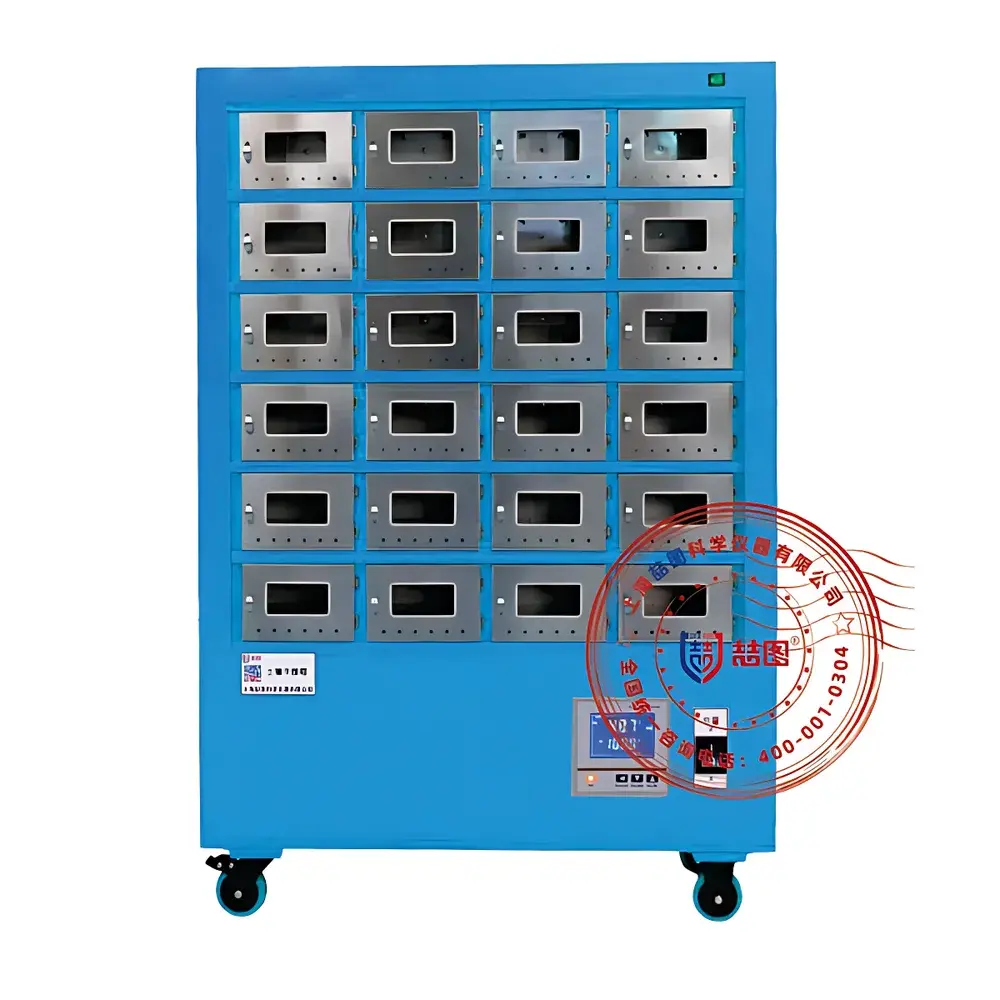
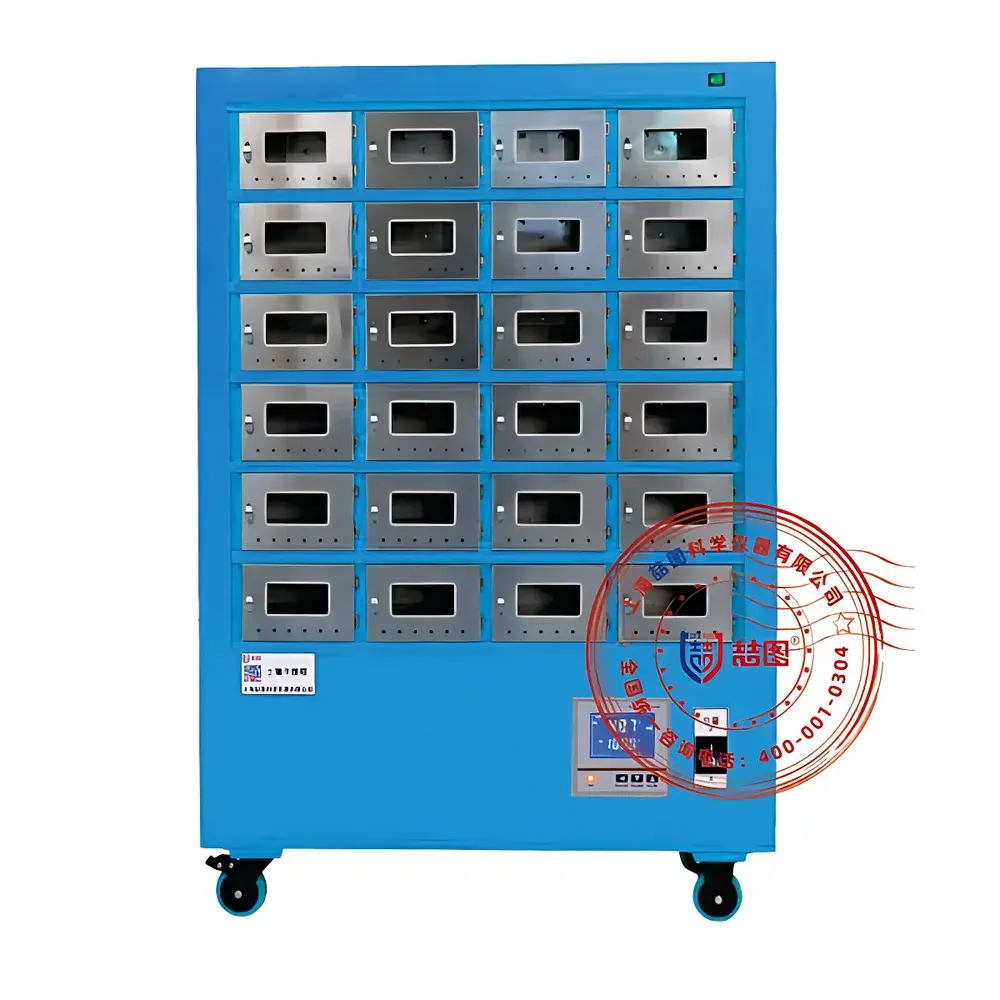
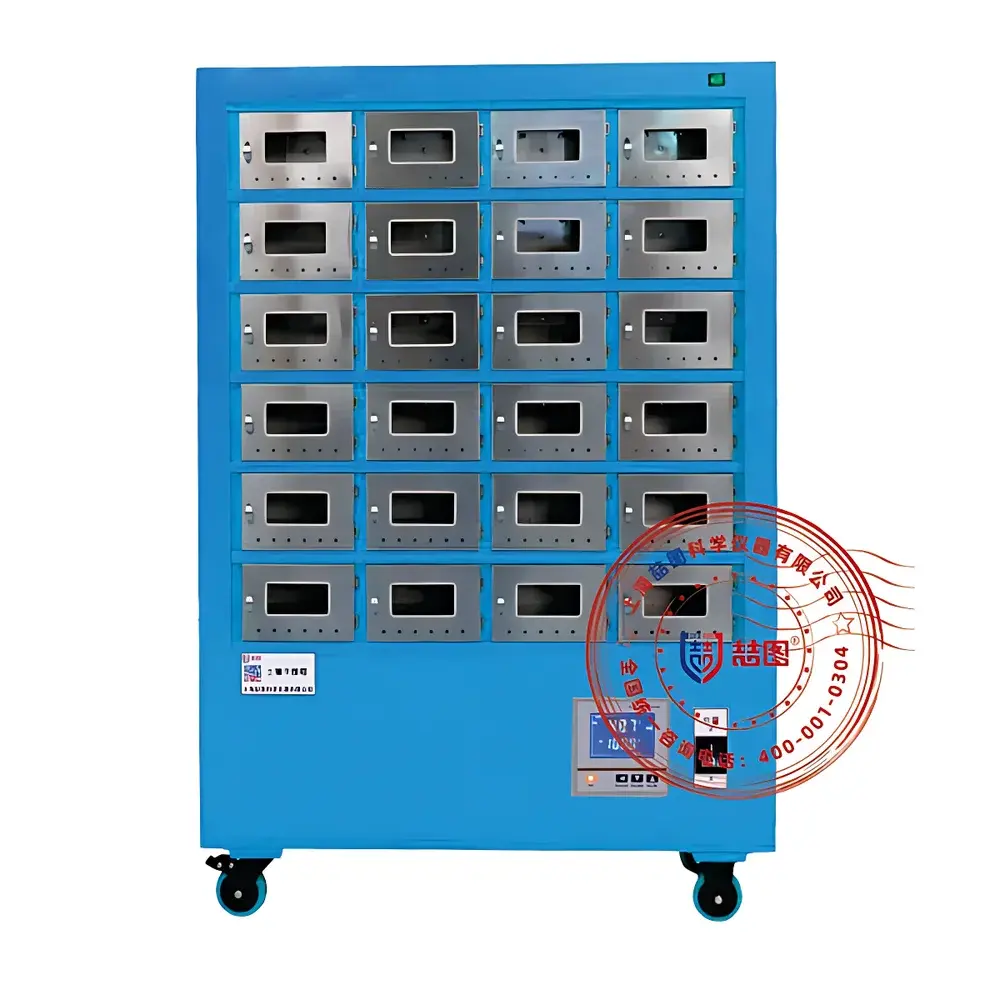
DRETOP TRD-7.2-24 Soil Drying Chamber
| Brand | DRETOP |
|---|---|
| Origin | Shanghai, China |
| Manufacturer Type | Direct Manufacturer |
| Model | TRD-7.2-24 |
| Temperature Range | RT+5°C to 60°C |
| Temperature Uniformity | ±1°C |
| Temperature Resolution | ±0.1°C |
| Power Input | 300 W |
| Sample Chamber Count | 24 |
| Chamber Dimensions (W×D×H) | 200 × 300 × 120 mm |
| Control Mode | Independent per Chamber (TRD-7.2-24K variant) / Unified (TRD-7.2-24 standard) |
| Construction Material | 304 Stainless Steel Interior |
| Airflow System | Vertical Forced Convection with Independent Inlet per Chamber |
| Optional Interface | RS-485 for MES/LIMS Integration |
Overview
The DRETOP TRD-7.2-24 Soil Drying Chamber is an engineered environmental conditioning system designed specifically for the standardized pre-analytical preparation of soil samples in compliance with international soil testing protocols. It operates on the principle of controlled convective air drying—utilizing filtered, temperature-regulated airflow to remove moisture from soil specimens without inducing thermal degradation, oxidation, or volatile loss of analytes. Unlike general-purpose ovens, this chamber integrates sample compartmentalization, airflow isolation, and real-time environmental monitoring to meet the stringent requirements of ISO 11464:2014 (soil sampling and handling), ASTM D2216 (laboratory determination of water content), and Chinese Standard HJ 494–2019 (environmental monitoring—soil sampling techniques). Its architecture supports GLP-aligned workflows by minimizing cross-contamination risk and enabling traceable, repeatable drying conditions across heterogeneous sample sets.
Key Features
- 24 independent stainless steel sample chambers (304 grade), each with dedicated air inlet and sealed transparent viewing window—enabling parallel processing without inter-chamber vapor migration.
- PID-based digital temperature controller with ±0.1°C resolution and ±1°C uniformity across all chambers; programmable setpoints from ambient +5°C to 60°C.
- Vertical forced-air circulation system with low-noise high-efficiency blower; airflow optimized via internal baffle geometry to ensure laminar, uniform thermal distribution within each chamber.
- Integrated particulate and organic vapor filtration (HEPA + activated carbon stage) on intake air path—preventing re-deposition of airborne contaminants onto dried samples.
- Modular chassis design with corrosion-resistant housing and tool-free chamber access; compatible with standard laboratory benchtop footprints (approx. 720 × 600 × 1200 mm).
- Optional RS-485 serial interface supporting Modbus RTU protocol for bidirectional communication with LIMS, MES, or centralized environmental monitoring systems—enabling audit-trail logging per chamber (temperature history, runtime, operator ID).
Sample Compatibility & Compliance
The TRD-7.2-24 accommodates bulk soil specimens (up to 500 g per chamber), including clay-rich, organic-matter-heavy, and metal-contaminated matrices. Each chamber accepts standard 100–200 mL porcelain or polypropylene drying dishes. The system complies with regulatory expectations for sample integrity in accredited environmental laboratories: it satisfies the “drying under controlled conditions” requirement outlined in US EPA Method 5035A (soil and waste extraction), supports validation of moisture content per ISO 11274, and maintains sample stability during extended drying cycles required for gravimetric analysis. Its independent chamber control (available in TRD-7.2-24K configuration) allows simultaneous multi-condition trials—for example, drying at 40°C for pesticide residue analysis versus 105°C-equivalent effective kinetics at 60°C for total solids determination—without hardware modification.
Software & Data Management
While the base unit features a local LCD interface for manual operation, the RS-485–enabled variant integrates seamlessly into validated digital infrastructures. When connected to compliant laboratory software platforms, it records timestamped temperature logs per chamber at user-defined intervals (1–60 min), stores up to 30 days of local history, and transmits data with embedded checksums to prevent corruption. All electronic records conform to ALCOA+ principles (Attributable, Legible, Contemporaneous, Original, Accurate, Complete, Consistent, Enduring, Available) and support 21 CFR Part 11–compliant electronic signatures when deployed with appropriate access controls and audit trail modules. No proprietary cloud service or vendor-hosted platform is required—data remains under full institutional control.
Applications
- Agricultural Science: Preparation of field-collected soils for pH, CEC, organic carbon, and nutrient (NPK) assays—ensuring moisture removal without volatilizing ammonium or altering redox-sensitive species.
- Environmental Forensics: Stabilization of heavy-metal–contaminated soils prior to acid digestion (EPA 3050B) or sequential extraction (BCR protocol), where uncontrolled drying induces speciation shifts.
- Geotechnical Testing: Controlled desiccation for Atterberg limits, compaction curve generation, and shrink-swell potential assessment—maintaining particle aggregation integrity.
- Biogeochemical Research: Pre-treatment of rhizosphere or sediment cores for DNA/RNA extraction, where rapid, low-thermal-stress drying preserves microbial community profiles.
- Regulatory Compliance Labs: High-throughput batch processing for national soil monitoring programs (e.g., China’s National Soil Pollution Survey), meeting throughput targets of ≥120 samples/24 h with documented drying parameters.
FAQ
Is the TRD-7.2-24 suitable for drying samples intended for volatile organic compound (VOC) analysis?
No. This chamber uses ambient-pressure convective drying and is not rated for VOC retention. For VOC-sensitive matrices, use inert-atmosphere freeze-drying or vacuum desiccation systems.
Can humidity be monitored or controlled inside individual chambers?
Relative humidity is not actively regulated or measured per chamber; the system controls only dry-bulb temperature and airflow rate. RH may be inferred indirectly using psychrometric calculations if inlet air conditions are known.
Does the stainless steel construction resist hydrofluoric acid exposure during post-drying sample digestion prep?
304 stainless steel offers limited resistance to HF. For HF-handling workflows, chamber interiors should be lined with PTFE or operated with secondary containment—consult chemical compatibility charts before exposure.
What maintenance intervals are recommended for the air filtration system?
HEPA and activated carbon filters require replacement every 6 months under continuous operation or after 1,000 hours of cumulative runtime—whichever occurs first—to maintain specified particulate and VOC adsorption efficiency.
Is calibration documentation provided with the unit?
Yes. Each shipment includes a factory calibration certificate traceable to NIM (National Institute of Metrology, China), covering temperature sensor accuracy across the full operating range (RT+5°C to 60°C) per IEC 61000-4-30 Class A standards.



