
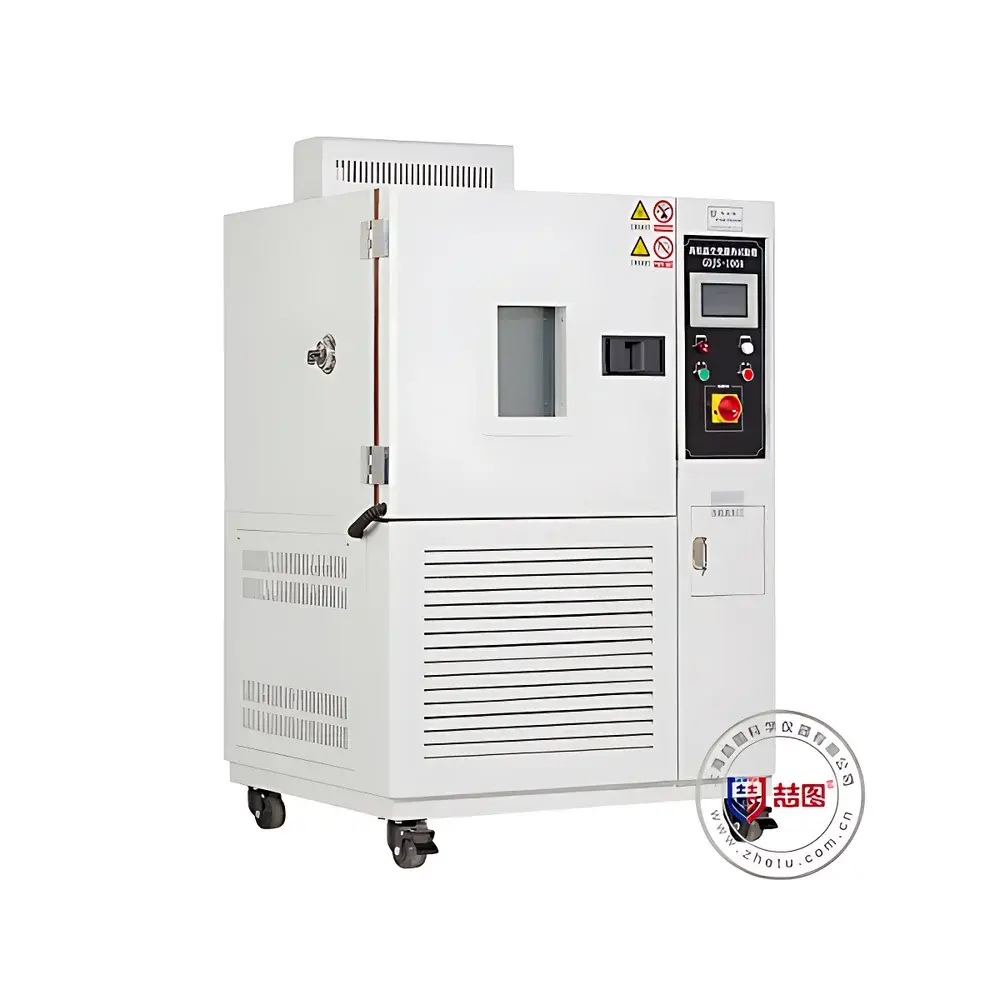
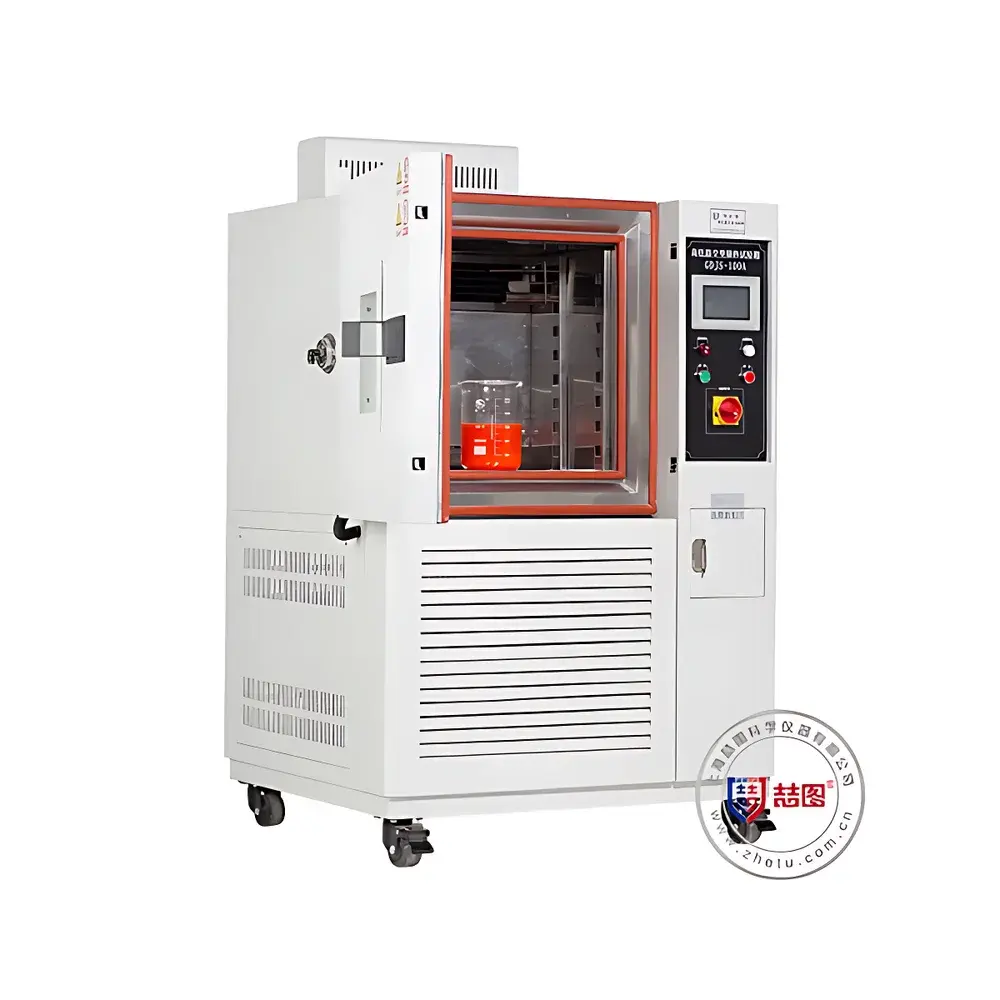
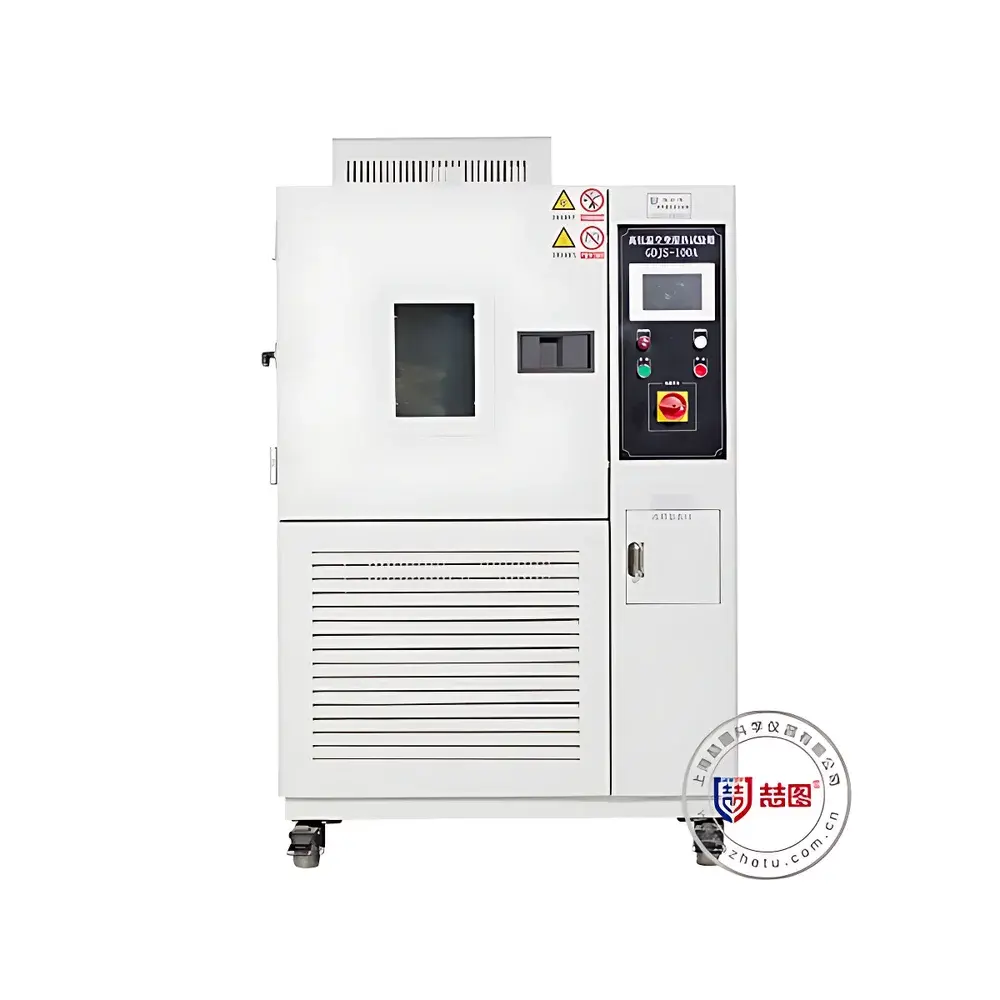
DRETOP THL-C400-I High-Low Temperature Environmental Test Chamber
| Brand | DRETOP |
|---|---|
| Origin | Shanghai, China |
| Manufacturer Type | Direct Manufacturer |
| Model | THL-C400-I |
| Temperature Range | -60 °C to +120 °C |
| Refrigeration Method | Hermetic Compressor-Based Cooling |
| Explosion-Proof Rating | Standard (Non-Explosion-Proof) |
| Temperature Fluctuation | ±0.5 °C |
| Temperature Uniformity | ≤2 °C |
| Heating Rate | 1–3 °C/min (adjustable) |
| Cooling Rate | 0.7–1 °C/min (adjustable) |
| Internal Chamber Dimensions | 800 × 600 × 850 mm (W × D × H) |
Overview
The DRETOP THL-C400-I High-Low Temperature Environmental Test Chamber is an engineered precision system designed for controlled thermal stress testing under dynamic temperature cycling conditions. Based on forced-air convection and dual-stage compressor refrigeration architecture, it replicates real-world environmental extremes—such as those encountered during transportation, storage, or operational deployment—to evaluate material integrity, component reliability, and product performance across defined thermal profiles. Its operational range of –60 °C to +120 °C supports standardized thermal shock, temperature cycling, and steady-state exposure protocols per IEC 60068-2-1 (cold), IEC 60068-2-2 (dry heat), and MIL-STD-810H Method 502.7. The chamber is purpose-built for laboratories conducting qualification testing in accordance with ISO/IEC 17025-accredited workflows and serves as a foundational tool for design validation, failure mode analysis, and accelerated life testing in regulated R&D and QA/QC environments.
Key Features
- 10.1-inch full-color capacitive touchscreen interface with multi-language support (English/Chinese), hierarchical password protection, and audit-trail-capable user access control;
- Programmable logic controller supporting up to 1000 stored test sequences, each configurable with 100 individual segments—including ramp, soak, and step functions;
- Dual-stage hermetic compressor refrigeration system with shared evaporator-condenser configuration, enabling stable low-temperature operation down to –60 °C without liquid nitrogen or cascade cryogenics;
- Optimized air circulation architecture featuring nickel-chromium heating elements, high-efficiency centrifugal blower assembly, and aerodynamically tuned ductwork to ensure ≤2 °C temperature uniformity across the 400 L working volume;
- Double-layer tempered safety glass observation window with integrated anti-frost heating film and LED interior lighting—designed to prevent condensation-induced electrical hazards and maintain optical clarity during sub-zero operation;
- Robust chamber construction: cold-rolled steel outer shell with polyurethane insulation (≥100 mm thickness), silicone rubber door gasket rated for continuous service from –70 °C to +150 °C, and reinforced structural frame;
- Comprehensive safety subsystems including over-temperature cut-off, compressor/fan overload protection, ground-fault circuit interruption, and automatic power recovery after utility interruption;
- Standard 50 mm diameter test port (with EPDM sealing plug) for live signal, power, or pneumatic feedthrough during in-situ monitoring or functional testing;
- PID auto-tuning algorithm with adaptive parameter adjustment to maintain ±0.5 °C temperature fluctuation under variable load and door-opening conditions;
- Modular mobility base with four swivel casters (two lockable) and adjustable leveling feet for stable installation on non-level laboratory floors.
Sample Compatibility & Compliance
The THL-C400-I accommodates diverse sample geometries up to 800 × 600 × 850 mm internal dimensions, with two removable stainless-steel shelves included as standard. It supports both passive thermal exposure and active electro-mechanical testing via optional RS485 or USB communication interfaces—enabling integration into automated test systems compliant with IEEE 1621 or SCPI command sets. The chamber meets electromagnetic compatibility requirements per EN 61326-1 and safety standards per EN 61010-1. While not intrinsically explosion-proof, its electrical design conforms to Class I, Division 2 hazardous location guidelines when operated outside classified zones. Data logging functionality satisfies GLP/GMP documentation requirements, including timestamped event records, alarm history, and calibration traceability logs exportable in CSV or Excel format.
Software & Data Management
Embedded firmware provides real-time temperature graphing, historical trend review, and programmable data export via USB mass storage. Optional PC-based software (DRETOP LabControl Suite v3.2) enables remote supervision, multi-chamber synchronization, statistical process control (SPC) charting, and compliance reporting aligned with FDA 21 CFR Part 11 electronic record requirements—including user authentication, audit trail generation, and electronic signature capability. All logged datasets retain metadata such as operator ID, program name, cycle count, and environmental deviation flags—ensuring full traceability for internal audits or regulatory submissions.
Applications
This chamber is routinely deployed in electronics reliability labs for solder joint fatigue assessment, PCB delamination screening, and battery thermal runaway characterization; in automotive Tier-1 suppliers for ECU thermal cycling validation per AEC-Q200; in aerospace subcontractors performing avionics box qualification to DO-160 Section 4; and in polymer R&D facilities evaluating thermoplastic crystallinity shifts under cyclic thermal loading. Academic users apply it to metallurgical phase transformation studies, while quality assurance teams utilize it for incoming inspection of elastomeric seals, adhesives, and composite laminates per ASTM D3418 and ISO 11359.
FAQ
What is the maximum allowable sample mass for thermal stability testing?
Thermal inertia effects are minimized when total sample mass remains below 20 kg. For loads exceeding this threshold, extended stabilization time and empirical calibration against reference sensors are recommended.
Can the chamber be integrated into a LIMS or MES environment?
Yes—via Modbus RTU over RS485 or TCP/IP Ethernet (optional add-on module), supporting bidirectional data exchange with major laboratory informatics platforms.
Is third-party calibration certification available?
DRETOP provides NIST-traceable factory calibration reports (including 9-point uniformity mapping and stability verification). UKAS or DAkkS-accredited field calibration services can be arranged through authorized regional partners.
Does the system support rapid thermal transition profiles (e.g., <5-minute ramp between –40 °C and +85 °C)?
The THL-C400-I achieves typical ramp rates of 0.7–1 °C/min cooling and 1–3 °C/min heating. For faster transitions, consider the THL-D series with enhanced refrigeration capacity and auxiliary heating.
Are spare parts and technical support available globally?
DRETOP maintains regional service hubs in Germany, Singapore, and the USA, with 48-hour critical component dispatch and remote diagnostic support via secure VPN-assisted maintenance portal.



