
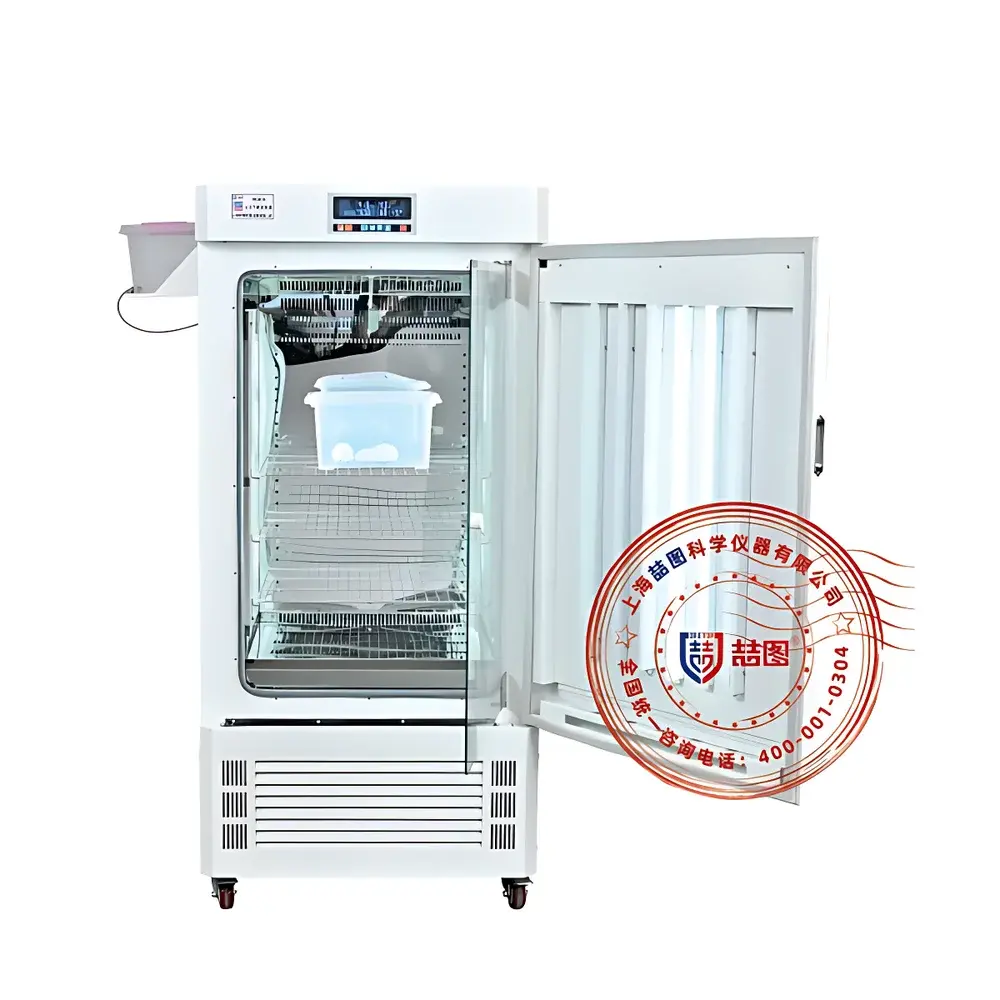
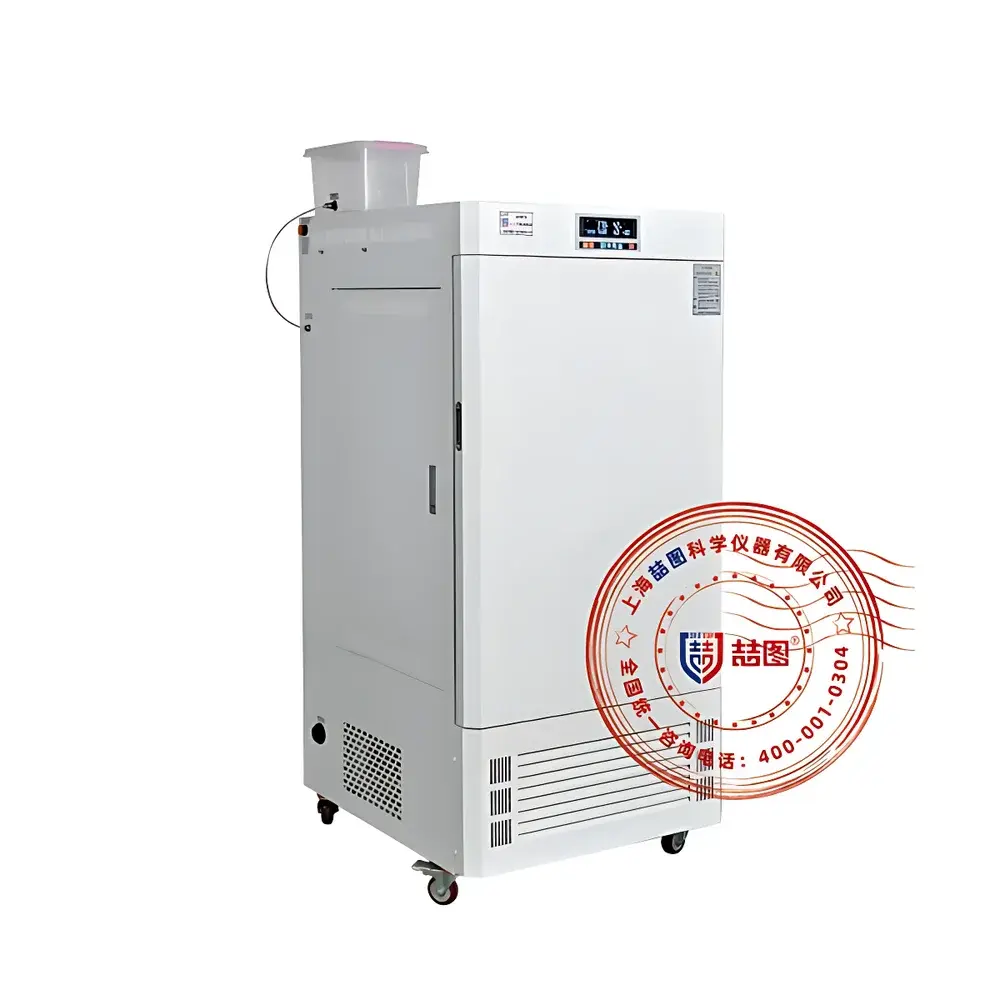
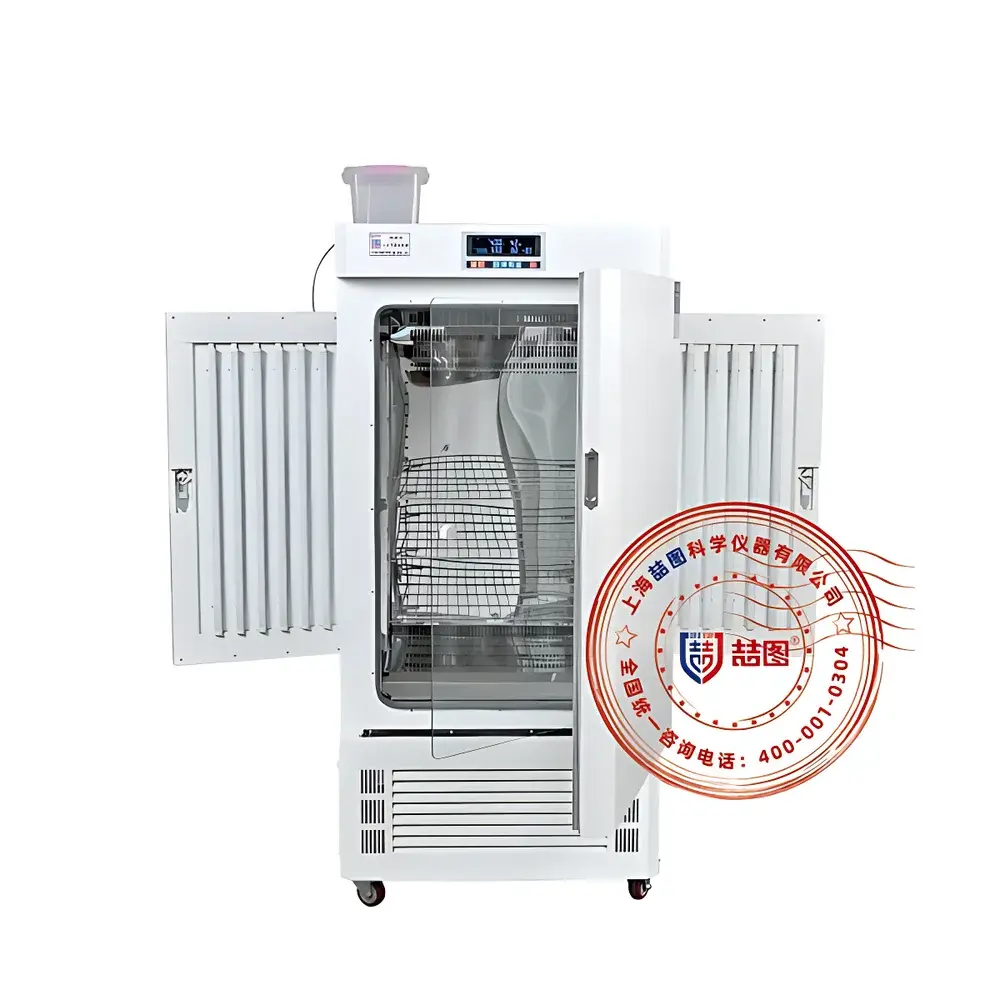
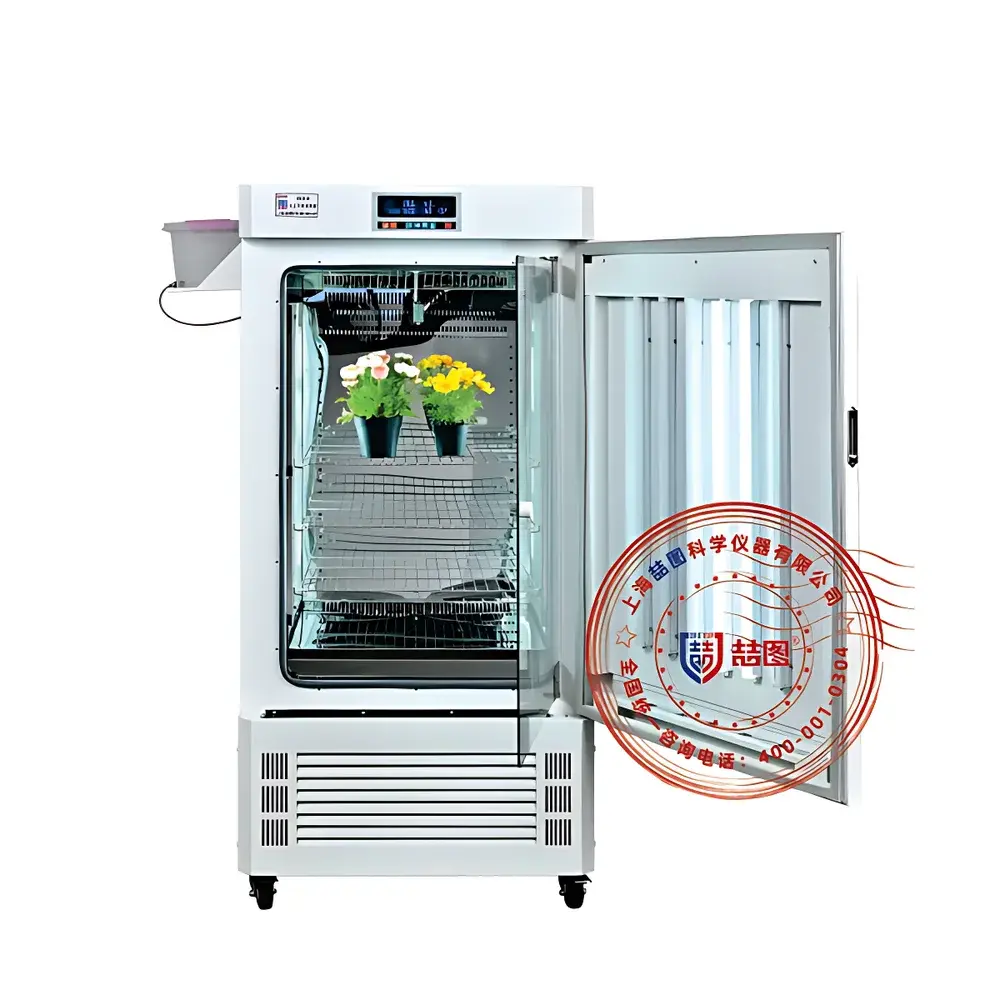
DRETOP DRQ-N400-RBW Multi-Source Artificial Climate Incubator
| Brand | DRETOP |
|---|---|
| Origin | Shanghai, China |
| Manufacturer Type | Direct Manufacturer |
| Instrument Type | Fully Automated (Programmable) |
| Capacity | 400 L |
| Temperature Range | 5–60 °C (with illumination), 0–60 °C (without illumination) |
| Humidity Range | 30–95% RH |
| Illuminance Range | 0–25,000 lx |
| External Dimensions (W×D×H) | 910 × 855 × 1830 mm |
| Refrigerant | Eco-friendly non-CFC |
| Control System | Microprocessor-based PID with touchscreen interface |
| Lighting Configuration | RGBW multi-spectral LED array (Red, Green, Blue, White), independently controllable per panel |
| Illumination Geometry | Triple-face illumination (front door + dual side panels), fully openable for uniform exposure |
| Air Circulation | Axial-flow fan with optimized ducted airflow path |
| Heating Element | Nickel-chromium alloy heater |
| Cooling System | Modular hermetic compressor unit with auto-defrost |
| Safety Features | Over-temperature alarm, door-open detection, power-fail memory, humidity low-level alert, UV/visible light runtime logging |
Overview
The DRETOP DRQ-N400-RBW Multi-Source Artificial Climate Incubator is a programmable, high-precision environmental simulation system engineered for reproducible plant physiology, microbiological culture, and developmental biology studies. It operates on a dual-mode thermal management principle—combining Peltier-assisted cooling and resistive heating under microprocessor-driven PID control—to maintain stable temperature setpoints across defined diurnal cycles. Its core functionality integrates independent regulation of temperature (0–65 °C), relative humidity (30–95% RH), and spectrally tunable illumination (0–25,000 lx), enabling emulation of natural photoperiods, seasonal climate gradients, and controlled abiotic stress conditions. Designed for GLP-compliant laboratories, the incubator supports long-term unattended operation with built-in data logging, audit-trail-capable event recording, and ISO/IEC 17025-aligned calibration traceability pathways.
Key Features
- Triple-face RGBW LED illumination system with individually addressable red (620–780 nm), green (490–570 nm), blue (420–490 nm), white (400–830 nm), and optional violet (380–450 nm) channels—enabling precise spectral composition tuning for photomorphogenesis studies.
- 30-segment programmable controller supporting complex diurnal profiles: simultaneous scheduling of temperature ramping, humidity modulation, light intensity transitions, and spectral ratio shifts (e.g., R:B = 4:1 to 9:1).
- Stainless-steel interior chamber (304 grade) with removable, height-adjustable shelves; reinforced double-glass observation door with magnetic seal and nano-insulating gasket to minimize thermal leakage (<0.8 K/h drift during door closure).
- Modular refrigeration architecture featuring hermetically sealed rotary compressors, copper-aluminum finned evaporators, and intelligent defrost cycling—ensuring continuous operation at ≤65 °C ambient without performance degradation.
- Touchscreen HMI with bilingual (English/Chinese) UI, real-time trend visualization (past 60 min), automated alarm history export (CSV), and configurable user access levels (three-tier password protection with time-limited session enforcement).
- Comprehensive safety suite: over-temperature cutoff (±2 °C hysteresis), door-open interruption protocol, low-humidity shutdown, and power-loss recovery preserving all active program states and sensor logs.
Sample Compatibility & Compliance
The DRQ-N400-RBW accommodates diverse biological specimens—including seedlings, tissue cultures, microbial colonies, insect larvae, and small aquatic organisms—within its 400 L working volume. Its stainless-steel chamber and chemical-resistant surfaces support routine sterilization via 70% ethanol, hydrogen peroxide vapor, or UV-C irradiation (optional add-on). The system complies with IEC 61000-6-3 (EMC emissions), IEC 61000-6-2 (immunity), and meets essential requirements of EU Directive 2014/30/EU (EMC) and 2014/35/EU (LVD). While not certified to FDA 21 CFR Part 11 out-of-the-box, its data logging architecture—featuring timestamped, immutable records with operator ID tagging—supports validation for GxP environments when deployed with supplementary SOPs and electronic signature protocols.
Software & Data Management
Data acquisition occurs at 1-minute intervals for temperature, humidity, illuminance, and operational status (door state, alarm triggers, lighting channel output). All logs are stored internally (≥30 days at default resolution) and exportable via USB 2.0 port in CSV format. The embedded firmware supports remote monitoring via optional RS-485 Modbus RTU interface (compatible with LabVIEW, SCADA, and BMS platforms). Audit trail functionality captures user login/logout events, parameter modifications, and manual override actions—including timestamps, IP addresses (if network-enabled), and reason codes. Firmware updates are performed via signed binary packages to prevent unauthorized modification.
Applications
- Plant phenotyping under controlled photoperiods and spectral quality—e.g., evaluating shade avoidance responses using dynamic R:FR ratios.
- Seed germination assays requiring precise moisture–temperature–light coupling per ISTA guidelines.
- Mycological cultivation where CO2-independent humidity stability is critical (e.g., Agaricus bisporus primordia formation).
- BOD5 testing per APHA Standard Methods 5210B, leveraging stable 20 °C ±0.5 °C holding with minimal vibration transfer.
- Photobioreactor pre-conditioning for microalgae strains prior to scale-up, using calibrated PAR-equivalent irradiance settings.
- Regulatory stability studies (ICH Q1A–Q5C) for botanical extracts under accelerated aging conditions (40 °C/75% RH).
FAQ
What spectral combinations are factory-configured for the RBW module?
The standard configuration delivers independent red (R), blue (B), and white (W) channels per illuminated surface, allowing user-defined mixing ratios. Custom UV-A (320–400 nm) or far-red (730 nm) augmentation is available upon request.
Is humidity control validated across the full 30–95% RH range?
Yes—calibration certificates (NIST-traceable hygrometer reference) confirm ±3% RH accuracy at 25 °C and ±5% RH at extremes (30% and 95%), per ISO 17025-accredited verification reports.
Can the incubator operate continuously for >30 days without maintenance?
Affirmative. The auto-defrost cycle activates only when condensate accumulation exceeds threshold; under typical 25 °C/60% RH operation, intervals exceed 14 days. Compressor duty cycle remains ≤65% even at 60 °C/95% RH.
Does the system support external CO2 or O2 concentration control?
Not natively. Gas modulation requires third-party integration via the analog I/O expansion port (0–10 V / 4–20 mA) and custom valve actuation logic.
How is light uniformity verified across the chamber volume?
Illuminance mapping is conducted per CIE S 023/E:2018 using a calibrated spectroradiometer at 9-point grid (center + eight corners) at each shelf level; typical deviation is ≤±8% of setpoint at 15 cm from source.





