
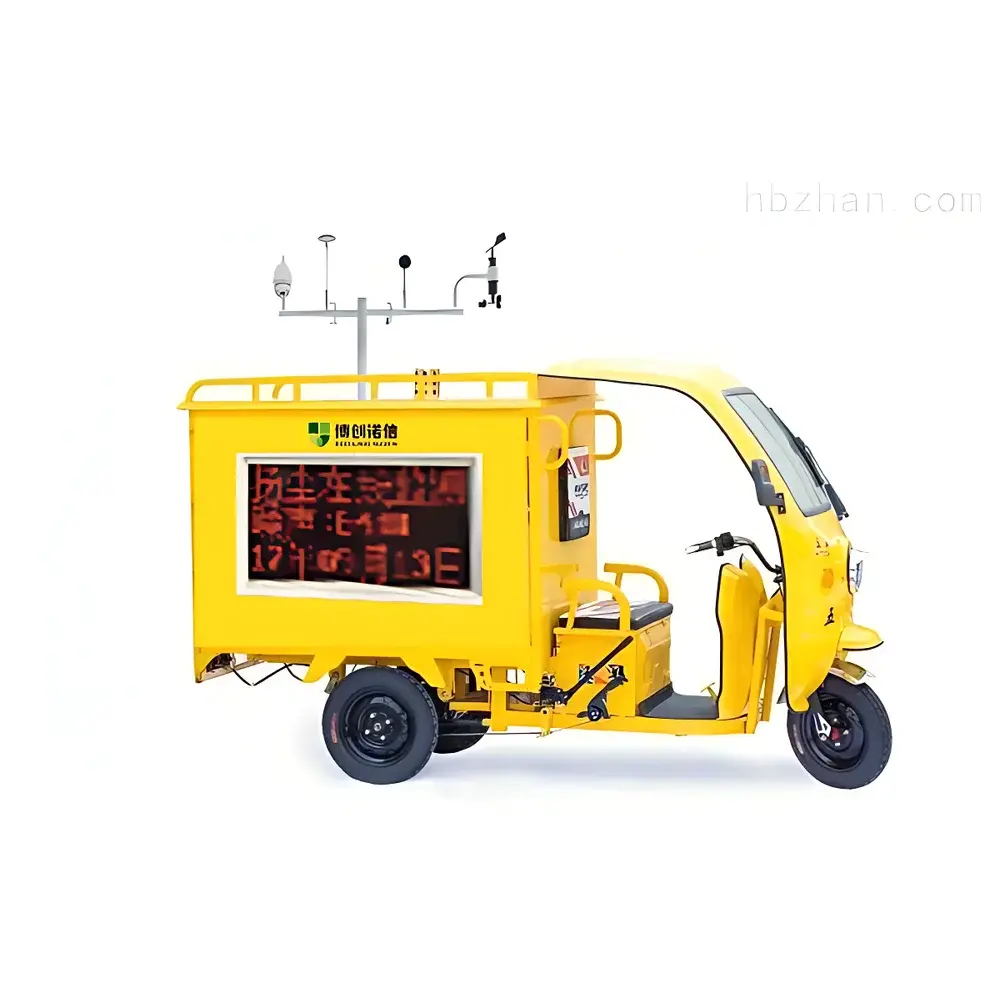
BCNX RD20OC2 Mobile Dust Monitoring Vehicle
| (Origin | Beijing, China |
|---|---|
| Manufacturer Type | Authorized Distributor |
| Origin Category | Domestic (PRC) |
| Model | BCNX RD20OC2 |
| Pricing | Available Upon Request) |
Overview
The BCNX RD20OC2 Mobile Dust Monitoring Vehicle is an integrated, vehicle-mounted environmental monitoring platform engineered for high-precision, real-time measurement and spatially flexible surveillance of particulate matter (PM2.5, PM10), ambient noise, and meteorological parameters—including temperature, humidity, wind speed, and atmospheric pressure. Built upon a ruggedized 36/46 mobile IoT architecture, the system employs standardized optical scattering (for PM), Class 2 sound level metering (IEC 61672-1), and calibrated environmental sensors compliant with national reference methodologies. Its mobility enables dynamic deployment across construction sites, road networks, industrial perimeters, and urban redevelopment zones—eliminating fixed-station blind spots and supporting regulatory enforcement under China’s GB 3095–2012 (Ambient Air Quality Standards) and GB 3096–2008 (Environmental Noise Quality Standards). The platform operates continuously under field conditions, drawing stable power directly from the host vehicle’s 12/24 V DC electrical system.
Key Features
- Multi-sensor integration: Simultaneous acquisition of PM2.5/PM10 mass concentration (μg/m³), A-weighted sound pressure level (dB(A)), and core meteorological variables via certified transducers.
- Real-time georeferenced data logging: Integrated GPS module (±2.5 m CEP) synchronizes all measurements with precise location stamps, enabling spatiotemporal mapping and compliance traceability.
- Onboard LED display: P6.5 pitch, high-brightness imported LED matrix (IP65 rated) provides at-a-glance visualization of live PM, noise, and weather metrics—visible under direct sunlight and adverse weather.
- Ruggedized environmental resilience: IP65-rated enclosure design ensures operational integrity during rain, dust exposure, and temperature fluctuations (–20 °C to +50 °C operating range).
- Automated event response: Programmable threshold-based alarms trigger on-device image capture (via integrated HD camera), timestamped metadata logging, and immediate wireless transmission via 36/46 cellular uplink.
- Modular firmware architecture: Sensor drivers, communication protocols, and data processing modules are decoupled—supporting field-upgradable functionality, third-party sensor integration, and audit-ready configuration control.
Sample Compatibility & Compliance
The BCNX RD20OC2 is validated for continuous monitoring of airborne particulates in non-laboratory, outdoor environments typical of municipal infrastructure projects, quarry operations, bulk material handling facilities, and transportation corridors. All onboard sensors meet metrological requirements specified in GB/T 15432–1995 (ambient PM sampling), JJG 778–2019 (dust monitor calibration), and JJG 669–2003 (noise analyzer verification). Data output formats adhere to HJ 212–2017 (pollutant online monitoring data transmission standard), ensuring interoperability with provincial ecological monitoring platforms and municipal environmental information systems. The system supports GLP-aligned data integrity practices—including immutable timestamps, operator ID tagging, and tamper-evident storage logs.
Software & Data Management
Data acquisition, preprocessing, and telemetry are managed through embedded Linux-based firmware with dual-mode connectivity: primary 4G LTE (36/46 band support) and optional RS485/LoRaWAN fallback. Raw sensor outputs undergo on-device linearization, temperature/humidity compensation, and outlier filtering prior to packetization. Encrypted (AES-128) transmissions conform to HJ 212–2017 frame structure and include digital signatures for source authentication. Local storage retains ≥30 days of 1-minute averaged data (expandable via microSD). Remote configuration, firmware updates, and diagnostic reporting are accessible via HTTPS-secured web interface or MQTT-based enterprise middleware integration. Audit trails comply with basic data governance expectations for environmental compliance documentation.
Applications
- Dynamic compliance verification during construction phase inspections by municipal ecological bureaus.
- Source apportionment support in brownfield remediation—correlating mobile PM gradients with fixed-site baselines.
- Temporary monitoring during road resurfacing, demolition, or soil excavation where permanent stations are impractical.
- Calibration validation and intercomparison campaigns for stationary air quality networks.
- Post-event forensic analysis using time-synchronized video + sensor archives for dispute resolution or regulatory reporting.
FAQ
Does the BCNX RD20OC2 meet international calibration traceability requirements?
It complies with Chinese national verification regulations (JJG series) and references ISO 12103-1 for PM sensor aerosol calibration methodology; however, NIST-traceable certificates require third-party lab validation.
Can the vehicle operate autonomously without driver intervention during monitoring missions?
Yes—predefined patrol routes, dwell times, and sensor activation schedules can be programmed; however, physical deployment, safety checks, and battery/fuel management remain operator responsibilities.
Is raw sensor data exportable in CSV or JSON format for external analytics platforms?
Yes—both local microSD dump and remote API access support structured exports with full metadata headers (UTC timestamps, GPS coordinates, sensor IDs, and QC flags).
What is the maximum continuous operation time on vehicle battery power alone?
Under nominal load (all sensors + LTE + display active), runtime exceeds 8 hours; auxiliary power options (e.g., deep-cycle battery bank) extend field endurance to 48+ hours.
Are firmware updates delivered over-the-air, and do they preserve historical configuration settings?
Yes—OTA updates maintain user-defined thresholds, network credentials, and sensor calibration offsets unless explicitly reset during version migration.
Related Products







