
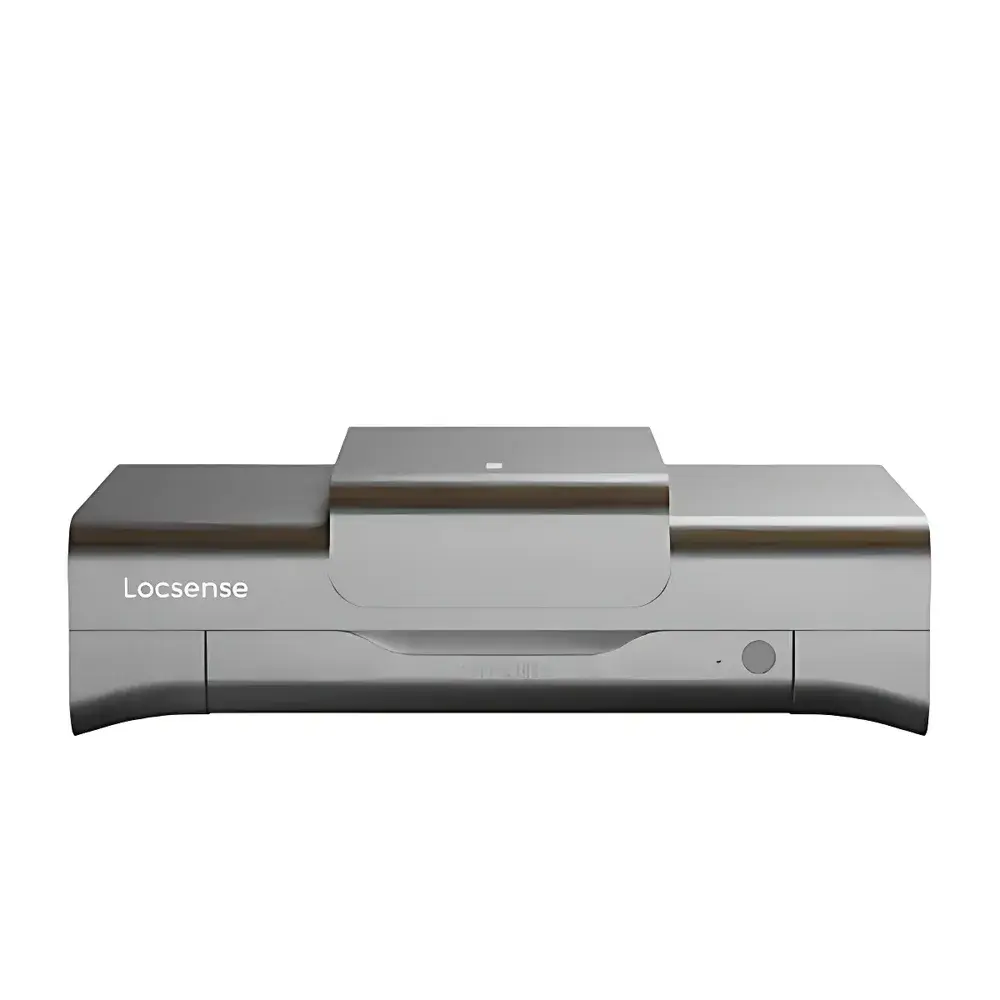
Locsense Artemis ST Trans-Epithelial/Endothelial Electrical Resistance (TEER) Analyzer
| Brand | Locsense |
|---|---|
| Country of Origin | Netherlands |
| Model | Artemis ST |
| AC Voltage Range | 24 V |
| Reference Electrode Input Impedance | 10–4000 Ω |
| Sensitivity | 1 |
| Input Bias Current | 234 pA |
| Frequency Range (Incubator Mode) | 10 Hz – 100 kHz |
| Frequency Range (Benchtop Mode) | 10 Hz – 1 MHz |
| Impedance Measurement Range | 10–4000 Ω |
| Channel Configuration | 1 × 24-well Transwell |
| Operating Temperature | 5–40 °C |
| Dimensions (L×W×H) | 20 × 150 × 90 mm |
| Electrode Material | Gold |
| Sterilization Compatibility | Autoclavable components in contact with cells |
| Compatible Inserts | CellQart, Corning, Greiner, NUNC, VWR 24-well Transwell plates |
| Connectivity | Ethernet, Wi-Fi, D-Sub to PC via SmartSense interface |
| Cleaning Protocol | IPA or ethanol |
Overview
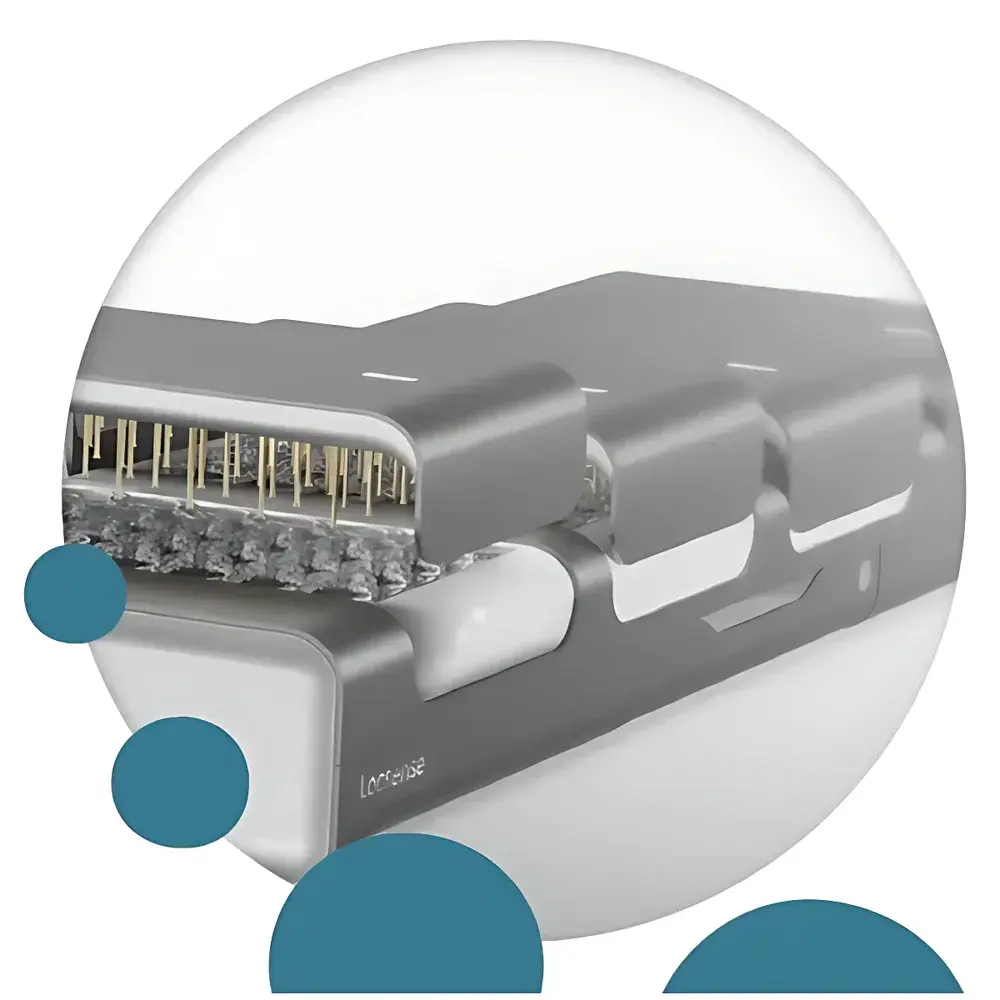
The Locsense Artemis ST is a high-precision, non-invasive trans-epithelial and trans-endothelial electrical resistance (TEER) analyzer engineered for real-time, label-free assessment of cellular barrier integrity in vitro. Unlike conventional endpoint assays, the Artemis ST employs impedance spectroscopy—measuring complex impedance across a frequency range from 10 Hz to 1 MHz—to quantitatively characterize tight junction formation, paracellular permeability, and monolayer confluence without perturbing cell physiology. Designed specifically for integration into standard cell culture workflows, it enables continuous monitoring of barrier function directly inside CO₂ incubators (10 Hz–100 kHz mode) or on the benchtop (10 Hz–1 MHz mode), supporting both kinetic and steady-state TEER profiling. Its architecture centers on gold microelectrodes embedded in a sterilizable, low-profile probe head compatible with industry-standard 24-well Transwell inserts—eliminating electrode polarization artifacts and ensuring reproducible inter-laboratory data.
Key Features
- Single-channel, 24-well parallel measurement capability—enables full-plate TEER acquisition in under 90 seconds per timepoint.
- Autoclavable sensor head with biocompatible gold electrodes—validated for repeated sterilization (121 °C, 20 min, 15 psi) without performance degradation.
- Dual-mode frequency operation: optimized low-noise 10 Hz–100 kHz mode for incubator-integrated long-term monitoring; extended 10 Hz–1 MHz mode for detailed impedance spectroscopy (e.g., Cole-Cole analysis, capacitance estimation).
- Integrated environmental tolerance: operates continuously at 5–40 °C and up to 95% RH—fully compatible with standard humidified CO₂ incubators.
- Reference electrode input impedance of 10–4000 Ω ensures stable potential referencing across variable biological media conductivities, including low-salt formulations used in air-liquid interface (ALI) models.
- Input bias current ≤234 pA minimizes electrochemical interference during low-current impedance measurements, critical for sensitive primary cell and stem-cell-derived monolayers.
Sample Compatibility & Compliance
The Artemis ST is validated for use with commercially available 24-well Transwell systems from Corning, Greiner Bio-One, NUNC, VWR, and CellQart—including polyester, polycarbonate, and collagen-coated membranes (0.4 µm, 1.0 µm, 3.0 µm pore sizes). It supports epithelial (e.g., Caco-2, HaCaT, ARPE-19) and endothelial (e.g., HUVEC, bEnd.3) models under static and dynamic (microfluidic co-culture) conditions. All hardware components contacting cells comply with ISO 10993-5 (cytotoxicity) and USP <87> extractables testing. Data acquisition meets ALCOA+ principles (Attributable, Legible, Contemporaneous, Original, Accurate, Complete, Consistent, Enduring, Available) and supports audit trails required for GLP-compliant preclinical safety studies. While not FDA-cleared as a diagnostic device, its output aligns with ASTM E2921-22 (Standard Guide for In Vitro Barrier Function Assays) and EFSA guidance on non-animal alternative methods.
Software & Data Management
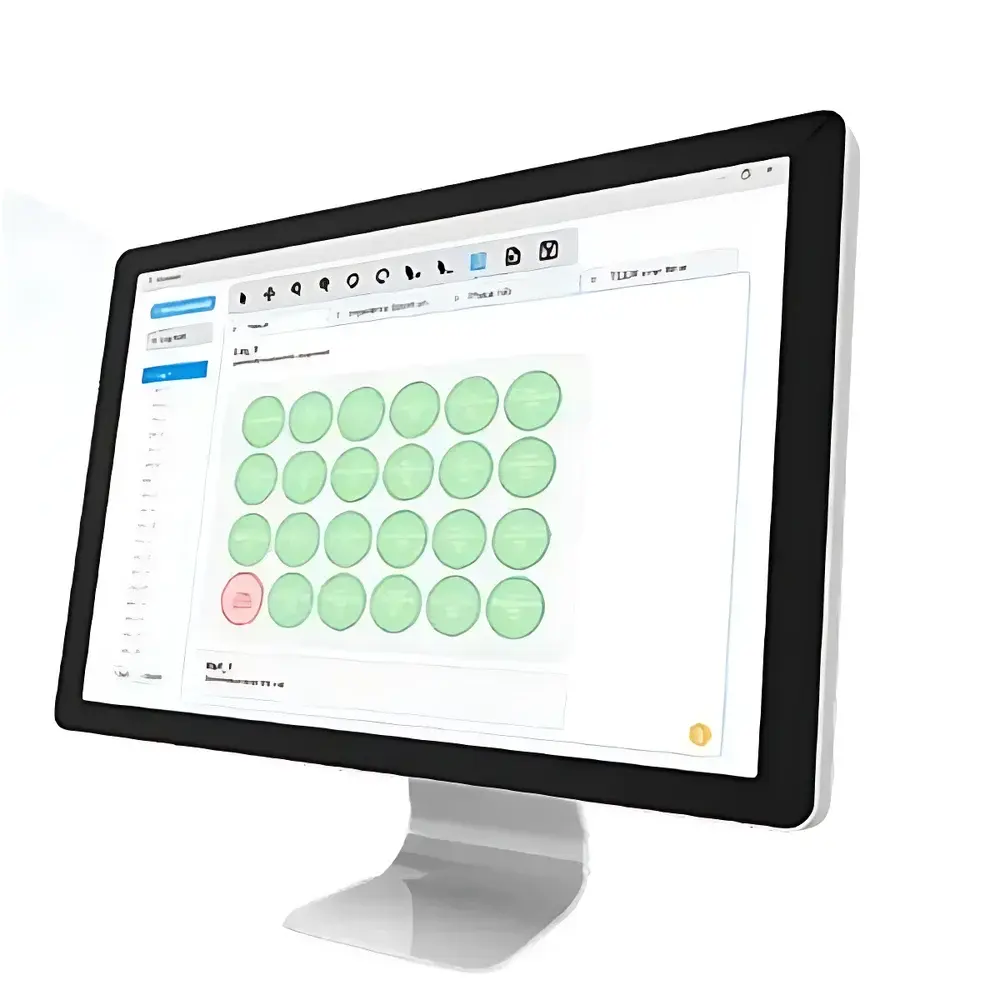
Artemis ST is controlled via the Locsense SmartSense software platform—a CE-marked Class I medical device software (MDD 93/42/EEC compliant). The interface features workflow-driven experiment setup: users select plate layout, assign metadata (cell type, passage number, treatment), define measurement intervals (e.g., hourly for 72 h), and initiate automated runs. All raw impedance spectra (Z′, Z″, phase angle), derived TEER values (Ω·cm²), and quality metrics (electrode contact resistance, signal-to-noise ratio) are timestamped and stored in HDF5 format with embedded MIAME-compliant metadata. Export options include CSV, Excel, and direct integration with Python (via PyArtemis API) or MATLAB for custom modeling. Audit logs record user actions, system events, and calibration history—supporting 21 CFR Part 11 compliance when deployed with electronic signature modules and network-based authentication.
Applications
The Artemis ST serves as a core functional readout in barrier biology research and regulatory science. It is routinely applied in: (1) Predictive toxicology—assessing compound-induced barrier disruption in intestinal (Caco-2/HT29-MTX co-cultures) and dermal (HaCaT/RHE) models per OECD TG 431 and 439; (2) Drug permeability screening—correlating TEER kinetics with Papp values for CNS-penetrant candidates; (3) Disease modeling—quantifying barrier dysfunction in inflammatory bowel disease (IBD) and diabetic retinopathy organoids; (4) Biomaterial evaluation—testing scaffold-induced epithelialization in wound-healing assays; and (5) Quality control of induced pluripotent stem cell (iPSC)-derived barriers—validating functional maturation prior to high-content imaging or electrophysiology.
FAQ
Can the Artemis ST be used inside a CO₂ incubator?
Yes—the instrument is rated for continuous operation at 5–40 °C and 95% relative humidity, with dedicated low-frequency mode (10 Hz–100 kHz) optimized for stable long-term incubator deployment.
Is calibration required before each experiment?
No routine recalibration is needed; factory calibration is traceable to NIST standards. A daily verification using the supplied 1000 Ω precision resistor is recommended for GLP workflows.
Which Transwell insert brands are validated?
Corning Costar, Greiner Bio-One, NUNC, VWR, and CellQart 24-well inserts—across all standard membrane materials (PET, PC, collagen-coated) and pore sizes (0.4–3.0 µm).
Does the system support multi-frequency impedance spectroscopy for equivalent circuit modeling?
Yes—benchtop mode provides full 10 Hz–1 MHz sweeps, enabling fitting to Randles or modified Randles circuits to deconvolute membrane resistance, capacitance, and access resistance components.
Are consumables required beyond standard Transwell inserts?
No—no proprietary electrodes, gels, or reagents are needed. Only standard cell culture media and sterile technique are required for operation.






