
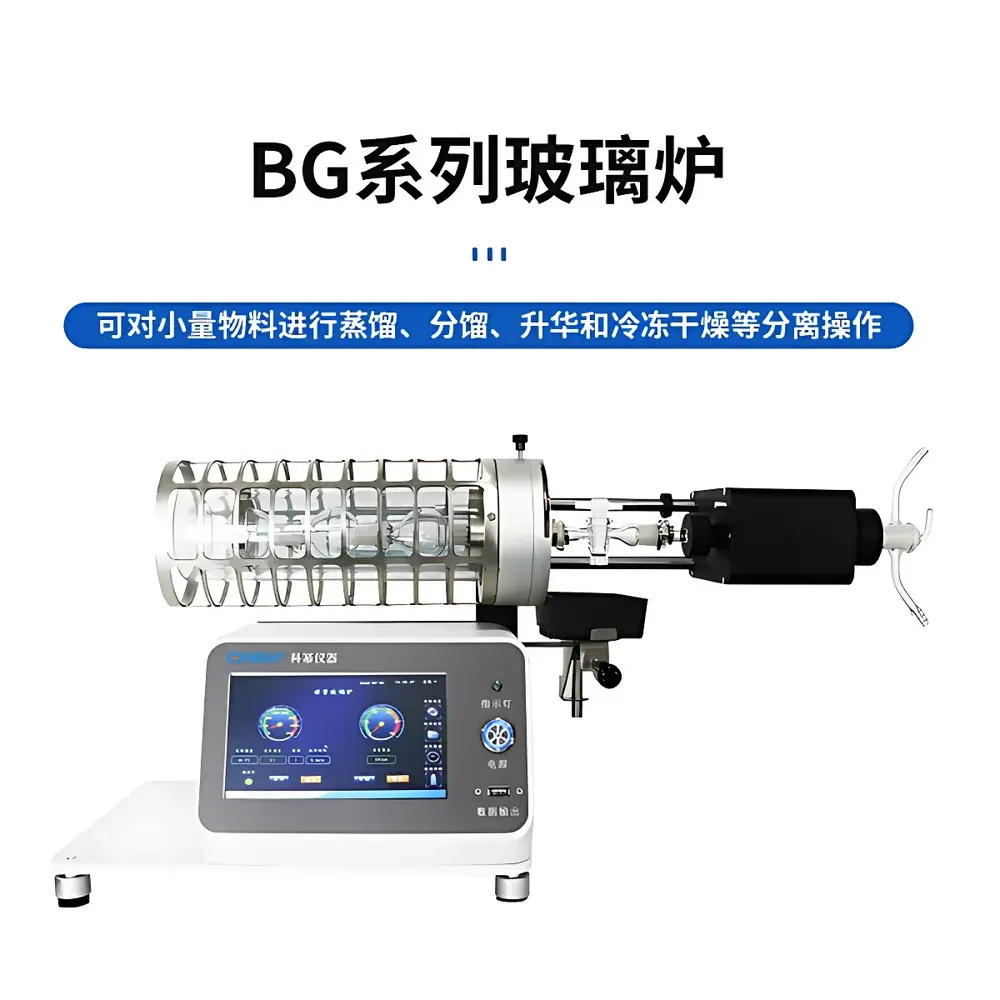
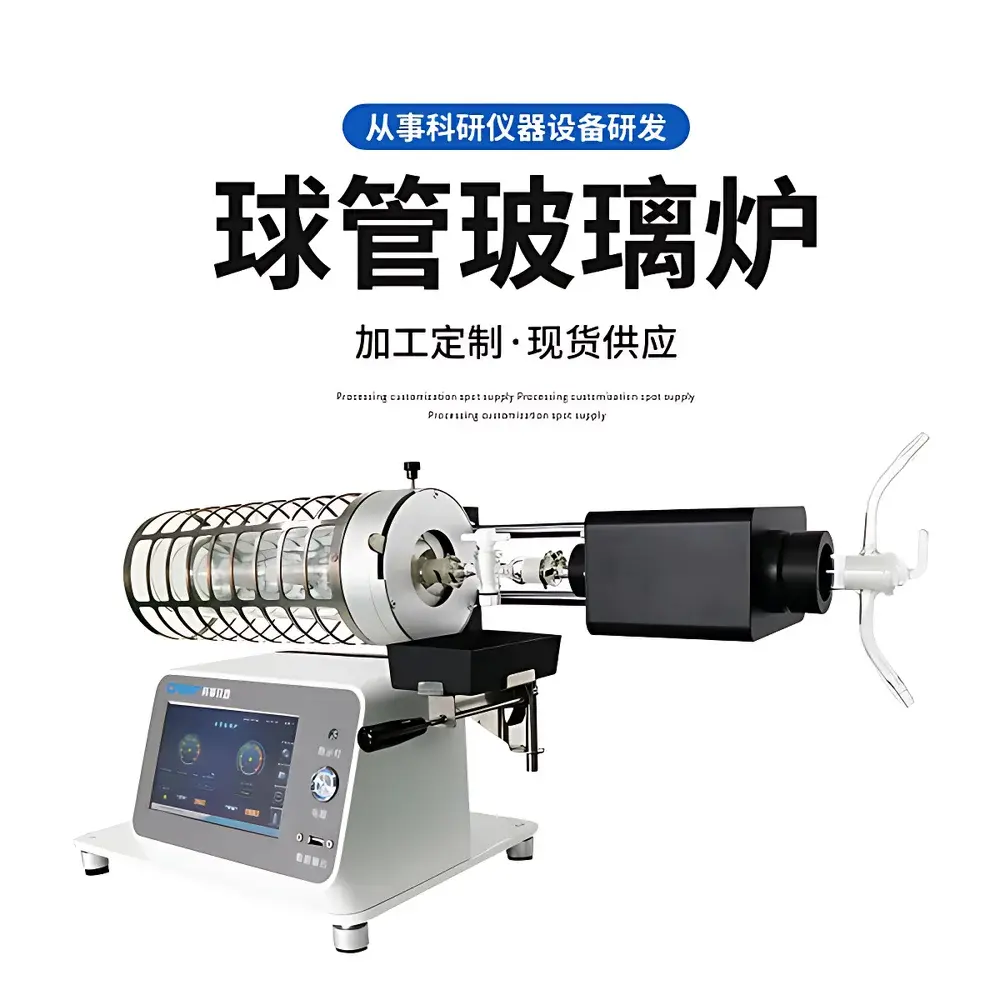
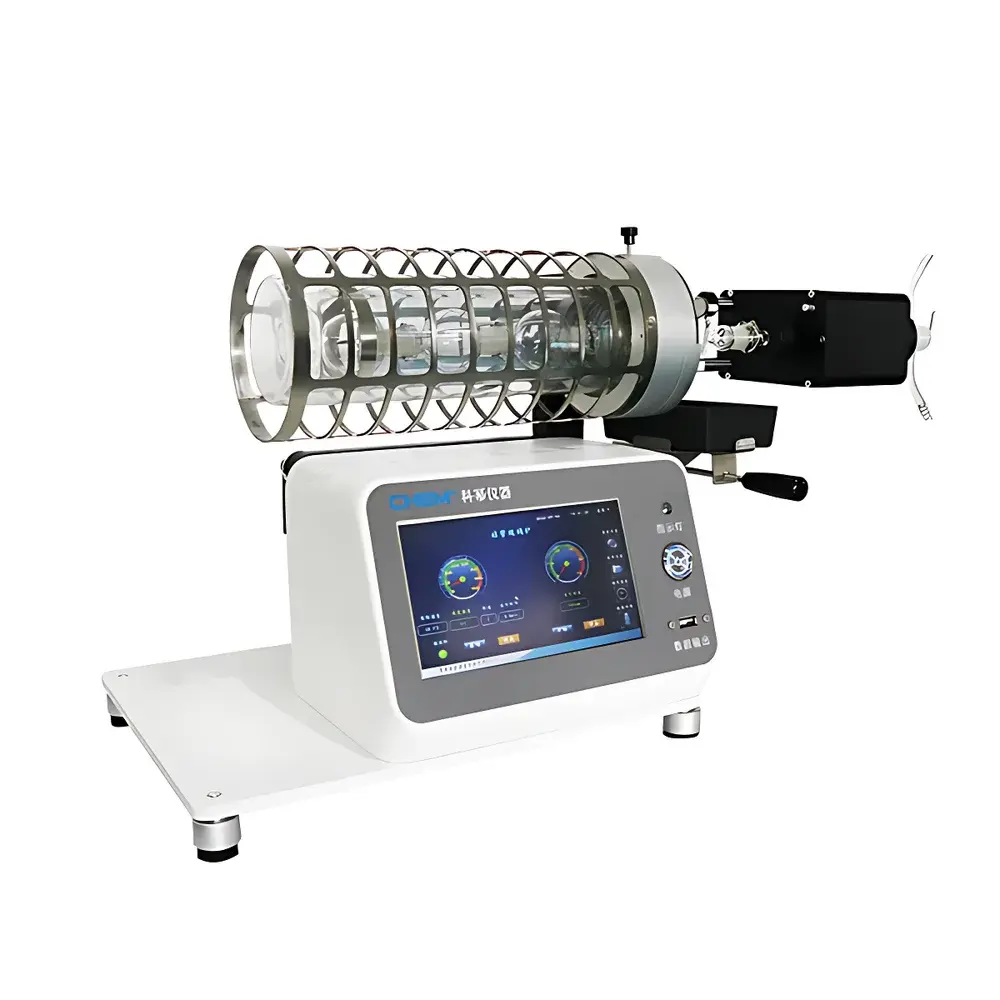
CHEMn BG-350 Ball-Tube Glass Furnace
| Brand | CHEMn |
|---|---|
| Origin | Anhui, China |
| Model | BG-350 |
| Instrument Type | Tube Furnace |
| Max Temperature | 300 °C (short-term) |
| Operating Temperature Range | 50–280 °C |
| Temperature Control Accuracy | ±5 °C (at furnace center, ≤280 °C) |
| Max Power | 1 kW |
| Heating Method | Resistive Wire |
| Internal Dimensions | 600 × 260 × 300 mm |
| Nominal Capacity | 10–60 mL per tube |
| Rotational Speed | 0–50 rpm |
| Vacuum Limit | 30 mbar |
| Tube Quantity | 2–4 (configurable by individual tube volume) |
| Weight | 15 kg |
| Power Supply | AC 220 V, 50/60 Hz |
Overview
The CHEMn BG-350 Ball-Tube Glass Furnace is a compact, programmable thermal processing system engineered for precise low-temperature thermal treatment of small-volume samples in glass reaction vessels. Unlike conventional muffle furnaces, the BG-350 integrates rotational motion with transparent quartz tube heating—enabling simultaneous controlled heating, gentle agitation, and real-time visual monitoring of sample behavior under inert or vacuum conditions. Its core architecture employs electrically conductive-coated fused quartz tubes as both containment and resistive heating elements, delivering rapid thermal response and uniform axial temperature distribution up to 300 °C. Designed for applications requiring thermal stability below 280 °C—such as solvent removal, fractional distillation of heat-sensitive compounds, sublimation, and low-temperature drying—the BG-350 operates within ASTM E29 and ISO/IEC 17025-aligned thermal control tolerances, supporting GLP-compliant workflows where traceability and repeatability are critical.
Key Features
- Rotational capability (0–50 rpm) with adjustable tilt angle (0° to +90°), enabling uniform film formation and preventing localized overheating during drying or distillation
- 30-segment programmable temperature ramping and soaking profiles, supporting complex multi-step thermal protocols
- Optically transparent conductive quartz tube assembly for direct visual inspection of phase transitions, color changes, or thermal decomposition events
- Vacuum-compatible design (down to 30 mbar) with optional inert gas purging (N₂ or Ar) to suppress oxidation or hydrolysis
- Compact footprint (600 × 260 × 300 mm) and energy-efficient 1 kW resistive heating system, minimizing standby losses and lab space requirements
- No internal metal contact surfaces—eliminating cross-contamination risks common in ceramic or metallic furnace chambers
Sample Compatibility & Compliance
The BG-350 accommodates standard borosilicate or fused quartz ball-tube configurations (10–60 mL nominal volume per tube), with modular support for 2–4 tubes depending on selected capacity. It is compatible with volatile organic solvents (e.g., diethyl ether, acetone, hexane), thermally labile natural products, pharmaceutical intermediates, and hygroscopic salts. The system meets structural safety requirements per IEC 61010-1 for laboratory electrical equipment and supports documentation practices aligned with FDA 21 CFR Part 11 when paired with validated data logging software. All temperature setpoints and rotational parameters are traceable via onboard non-volatile memory, satisfying basic audit trail needs for ISO 9001 and GLP environments.
Software & Data Management
The BG-350 is operated via an integrated digital controller with LED display and tactile keypad, supporting manual mode and full 30-step program execution. Optional RS-485 or USB interface enables connection to third-party SCADA or LIMS platforms for centralized parameter logging. Raw operational data—including actual temperature (measured via embedded K-type thermocouple), setpoint, rotation speed, and elapsed time—is timestamped and exportable in CSV format. While the base unit does not include built-in electronic signature or user-role management, its deterministic control logic and hardware-based thermal cutoffs (activated at 310 °C) ensure functional safety compliance without reliance on software layers.
Applications
- Low-boiling-point solvent recovery from reaction mixtures (e.g., THF, dichloromethane) via gentle rotary distillation
- Controlled sublimation of camphor, iodine, or caffeine under reduced pressure
- Residual solvent removal from APIs and fine chemicals under nitrogen blanket
- Thermal desolvation of MOFs and coordination polymers while preserving crystallinity
- Accelerated stability testing of moisture-sensitive formulations using programmable ramp-and-hold drying cycles
- In-situ observation of melt crystallization or polymorphic transitions in transparent glass reactors
FAQ
Can the BG-350 be used for atmospheric-pressure distillation?
Yes—operation at ambient pressure is fully supported; vacuum or inert gas modes are optional enhancements.
Is calibration certificate included with shipment?
A factory calibration report (traceable to NIM standards) is provided; on-site verification using external reference thermometers is recommended prior to first use.
What maintenance is required for long-term reliability?
Annual inspection of quartz tube integrity, thermocouple contact resistance, and rotary seal lubrication is advised; no consumables beyond standard lab-grade quartzware are required.
Does the system meet CE or UL certification requirements?
It complies with CE marking directives (EMC Directive 2014/30/EU and LVD Directive 2014/35/EU); UL listing is not available but design adheres to equivalent IEC 61010-1 safety principles.
Can custom tube geometries be accommodated?
Yes—standard mounting fixtures accept ISO-KF 25 or CF-35 flanged quartz tubes; OEM integration with non-standard diameters requires mechanical adapter design review.



