
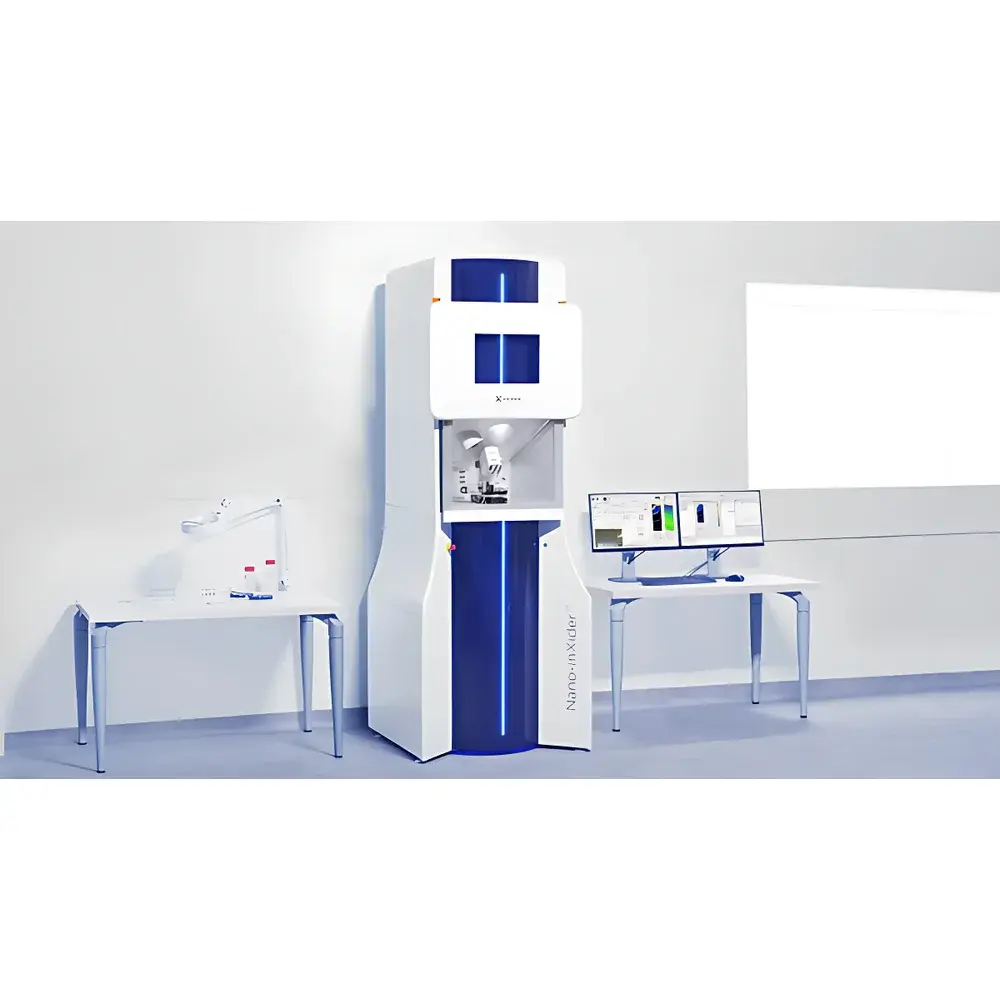
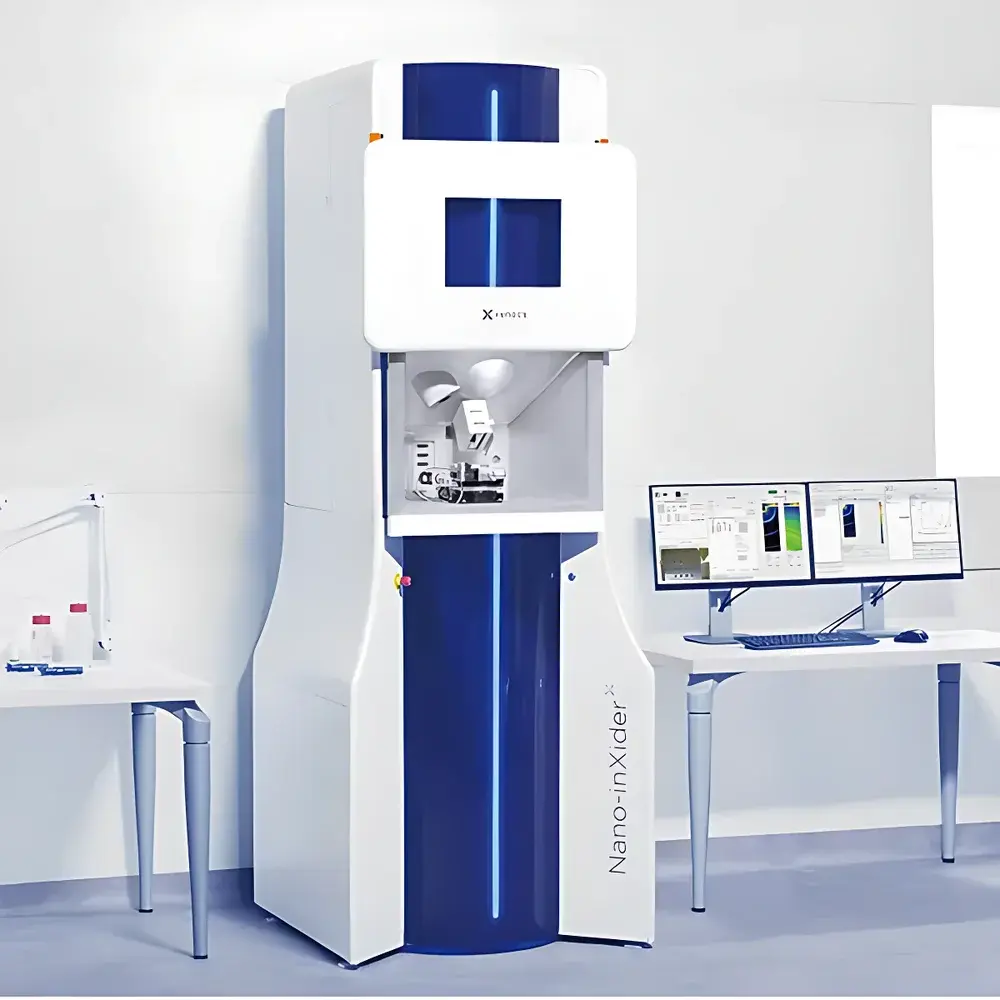
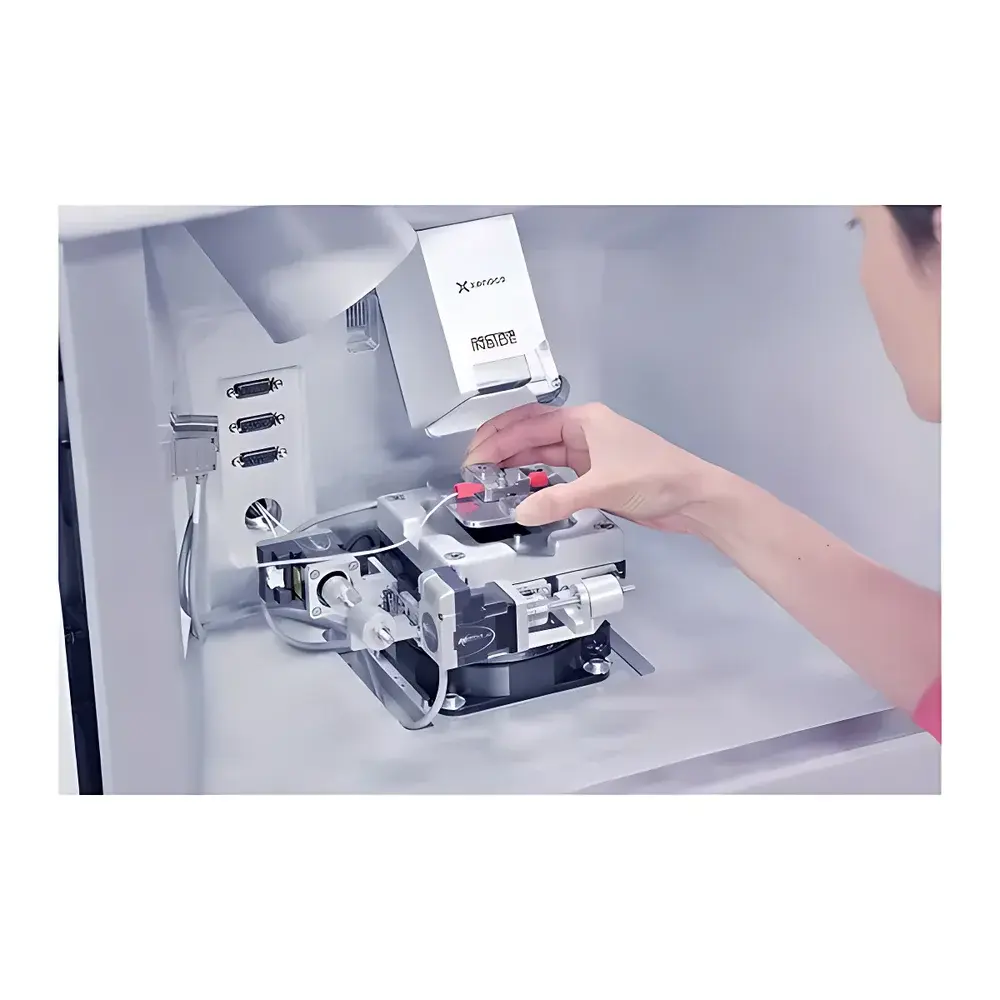
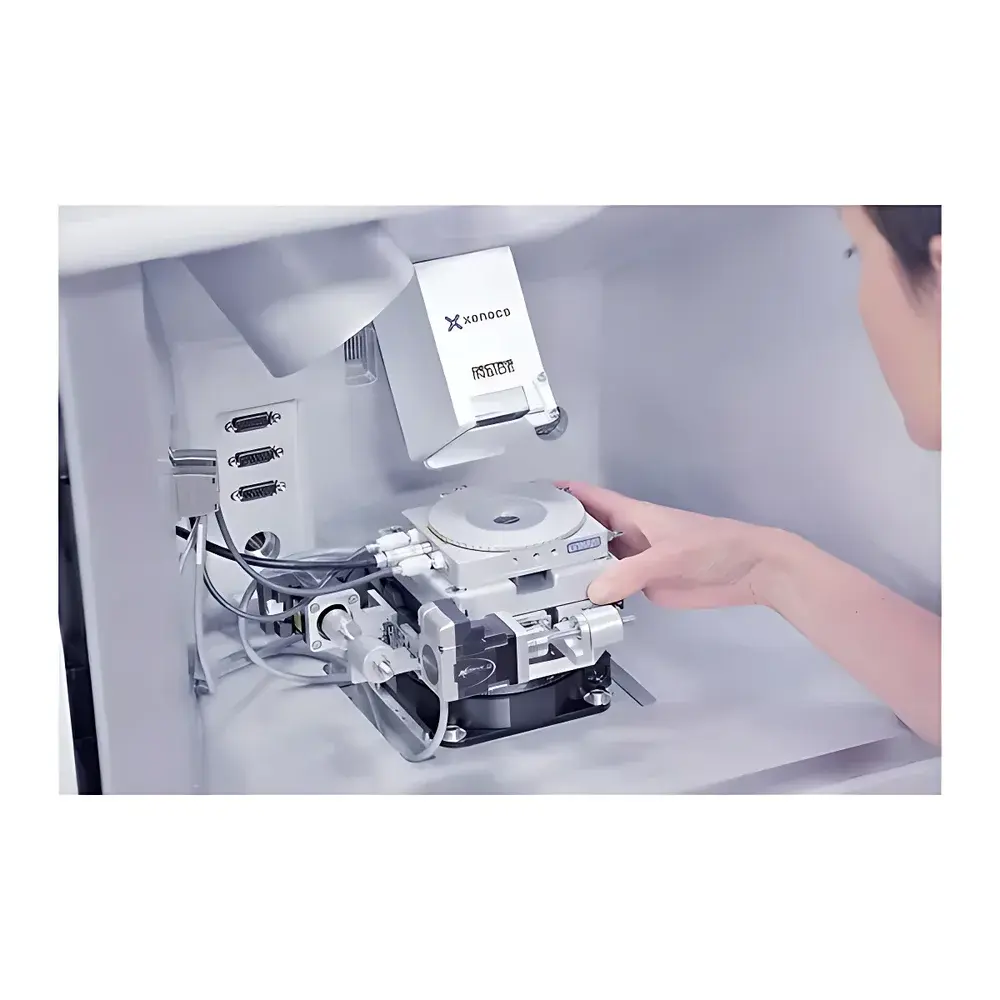
Xenocs Nano-inXider Small-Angle X-ray Scattering (SAXS) Instrument
| Brand | Xenocs |
|---|---|
| Origin | France |
| Model | Nano-inXider |
| Instrument Type | Integrated SAXS/WAXS System |
| Measurement Range | q_min ≈ 0.006 Å⁻¹ (corresponding to ~250 nm real-space correlation length, validated with SiO₂ nanoparticle standard) |
| Beam Size | 30 µm (FWHM) |
| Sample Consumption | < 1 µL for liquid samples |
| Acquisition Time | 1–30 min per measurement |
| Detector Mode | Virtual Detector enabled for extended WAXS angular coverage |
Overview
The Xenocs Nano-inXider is a compact, laboratory-scale integrated small-angle and wide-angle X-ray scattering (SAXS/WAXS) instrument engineered for high-resolution structural characterization of nanoscale materials. It operates on the fundamental principles of coherent X-ray scattering, where monochromatic synchrotron-grade Cu Kα radiation (λ = 1.5418 Å) interacts with electron density fluctuations in heterogeneous samples. Scattered intensity as a function of momentum transfer *q* (q = 4πsinθ/λ) is recorded simultaneously across both SAXS (0.006–0.5 Å⁻¹) and WAXS (0.5–6 Å⁻¹) regimes—enabling concurrent analysis of nanoscale morphology (e.g., particle size, shape, ordering) and atomic/molecular crystallinity (e.g., lattice parameters, phase identification). Unlike conventional benchtop SAXS systems, the Nano-inXider integrates a patented Xeuss optical design featuring a high-brilliance microfocus source, multilayer optics, and a vacuum-compatible flight path—delivering exceptional signal-to-noise ratio and low-background performance without requiring beamstop removal or post-acquisition masking.
Key Features
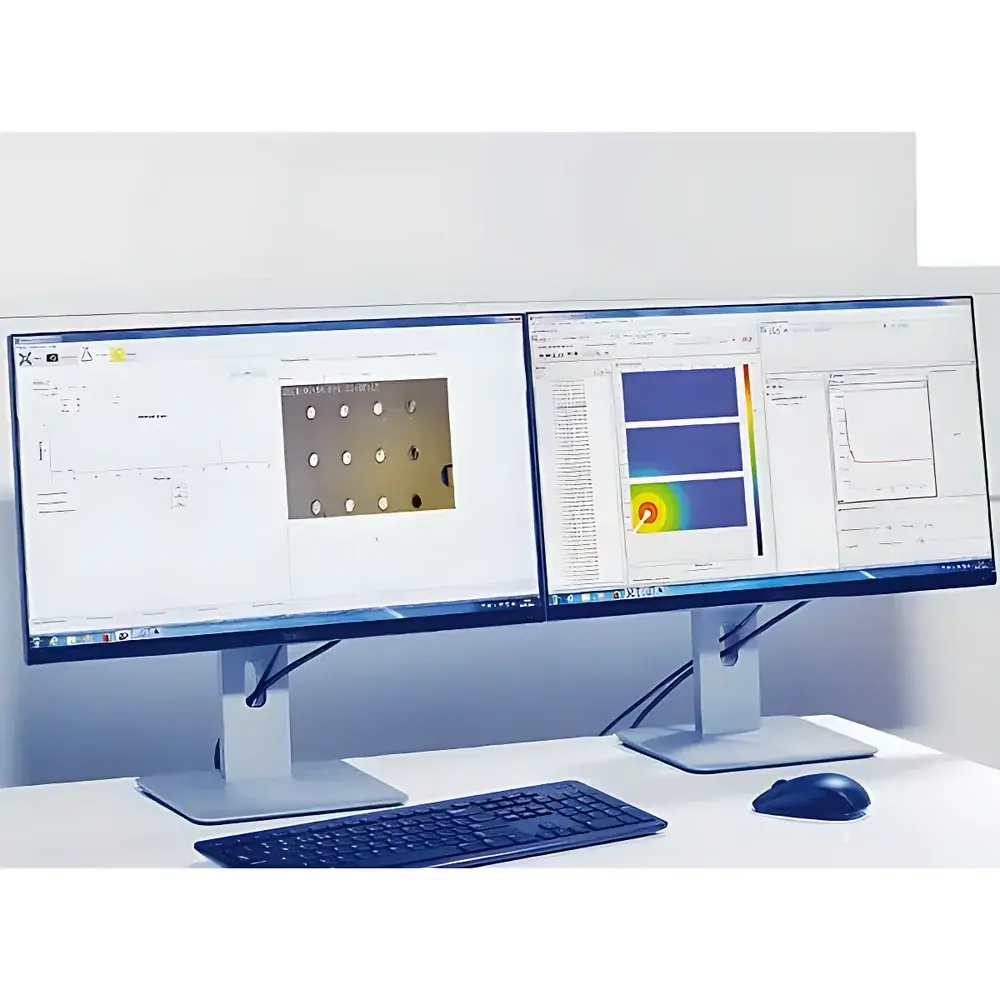
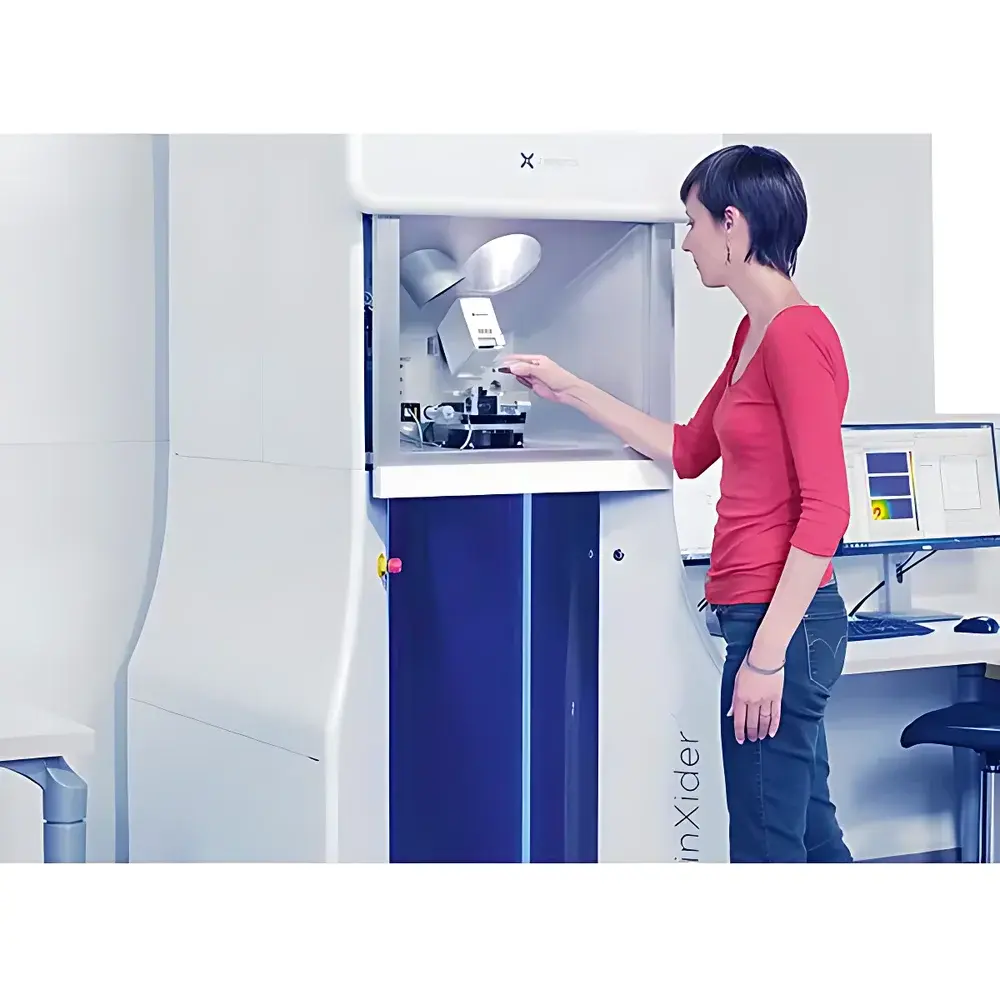
- Automated end-to-end workflow—from sample loading and alignment to data reduction and modeling—controlled via the unified XSACT software platform.
- Beamstop-free acquisition enabled by a high-dynamic-range Pilatus3 detector and optimized scatter rejection optics, eliminating dead-zone artifacts and enabling continuous *q*-space coverage from SAXS into the WAXS regime.
- Simultaneous SAXS/WAXS data collection within a single exposure, preserving temporal and thermal equivalence between nanoscale and atomic-scale structural responses.
- Compact footprint (≤ 1.2 m²) with modular shielding, designed for installation in standard ISO Class 7 cleanrooms or regulated QC laboratories without dedicated radiation vaults.
- Virtual Detector mode dynamically extends the effective WAXS angular range by up to 30% through geometric re-binning and intensity interpolation—enhancing crystallite size and strain resolution without hardware modification.
- Optimized for ultra-low sample consumption: compatible with capillary, quartz-glass, or silicon nitride membrane cells; supports in situ/operando studies under controlled temperature (−20 °C to 150 °C), humidity, or gas environments (optional accessories).
Sample Compatibility & Compliance
The Nano-inXider accommodates a broad spectrum of sample forms—including colloidal dispersions, polymer melts, lyophilized powders, thin films, gels, and porous monoliths—with minimal preparation requirements. Its 30 µm microbeam enables spatially resolved mapping of heterogeneous systems (e.g., gradient membranes or coated substrates) via motorized XYZ stages. All instrumentation complies with IEC 61000-6-3 (EMC), IEC 61000-6-4 (emissions), and EN 61000-6-2 (immunity) standards. Data acquisition and processing workflows support audit-trail generation and electronic signature capabilities aligned with FDA 21 CFR Part 11 and EU Annex 11 requirements when deployed in GLP/GMP-regulated environments (e.g., pharmaceutical formulation development per USP <429> and ICH Q5E).
Software & Data Management
XSACT v4.x serves as the unified control, analysis, and reporting environment. It includes built-in modules for primary data reduction (background subtraction, radial integration, absolute intensity calibration using silver behenate or water), model-free analysis (Guinier, Porod, Kratky, and invariant evaluation), and advanced fitting (core-shell sphere, cylinder, lamellar, fractal, and form-factor convolution models). Raw and processed datasets are stored in HDF5 format with embedded metadata (instrument configuration, sample ID, environmental conditions), ensuring FAIR (Findable, Accessible, Interoperable, Reusable) data principles. Integration with third-party tools—including SasView, ATSAS, and Python-based SciPy/Scikit-learn pipelines—is supported via standardized NeXus-compatible APIs.
Applications
The Nano-inXider delivers quantitative structural insights critical to R&D and quality control across multiple regulated and industrial domains. In nanomaterials science, it characterizes core–shell architecture, aggregation state, and interfacial curvature in lipid nanoparticles (LNPs) and polymeric micelles. In pharmaceutical development, it monitors polymorphic transitions during hot-melt extrusion and quantifies amorphous content in spray-dried dispersions. In food science, it resolves protein–polysaccharide complexation and fat crystal network evolution. In energy materials, it evaluates pore size distribution and connectivity in catalyst supports and battery separators. In cosmetics, it correlates rheological behavior with surfactant self-assembly and lamellar repeat distances in emulsions.
FAQ
What is the minimum detectable particle size using the Nano-inXider?
The system achieves reliable detection down to ~1 nm radius (via Guinier analysis) and resolves structural correlations up to ~250 nm (as verified against NIST-traceable SiO₂ nanoparticle standards), depending on sample contrast and exposure time.
Can the Nano-inXider perform time-resolved measurements?
Yes—kinetic series with time resolution as low as 1 second per frame are achievable using triggered acquisition and fast-readout detectors, supporting reaction monitoring, gelation kinetics, and crystallization onset studies.
Is remote operation supported for multi-site laboratories?
XSACT includes secure client-server architecture with TLS-encrypted communication, enabling supervised remote access, queue management, and collaborative data review across geographically distributed teams.
Does the system require liquid nitrogen or external chiller infrastructure?
No—the microfocus X-ray source and detector operate air-cooled; optional Peltier-controlled sample stages eliminate dependency on cryogenic utilities.
How is calibration traceability maintained?
Factory calibration uses NIST SRM 660c (LaB₆) and SRM 676a (silver behenate); users can perform routine verification using certified reference materials and automated calibration routines embedded in XSACT.
Related Products





