
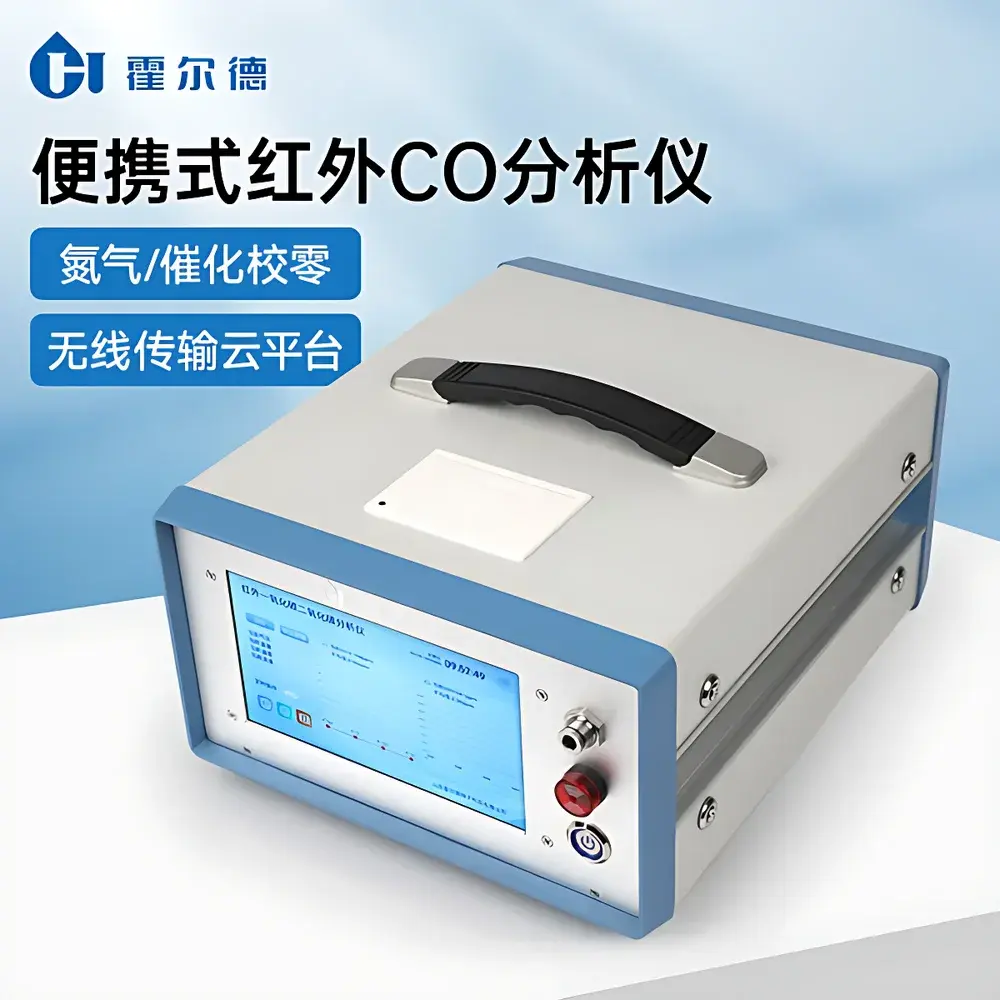
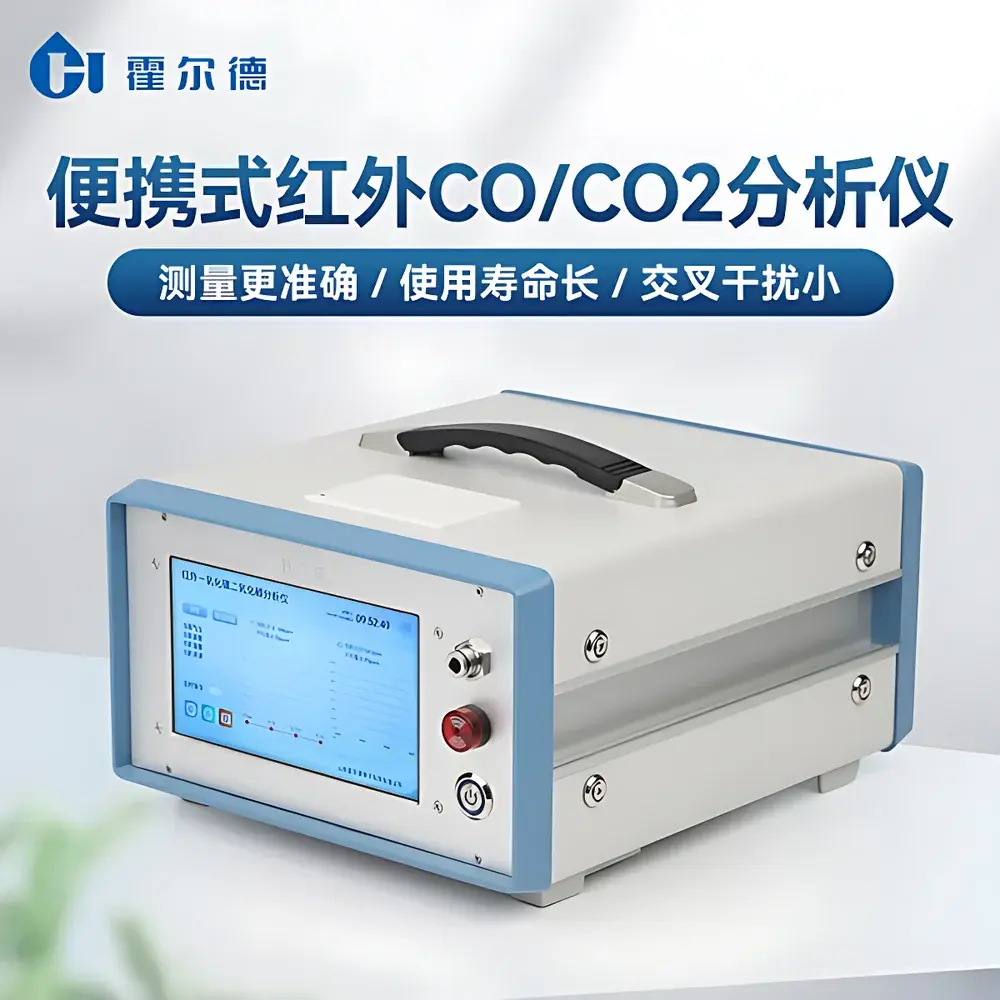
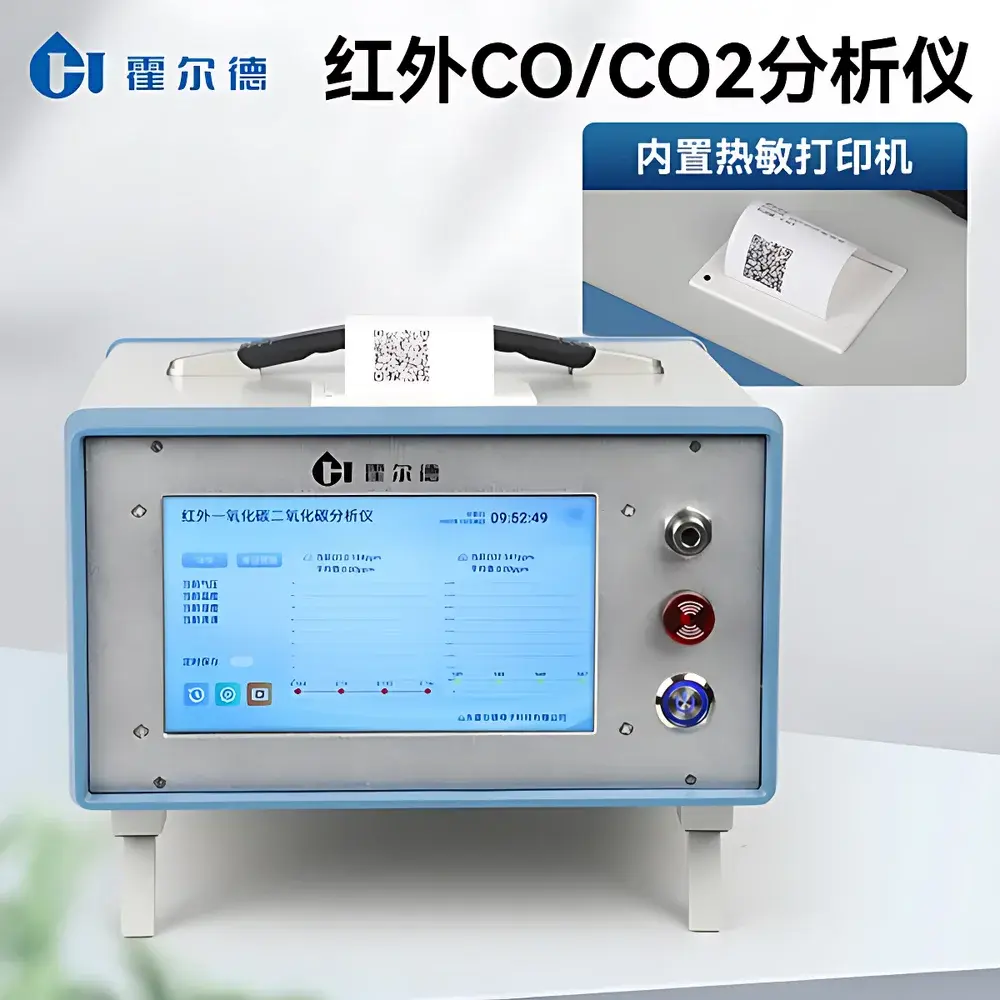
Horde Electric HD-HW100A Portable NDIR Carbon Monoxide Analyzer
| Brand | Horde Electric |
|---|---|
| Origin | Shandong, China |
| Model | HD-HW100A |
| Instrument Type | Portable |
| Detection Principle | Non-Dispersive Infrared (NDIR) |
| Target Gas | Carbon Monoxide (CO) |
| Multi-Component Capability | Yes |
| Repeatability | ≤1.0% |
| Response Time (T90) | ≤90 s |
| Linearity Error | ≤±2% F.S. |
| Operating Temperature Range | -10°C to 50°C |
| Data Storage Capacity | >100,000 records |
| Battery Life | >8 h (fully charged) |
| Display | 7-inch capacitive touchscreen (Android OS) |
| Connectivity | Wi-Fi, USB host/device, cloud platform integration |
| Calibration Options | N₂ zeroing & catalytic zeroing |
| Environmental Compensation | Integrated temperature & humidity sensors with real-time algorithmic correction |
| Flow Measurement | Optional digital mass flow sensor |
| Data Output | ppm / mg/m³ (user-switchable) |
| Regulatory Compliance | JJG635–2011, HJ965–2018, GB/T18204.2–2014, GB9801–1988, GBZ/T300.37–2017 |
Overview
The Horde Electric HD-HW100A is a portable, field-deployable non-dispersive infrared (NDIR) carbon monoxide (CO) analyzer engineered for high-accuracy ambient air monitoring in occupational and environmental settings. It operates on the fundamental spectroscopic principle that CO molecules exhibit characteristic absorption bands near 4.6 µm in the mid-infrared region; the instrument quantifies concentration by measuring attenuation of infrared radiation across a precisely tuned optical path. Unlike electrochemical or metal oxide semiconductor sensors, NDIR detection delivers inherent stability, minimal drift over time, and negligible cross-sensitivity to common interferents such as CO₂, CH₄, or water vapor—critical for reliable measurements in complex real-world atmospheres. Designed for compliance with Chinese national metrological verification regulations and environmental monitoring standards—including JJG635–2011, HJ965–2018, and GBZ/T300.37–2017—the HD-HW100A meets traceability requirements for routine surveillance, indoor air quality (IAQ) assessments, and emergency response applications.
Key Features
- 7-inch Android-based capacitive touchscreen interface enabling simultaneous visualization of real-time CO concentration, moving average, ambient temperature, relative humidity, barometric pressure, and volumetric flow rate (with optional sensor)
- Integrated thermal printer supporting configurable print templates—users may selectively enable/disable output of calibration parameters, timestamps, or environmental metadata
- Cloud-enabled data management via built-in Wi-Fi module; encrypted upload to secure web portal accessible from desktop browsers or mobile devices
- Dual zeroing methodology: nitrogen gas purging and catalytic oxidation zeroing—ensuring robust baseline stability under variable field conditions
- Active temperature-controlled optical chamber with Peltier heating, maintaining internal sensor environment between 35–40°C to mitigate condensation and thermal drift during low-temperature operation (down to –10°C ambient)
- Automatic solenoid valve switching between zero and measurement cycles—eliminating manual valve manipulation and reducing operator error
- Real-time environmental compensation using co-located high-precision thermistor and capacitive humidity sensors, coupled with proprietary algorithmic correction per ISO 8573-1 and GB/T18204.2–2014 Annex C guidelines
- User-defined auto-storage intervals (1 s to 24 h), synchronized with internal RTC clock; timestamped records support GLP-compliant audit trails
- Expandable storage architecture accommodating >100,000 measurement records with full metadata (GPS coordinates optional via external Bluetooth module)
- Rechargeable lithium-ion battery pack rated for ≥8 hours continuous operation at 25°C; supports hot-swappable battery exchange in multi-shift deployments
Sample Compatibility & Compliance
The HD-HW100A is validated for direct analysis of ambient air, indoor workplace air, tunnel exhaust, and combustion flue gas streams (diluted to safe CO levels). Its NDIR optical path is optimized for sampling volumes ranging from 0.5 to 2.0 L/min, compatible with standard Gilian or SKC sampling pumps. The analyzer conforms to Chinese regulatory frameworks governing occupational exposure limits (OELs) and environmental quality standards, including GBZ 2.1–2019 (Workplace Hazardous Factors Exposure Limits) and HJ 633–2012 (Environmental Air Quality Standards). While not certified to EU ATEX or IECEx directives, its ingress protection rating (IP54) ensures operational integrity in dusty or light-rain field environments. All firmware and calibration procedures adhere to metrological traceability chains referenced to NIM (National Institute of Metrology, China) primary standards.
Software & Data Management
Firmware is upgradable via USB or OTA (over-the-air) mechanisms, with version-controlled release notes archived on the manufacturer’s technical support portal. Raw data exports follow CSV/Excel-compatible formats compliant with ASTM E2500–18 (Standard Guide for Specification, Design, and Verification of Pharmaceutical and Biopharmaceutical Manufacturing Systems) metadata conventions. Cloud platform access includes role-based permissions, customizable dashboards, statistical summaries (min/max/mean/std dev), and automated PDF report generation. Audit logs record all critical events—including calibration actions, parameter changes, and user logins—satisfying basic requirements for 21 CFR Part 11 electronic record retention when deployed in GxP-aligned workflows.
Applications
- Indoor air quality audits in schools, hospitals, office buildings, and public transportation hubs
- Ongoing occupational hygiene monitoring in boiler rooms, parking garages, welding facilities, and generator enclosures
- Field validation of fixed-site CO monitoring networks during QA/QC audits
- Emergency response screening following fire incidents or incomplete combustion events
- Research-grade emission profiling of small-scale combustion sources (e.g., biomass stoves, portable heaters)
- Compliance verification against local environmental protection bureau (EPB) enforcement thresholds
FAQ
What is the recommended calibration frequency for routine use?
For daily field operations, zero calibration before each measurement session and span calibration every 7 days are advised; more frequent calibration is required if operating in high-humidity or particulate-laden environments.
Does the instrument support external GPS tagging of measurement locations?
Yes—via Bluetooth pairing with certified GNSS receivers; geotagged data syncs automatically to the cloud platform upon upload.
Can the HD-HW100A measure CO₂ simultaneously?
No—it is optimized exclusively for CO detection; however, its optical architecture allows future firmware upgrades to support dual-gas configurations pending regulatory revalidation.
Is the cloud platform compatible with third-party LIMS systems?
Yes—RESTful API documentation and JSON schema definitions are available under NDA for enterprise integration projects.
How is measurement uncertainty quantified per JJG635–2011?
Expanded uncertainty (k=2) is ≤±3.2% F.S. at 23°C ±2°C and 50% RH ±10%, incorporating contributions from sensor linearity, temperature compensation residuals, and flow rate variability.







