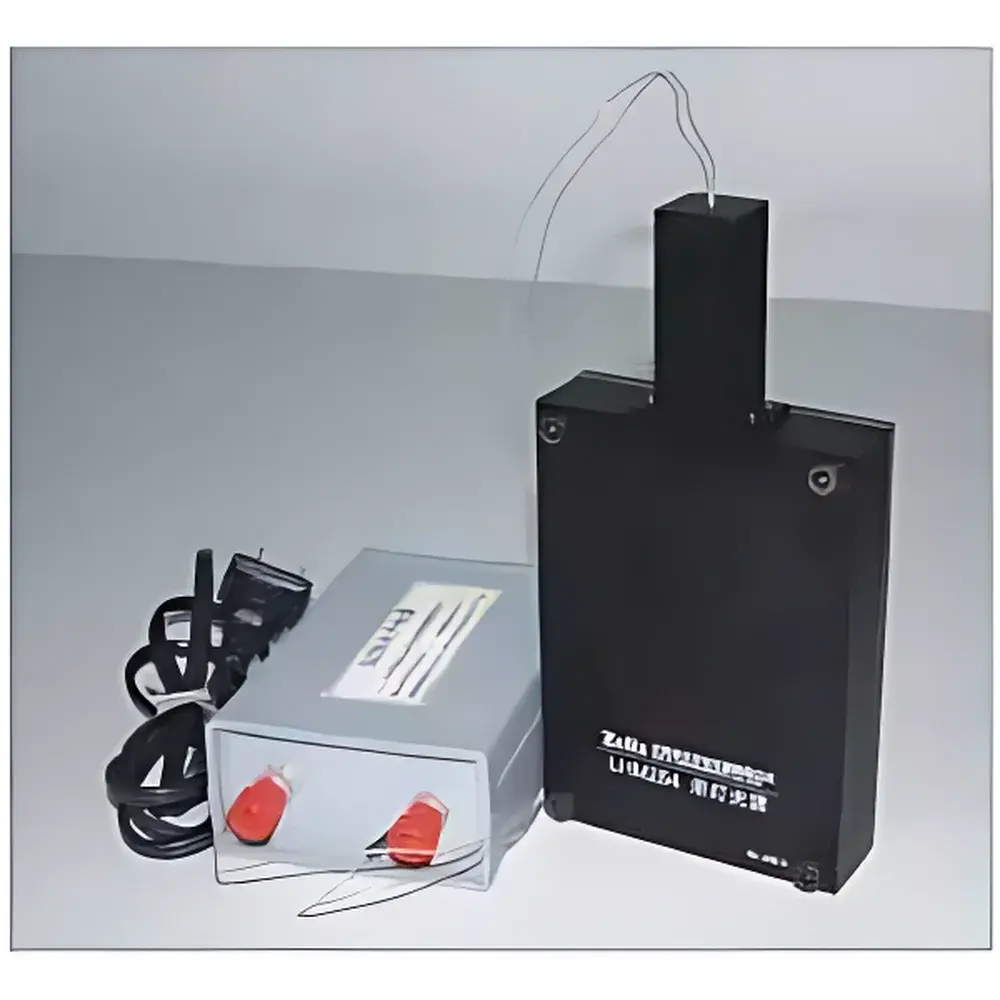
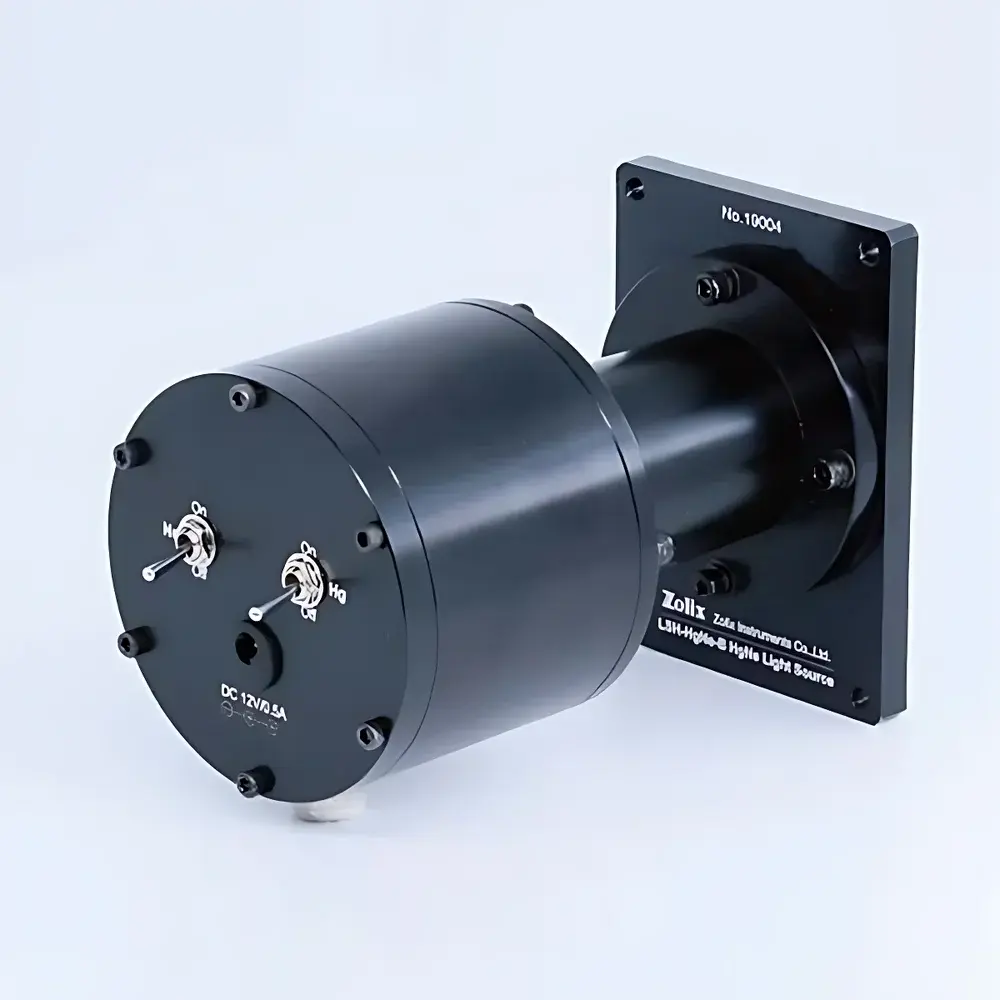
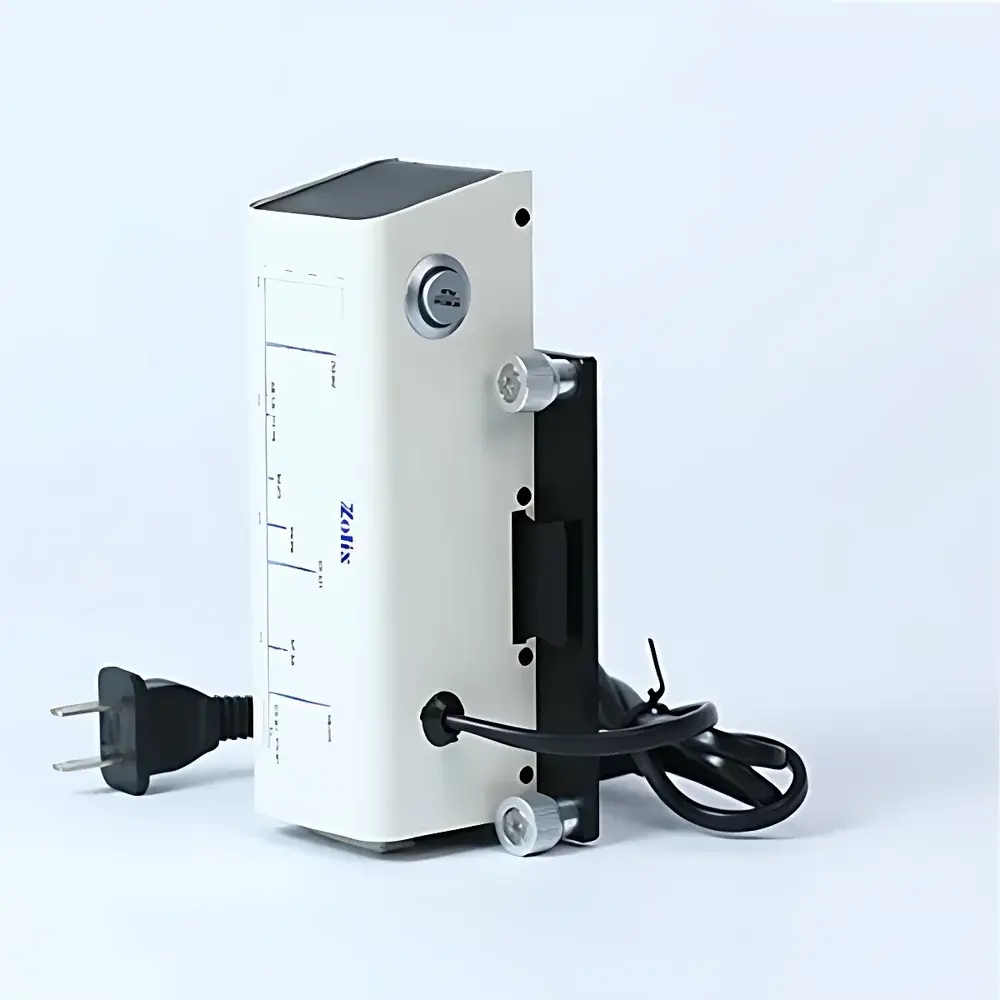
ZOLIX LHM254 Mercury Arc Lamp Wavelength Calibration Source
| Brand | ZOLIX |
|---|---|
| Origin | Beijing, China |
| Manufacturer Type | Direct Manufacturer |
| Product Origin | Domestic (China) |
| Model | LHM254 |
| Light Source Type | Low-Pressure Mercury Discharge Lamp |
| Illumination Mode | External Illumination |
| Characteristic Emission Lines | 253.65 nm, 312.57 nm, 313.15 nm, 313.18 nm, 365.02 nm, 404.66 nm, 435.84 nm, 546.07 nm, 576.96 nm, 579.07 nm |
| Ignition Voltage | ≤500 V |
| Rated Power | 254 W |
| Operating Current | 310 mA |
| Lamp Type | Cold-Cathode Low-Pressure Mercury Vapor Lamp |
Overview
The ZOLIX LHM254 Mercury Arc Lamp Wavelength Calibration Source is a precision-engineered low-pressure mercury vapor discharge lamp designed for high-accuracy wavelength calibration of optical spectrometers, monochromators, and spectroscopic imaging systems. Operating on the principle of cold-cathode gas discharge, the LHM254 emits intense, narrowband spectral lines arising from electronic transitions in atomic mercury vapor under controlled low-pressure conditions. Its emission spectrum includes ten well-documented, NIST-traceable characteristic lines spanning the ultraviolet to visible range—from 253.65 nm (strong UV line) through 579.07 nm (yellow-orange region)—enabling multi-point calibration across broad spectral domains. Unlike broadband sources or tunable lasers, mercury lamps provide inherently stable, reproducible line positions with minimal thermal drift and long-term spectral fidelity—critical for compliance with ISO/IEC 17025 requirements for laboratory instrument validation.
Key Features
- Cold-cathode low-pressure mercury discharge architecture ensures rapid ignition (≤500 V), stable arc formation, and extended operational lifetime (>2000 hours typical)
- High-intensity, narrow linewidth (<0.1 nm FWHM at 253.65 nm and 435.84 nm) emission lines optimized for spectrometer pixel mapping and grating alignment verification
- Integrated thermal management system maintains consistent lamp wall temperature, minimizing wavelength shift due to thermal expansion of quartz envelope
- External illumination configuration enables flexible integration into existing optical benches, fiber-coupled setups, or front-illuminated monochromator input slits
- Electromagnetically shielded housing reduces RF noise interference during sensitive CCD or CMOS detector readout
- Compatible with standard DC power supplies featuring current-limiting and soft-start circuitry to prevent cathode sputtering during startup
Sample Compatibility & Compliance
The LHM254 is compatible with all grating-based dispersive instruments requiring primary wavelength reference standards—including Czerny–Turner, Paschen–Runge, and Echelle spectrometers. It meets essential performance criteria outlined in ASTM E275 (Standard Practice for Calibration of Spectrophotometers), ISO 6944 (Optics and photonics — Calibration of spectrometers), and supports GLP/GMP traceability workflows when used with documented lamp batch certification. While not itself certified to IEC 61000-6-3 (EMC emissions), its shielded design facilitates compliance in Class I laboratory environments. The lamp’s quartz envelope transmits down to 185 nm; however, operation below 250 nm requires purged or vacuum-optical-path configurations to mitigate atmospheric oxygen absorption.
Software & Data Management
Although the LHM254 is a passive light source without embedded firmware or digital interface, it integrates seamlessly with industry-standard spectroscopy software platforms—including Ocean Insight OceanView, Thorlabs ThorImageLS, and Horiba LabSpec—via external trigger synchronization and automated line-detection algorithms. When paired with ZOLIX’s proprietary spectroscopic calibration utilities (e.g., ZolixSpecCal v3.x), users can perform multi-line least-squares fitting, residual error mapping, and uncertainty propagation analysis per EURACHEM/CITAC Guide CG4. All calibration events—including lamp usage time, ambient temperature, and observed centroid shifts—are loggable in audit-trail-enabled systems compliant with FDA 21 CFR Part 11 when deployed within validated QC/QA environments.
Applications
- Primary wavelength calibration of UV-Vis-NIR spectrophotometers and array detectors
- Grating groove density verification and blaze angle characterization
- Pixel-to-wavelength mapping validation for scientific CMOS and back-thinned CCD sensors
- Reference standard in metrology labs accredited to ISO/IEC 17025 for spectral instrument verification
- Linearity assessment of monochromator scanning mechanisms across 200–800 nm range
- Supporting inter-laboratory comparison studies requiring common spectral anchors
FAQ
Is the LHM254 suitable for vacuum-ultraviolet (VUV) applications below 190 nm?
No—the fused silica envelope exhibits strong absorption below ~185 nm; VUV calibration requires magnesium fluoride or lithium fluoride windows and nitrogen/purged optical paths.
Can the LHM254 be operated continuously for >8 hours without performance degradation?
Yes—under rated current (310 mA) and ambient temperature <35°C, continuous operation up to 12 hours is supported; longer durations require active cooling and voltage derating per ZOLIX Technical Bulletin TB-LHM-2023.
Does the lamp include NIST-traceable calibration documentation?
Each production batch undergoes spectral line position verification against NIST SRM 1930a; certificate of conformance (CoC) with measured centroid wavelengths ±0.005 nm uncertainty is provided upon request.
What safety precautions are required during handling and operation?
UV radiation hazard (253.65 nm) mandates use of UV-blocking eyewear and enclosure interlocks; ozone generation necessitates adequate ventilation in enclosed spaces.
How does the LHM254 compare to mercury–neon hybrid sources like the LSH-HgNe series?
The LHM254 offers higher UV line intensity and narrower linewidths than dual-lamp hybrids but lacks neon/argon lines beyond 600 nm; selection depends on required spectral coverage and resolution priority.