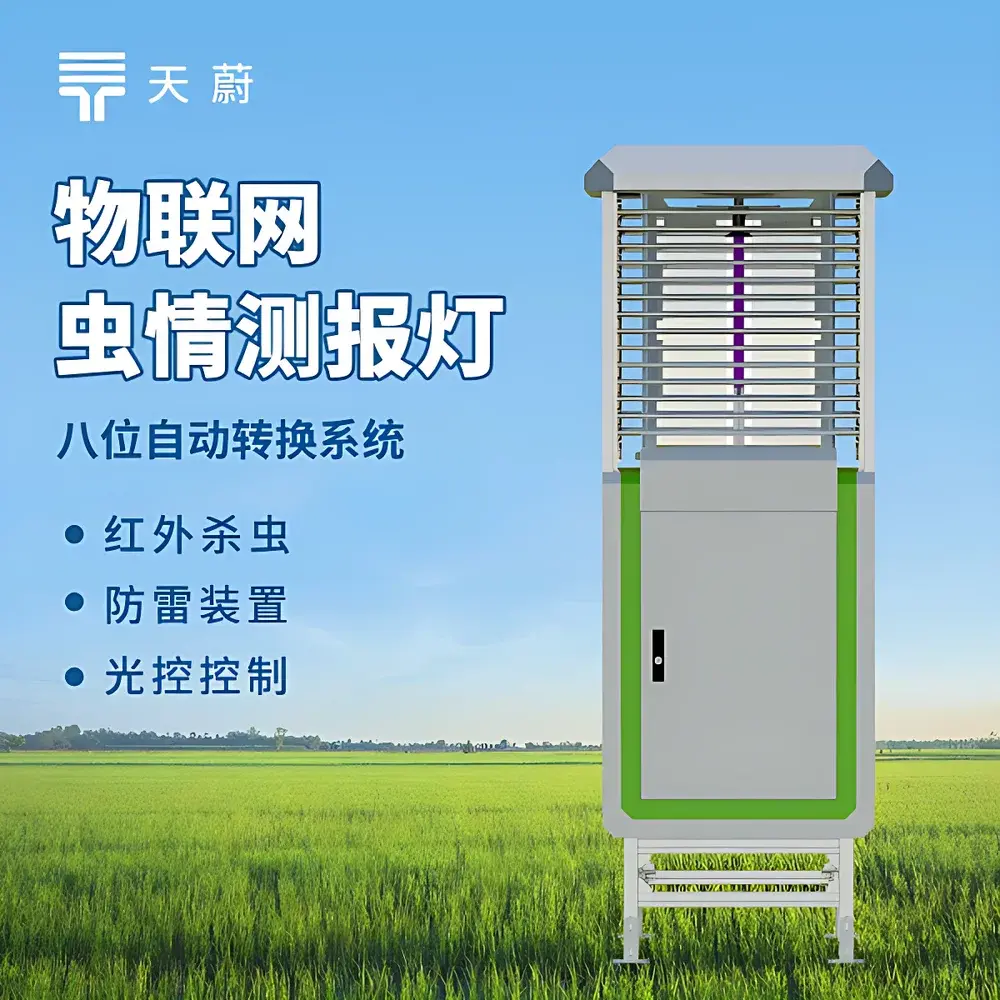
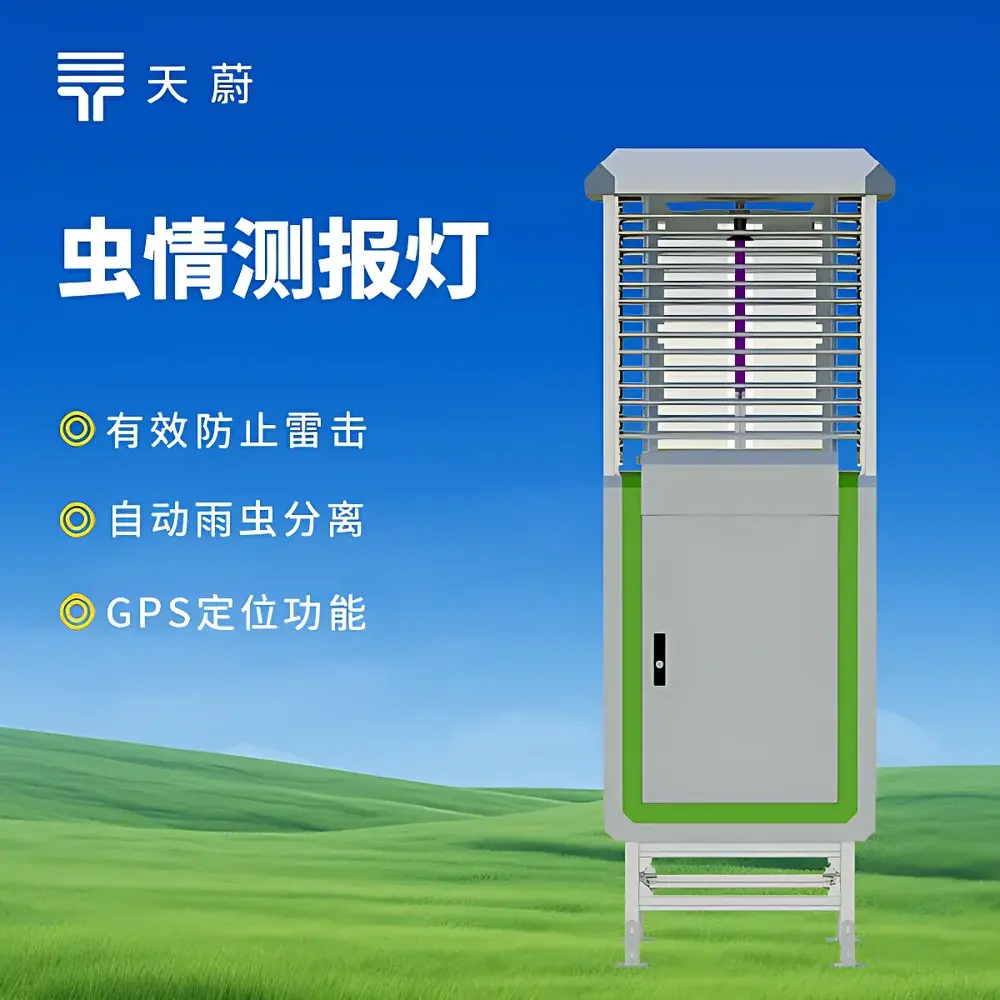
TW-CQ4 Intelligent Pest Monitoring System by Tianwei Environmental
| Brand | Tianwei Environmental (TW) |
|---|---|
| Origin | Shandong, China |
| Manufacturer Type | Direct Manufacturer |
| Country of Origin | China |
| Model | TW-CQ4 |
| Instrument Category | Pest Control Instrument |
| Dimensions | 710 × 600 × 2120 mm (including base) |
| Compliance | GB/T 24689.1–2009 |
Overview
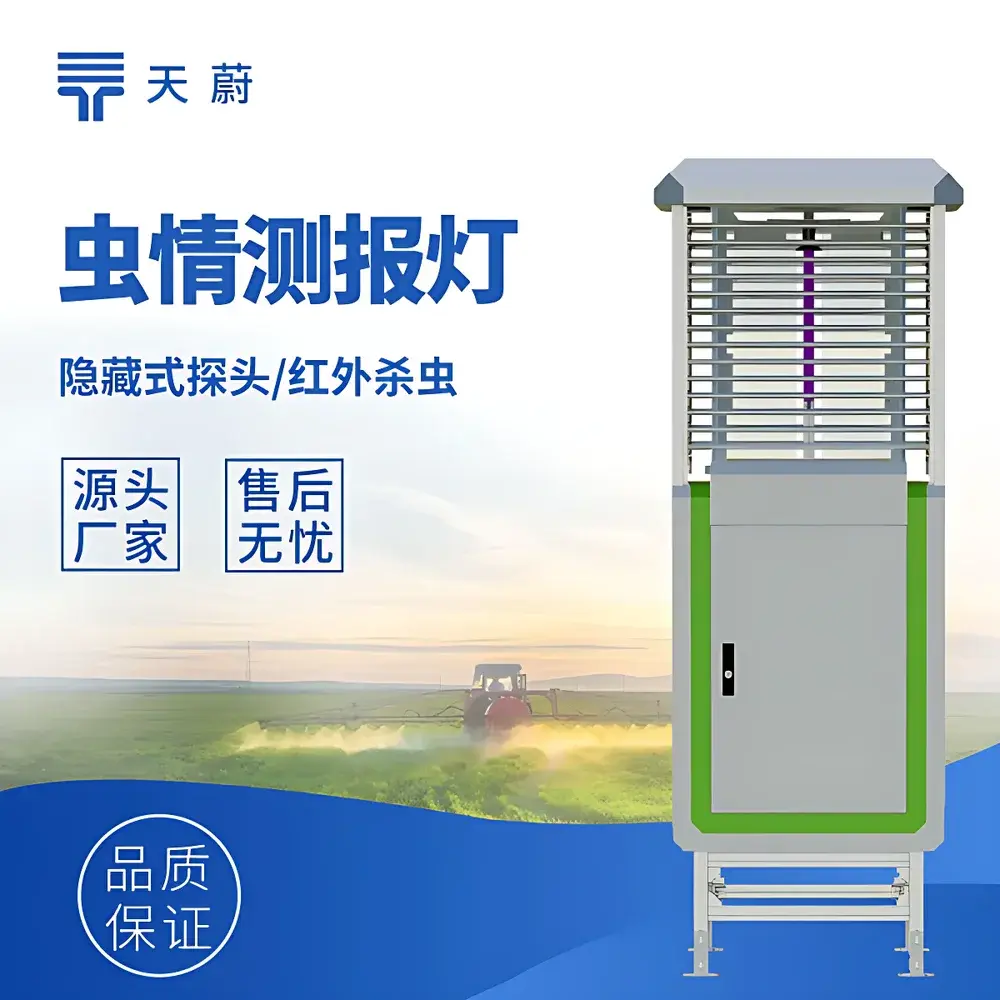
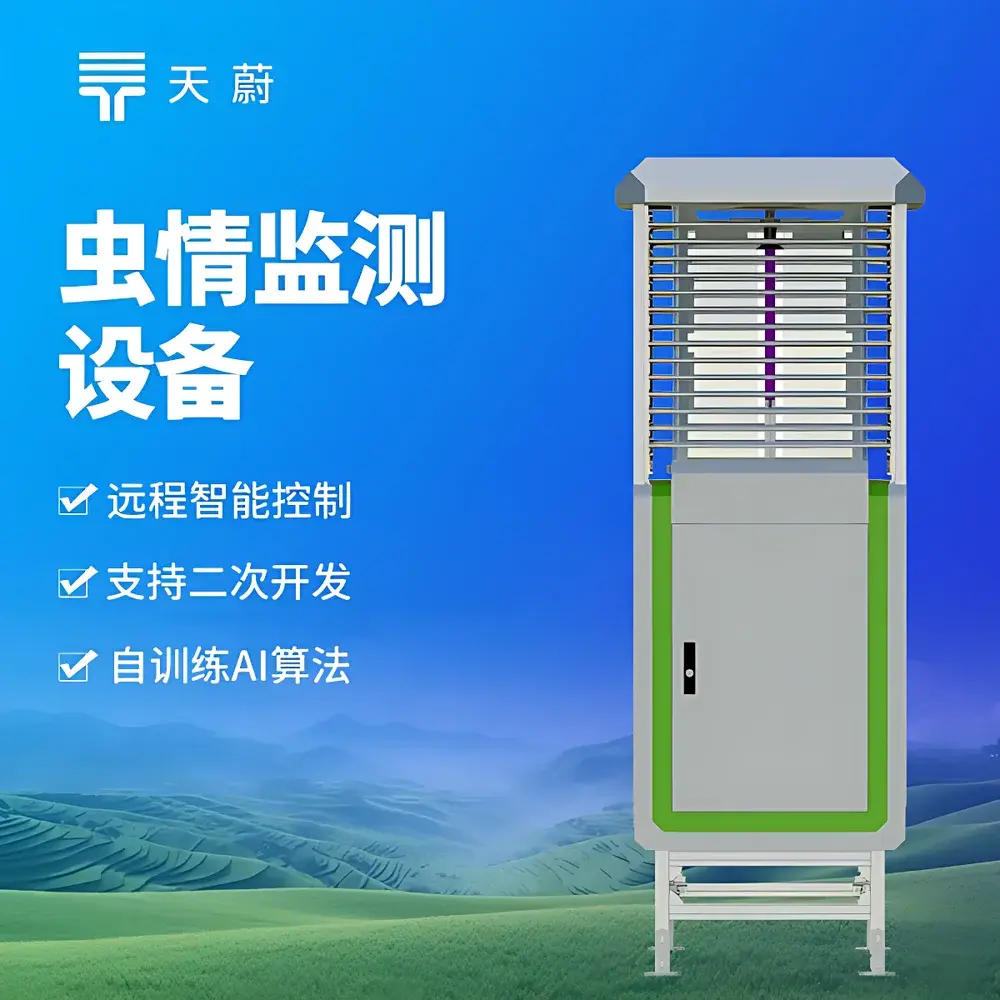
The TW-CQ4 Intelligent Pest Monitoring System is an autonomous, solar- and grid-powered field instrument engineered for continuous, unattended monitoring of insect populations in agricultural and forestry ecosystems. It operates on a validated optical attraction principle—using broad-spectrum UV-A light (365 nm peak) to lure nocturnal flying insects—combined with non-chemical physical mortality via far-infrared thermal treatment. The system integrates precision mechanical actuation, high-resolution digital imaging, environmental sensing, and IoT-enabled telemetry to deliver time-stamped, georeferenced entomological data. Designed in strict accordance with GB/T 24689.1–2009 (Technical Requirements and Safety Specifications for Pest Monitoring Lamps), the TW-CQ4 supports standardized pest surveillance workflows required for integrated pest management (IPM), early-warning forecasting, and regulatory reporting under national phytosanitary frameworks.
Key Features
- Automated multi-stage operation cycle: optical attraction → impact capture → far-infrared killing (90 ± 5 °C, ≥98% mortality, ≥95% specimen integrity) → vibration-based dispersion → sequential transport → high-fidelity imaging → temporal compartmentalization
- 8-position auto-rotating insect collection chamber enabling hour- or day-specific stratification without cross-contamination
- 10.1-inch industrial-grade capacitive touchscreen HMI with local configuration, real-time status visualization, and manual trigger capability
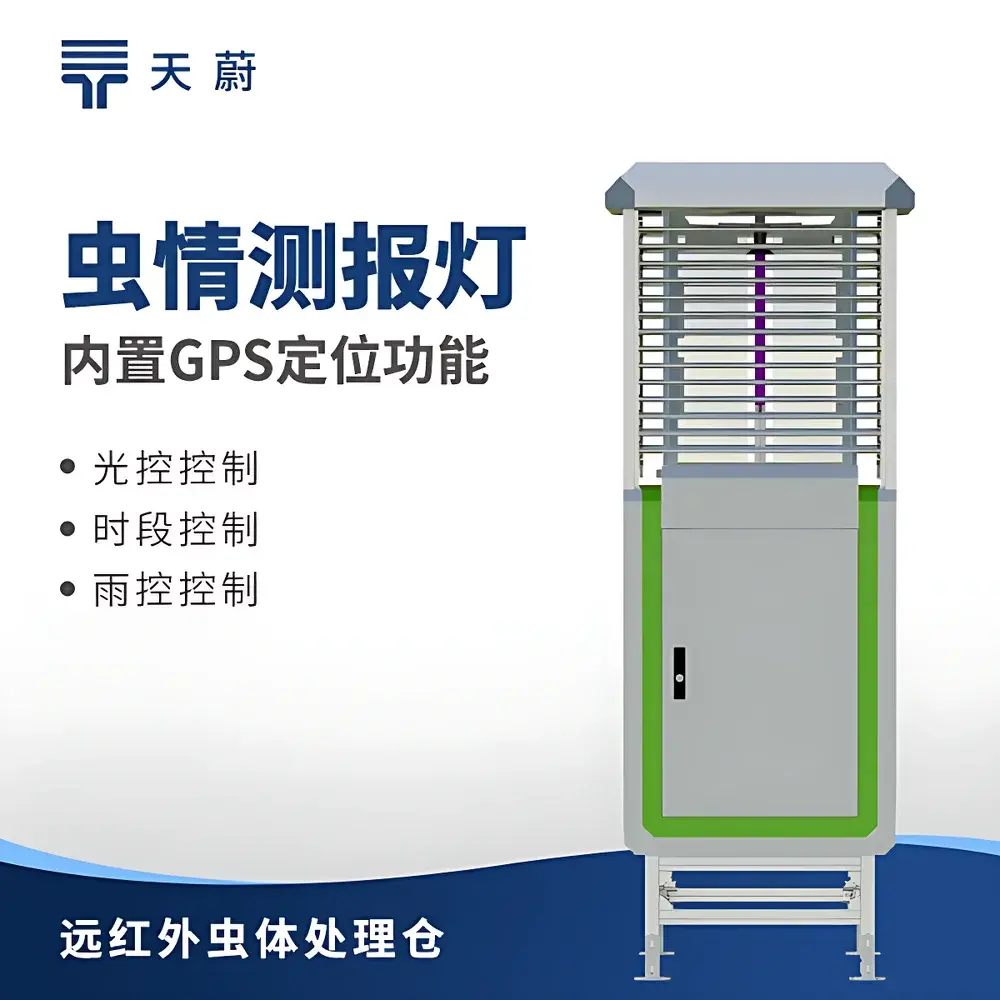
- Dual-mode illumination control: photoperiod-sensitive (light-dependent) activation + programmable time-window scheduling aligned with target pest circadian behavior
- Integrated environmental sensor suite: optional expansion ports for wind speed/direction, soil temperature/moisture, photosynthetic photon flux density (PPFD), and tipping-bucket rainfall measurement
- Robust weatherproof architecture: IP65-rated metal frame, rain-diverting baffle system, anti-bird/rodent mesh, and lightning protection compliant with IEC 62305 standards
- GPS-assisted geolocation and asset tracking with tamper-detection alerts
Sample Compatibility & Compliance
The TW-CQ4 is optimized for monitoring lepidopteran, coleopteran, dipteran, and hymenopteran species commonly associated with crop and forest health—including Spodoptera frugiperda, Helicoverpa armigera, Anoplophora glabripennis, and Bactrocera dorsalis. Specimen integrity is preserved through controlled thermal desiccation rather than chemical fixation, ensuring morphological features remain analyzable for taxonomic verification. All electrical, thermal, and mechanical subsystems conform to GB/T 24689.1–2009 requirements for safety, electromagnetic compatibility (EMC), insulation resistance, and operational reliability under ambient conditions ranging from −20 °C to +60 °C and relative humidity up to 95% RH. The system supports GLP-aligned data traceability when deployed in government-run monitoring networks or certified IPM programs.
Software & Data Management
Data acquisition and remote management are handled via the proprietary Tianwei Agricultural Cloud Platform—a web-based SaaS application accessible via desktop or mobile clients. The platform implements role-based access control (RBAC) with hierarchical permissions (admin, technician, analyst, regional coordinator), enforcing strict inter-institutional data isolation. Image uploads are timestamped, geotagged, and associated with concurrent microclimate metadata. AI-driven pest classification uses a continuously retrained convolutional neural network (CNN) trained on a curated dataset of >120 regional pest taxa; users may manually validate or correct classifications, feeding corrections back into model fine-tuning pipelines. Audit logs record all parameter changes, image captures, and remote commands per ISO/IEC 27001 principles. RESTful Java APIs enable integration with national agricultural information systems, FAO-compatible pest reporting portals, and third-party GIS platforms.
Applications
The TW-CQ4 serves as a foundational node in spatially distributed pest surveillance networks. Its primary use cases include: seasonal population trend analysis for forecasting outbreak thresholds; validation of pheromone trap efficacy across agroecological zones; supporting pesticide resistance monitoring through longitudinal specimen collection; informing area-wide management decisions in rice, maize, cotton, fruit orchards, and timber plantations; and contributing standardized data to China’s National Agricultural Pest Monitoring and Early-Warning System (NAPMES). Field deployments have demonstrated reproducible detection sensitivity for moths at densities as low as 3 individuals per night per unit, with inter-unit coefficient of variation (CV) <12% under identical environmental conditions.
FAQ
Does the TW-CQ4 require external power sources, or can it operate autonomously?
The system supports dual-power operation: AC 220 V ±60 V with built-in leakage protection, or optional solar-charged battery backup (not included). Standalone solar operation requires site-specific PV panel sizing based on local insolation and duty cycle.
How is image quality maintained under varying lighting and weather conditions?
The 1600-pixel CMOS camera employs adaptive exposure control and LED ring illumination synchronized with conveyor movement, ensuring consistent contrast and focus across dawn/dusk transitions and light rain events.
Can historical insect images be exported for offline taxonomic review?
Yes—raw JPEG images, metadata JSON files, and CSV-formatted summary reports are downloadable via the cloud platform interface with configurable date ranges and filter criteria.
Is the system compatible with international pest identification standards such as EPPO codes or FAO pest lists?
The platform’s taxonomy ontology maps natively to EPPO Global Database identifiers and supports custom mapping to national pest registries, including China’s Ministry of Agriculture and Rural Affairs (MARA) pest list.
What maintenance intervals are recommended for long-term field deployment?
Biannual inspection is advised: cleaning of UV lamps and optical surfaces, verification of conveyor belt tension and IR chamber calibration, and firmware updates via OTA. Mechanical components are rated for ≥5 years of continuous outdoor service under normal agronomic conditions.