
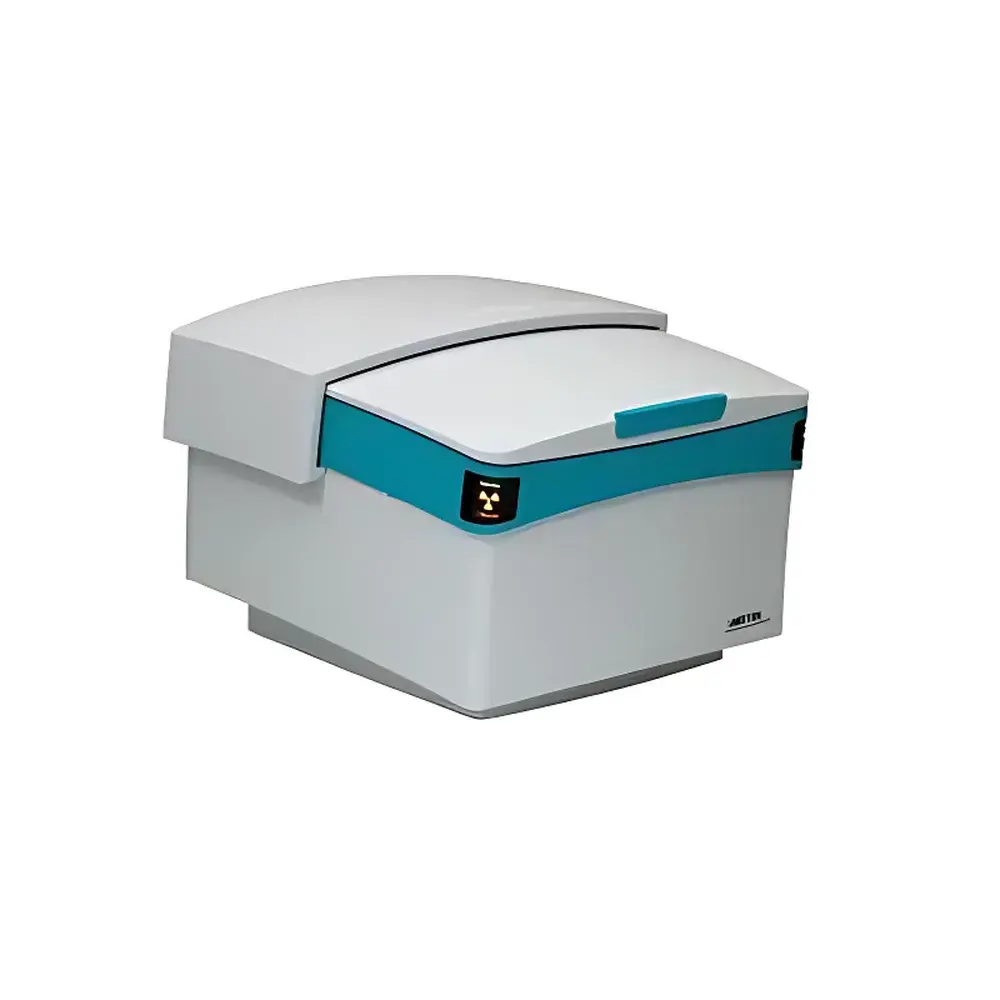
SPECTRO XEPOS Polarized Energy-Dispersive X-Ray Fluorescence Spectrometer
| Brand | SPECTRO |
|---|---|
| Origin | Germany |
| Model | XEPOS |
| Instrument Type | Floor-standing |
| X-ray Tube Power | 50 W |
| Elemental Range | Na (Z=11) to U (Z=92) |
| Detection Limit Improvement | Up to 3× lower vs. prior-generation ED-XRF |
| Analytical Range | Sub-ppm to 100% w/w |
| Repeatability | < 0.1% RSD (at mid-range concentrations) |
| Energy Resolution | < 130 eV (Mn Kα) |
| Excitation Mode | Polarized, Single-Wavelength (Monochromatic) Secondary Target Excitation |
| Software Platform | TurboQuant II |
| Compliance Framework | Designed for GLP/GMP environments |
Overview
The SPECTRO XEPOS is a floor-standing, polarized energy-dispersive X-ray fluorescence (ED-XRF) spectrometer engineered for high-precision, multi-element quantitative analysis across concentration ranges from sub-parts-per-trillion (sub-ppt) trace levels to 100% major constituents. Unlike conventional ED-XRF systems employing broadband X-ray excitation, the XEPOS integrates a proprietary monochromatic secondary target excitation architecture—where a high-stability 50 W X-ray tube irradiates a precisely selected polarizing target, generating a narrow-band, linearly polarized beam. This geometry minimizes scattered background intensity while maximizing signal-to-noise ratio for both light elements (Na–F) and heavy metals (e.g., Pb, As, Hg, U), enabling robust detection limits typically reduced by up to 3× compared to non-polarized ED-XRF platforms. The instrument’s core measurement principle relies on characteristic X-ray emission following inner-shell ionization, with spectral deconvolution performed via high-count-rate silicon drift detector (SDD) technology and advanced peak-fitting algorithms. Its design targets laboratories requiring regulatory-grade reproducibility (< 0.1% RSD at stable operating conditions) without the operational complexity or capital cost of wavelength-dispersive (WDXRF) systems.
Key Features
- Polarized monochromatic excitation using selectable secondary targets—optimized for matrix-specific suppression of Compton and Rayleigh scatter.
- High-efficiency silicon drift detector (SDD) with energy resolution < 130 eV (Mn Kα), enabling clear separation of overlapping peaks (e.g., S Kα/Pb Mα, Cr Kβ/Mn Kα).
- Automated vacuum and helium purge pathways for enhanced light-element sensitivity (down to Na, Z=11) in solid, powdered, and liquid samples.
- Motorized sample stage with programmable positioning and integrated height-sensing for consistent geometric alignment across heterogeneous or irregular surfaces.
- Rugged, thermally stabilized optical bench minimizing spectral drift during extended acquisition sequences (> 8 h continuous operation).
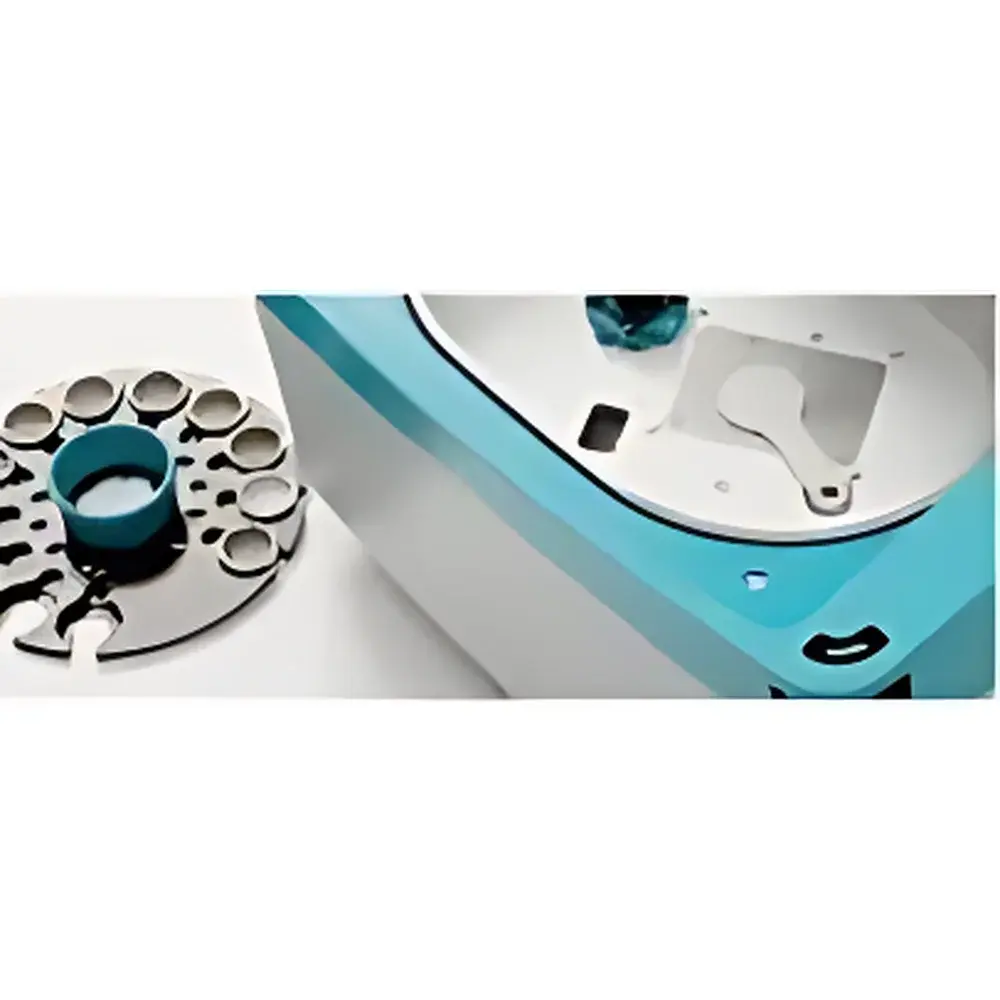
- Modular hardware configuration supporting optional accessories: automated sample changers (up to 48 positions), fused-glass bead fusion units, and micro-spot collimation (diameter ≥ 1 mm).
Sample Compatibility & Compliance
The XEPOS accommodates diverse physical forms—including pressed pellets, fused beads, loose powders, filter membranes, thin films, and homogenized liquids—without requiring extensive sample preparation for routine screening. Its open-sample chamber design permits rapid manual loading and accommodates samples up to 300 × 300 × 100 mm (L × W × H). For regulated environments, the system is architected to support Good Laboratory Practice (GLP) and Good Manufacturing Practice (GMP) workflows: software enforces role-based user authentication, electronic signatures, full audit trail logging (including method changes, calibration events, and result modifications), and data integrity controls aligned with FDA 21 CFR Part 11. Instrument qualification documentation (IQ/OQ/PQ protocols) is available upon request, and analytical methods may be validated per ISO 17025, ASTM E1621, and USP .
Software & Data Management
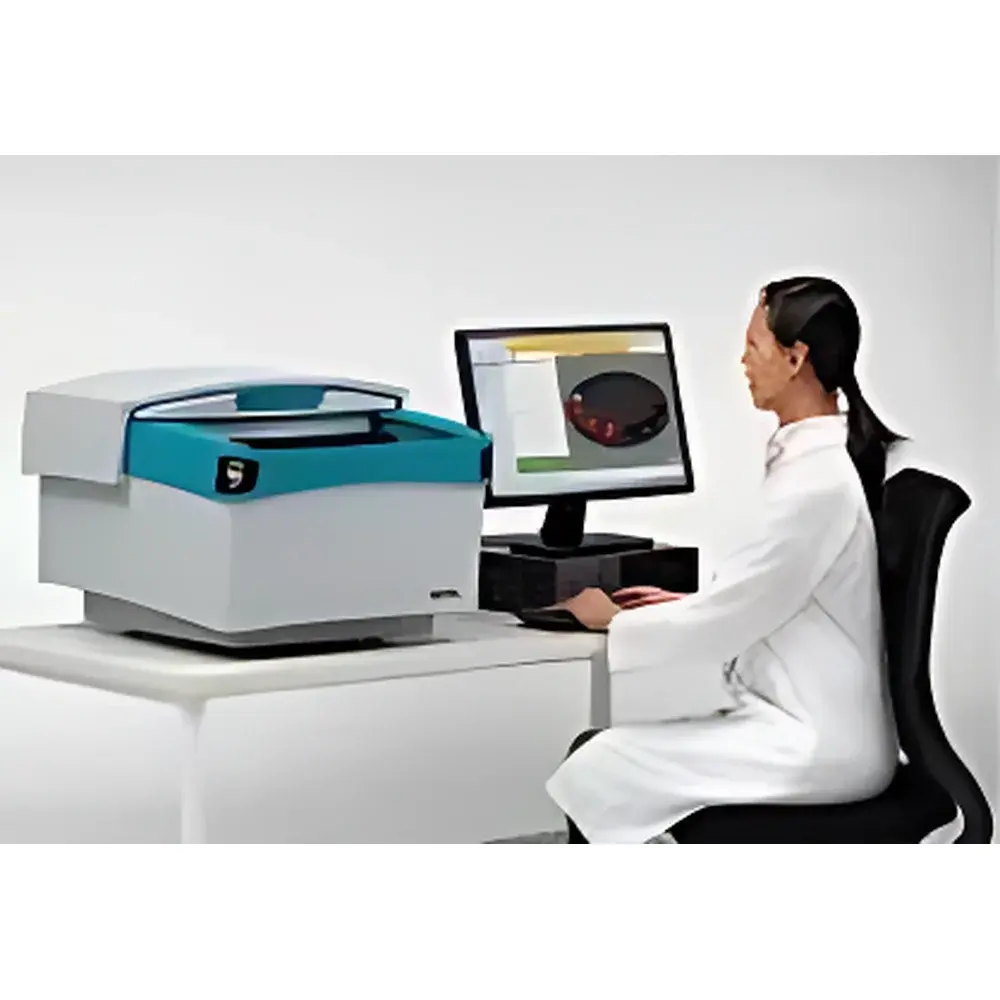
TurboQuant II serves as the native analytical platform, combining empirical and fundamental parameter (FP) quantification engines with intelligent matrix correction routines. Its “unknown sample” mode performs automatic phase recognition and elemental group prioritization without prior knowledge of composition—particularly valuable for geological surveys, recycling feedstock assessment, or forensic material identification. All spectra and processing parameters are stored in a secure, timestamped database compliant with relational SQL standards. Export options include ASTM E1346-compliant .trc files, CSV tables with uncertainty propagation, and PDF reports embedding raw spectra, calibration curves, and QC metrics. Remote diagnostics and firmware updates are supported via encrypted HTTPS channels; local network deployment allows integration with LIMS via HL7 or RESTful API interfaces.
Applications
The XEPOS delivers validated performance across multiple industrial and research domains: geological exploration (major oxide + REE quantification in drill cores), environmental monitoring (soil, sediment, and airborne particulate matter for regulated metals), catalyst and battery material characterization (Ni, Co, Mn, Li distribution in cathode precursors), RoHS/WEEE compliance screening (Cd, Pb, Cr⁶⁺, Br, Hg), petroleum product analysis (S, V, Ni in crude and distillates), and academic materials science (thin-film stoichiometry, corrosion layer profiling). Its ability to analyze heterogeneous natural matrices—such as plant tissue, polymer composites, or metallurgical slags—without digestion or dissolution makes it especially suited for rapid process feedback in mining, waste sorting, and quality assurance laboratories.
FAQ
Does the XEPOS require liquid nitrogen cooling?
No—the silicon drift detector is Peltier-cooled to –20 °C, eliminating cryogenic maintenance.
Can it analyze light elements such as sodium or magnesium in air?
Yes, when operated under helium purge or vacuum; detection limits for Na improve by >10× versus ambient-air mode.
Is method transfer possible between different XEPOS units?
Yes—calibration models and spectral libraries are exportable and interoperable across identical configurations.
What maintenance intervals are recommended for the X-ray tube?
The 50 W tube is rated for ≥ 20,000 hours; annual performance verification (tube output, detector resolution, background stability) is advised.
How does TurboQuant II handle inter-element matrix effects?
It applies iterative fundamental parameter corrections using user-defined or auto-detected matrix composition, supplemented by empirical coefficients derived from certified reference materials.






