
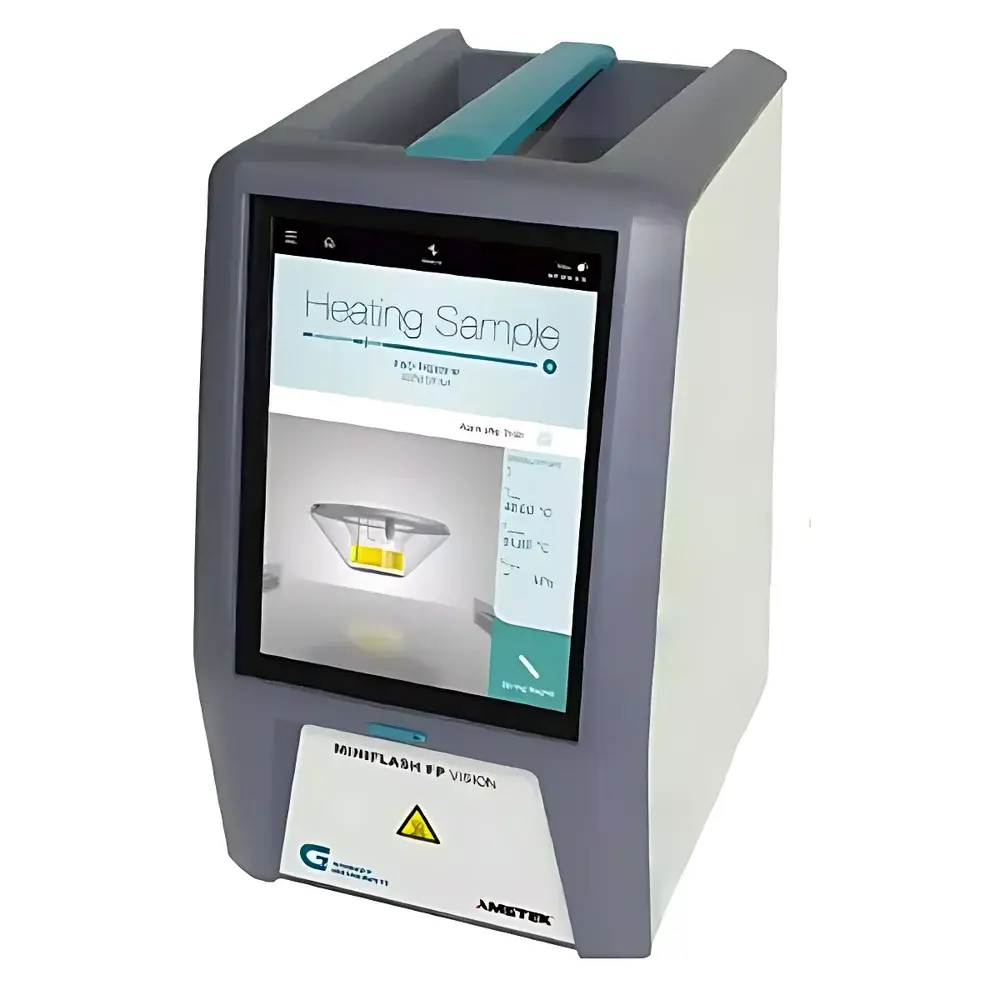
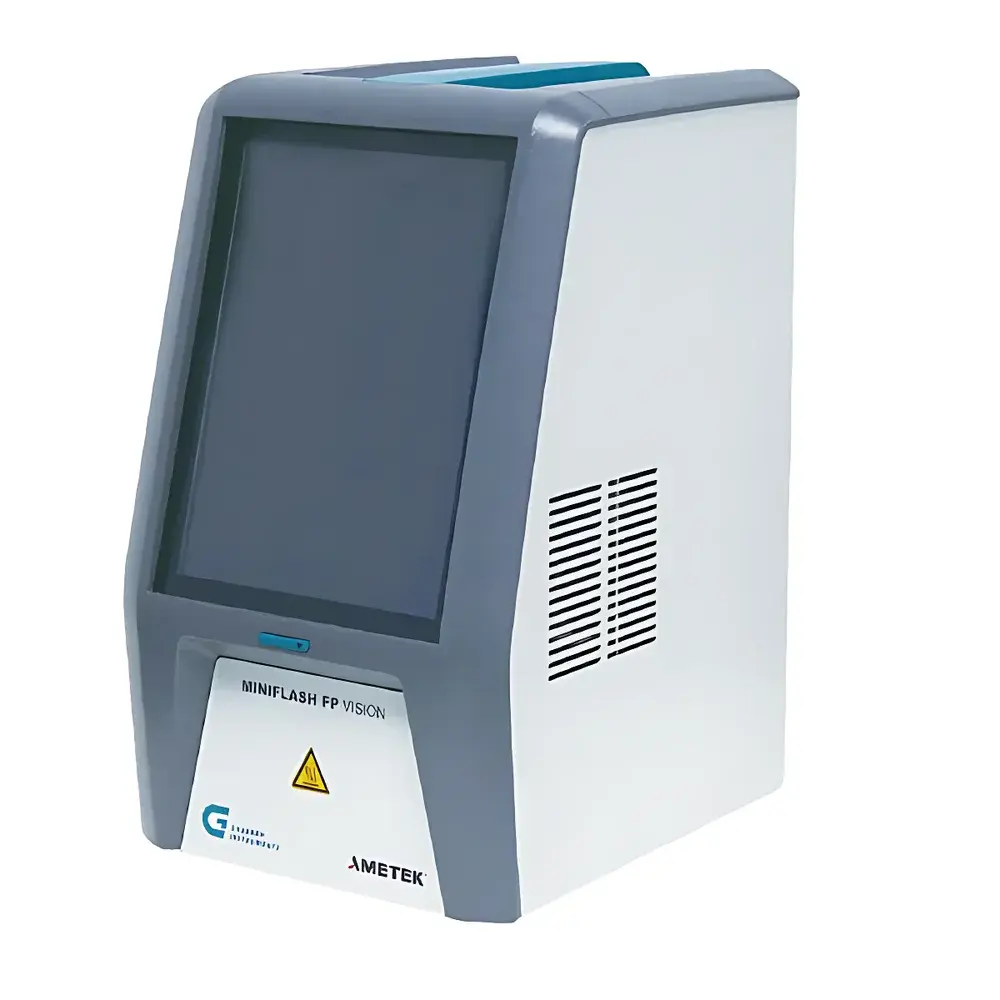
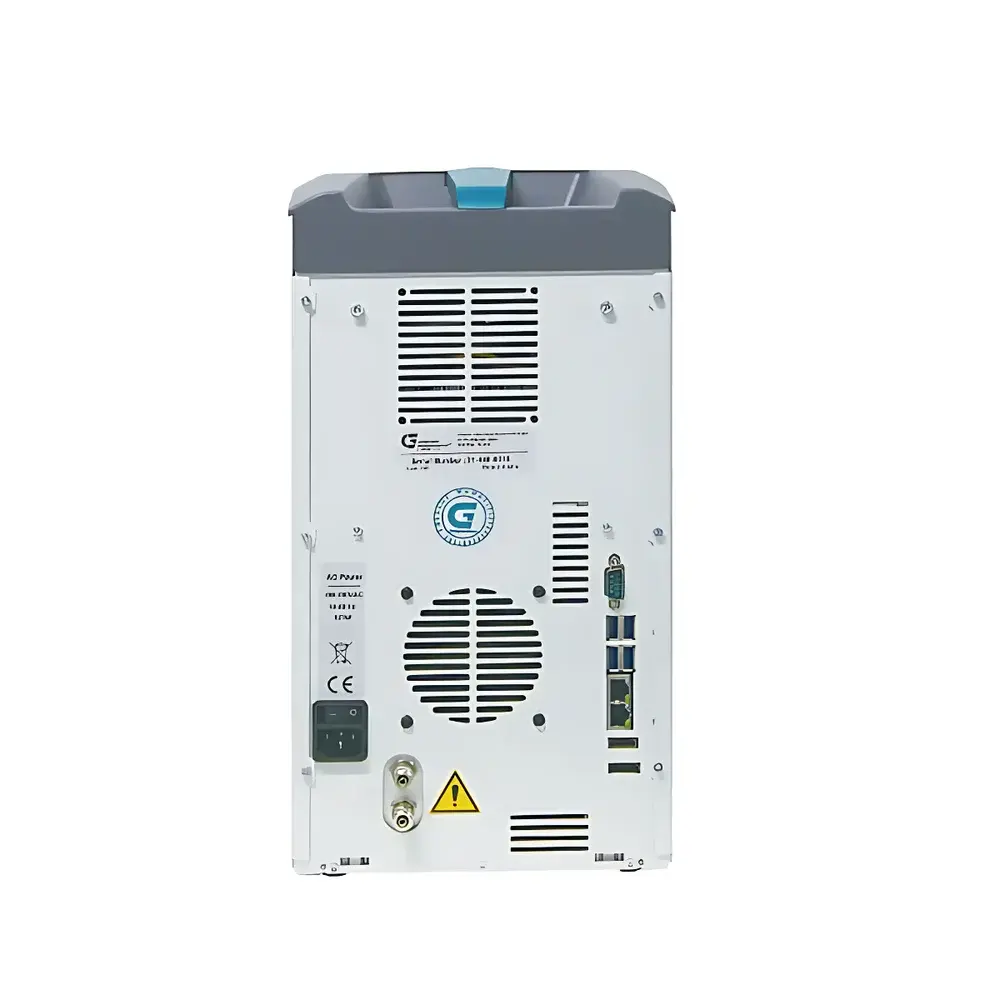
Grabner MINIFLASH FP VISION Portable Automated Touchscreen Flash Point Analyzer
| Brand | Grabner |
|---|---|
| Origin | Austria |
| Model | MINIFLASH FP VISION |
| Detection Method | Closed-Cup |
| Operation Mode | Fully Automatic |
| Applicable Standards | ASTM D6450 (SH/T 0768) & ASTM D7094 |
| Repeatability | ASTM D6450 ≤ 0.4°C, ASTM D7094 ≤ 0.5°C |
| Reproducibility | ≤ 0.9°C for both methods |
| Ignition Method | Electric Arc |
| Temperature Range | 0–120°C (no external cooling required) |
Overview
The Grabner MINIFLASH FP VISION is a portable, fully automated flash point analyzer engineered for precision, safety, and regulatory compliance in petroleum, lubricant, chemical, and fragrance industries. It operates on the closed-cup equilibrium method—specifically conforming to ASTM D6450 (modified Pensky-Martens) and ASTM D7094 (miniature high-speed closed-cup)—which eliminates open-flame hazards while delivering statistically equivalent results to traditional ASTM D93 and ISO 2719 methodologies. Unlike conventional testers, the FP VISION employs real-time combustion imaging and thermal profiling to detect sub-threshold flammability events, enabling trace-level contaminant analysis (e.g., fuel dilution in used engine oils) and “flash/no-flash” binary classification where conventional methods fail. Its thermoelectric (Peltier) dual-stage heating/cooling architecture ensures rapid thermal cycling—critical for high-throughput labs and field-deployed QA/QC workflows—without mechanical compressors or refrigerants.
Key Features
- 10-inch full-color capacitive touchscreen with intuitive, icon-driven navigation—no operator training required
- Electric arc ignition system with automated post-test cleaning cycle to prevent carbon buildup and ensure long-term ignition reliability
- Patented dual-Peltier thermal control: achieves <2-minute cool-down from 120°C to ambient; supports 16 determinations per hour under ASTM D6450
- Integrated combustion imaging module: captures and logs flame initiation dynamics frame-by-frame for forensic analysis of volatile impurities
- Automated sample chamber door actuation with pressure-equalized air compensation—eliminates odor release and explosion risk during testing
- Ultra-low sample consumption: 1 mL (ASTM D6450/SH/T 0768) or 2 mL (ASTM D7094), minimizing waste and hazardous handling
- Modular hardware design: compatible with optional FPH VISION high-temperature module (10–400°C) and circulating water chiller for sub-zero stabilization
- Robust portable enclosure: 253 × 368 × 277 mm, 10.2–11.2 kg; certified for mobile use with optional DC/AC converter (12/24 V vehicle power)
Sample Compatibility & Compliance
The MINIFLASH FP VISION is validated for crude oil fractions, distillates, biodiesel blends, hydraulic fluids, transformer oils, jet fuels (JP-5, JP-8), marine fuels (IFO 180, IFO 380), and fragrance solvents. It satisfies mandatory reporting requirements under U.S. DOT 49 CFR §173.120, EPA RCRA waste characterization (40 CFR Part 261), and NATO AEP-55. Regulatory acceptance includes formal recognition by the U.S. Navy, NATO Standardization Agency (NSA), and inclusion in over 30 ASTM material specifications (e.g., D975, D396, D2880). Method equivalence is documented against ASTM D93, ISO 2719, IP 34, DIN 51758, JIS K2265, ISO 13736, and EN ISO 3679/3680. For GLP/GMP environments, the instrument supports 21 CFR Part 11-compliant electronic signatures and audit trails when operated with Cockpit™ SQC software.
Software & Data Management
Cockpit™ software serves as the central management platform for distributed MINIFLASH networks. It enables remote instrument monitoring, user role-based access control (administrator, analyst, reviewer), method versioning, and automated report generation compliant with ASTM D6299 precision control protocols. All test data—including raw thermal curves, flame detection timestamps, and video snippets—are time-stamped, digitally signed, and exportable in CSV, PDF, or XML formats. The system integrates natively with LIMS via ASTM E1384-compliant HL7 messaging and supports direct USB printing or LAN-based network printing. Onboard digital documentation includes interactive troubleshooting guides and context-sensitive help accessible directly from the touchscreen interface.
Applications
- Refinery QC: Rapid verification of flash point compliance for gasoline, kerosene, and diesel batches prior to shipment
- Condition monitoring: Quantification of fuel dilution in crankcase oils using ASTM D7094’s enhanced sensitivity to low-volatility contaminants
- Hazardous waste classification: Determination of ignitability per EPA SW-846 Method 1010A and UN GHS Category 2 criteria
- Fragrance & flavor R&D: Safe screening of highly volatile solvent blends where traditional open-cup methods pose unacceptable fire risk
- Military logistics: Field-deployable verification of aviation turbine fuel (JP-8) flash point stability under variable ambient conditions
- Regulatory submission: Generation of auditable datasets for FDA, EMA, or REACH registration dossiers requiring ISO/IEC 17025 traceability
FAQ
Does the MINIFLASH FP VISION require calibration with certified reference materials?
Yes—calibration is performed using NIST-traceable flash point standards (e.g., hexadecane, heptane, decane mixtures) at three points across the operational range. Daily verification checks are recommended per ASTM D6450 Section 8.2.
Can it be used for samples containing suspended solids or high-viscosity residues?
No—per ASTM D6450/D7094, the sample must be homogeneous and filterable through a 75-µm mesh. Viscous or particulate-laden samples require pre-filtration or dilution with a non-interfering solvent.
Is remote firmware update supported?
Yes—Cockpit™ software enables secure over-the-air (OTA) updates with cryptographic signature verification and rollback capability.
What safety certifications does the instrument hold?
It carries CE marking (EN 61010-1, EN 61326-1), UL 61010-1, and ATEX Zone 2/22 certification for use in potentially explosive atmospheres.
How is data integrity ensured during power interruption?
The system features non-volatile memory with automatic save-on-failure; all active tests resume from last valid temperature step upon power restoration.






