
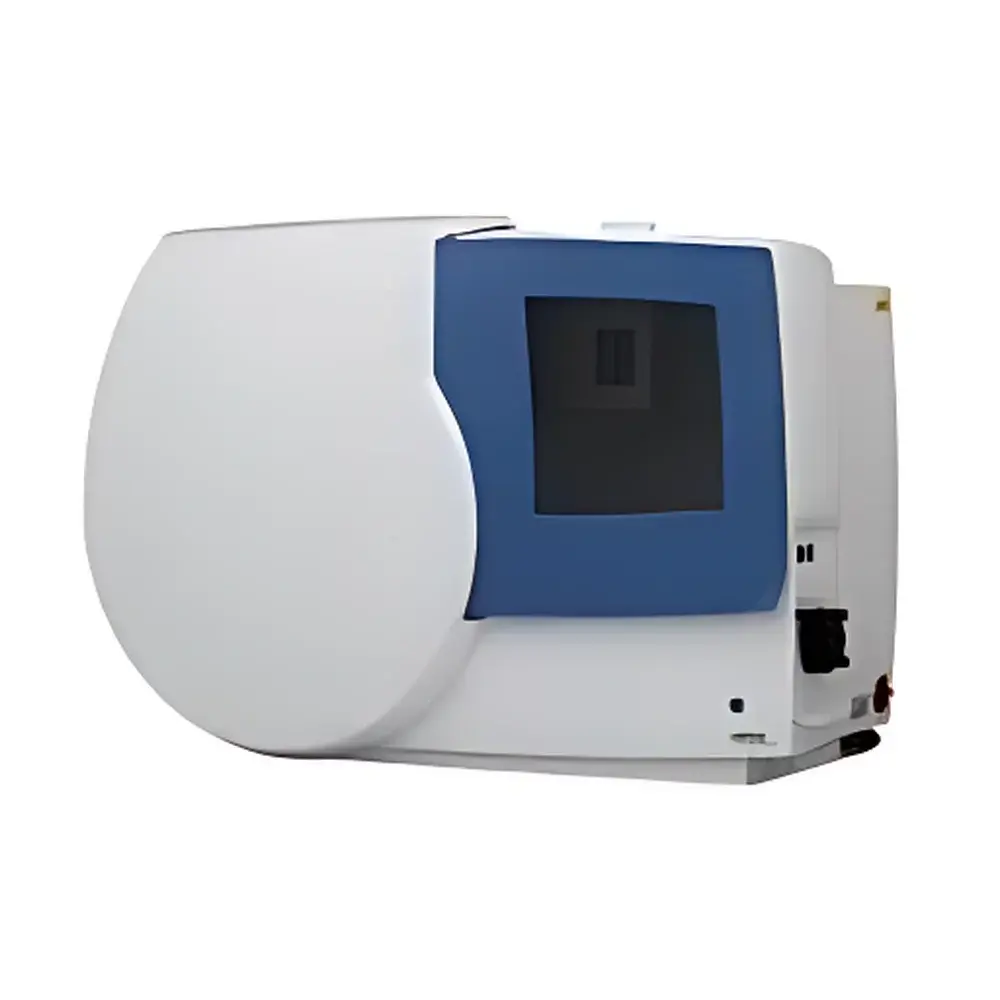
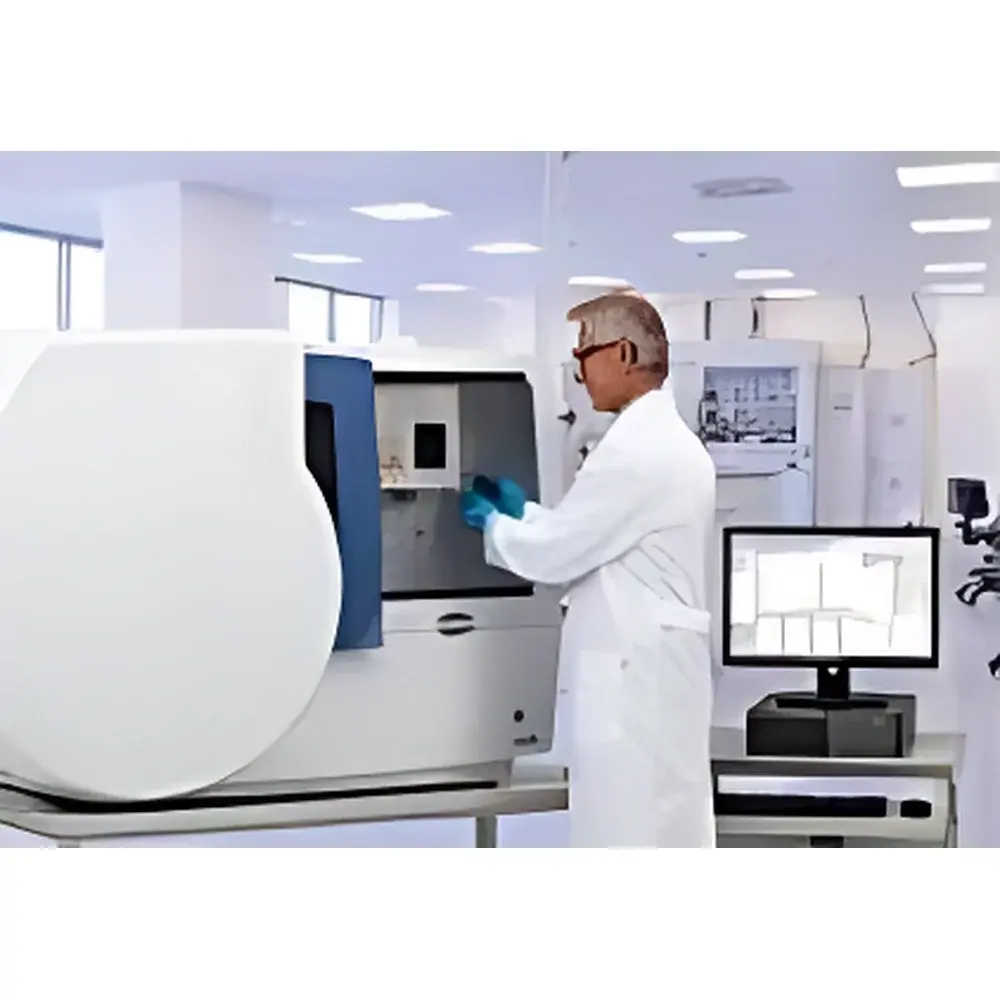
SPECTRO ARCOS Inductively Coupled Plasma Optical Emission Spectrometer
| Brand | SPECTRO |
|---|---|
| Origin | Germany |
| Manufacturer Type | Authorized Distributor |
| Origin Category | Imported Instrument |
| Model | SPECTRO ARCOS |
| Instrument Type | Full-Spectrum Simultaneous ICP-OES |
| Detection Limit | Sub-ppb to ppm |
| Repeatability | ≤1% RSD |
| Long-Term Stability | ≤0.1% RSD |
| Wavelength Range | 130–770 nm |
| Optical Resolution | ≤0.008 nm |
Overview
The SPECTRO ARCOS is a high-performance, full-spectrum simultaneous inductively coupled plasma optical emission spectrometer (ICP-OES) engineered for precision elemental analysis across demanding industrial, environmental, and academic laboratories. Based on robust radiofrequency (RF) plasma excitation and high-fidelity polychromator-based detection, the system operates by atomizing and ionizing liquid samples in a 2000 W LDMOS RF generator-driven argon plasma (~6,000–10,000 K), followed by quantitative measurement of element-specific atomic and ionic emission lines across the ultraviolet to visible spectrum (130–770 nm). Its core innovation lies in the MultiView plasma observation architecture — the only commercially available ICP-OES platform capable of true axial and true radial viewing modes *within a single instrument*, without mechanical repositioning or optical compromise. This dual-view capability enables method-optimized sensitivity (axial) and matrix tolerance (radial) — both accessible in under 90 seconds via software-controlled plasma orientation.
Key Features
- MultiView Dual-Geometry Plasma Observation: Seamless switching between axial and radial plasma viewing paths using an integrated, mirror-free optical path — eliminating alignment drift and preserving long-term calibration integrity.
- ORCA Optical System: A high-throughput, aberration-corrected echelle-grating polychromator with optimized UV-VUV transmission (down to 130 nm), enabling simultaneous multi-element detection across the full 130–770 nm range with ≤0.008 nm spectral resolution.
- LDMOS RF Generator: Solid-state 2000 W generator delivering stable, low-noise power output — compatible with high-TDS matrices, organic solvents (e.g., kerosene, xylene), and volatile sample introduction systems including micro-nebulizers and desolvation units.
- UV-PLUS Sealed Optics: Hermetically sealed optical chamber with internal nitrogen purge — eliminates external gas consumption and maintains optimal UV throughput without vacuum pumps or continuous purge gas supply.
- OPI-Air Interface: Robust, air-cooled plasma interface requiring no external chiller — reduces infrastructure dependency and total cost of ownership while maintaining thermal stability during extended operation.
- Ergonomic Modular Chassis: Tool-free access to nebulizer, torch, and injector; integrated waste management; and service-friendly component layout aligned with ISO/IEC 17025-compliant maintenance workflows.
Sample Compatibility & Compliance
The SPECTRO ARCOS supports aqueous solutions, digested geological and metallurgical samples, organic extracts (with appropriate solvent compatibility verification), and high-salinity brines (up to 25% TDS with optional spray chamber cooling). It meets essential regulatory requirements for routine QA/QC and compliance testing, including ASTM D1944 (trace metals in water), ISO 11885 (water quality — determination of selected elements by ICP-OES), and USP / (elemental impurities in pharmaceuticals). The instrument’s audit trail, user access control, and electronic signature functionality support adherence to FDA 21 CFR Part 11 and GLP/GMP documentation standards when configured with compliant software modules.
Software & Data Management
Controlled by SPECTRO’s proprietary Spark Software, the system provides intuitive method development, real-time spectral visualization, automated background correction, and multi-point calibration with internal standard normalization. Data handling complies with LIMS integration protocols (via ASTM E1384 or HL7), supports raw spectrum archiving in vendor-neutral formats (e.g., .spc), and includes built-in uncertainty estimation per IUPAC guidelines. All analytical sequences are timestamped and logged with operator ID, instrument status, and plasma parameters — ensuring traceability for ISO/IEC 17025 accreditation audits.
Applications
- Metal production & recycling: Quantification of trace impurities (e.g., As, Bi, Pb, Sb) in aluminum, copper, and nickel alloys per ASTM E3061 and EN 10317.
- Petrochemical QA: Multi-element screening of catalyst poisons (V, Ni, Na, Fe) in crude oil and refined fuels per ASTM D5185 and IP 501.
- Environmental monitoring: Regulatory-grade analysis of EPA Method 200.7 analytes (Al, Cd, Cr, Cu, Pb, Zn, etc.) in wastewater, soils, and sediments.
- Academic research: Isotopic ratio-independent quantification of major/minor/trace elements in geological reference materials (e.g., NIST SRM 2710a, GBW 07304).
- Pharmaceutical excipient testing: Elemental impurity profiling per ICH Q3D, including Co, Mo, V, and other Class 2B elements.
FAQ
What plasma viewing configurations does the SPECTRO ARCOS support?
It supports true axial, true radial, and hybrid axial/radial viewing — all selectable via software without hardware modification or realignment.
Is vacuum pumping required for UV spectral access?
No — the UV-PLUS sealed optical system uses internal nitrogen purging and requires no vacuum pump or continuous external gas flow.
Can the instrument handle high-TDS or organic samples?
Yes — the 2000 W LDMOS generator and OPI-Air interface enable stable plasma operation with samples containing up to 25% dissolved solids or miscible organic solvents when paired with appropriate nebulization and desolvation accessories.
What data security features support regulatory compliance?
Spark Software offers role-based access control, electronic signatures, immutable audit trails, and 21 CFR Part 11–compliant configuration options for validated environments.
How is long-term calibration stability maintained?
Through MultiView’s fixed optical geometry, temperature-stabilized detector housing, and automatic wavelength recalibration using internal Hg/Ar reference lines before each analytical sequence.






