
Anton Paar HTR High-Throughput Rotational Rheometer
| Brand | Anton Paar |
|---|---|
| Origin | Austria |
| Model | HTR |
| Instrument Type | Rotational Rheometer |
| Sample State | Liquid, Paste, Polymer Melt |
| Bearing Type | Air Bearing |
| Maximum Torque | 230 mNm |
| Minimum Torque (Rotational) | 1 nNm |
| Minimum Torque (Oscillatory) | 0.05 nNm |
| Max Angular Velocity | 314 rad/s |
| Max Angular Frequency | 628 rad/s |
| Normal Force Range | 0.005–50 N |
| Dimensions (W×D×H) | 1800 × 1200 × 2000 mm |
| Net Weight | 900 kg |
| Power Supply | 400 V, 16 A, 50/60 Hz |
| Interface | Ethernet |
| Pneumatic Interface | Compressed Air |
| Fluid Interface | Cleaning Solvent Inlet & Waste Drain |
Overview
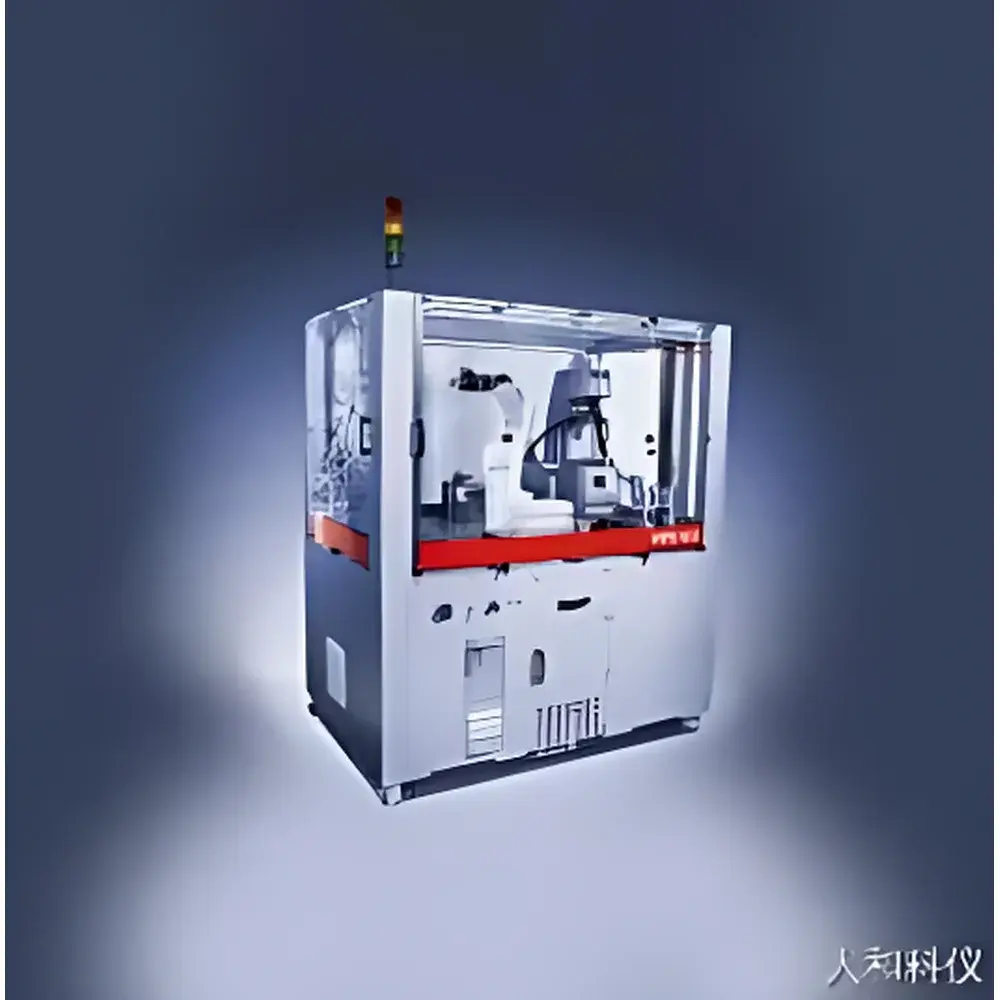
The Anton Paar HTR High-Throughput Rotational Rheometer is an integrated automation platform engineered for precision rheological characterization in demanding R&D and QC environments. Built upon the proven mechanical and metrological foundation of the MCR 702 MultiDrive rheometer, the HTR combines air-bearing-supported torque transduction with programmable robotic sample handling to deliver laboratory-grade measurement fidelity at scale. Its core operating principle relies on controlled rotational and oscillatory shear deformation—governed by Couette or parallel-plate flow geometries—to quantify viscoelastic properties including complex viscosity (η*), storage modulus (G′), loss modulus (G″), yield stress, and thixotropic recovery. Designed explicitly for unattended operation across multi-day campaigns, the HTR supports standardized workflows compliant with ISO 16520, ASTM D4402, and USP <911> for rheological testing of pharmaceuticals, polymers, coatings, and food formulations.
Key Features
- Modular high-throughput architecture supporting up to 96 sample positions per standard rack, with optional expansion for larger batches
- Triple-geometry compatibility: concentric cylinder (CC), cone-and-plate (CP), and parallel-plate (PP) systems—each optimized for specific material classes (e.g., low-viscosity liquids, pastes, polymer melts)
- Four-step automated cleaning station: solvent rinse → brush scrub → secondary rinse → inert gas drying—ensuring cross-contamination-free transitions between samples
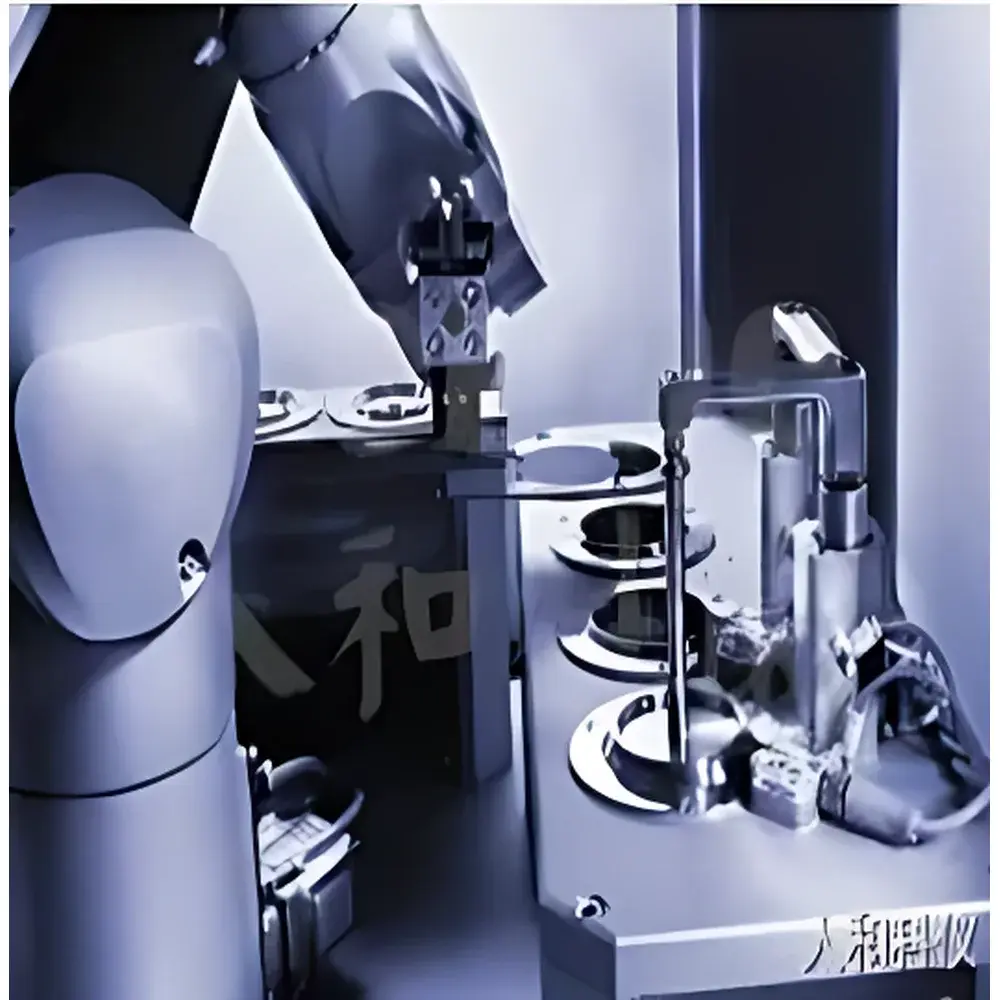
- Integrated刮片 (scraping) tooling with real-time visual verification to eliminate residual material from geometry surfaces prior to measurement
- Mechanical decoupling between rheometer head and robotic arm ensures metrological independence—preserving the MCR 702’s sub-nN·m torque resolution and angular displacement accuracy during automated operation
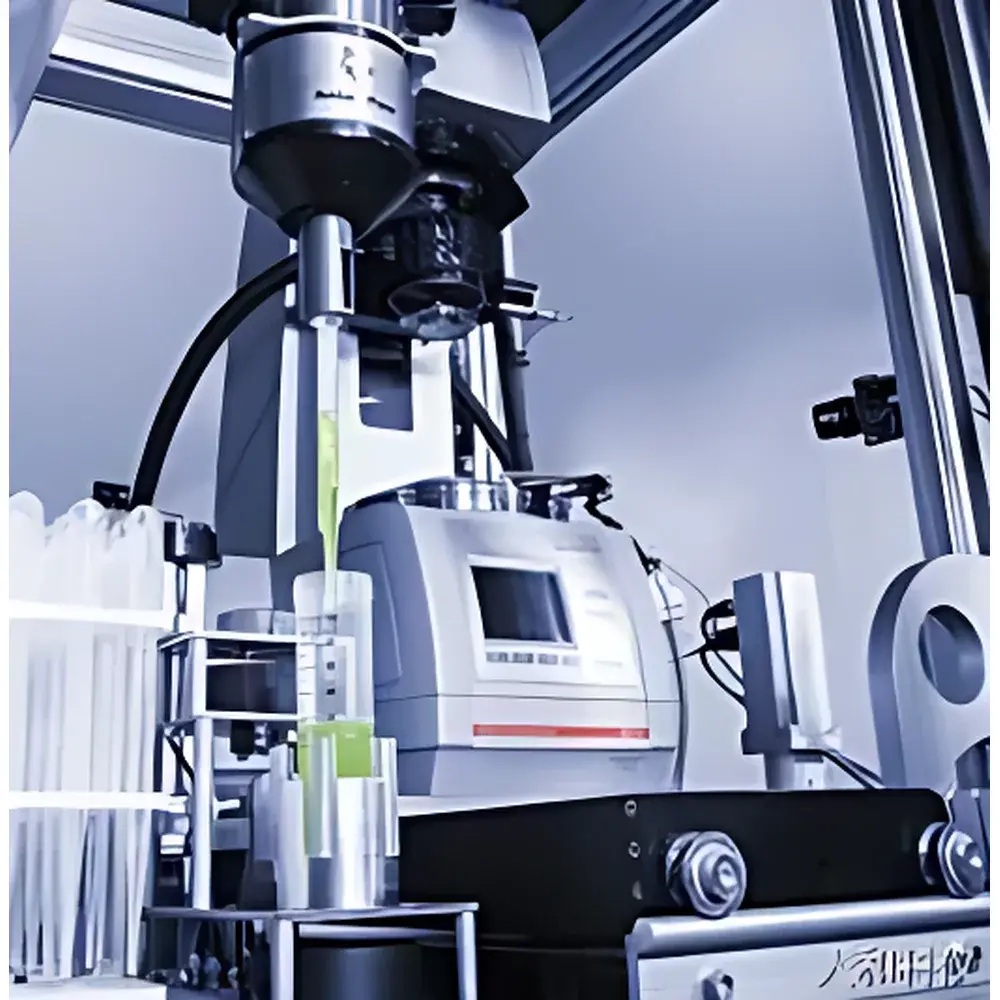
- Configurable sample introduction modules: pipette-based dispensing (up to 1000 mPa·s), syringe-driven loading, spatula-assisted paste transfer, and temperature-controlled sample storage (4 °C minimum)
- Optional add-ons include gravimetric/volumetric dosing units, pH sensing probes, barcode readers for LIMS traceability, solvent venting enclosures, and automated vial capping/unsealing mechanisms
Sample Compatibility & Compliance
The HTR accommodates heterogeneous sample states without manual intervention: Newtonian and non-Newtonian liquids (e.g., solvents, emulsions), semi-solid pastes (e.g., toothpaste, battery slurries), thermoplastic polymer melts (in disc format), and shear-thinning gels. Each measurement system is validated against ISO/IEC 17025-accredited calibration protocols using NIST-traceable standard oils and reference materials. The platform supports full audit trails required under FDA 21 CFR Part 11 and EU Annex 11, including electronic signatures, change history logging, and user-access-controlled method execution. All hardware interfaces—including Ethernet, pneumatic lines, and solvent waste routing—are designed to meet CE, UL, and IEC 61000-6-4 electromagnetic compatibility standards.
Software & Data Management
Controlled via Anton Paar’s RheoCompass™ software suite, the HTR enables fully scriptable experiment sequencing, real-time data visualization, and batch-wise statistical analysis. Method templates adhere to GLP/GMP documentation requirements, with automatic metadata capture (operator ID, timestamp, environmental conditions, geometry ID, calibration status). Native LIMS integration supports bidirectional file exchange (CSV, XML, PDF reports) and database synchronization via ODBC or RESTful API. Raw time-series datasets are stored in HDF5 format for long-term reproducibility and third-party analysis interoperability. Software validation packages—including IQ/OQ documentation and cybersecurity hardening guidelines—are available upon request for regulated industries.
Applications
- Pharmaceutical formulation development: viscosity profiling of injectables, suspension stability assessment, and gelation kinetics of thermoresponsive hydrogels
- Polymer processing optimization: melt elasticity mapping for extrusion die design, crystallization onset detection in polyolefins, and degradation monitoring during multiple extrusion passes
- Coatings & inks: sag resistance evaluation, leveling behavior quantification, and pigment dispersion stability under shear
- Foods & personal care: mouthfeel prediction via frequency sweep G′/G″ crossover analysis, pumpability assessment of dairy concentrates, and structural recovery after pumping-induced breakdown
- Battery electrode slurries: solid-network yield point determination, binder distribution homogeneity screening, and slurry aging kinetics under controlled humidity
FAQ
What sample throughput can be achieved per 24-hour cycle?
Typical throughput ranges from 48 to 96 measurements per day depending on test duration, cleaning sequence length, and thermal equilibration requirements—fully configurable via priority queue management.
Is the HTR compatible with non-Anton Paar geometries or accessories?
No. Only Anton Paar-certified CC, CP, and PP geometries—including temperature-controlled Peltier and convection oven variants—are supported to maintain torque calibration integrity and thermal uniformity.
How is instrument performance verified during routine operation?
Built-in daily self-diagnostics include motor inertia verification, air bearing pressure monitoring, torque sensor zero-drift tracking, and geometry alignment validation using capacitive gap sensing.
Can the HTR operate under inert atmosphere or vacuum conditions?
Yes—optional glovebox integration or sealed chamber modules with gas purging (N₂, Ar) are available for oxygen- or moisture-sensitive samples such as lithium-ion battery slurries or reactive polymer precursors.
What level of technical support is provided post-installation?
Anton Paar offers global 24/7 remote diagnostics, on-site preventive maintenance contracts, application-specific method development workshops, and certified operator training aligned with ISO/IEC 17025 competency frameworks.



