
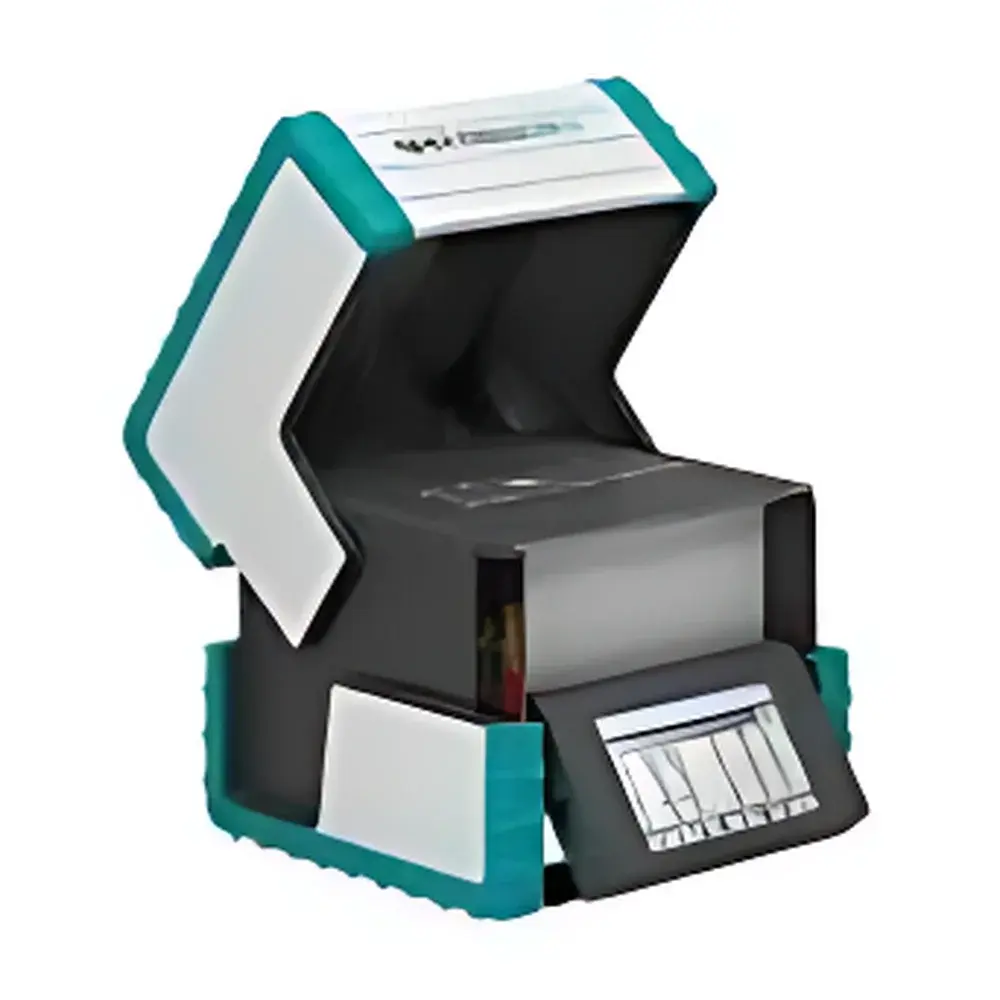
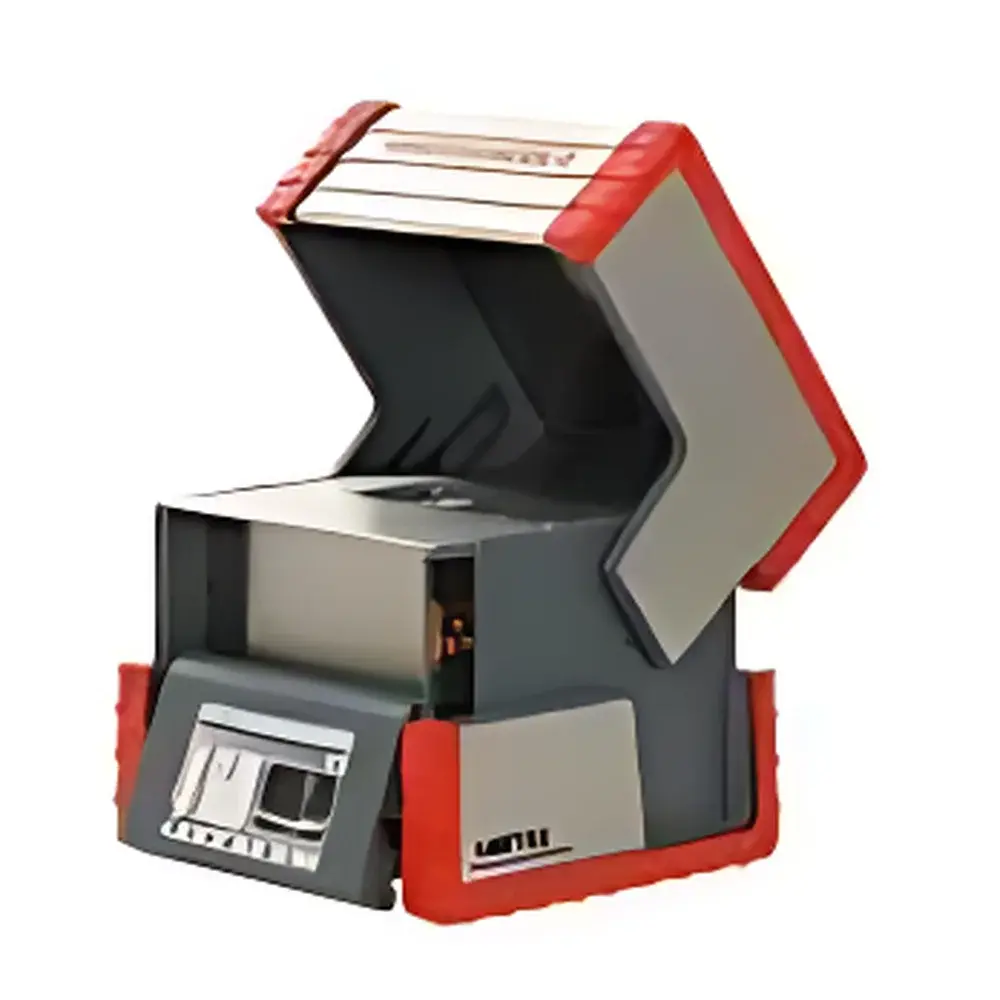

SPECTRO SCOUT Portable Energy-Dispersive X-Ray Fluorescence (ED-XRF) Spectrometer
| Brand | SPECTRO |
|---|---|
| Origin | Germany |
| Model | SPECTRO SCOUT |
| Type | Portable, Hybrid (Scanning + Multi-Channel) ED-XRF Spectrometer |
| Detector | Silicon Drift Detector (SDD) |
| X-ray Tube | Rh anode, max. 50 kV |
| Elemental Range | Na (11) to U (92) |
| Spot Size | 1 mm diameter |
| Dimensions (transport) | 270 × 306 × 306 mm |
| Dimensions (operational) | 350 × 306 × 306 mm |
| Weight | 12.0 kg (without battery), 12.75 kg (with battery) |
| Power Supply | 10–30 V DC (integrated Li-ion battery) |
| AC adapter | 90–264 V AC, 50–60 Hz |
| Interface | Integrated touchscreen PC, Bluetooth, Wi-Fi, LAN, USB |
| Software | SPECTRO XRF Analyzer Pro with iCAL (intelligent Calibration) |
| Compliance | Designed for field-deployable GLP-aligned workflows |
Overview
The SPECTRO SCOUT Portable Energy-Dispersive X-Ray Fluorescence (ED-XRF) Spectrometer is an engineered solution for high-fidelity elemental analysis outside the controlled laboratory environment. Unlike wavelength-dispersive systems (WDXRF), which rely on crystal diffraction for spectral separation, the SPECTRO SCOUT employs energy-dispersive detection using a high-resolution silicon drift detector (SDD), enabling simultaneous acquisition across the full detectable energy range (approximately 0.9 keV to 20 keV). This architecture delivers rapid, non-destructive quantification of elements from sodium (Na, Z = 11) through uranium (U, Z = 92) in solid, powdered, or irregularly shaped samples — without requiring vacuum or helium purging for light-element analysis down to Na. Its compact mechanical design, integrated computing platform, and optimized X-ray optics (Rh-target tube, 50 kV maximum excitation) make it suitable for both field-based geological surveys and near-line quality control in metal fabrication, recycling, and mining operations.
Key Features
- True portable ED-XRF platform with integrated touchscreen PC and real-time spectral processing — no external laptop required.
- 1-mm analysis spot size enables precise micro-localization of elemental composition on heterogeneous surfaces.
- iCAL intelligent calibration technology: standardization completed in under 5 minutes using a single reference sample, minimizing setup time while maintaining traceability to certified reference materials (CRMs).
- Silicon drift detector (SDD) with Peltier cooling ensures high count-rate capability (>100,000 cps) and excellent energy resolution (<145 eV at Mn Kα), critical for resolving overlapping peaks in complex matrices.
- Modular hardware architecture supporting optional accessories including integrated HD video imaging, GPS geotagging, nitrogen purge for enhanced light-element sensitivity, vacuum chamber for ultra-low-Z analysis, and motorized sample rotation for improved homogeneity averaging.
- Ruggedized enclosure rated for IP54 environmental protection, compliant with MIL-STD-810G shock and vibration requirements for transport and operation in industrial or outdoor settings.
Sample Compatibility & Compliance
The SPECTRO SCOUT accommodates a broad range of sample forms: bulk metals, alloys, ores, soils, sediments, ceramics, catalysts, and coated substrates. No sample preparation is required for many applications; flat, stable surfaces yield optimal precision. For powders or irregular solids, optional sample spinners and press tools ensure reproducible geometry. The system adheres to international analytical standards including ASTM E1621 (standard test method for elemental analysis of waste materials by ED-XRF), ASTM E2587 (practice for statistical sampling and analysis of particulate matter), and ISO 21043 (XRF — general requirements for instrumentation). Data integrity features align with GLP and GMP principles: full electronic audit trail, user access control, timestamped spectra storage, and exportable .csv/.xrf binary formats compatible with LIMS integration.
Software & Data Management
SPECTRO XRF Analyzer Pro provides a streamlined, task-oriented interface accessible via the built-in 7-inch capacitive touchscreen. Preloaded application packages — such as Alloy ID, Mining Geochemistry, RoHS Screening, and Precious Metals — include factory-calibrated models with matrix-matched standards and interference corrections. All quantitative results are traceable to NIST-traceable CRMs. The software supports multi-layer analysis, limit-of-detection (LOD) calculation per element, statistical process control (SPC) charting, and customizable report generation (PDF/Excel). Data export includes raw spectra, processed concentrations, acquisition parameters, and metadata (GPS coordinates, operator ID, timestamp). Remote diagnostics and firmware updates are enabled via secure HTTPS connection.
Applications
- On-site scrap metal sorting and alloy verification in recycling yards and foundries.
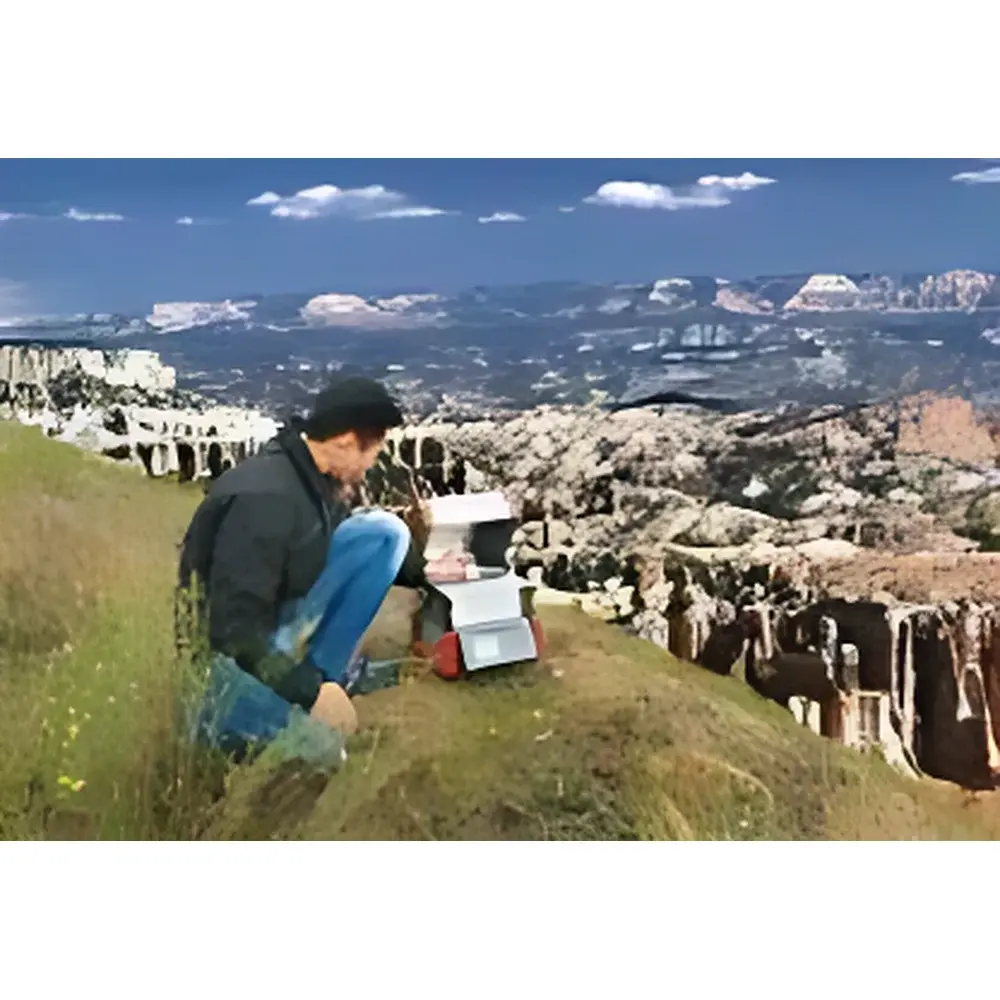
- Rapid geochemical mapping of exploration drill cores, outcrops, and soil profiles during field campaigns.
- QA/QC of incoming raw materials (e.g., bauxite, nickel laterite, copper concentrates) prior to smelting.
- Regulatory screening for restricted substances (Pb, Cd, Hg, Cr⁶⁺, Br) in electronics and consumer goods per RoHS and WEEE directives.
- Analysis of precious metal content in jewelry, catalytic converters, and electronic components.
- Forensic material identification and contamination source tracing in environmental remediation projects.
FAQ
Does the SPECTRO SCOUT require vacuum or helium flushing to analyze light elements?
No — its optimized SDD detector and Rh-tube excitation enable reliable detection of sodium (Na) and magnesium (Mg) in air, though optional nitrogen purge or vacuum accessories further improve sensitivity below aluminum.
Can calibration be performed in the field without certified standards?
iCAL requires only one well-characterized reference sample per application type; however, long-term accuracy and regulatory compliance necessitate periodic verification against CRMs traceable to national metrology institutes.
Is the instrument compliant with FDA 21 CFR Part 11 for regulated industries?
While the SPECTRO SCOUT itself is not a 21 CFR Part 11–certified system, its audit-trail functionality, electronic signatures (via optional domain authentication), and secure data export support validation pathways required for pharmaceutical or medical device manufacturing environments.
What is the typical detection limit for iron in stainless steel using the SPECTRO SCOUT?
Under standard measurement conditions (60 s live time, 40 kV/20 µA), typical LOD for Fe in austenitic stainless matrix is approximately 15–25 ppm; actual performance depends on surface finish, homogeneity, and counting statistics.
How is spectral interference handled during multi-element analysis?
The SPECTRO XRF Analyzer Pro applies fundamental parameter (FP)-based deconvolution algorithms combined with empirical peak-shape modeling and inter-element correction matrices derived from CRM libraries — minimizing bias from overlapping L- and K-lines in complex alloys and geological samples.




