
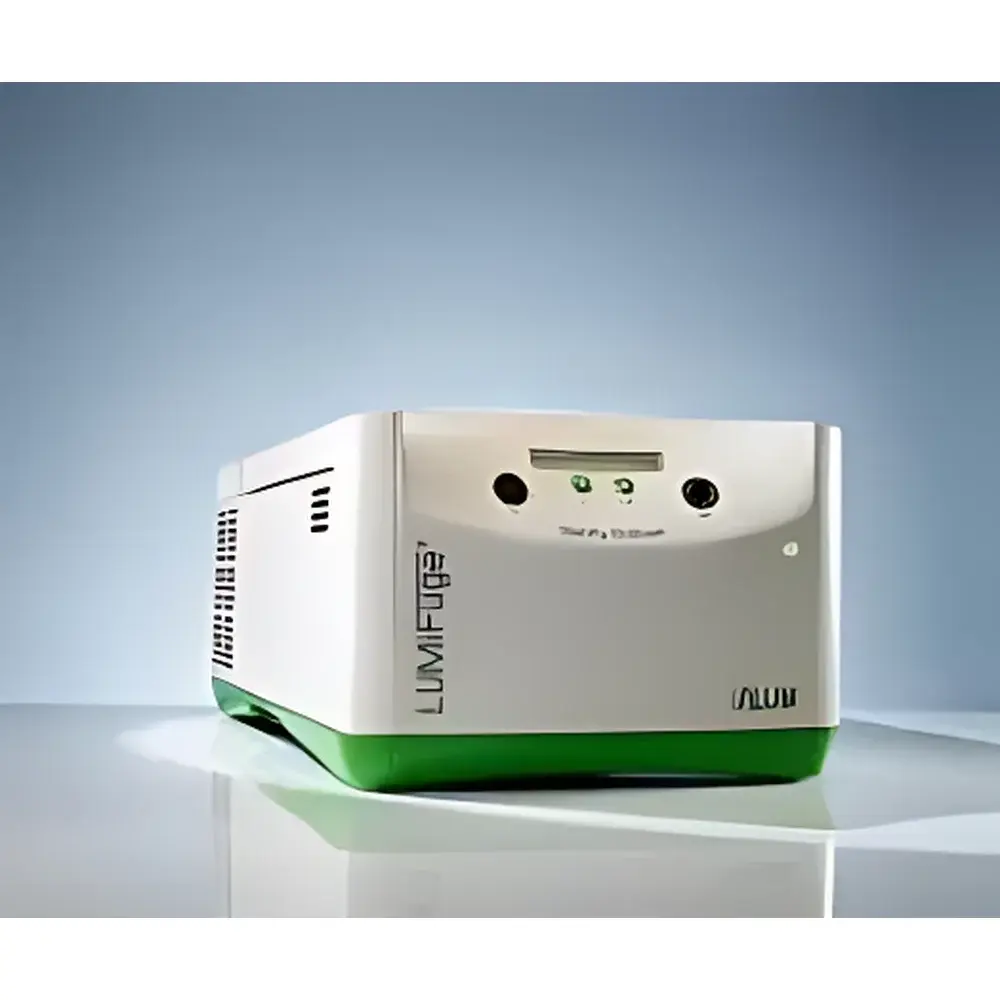
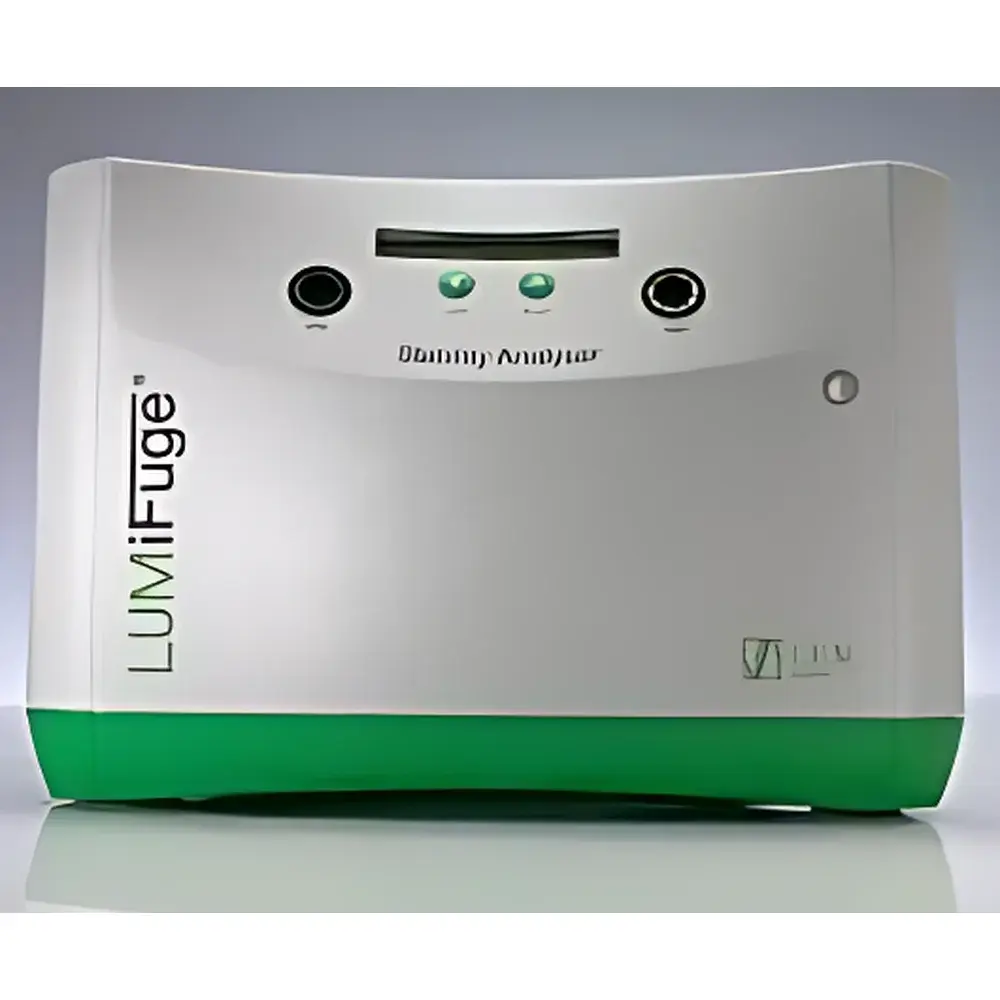
LUM LUMiFuge Stability Analyzer
| Brand | LUM |
|---|---|
| Origin | Germany |
| Manufacturer Type | Authorized Distributor |
| Origin Category | Imported |
| Model | LUMiFuge |
| Price | Upon Request |
Overview
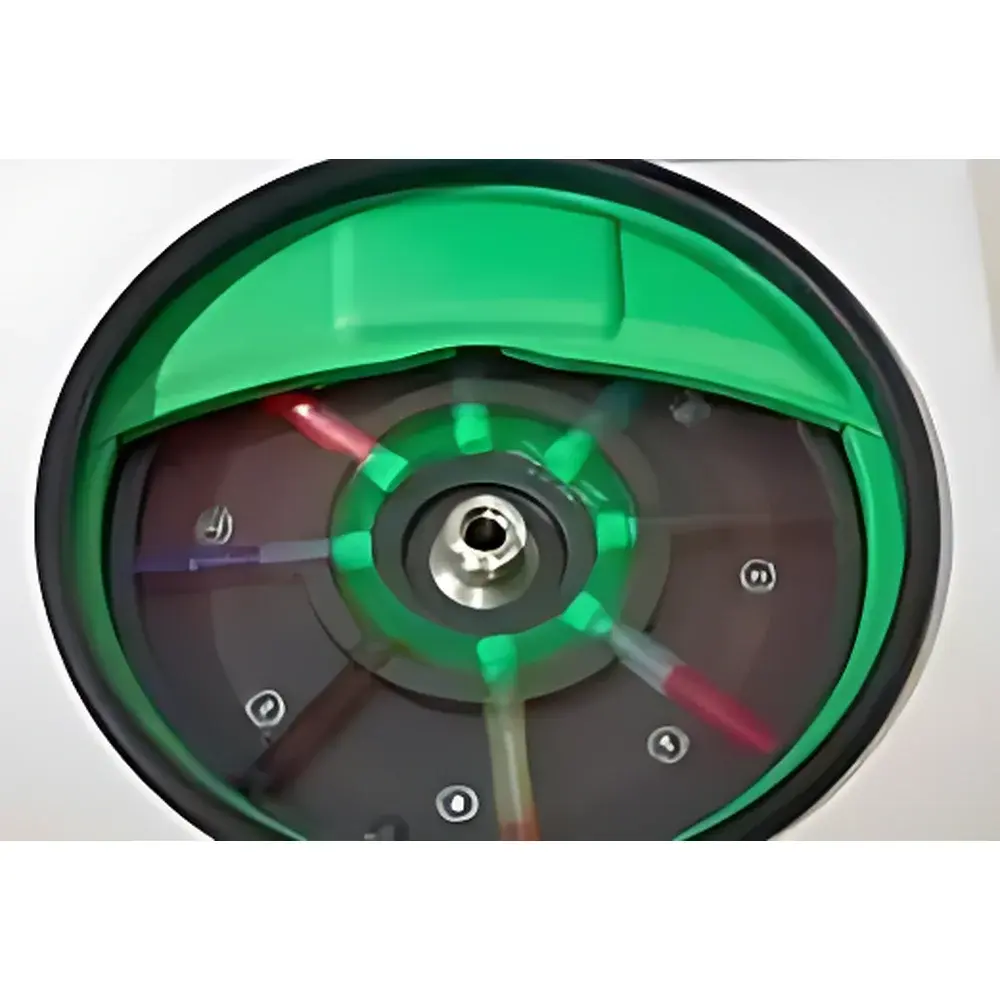
The LUM LUMiFuge Stability Analyzer is a high-precision analytical centrifuge engineered for accelerated, quantitative assessment of colloidal and particulate system stability. It operates on the patented Spatially Resolved Extinction Profile (STEP) Technology — a non-invasive, real-time optical method that captures the full extinction profile across the entire sample height (0–2 mm path length) in a single measurement. Unlike conventional sedimentation analyzers relying on point detection or time-consuming sequential scanning, STEP enables simultaneous acquisition of optical density gradients with spatial resolution down to 10 µm. This allows direct observation of migration fronts, phase separation kinetics, creaming, sedimentation, flocculation, coalescence, and gelation — all under controlled gravitational acceleration (6×g to 2300×g). The instrument physically accelerates destabilization processes while preserving native sample structure, eliminating the need for dilution, component identification, or prior knowledge of formulation composition. Its core function is to generate stability fingerprints — quantitative, time-resolved extinction maps — that serve as objective, reproducible metrics for ranking formulations, predicting shelf life, and deconvoluting instability mechanisms.
Key Features
- Simultaneous analysis of up to 8 samples per run, each independently configurable for speed, temperature, and illumination
- Integrated Peltier-based temperature control (4 °C to 60 °C, ±0.5 K accuracy) enabling thermally guided stability screening
- Dual-wavelength near-infrared (NIR) and customizable visible-light sources optimized for broad material transparency and scattering contrast
- High-resolution linear CCD array sensor capturing full extinction profiles at 1-second temporal resolution (adjustable from 1 s to 99 h)
- Patented parallel-beam optics ensuring uniform illumination across entire sample height — critical for accurate quantification of concentration gradients
- Optional magnetic field module (orthogonal or parallel configuration) for in situ characterization of magnetic nanoparticle/microparticle separation dynamics and magnetophoretic mobility
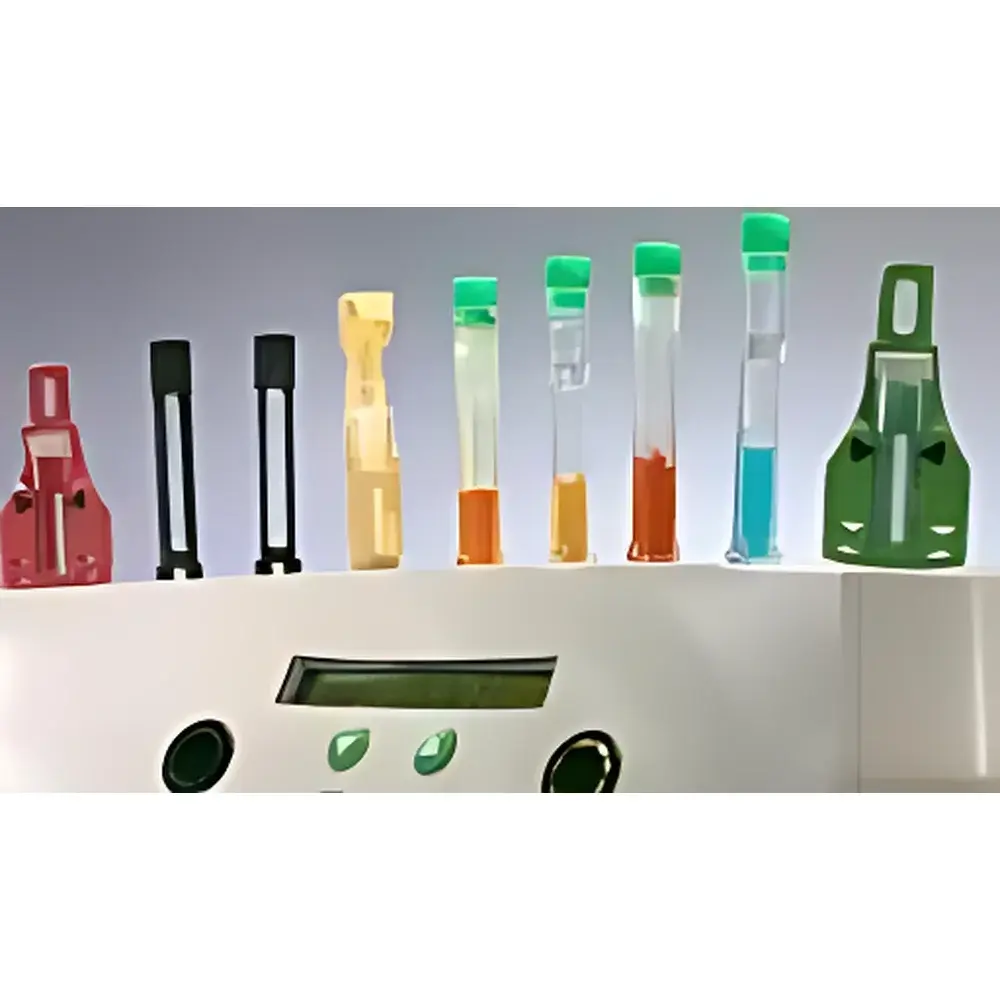
- Compatibility with disposable quartz, glass, or polymer cuvettes (0.05–2.0 mL volume; optical path lengths from 0.1–2.0 mm)
- Robust mechanical architecture designed for long-term operation under variable g-force loads and thermal cycling
Sample Compatibility & Compliance
The LUMiFuge accommodates highly diverse dispersions without modification: opaque suspensions (0.00015–90 wt% solids), high-viscosity systems (0.8–10⁸ mPa·s), dense particles (up to 22 g/cm³), and nanoscale to micrometer-scale entities (including CNTs, carbon black, TiO₂, Fe₃O₄, polymers, liposomes, and biological colloids). It complies with ISO/TR 13097 (Colloidal dispersions — Guidelines for the characterization of dispersion stability), supports audit-ready data integrity per FDA 21 CFR Part 11 (electronic records and signatures), and meets GLP/GMP documentation requirements through timestamped, user-logged measurement metadata and immutable raw extinction profile storage. All hardware components are CE-marked and conform to IEC 61010-1 safety standards for laboratory equipment.
Software & Data Management
The proprietary SEPView software provides full instrument control, real-time visualization of extinction profiles, and automated stability parameter extraction — including sedimentation velocity, creaming rate, interface sharpness, depletion zone formation, and destabilization onset time. Algorithms compute normalized stability indices (e.g., Turbiscan Stability Index, TSI) and enable comparative ranking across batches or formulations. Data export supports CSV, HDF5, and XML formats for integration into LIMS or statistical analysis platforms (e.g., JMP, MATLAB, Python pandas). Audit trails record operator ID, parameter settings, environmental logs, and software version history — essential for regulatory submissions and internal quality audits.
Applications
The LUMiFuge serves R&D, QC, and formulation laboratories across industries requiring rigorous physical stability assessment: pigment dispersions (inks, paints, coatings), pharmaceutical suspensions and emulsions (injectables, topicals), cosmetic lotions and serums, food colloids (dairy, plant-based beverages), lubricants and coolants, battery slurries, wastewater treatment flocs, agrochemical suspensions, and advanced functional materials (magnetic fluids, conductive pastes, ceramic precursors). It replaces multi-week real-time storage studies with predictive stability assessments completed in ≤24 hours — accelerating development cycles and reducing resource consumption.
FAQ
Does the LUMiFuge require sample dilution or pre-treatment before analysis?
No. STEP Technology enables direct measurement of undiluted, as-formulated samples across the full concentration range.
Can it distinguish between sedimentation and flocculation mechanisms?
Yes. Spatial-temporal extinction profiles reveal distinct signature patterns: sedimentation shows progressive downward interface movement; flocculation manifests as rapid local turbidity increase followed by network collapse.
Is magnetic field integration available as a standard or optional feature?
Magnetic field capability is an optional add-on module supporting both orthogonal and parallel field configurations for magnetophoretic studies.
What is the minimum detectable particle size?
Detection sensitivity depends on refractive index contrast and concentration, but reliable profiling is achieved for particles ≥50 nm in typical industrial dispersions.
How does temperature control impact measurement reproducibility?
Precise ±0.5 K thermal regulation ensures viscosity and Brownian motion effects are decoupled from gravitational migration — critical for isolating intrinsic stability behavior.



