
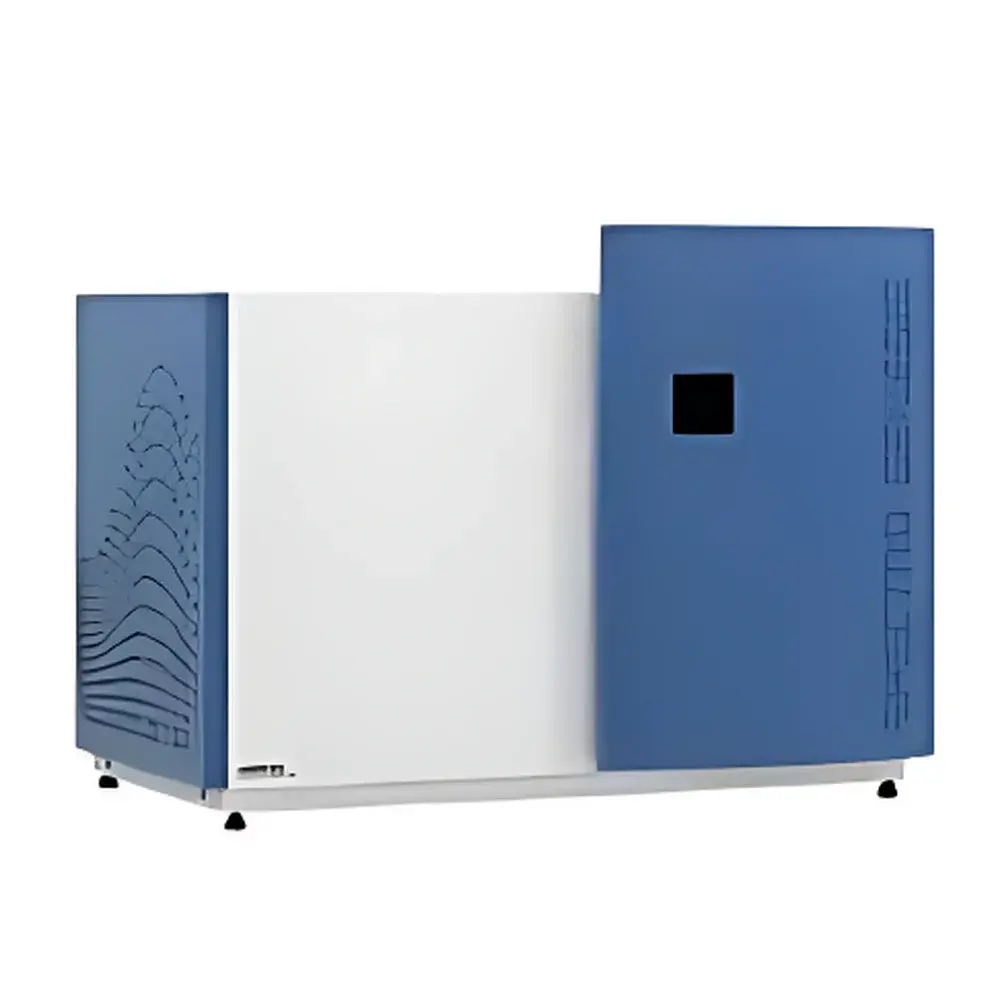
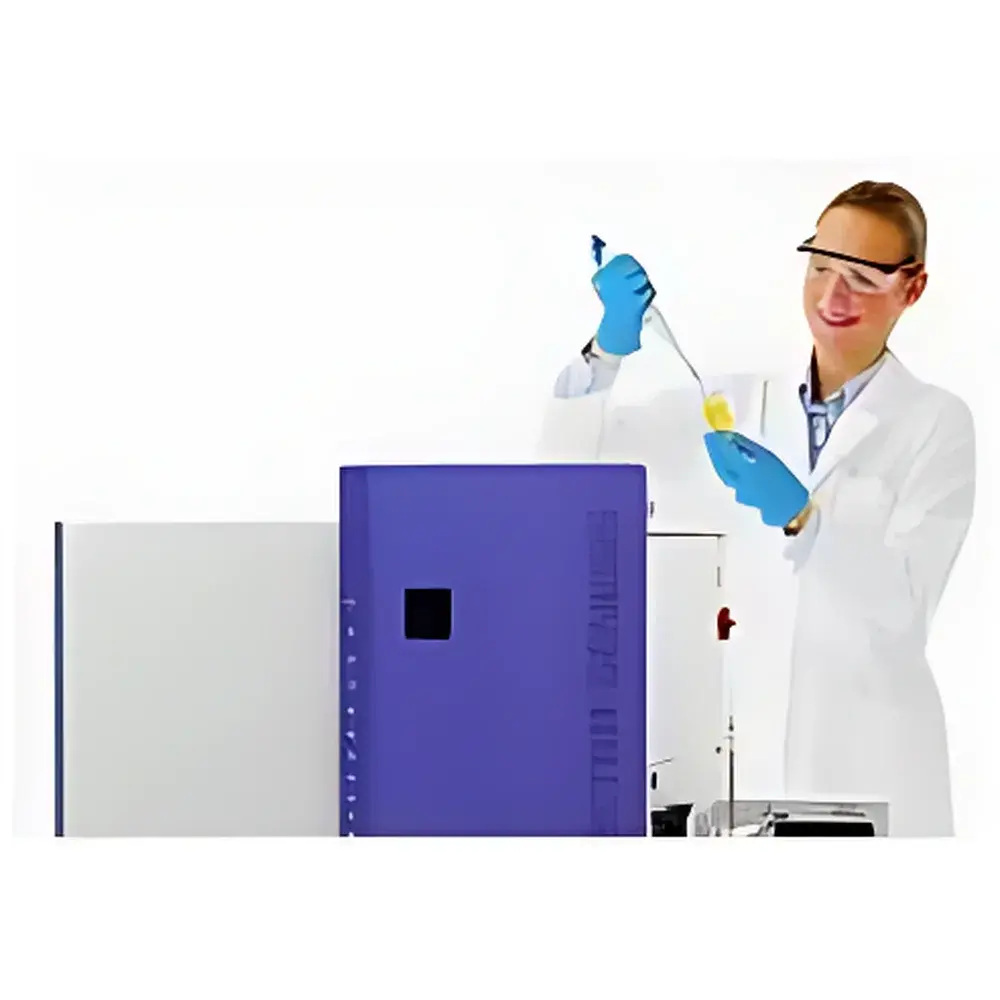
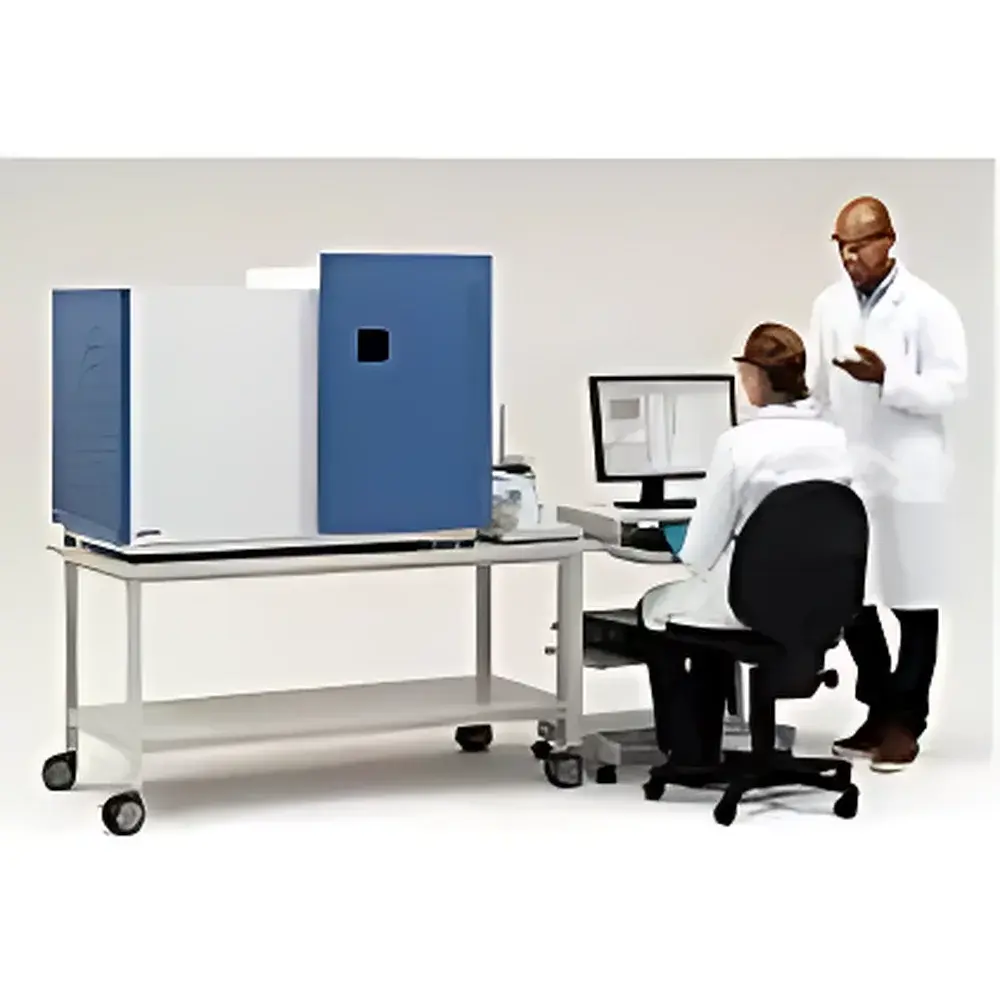
SPECTRO GENESIS ICP-OES Spectrometer for Oil and Industrial Fluid Analysis
| Brand | SPECTRO |
|---|---|
| Origin | Germany |
| Model | SPECTRO GENESIS |
| Type | Full-Spectrum Simultaneous ICP-OES |
| Wavelength Range | 175–770 nm |
| RF Generator | 27 MHz Solid-State |
| Optical Purge Flow | ≥0.5 L/min (Argon or Nitrogen) |
| Sample Throughput | Up to 700 samples/day |
| Detector | High-Quantum-Efficiency CCD Array |
| Compliance | ASTM D5185, D6595, ISO 11885, USP <233>, EPA Methods 200.7, 6010D, 6020B, GLP/GMP-ready with 21 CFR Part 11–compliant software options |
Overview
The SPECTRO GENESIS is a full-spectrum simultaneous inductively coupled plasma optical emission spectrometer (ICP-OES), engineered specifically for high-throughput elemental analysis of challenging organic and inorganic matrices—including lubricating oils, fuel oils, hydraulic fluids, coolants, and industrial process streams. Unlike sequential scanning ICP-OES systems or flame atomic absorption (FAA) instruments, the GENESIS captures the entire 175–770 nm spectral range in a single exposure using a high-resolution, back-thinned charge-coupled device (CCD) detector. This simultaneous acquisition enables true multi-element quantification without dwell-time compromises, delivering robust precision and inter-element interference correction via advanced spectral deconvolution algorithms. Its 27 MHz solid-state RF generator provides stable, low-noise plasma excitation optimized for volatile organic solvents and high-dissolved-solid aqueous digests—eliminating the need for water-cooling and reducing operational complexity. Designed and manufactured in Germany, the instrument integrates hardware-level optimization for direct oil analysis, including specialized nebulization, robust torch configuration, and matrix-tolerant plasma viewing geometry.
Key Features
- Full-spectrum simultaneous detection across 175–770 nm with no moving parts or wavelength scanning delays
- Pre-validated factory application methods covering >40 elements in oil, water, soil, sludge, and particulate filters—enabling immediate “out-of-the-box” compliance with ASTM D5185 (wear metals in used oils), D6595 (additive elements), ISO 11885 (wastewater), and EPA Method 200.7
- 27 MHz air-cooled solid-state RF generator with automatic impedance matching—optimized for organic solvent introduction and stable plasma operation at low argon consumption (≤0.5 L/min optical purge)
- Dedicated oil analysis hardware package: high-efficiency concentric nebulizer, cyclonic spray chamber, and vertical torch orientation to minimize carbon deposition and memory effects
- Integrated background correction and spectral interference management using pixel-by-pixel intensity modeling and internal standard normalization (e.g., Y, Sc, or In)
- Modular design supporting optional accessories: autosampler integration, UV inert gas purge upgrade, HF-resistant sample introduction for hydrofluoric acid digests, and remote diagnostics via secure TLS-encrypted connection
Sample Compatibility & Compliance
The SPECTRO GENESIS demonstrates exceptional tolerance for undiluted and diluted organic matrices. Validation data against NIST SRM 1084a (diluted 1:10 in kerosene) confirms recoveries between 92.4% and 107.7% for key wear metals (Fe, Cu, Cr, Ni, Pb), additives (Mo, V, Mg, Ca), and contaminants (Si, Al, Na). It meets regulatory requirements for routine testing under ISO/IEC 17025-accredited laboratories and supports audit-ready documentation for GLP and GMP environments. Software configurations include optional 21 CFR Part 11 compliance modules with electronic signatures, audit trails, and role-based access control. All factory methods are traceable to certified reference materials and validated per ICH Q2(R2) guidelines for analytical procedure validation.
Software & Data Management
SPECTRO’s proprietary SparkVue™ software provides intuitive method setup, real-time spectral visualization, and automated QC flagging (e.g., drift correction, blank contamination alerts, linearity deviation warnings). Data export complies with ASTM E1382 and ASTM E1447 standards, supporting CSV, XML, and LIMS-compatible formats (ASTM E1394, HL7). Raw spectral data is stored in vendor-neutral HDF5 format for third-party reprocessing. The system logs all user actions, parameter changes, and calibration events with time-stamped, immutable records—fully aligned with FDA 21 CFR Part 11 requirements when configured with digital signature and electronic record modules.
Applications
- Routine wear metal monitoring in turbine, engine, and gear oils per OEM specifications (e.g., Caterpillar S.O.S., Komatsu KOMTRAX)
- Additive depletion profiling (Zn, P, Ca, Mg, Ba) and contaminant ingress detection (Si, Na, B, Al) in lubricants
- Environmental compliance testing of wastewater, landfill leachate, and soil extracts per EPA and EU WFD directives
- Quality control of catalysts, battery electrolytes, and specialty chemical feedstocks
- Research-grade multi-element mapping in geological and metallurgical samples requiring rapid screening without digestion bottlenecks
FAQ
Can the SPECTRO GENESIS analyze neat oil without dilution?
Yes—its optimized plasma interface, low-flow nebulization, and vertical torch design enable direct analysis of unmodified lubricating oils, diesel, and jet fuels. Dilution is optional and typically applied only for ultra-trace elements or highly viscous samples.
Is method development required before routine use?
No. Factory-provided application packages include fully validated, ready-to-run methods for oil, water, soil, and sludge—each with documented LODs, LOQs, linearity ranges, and recovery data per ISO 17025 Annex A.2.
What maintenance intervals are recommended for organic matrix analysis?
Nebulizer and spray chamber cleaning is advised every 50–100 samples; torch inspection every 500 hours of plasma operation. No daily alignment or wavelength recalibration is required due to monolithic optical bench construction.
Does it support regulatory reporting for ISO 17025 or FDA audits?
Yes—when equipped with SparkVue™ GLP/GMP mode and 21 CFR Part 11 add-on, the system provides full electronic record integrity, user authentication, and audit trail generation compliant with ISO/IEC 17025:2017 Clause 7.7 and FDA guidance on computerized systems.
How does it compare to sequential ICP-OES in throughput and precision?
Simultaneous acquisition eliminates sequential dwell-time trade-offs, enabling sub-60-second multi-element analyses with RSDs ≤1.5% (n=10) across 30 elements—without sacrificing detection limits (typical 3σ LODs: 0.01–0.05 µg/L for most transition metals in 2% HNO₃).
Related Products





