
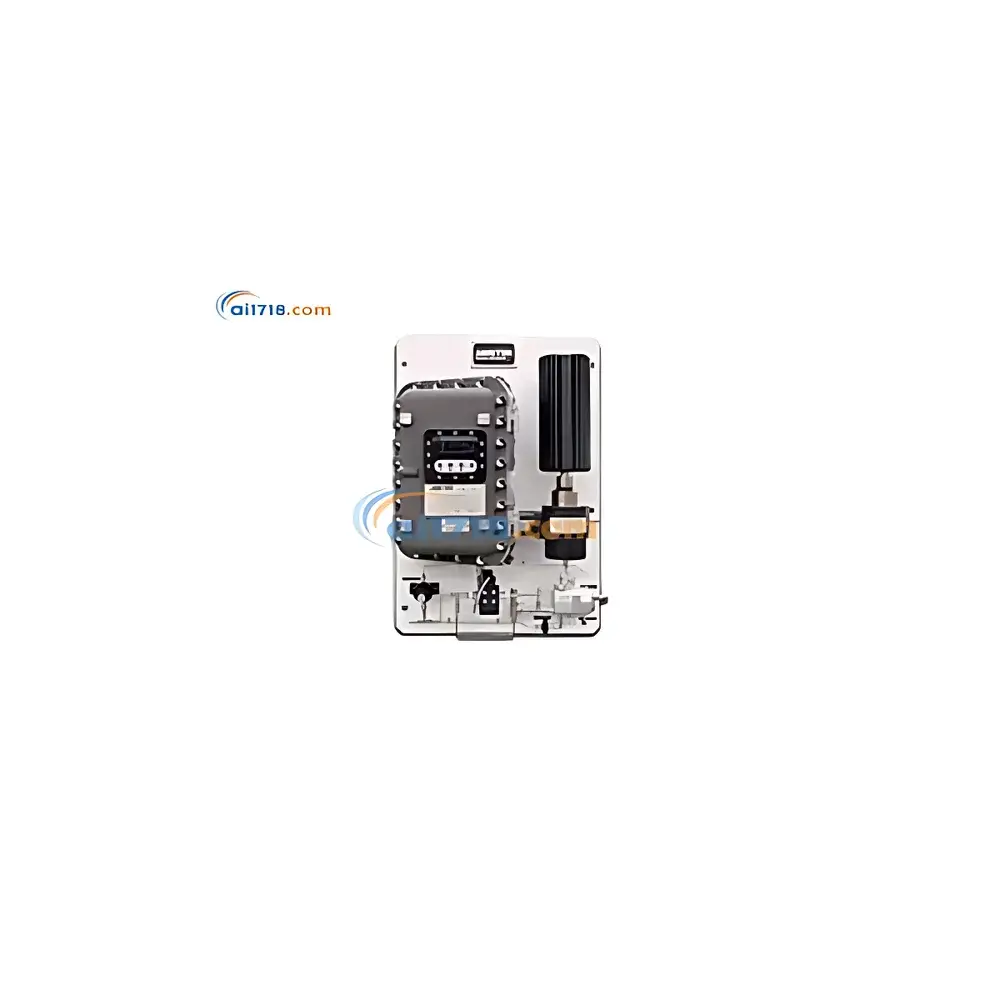
AMETEK MOCON 241CE II Hydrocarbon Dew Point Analyzer
| Brand | AMETEK MOCON |
|---|---|
| Origin | USA |
| Manufacturer Type | Authorized Distributor |
| Origin Category | Imported |
| Model | 241CE II |
| Pricing | Upon Request |
Overview
The AMETEK MOCON 241CE II Hydrocarbon Dew Point Analyzer is an industrial-grade, automated cold mirror-based analyzer engineered for continuous, unattended measurement of hydrocarbon dew point (HDP) temperature in natural gas streams under high-pressure and thermally critical conditions. It operates on the fundamental principle of optical condensation detection: a precisely temperature-controlled dual-surface mirror is cooled until hydrocarbon condensate forms, at which point reflected light intensity drops measurably—triggering detection of the true hydrocarbon dew point. Unlike indirect estimation methods such as gas chromatography (GC)-derived calculations—which rely on compositional assumptions and empirical correlations—the 241CE II delivers direct, physical-phase measurement with traceable metrological integrity. Its design prioritizes long-term stability, minimal drift, and immunity to water interference, making it suitable for custody transfer, pipeline integrity assurance, and process safety-critical applications across upstream, midstream, and power generation facilities.
Key Features
- Dual-surface, single-cell mirror architecture eliminates cross-sensitivity between water and hydrocarbon condensates—enabling selective HDP detection even in wet gas environments.
- Thermoelectric (Peltier) cooling system with platinum resistance thermometer (RTD) temperature sensing ensures ±1 °C accuracy and ±0.1 °C thermal stability—superior to thermocouple-based cold mirrors in long-term repeatability.
- Proprietary three-stage sample filtration system—optimized for natural gas—removes particulates, liquid aerosols, and heavy hydrocarbons to protect optical surfaces and extend maintenance intervals.
- Full Modbus RTU digital communication interface (RS-485) supports integration into DCS, SCADA, and PLC systems for remote monitoring and alarm triggering.
- Optional external trigger input allows synchronization of measurement cycles with process events (e.g., compressor staging or valve actuation).
- Integrated compatibility with AMETEK MOCON’s QCM-based moisture analyzers enables co-located, time-synchronized HDP and water dew point monitoring within a single enclosure.
Sample Compatibility & Compliance
The 241CE II is validated for use with dry to moderately wet natural gas (C1–C6+), biogas, and synthetic pipeline-quality gas mixtures. It accommodates operating pressures up to 13.79 MPa (2000 psi) and ambient installation temperatures from 10 °C to 40 °C (50 °F to 104 °F), with optional low-temperature variants available for sub-ambient installations. The analyzer meets Class I, Division 1, Groups C & D hazardous area requirements per NEC/CEC; carries ATEX/IECEx certification (II 2 G Ex db IIB T4 Gb); and complies with Russian TR CU 012/2011 (1ExdIIbT3X). All electrical and mechanical designs conform to CE marking directives, including EMC and Low Voltage Directive compliance. For regulated environments—including ISO 50001 energy management systems or API RP 1172-compliant gas quality monitoring—the 241CE II supports audit-ready operation when deployed with appropriate calibration documentation and traceable NIST-traceable RTD verification protocols.
Software & Data Management
The analyzer operates autonomously without embedded software or user-facing GUI. Configuration, diagnostics, and data logging are performed via Modbus register mapping, enabling seamless integration with third-party historian platforms (e.g., OSIsoft PI, Emerson DeltaV, Honeywell Experion). Four isolated 4–20 mA analog outputs provide real-time transmission of HDP temperature, mirror temperature, status flags (e.g., “condensation detected”, “mirror cleaning required”), and diagnostic voltage. Optional firmware updates—distributed through AMETEK MOCON’s secure support portal—maintain alignment with evolving industry data integrity expectations, including configurable event logging for GLP/GMP-aligned review trails where required by internal QA procedures.
Applications
- Custody transfer metering stations requiring contractual HDP compliance verification per GPA 2145 or ISO 12213-5 specifications.
- Pipeline transmission networks monitoring for incipient liquid dropout during seasonal pressure/temperature transients.
- Underground storage facility injection and withdrawal gas quality assurance.
- Gas turbine inlet conditioning—optimizing heating value and preventing hydrocarbon condensation in combustion air paths.
- Pressure swing adsorption (PSA) unit control—using HDP trends to refine cycle timing and improve product purity consistency.
- Refinery fuel gas header monitoring to prevent downstream equipment fouling and ensure flare gas spec compliance.
FAQ
What measurement principle does the 241CE II use?
It employs the chilled-mirror condensation method, detecting hydrocarbon phase transition optically via reflectance loss on a temperature-controlled mirror surface.
Can it distinguish between water dew point and hydrocarbon dew point?
Yes—the dual-surface mirror and proprietary optical discrimination algorithm allow independent detection of hydrocarbon vs. aqueous condensate formation.
Is the analyzer suitable for sour gas service?
While not certified for H₂S concentrations exceeding 100 ppm without additional conditioning, it may be deployed downstream of amine-treated or scavenger-processed gas streams meeting ISO 8503-2 cleanliness standards.
What sample flow rate is recommended?
1–5 L/min (2–10 scfh), dependent on line pressure, sample system configuration, and whether heated sample lines are used to prevent premature condensation upstream.
Does it require routine mirror cleaning?
The integrated filtration and self-diagnostic mirror contamination detection reduce cleaning frequency; typical intervals range from 3 to 12 months based on gas quality and upstream filtration efficacy.




