
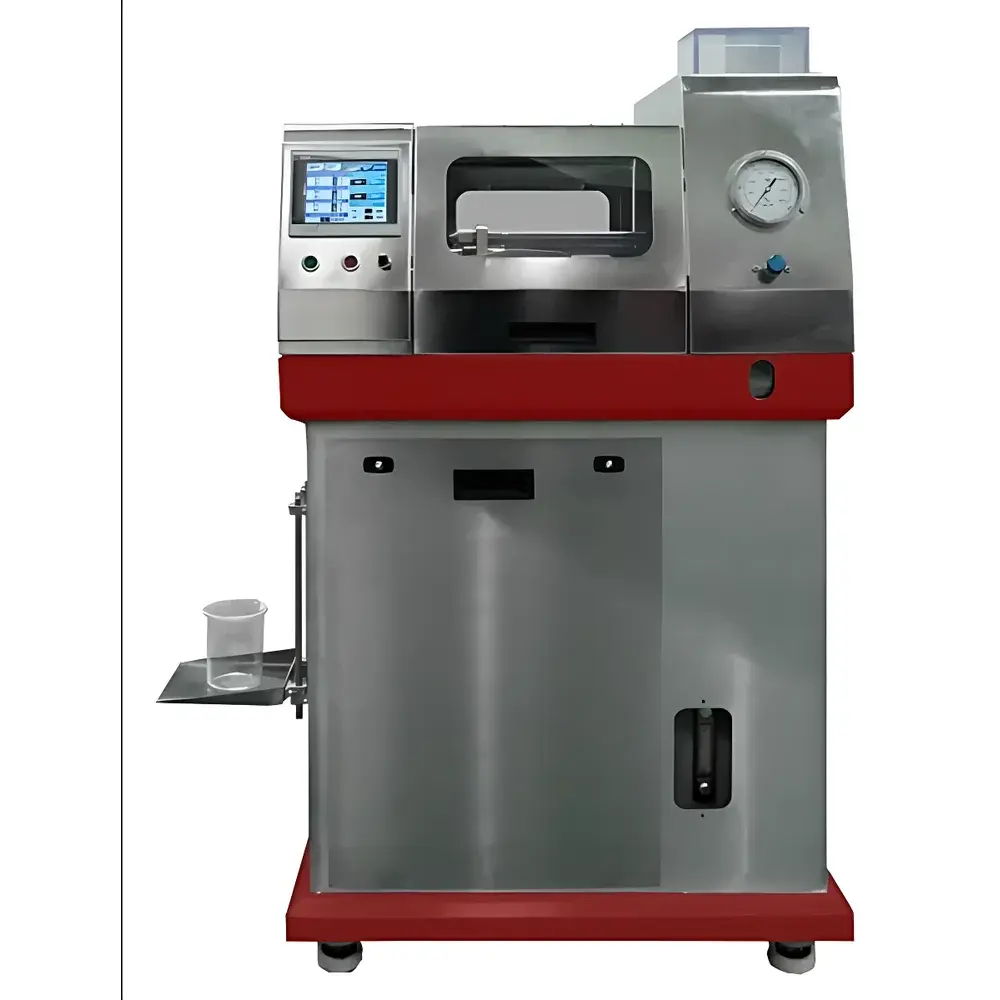
IlshinAutoclave NH300 High-Pressure Nano-Homogenizer
| Brand | IlshinAutoclave |
|---|---|
| Origin | South Korea |
| Model | NH300 |
| Instrument Type | High-Pressure Homogenizer |
| Dimensions (W×D×H) | 850×800×1500 mm |
| Processing Capacity | 1 L |
| Operating Pressure | 40,000 psi (2758 bar) |
| Flow Rate | 300 mL/min @ 40,000 psi |
| Orifice Nozzle Options | Z-type or Y-type |
| Feed Reservoir | 500 mL (auto/manual) |
| Hydraulic Power Unit | 5 HP |
| Weight | ~200 kg |
| Electrical Requirement | 220/380 VAC, 3-phase, 60 Hz |
| Cooling | Optional water line |
Overview
The IlshinAutoclave NH300 is a high-pressure nano-homogenizer engineered for scalable laboratory and pilot-scale processing of colloidal dispersions, liposomal formulations, nanosuspensions, and submicron emulsions. It operates on the principle of controlled hydrodynamic cavitation and intense shear stress generation via rapid pressure drop across precision-engineered micro-orifices. When a pressurized fluid—typically aqueous or organic suspensions—is forced through a narrow orifice (as small as 75 µm) at up to 40,000 psi (2758 bar), instantaneous pressure collapse induces supersonic flow velocity, localized turbulence, particle–particle collision, and transient cavitation bubbles. These combined mechanical forces disrupt agglomerates, lyse cells, and reduce particle size distribution to the nanoscale with high reproducibility. Unlike rotor-stator homogenizers or ultrasonic probes—which introduce thermal gradients and inconsistent energy input—the NH300 delivers uniform, controllable, and scalable mechanical energy transfer. Its robust hydraulic intensifier system ensures stable pressure maintenance during continuous operation, making it suitable for GMP-aligned process development in pharmaceutical, biotechnology, and advanced materials research.
Key Features
- High-intensity hydraulic intensifier system delivering consistent operating pressure up to 40,000 psi (2758 bar)
- Dual-configurable orifice modules: Z-type and Y-type geometries with interchangeable nozzles (75 µm, 100 µm, 200 µm) for optimized shear profile selection per application
- Programmable feed system with 500 mL reservoir supporting both manual and automated dosing modes
- Integrated 5 HP hydraulic power unit with real-time pressure monitoring and safety interlocks compliant with ISO 4414 and ANSI B93.1
- Stainless steel wetted parts (316L) compatible with aggressive solvents, buffers, and biological media
- Modular design enabling integration into closed-loop recirculation systems for multi-pass processing
- Low thermal load architecture—minimal temperature rise (<5°C per pass under standard conditions) without mandatory external cooling
Sample Compatibility & Compliance
The NH300 accommodates a broad range of sample viscosities (up to 5,000 cP) and solid loadings (≤25% w/v), including lipid suspensions, polymer nanoparticles, ceramic precursors, protein aggregates, and cell lysates. It meets material compatibility requirements for USP Class VI elastomers and complies with ISO 13485 design controls for medical device manufacturing environments. For pharmaceutical applications, the system supports audit-ready documentation packages aligned with FDA 21 CFR Part 11 (when paired with validated PC-based control software), ICH Q5A (viral clearance validation), and ASTM E2872-13 (nanoparticle dispersion stability testing). All contact surfaces are electropolished to Ra < 0.4 µm, facilitating clean-in-place (CIP) protocols and reducing carryover risk between batches.
Software & Data Management
While the base NH300 model features a discrete PCB-based controller with analog pressure gauges and manual valve actuation, optional digital upgrades include an Ethernet-enabled PLC interface with HMI touchscreen display. This configuration enables full parameter logging (pressure, flow rate, temperature, cycle count), export of CSV-formatted datasets, and integration with LIMS or MES platforms via Modbus TCP or OPC UA. Audit trails record operator ID, timestamped parameter changes, and alarm events—supporting GLP/GMP data integrity requirements. Firmware updates are performed via secure USB interface with cryptographic signature verification.
Applications
- Preclinical formulation development of injectable nanomedicines (e.g., paclitaxel nanocrystals, siRNA-loaded liposomes)
- Production of stable metal oxide nanoparticle dispersions for conductive inks and battery slurries
- Cell disruption for intracellular protein extraction with minimal denaturation
- Manufacturing of uniform polymeric micelles and nanoemulsions for topical delivery
- R&D-scale production of food-grade nanoencapsulates (vitamins, antioxidants) meeting EFSA nanomaterial definitions
- Dispersion of carbon nanotubes and graphene flakes in polymer matrices for composite reinforcement
FAQ
What is the minimum achievable particle size using the NH300?
Particle size reduction depends on feedstock composition, number of passes, and orifice selection. With optimized parameters, median diameters (D50) below 100 nm are routinely achieved for model systems such as polystyrene latex or titanium dioxide suspensions.
Can the NH300 be used for sterile processing?
Yes—when equipped with sterilizable orifice modules and integrated into a Class A/B isolator or glovebox environment, the NH300 supports aseptic nanosuspension preparation per ISO 14644-1 and EU GMP Annex 1 guidelines.
Is third-party calibration and qualification support available?
IlshinAutoclave provides IQ/OQ documentation templates and collaborates with certified service partners for on-site PQ execution, including pressure transducer calibration traceable to NIST standards and flow rate verification per ISO 5167.
How does the NH300 compare to microfluidizers in terms of scalability?
The NH300’s fixed-orifice geometry and hydraulic intensifier architecture enable direct linear scale-up from lab to pilot scale (1 L → 10 L/hour), whereas many microfluidizer platforms require re-optimization of interaction chamber geometry at higher throughput rates.
Does the system require chilled water for operation?
Cooling is optional and application-dependent. Most aqueous formulations operate within acceptable thermal limits without external cooling; however, viscous organic phases or extended multi-pass runs benefit from a recirculating chiller connected to the hydraulic oil cooler.



