
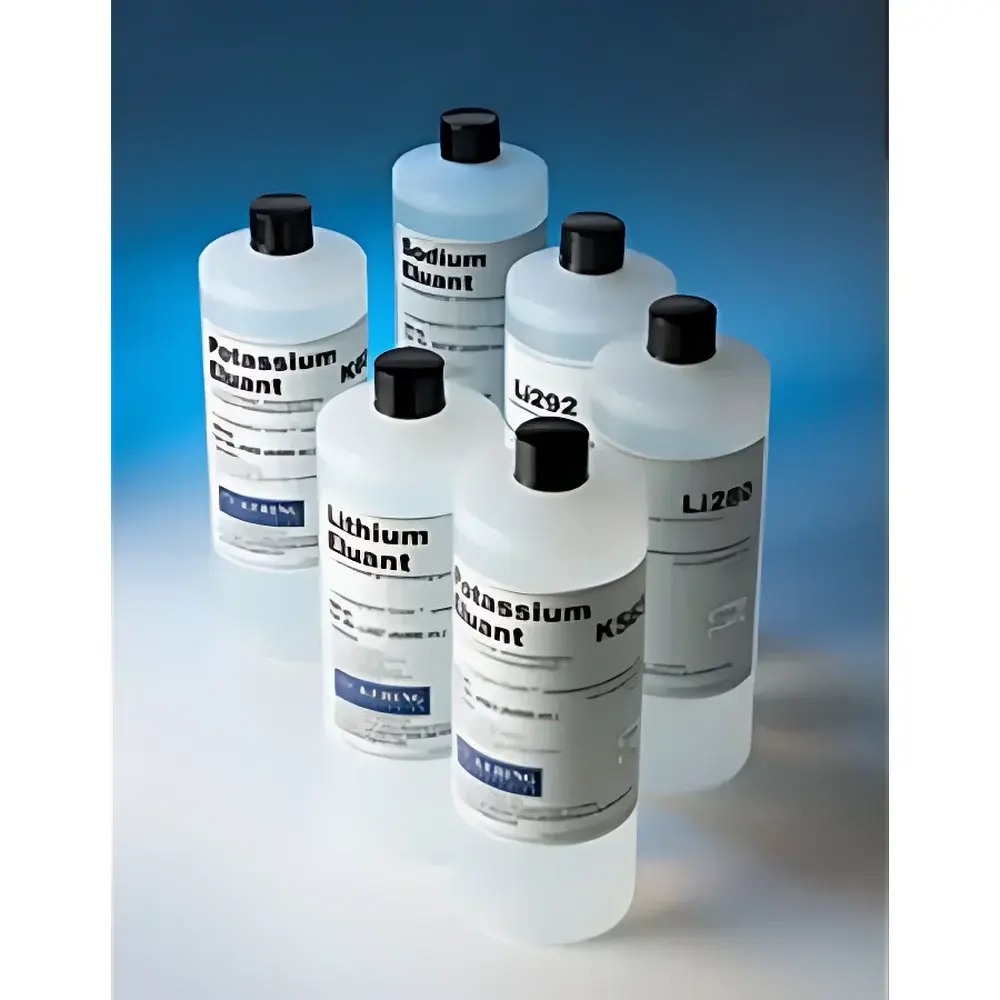
LABA AA9800 Plus Post-Column Derivatization Amino Acid Analysis Kit
| Brand | LABA (Tianjin Lanbo) |
|---|---|
| Origin | USA |
| Manufacturer Type | Authorized Distributor |
| Product Category | Imported Instrumentation |
| Model | AA9800 Plus |
| Instrument Type | Post-Column Derivatization System |
| Pump Flow Rate | 0.001–10.000 mL/min |
| Maximum Pump Pressure | 6000 psi |
| Autosampler Injection Volume | 0.1–500 µL |
| Autosampler Temperature Control | 4–40 °C |
| Post-Column Reactor Temperature Range | Ambient to 200 °C |
| Detection Wavelengths | 570 nm and 440 nm |
| Flow Cell Volume | 10 µL |
Overview
The LABA AA9800 Plus Post-Column Derivatization Amino Acid Analysis Kit is a fully integrated, high-precision solution engineered for quantitative and qualitative analysis of primary and secondary amino acids in complex biological, pharmaceutical, food, and clinical matrices. Based on the well-established post-column derivatization (PCD) principle—where amino acids are separated via ion-exchange or reversed-phase chromatography and subsequently reacted with ortho-phthalaldehyde (OPA), ninhydrin, or other selective reagents—the system delivers robust resolution of over 40 native and modified amino acid species. The kit is designed for seamless integration with the AA9800 Plus amino acid analyzer platform, supporting both OPA-based (for primary amines, detected at 440 nm) and ninhydrin-based (for primary and secondary amines, detected at 570 nm) detection chemistries. Its architecture adheres to fundamental requirements of regulated environments, including stable temperature-controlled reaction kinetics, precise gradient elution control, and low-dead-volume fluidic pathways to ensure retention time reproducibility (<0.15% RSD) and peak area precision (<1.0% RSD).
Key Features
- Comprehensive reagent suite optimized for LABA AA9800 Plus instrumentation, including pre-validated amino acid reference standards (certified traceable to NIST SRM 2389a), high-purity eluents, column regeneration solutions, and stabilized derivatization reagents (OPA and ninhydrin formulations with thiol co-reagents)
- Dedicated amino acid separation column packed with sulfonated polystyrene-divinylbenzene resin, offering pH-stable cation-exchange selectivity and >5,000 theoretical plates per meter
- Integrated dual-wavelength photometric detection (440 nm and 570 nm) with thermally stabilized flow cells (10 µL volume) to enable simultaneous quantification of primary and secondary amino acids without spectral deconvolution
- High-pressure, pulseless quaternary solvent delivery system capable of 0.001–10.000 mL/min flow control (±0.1% accuracy) and sustained operation up to 6000 psi, ensuring compatibility with sub-2-µm particle columns and fast-gradient methods
- Temperature-regulated autosampler (4–40 °C) with 100-position vial capacity and programmable needle wash, minimizing carryover (<0.005%) and thermal degradation of labile analytes such as cysteine and tryptophan
- Microprocessor-controlled post-column reactor with rapid thermal equilibration (±0.2 °C stability across 25–200 °C range), enabling precise optimization of derivatization kinetics for underivatized or sterically hindered residues
Sample Compatibility & Compliance
The AA9800 Plus reagent kit supports direct injection of hydrolyzed protein digests (6M HCl, 110 °C, 24 h), cell culture supernatants, plasma/serum extracts (deproteinized with sulfosalicylic acid), and food hydrolysates. It complies with method validation requirements outlined in USP , AOAC Official Method 994.12, and ISO 13895:2015 for amino acid profiling. All reagents meet ACS Reagent Grade or higher specifications; reference standards are accompanied by CoA documentation including purity (≥99.5%), water content (Karl Fischer), and uncertainty budgets. The system architecture supports 21 CFR Part 11-compliant data acquisition when paired with LABA ChromoLink™ software (audit trail, electronic signatures, role-based access control), fulfilling GLP and GMP laboratory documentation requirements.
Software & Data Management
ChromoLink™ Amino Acid Analysis Software (v4.2+) provides method editor, real-time chromatogram overlay, automated peak integration using tangent skim and valley-to-valley algorithms, and built-in calibration curve generation (linear, quadratic, or weighted least-squares). Raw data files (.chd) are stored in vendor-neutral format compliant with ASTM E1927-20 metadata standards. Batch processing supports IQ/OQ/PQ report generation, including system suitability metrics (tailing factor ≤2.0, resolution ≥2.0 between Asp/Glu, precision of replicate injections). Export options include CSV, PDF analytical reports, and LIMS-compatible XML output conforming to HL7 ADT and ASTM E2500-15.
Applications
- Pharmaceutical quality control: Quantification of amino acid composition in therapeutic peptides, monoclonal antibody fragments, and excipient-grade L-lysine or L-arginine
- Clinical diagnostics: Measurement of plasma amino acid profiles for inborn errors of metabolism (e.g., phenylketonuria, maple syrup urine disease)
- Food & nutrition science: Verification of protein digestibility (PDCAAS), allergen labeling compliance (e.g., gluten hydrolysate screening), and fortified food verification
- Bioprocess monitoring: Real-time tracking of amino acid depletion/enrichment in CHO or E. coli fermentation broths during fed-batch cultivation
- Academic research: Structural characterization of non-ribosomal peptides, post-translational modifications (e.g., hydroxyproline in collagen), and stable-isotope labeled tracer studies (¹³C/¹⁵N)
FAQ
What derivatization chemistries are supported out-of-the-box?
The kit includes validated protocols and reagents for both OPA (primary amines, 440 nm) and ninhydrin (primary + secondary amines, 570 nm) reactions, with optional add-on kits for fluorenylmethyloxycarbonyl chloride (FMOC) pre-column derivatization.
Are column and reagent lot numbers traceable to QC certificates?
Yes—each amino acid column ships with a Certificate of Performance (CoP) listing backpressure, efficiency, and resolution test results; all reagent vials bear unique batch IDs linked to CoAs with assay, residual solvents, and heavy metals testing.
Can this kit be used with third-party HPLC systems?
While optimized for AA9800 Plus hardware, the reagents and columns are compatible with most HPLC platforms equipped with post-column reactors, dual-wavelength UV-Vis detectors, and 0–200 °C reactor temperature control—method transfer requires gradient re-optimization and detector wavelength calibration.
How frequently must the derivatization reagents be replaced?
OPA reagent is stable for 48 hours at 4 °C; ninhydrin solution remains viable for 72 hours at ambient temperature when protected from light—software alerts trigger at 90% of recommended shelf-life based on preparation timestamp.
Is method validation support available?
LABA provides ICH Q2(R2)-aligned validation templates (specificity, linearity, LOD/LOQ, accuracy, precision, robustness) and offers on-site or remote IQ/OQ assistance through certified field application scientists.
Related Products






