
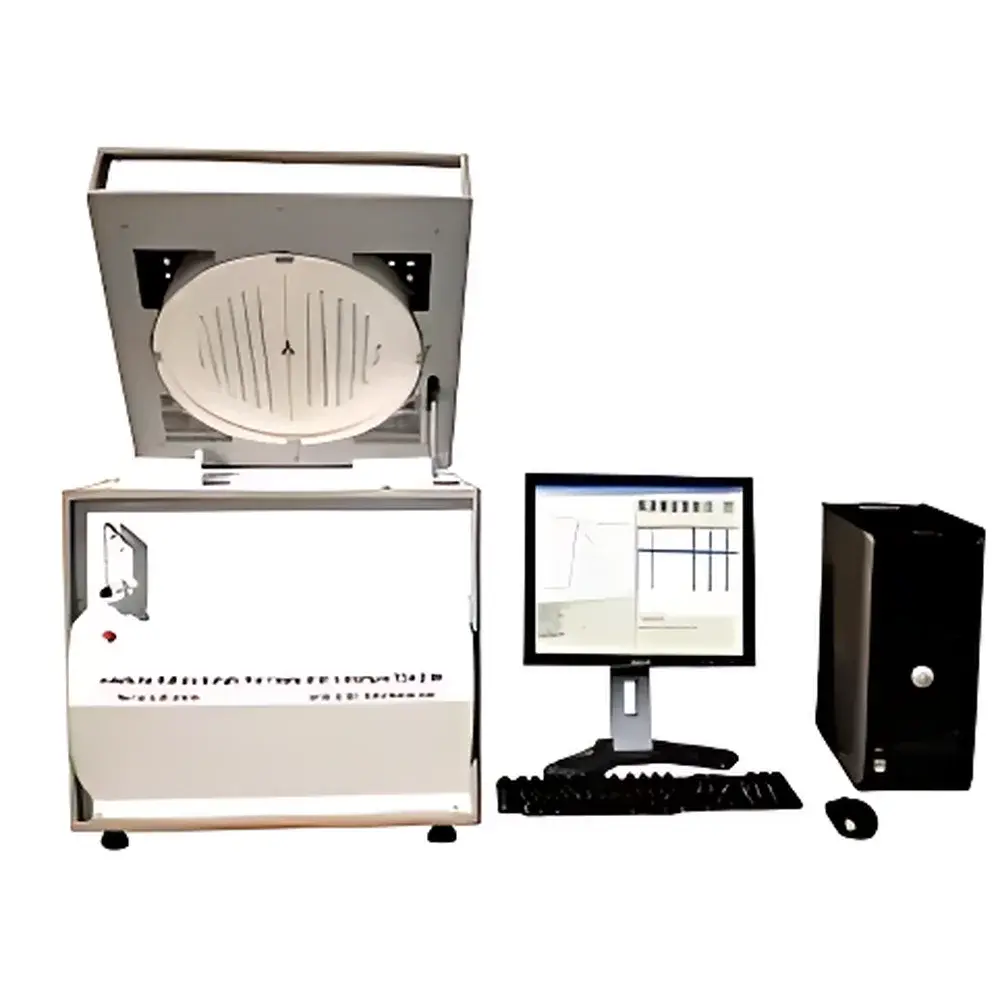
NAVAS INSTRUMENTS TGA-2000 Coal Proximate Analyzer
| Brand | NAVAS INSTRUMENTS |
|---|---|
| Origin | USA |
| Model | TGA-2000 |
| Temperature Range | 50–1000 °C (±1 °C) |
| Sample Mass | 0.1–5 g |
| Sample Capacity | 19 positions |
| Weight Resolution | 0.0002 mg |
| Mass Change Range | 0–100% |
| Compliance | ASTM D3172, D7582, ISO 11722, ISO 1171, USP <467> |
Overview
The NAVAS INSTRUMENTS TGA-2000 Coal Proximate Analyzer is a fully automated thermogravimetric system engineered for precise, repeatable determination of proximate analysis parameters in coal and coke—namely moisture, volatile matter, fixed carbon, and ash content—according to internationally recognized standards including ASTM D3172, ASTM D7582, ISO 11722, ISO 1171, and USP . Built on robust thermogravimetric analysis (TGA) principles, the instrument measures real-time mass loss under controlled thermal profiles and atmospheric conditions (inert or oxidizing), enabling accurate quantification of decomposition stages during sequential heating. Unlike conventional manual or semi-automated systems, the TGA-2000 integrates dual independent sample carousels—one for crucibles and one dedicated exclusively to crucible lids—to eliminate operator intervention during lid placement, crucible weighing, and high-temperature transfer. This architecture ensures consistent thermal sealing, minimizes ambient oxygen ingress during volatile release, and directly improves reproducibility of volatile matter values by reducing uncontrolled oxidation artifacts.
Key Features
- Dual-carousel mechanical architecture: Upper carousel holds crucible lids; lower carousel holds sample crucibles. Precision vertical actuation enables automatic lid placement onto crucibles inside the furnace chamber—no manual handling required.
- Integrated high-resolution microbalance: 4-digit analytical balance (0.0002 mg resolution) mounted within the furnace enclosure performs all in-situ weight measurements before, during, and after thermal cycles.
- Thermal safety engineering: Designed for safe operation at up to 600 °C with furnace door open; no risk of lid drop into furnace cavity due to guided carousel motion and mechanical interlocks.
- Power-fail resilience: Automatic system recovery and resume-from-interrupt functionality upon power restoration—preserving method integrity and data continuity.
- Modular hardware compatibility: All pneumatic valves, thermocouples, flow controllers, and magnetic sensors are commercially available off-the-shelf components—enabling local procurement and field-level maintenance without proprietary dependency.
- Configurable furnace options: Available in single-furnace and dual-furnace configurations, both controlled via a single Windows-based PC connected through standard USB interface.
Sample Compatibility & Compliance
The TGA-2000 accommodates standard silica or alumina crucibles (typically 15–20 mL volume) with masses ranging from 0.1 g to 5 g—covering routine coal, lignite, anthracite, petroleum coke, and biomass-derived solid fuels. Each run supports up to 19 samples per batch, with programmable individual step protocols per position. The system complies with regulatory and quality assurance frameworks applicable to coal testing laboratories, including full audit trail logging, user access control, and electronic signature support aligned with FDA 21 CFR Part 11 requirements when configured with validated software modules. All temperature calibration traces to NIST-certified reference materials, and mass calibration follows ASTM E2583 practices.
Software & Data Management
Controlled via NAVAS TGA Suite—a native Windows application supporting method creation, real-time monitoring, and post-run analysis—the platform allows granular definition of multi-stage thermal programs: target temperatures, ramp rates (0.1–100 °C/min), dwell times, purge gas selection (N₂, air, O₂), and flow rates (10–200 mL/min). Data output is structured in timestamped, metadata-enriched ASCII format and natively exports to CSV, TXT, and XLS via Microsoft Excel-compatible templates. An embedded ODBC driver enables direct integration with enterprise LIMS platforms (e.g., LabWare, Thermo Fisher SampleManager), supporting automated data ingestion, query-based filtering, statistical reporting, and long-term archival compliant with GLP/GMP documentation standards.
Applications
- Routine proximate analysis for coal trading, power plant feedstock qualification, and coking blend optimization.
- Quality control in coal preparation plants and metallurgical coke production facilities.
- Research-grade thermal stability assessment of low-rank coals, torrefied biomass, and alternative solid fuels.
- Method validation and inter-laboratory comparison studies requiring high inter-operator reproducibility (RSD < 0.3% for volatile matter across repeated runs).
- Regulatory compliance testing for EPA, ISO, and ASTM-mandated reporting in environmental and energy sectors.
FAQ
Does the TGA-2000 require proprietary consumables or service contracts?
No. All critical components—including magnetic position sensors, solenoid valves, and thermocouples—are industry-standard parts available from global industrial suppliers. NAVAS provides full schematics and maintenance guidelines.
Can the system be integrated into an existing LIMS environment?
Yes. Native ODBC connectivity supports bidirectional data exchange with major LIMS platforms. Validation documentation and IQ/OQ protocols are available upon request.
Is the instrument suitable for GLP-compliant laboratories?
When deployed with optional 21 CFR Part 11-compliant software configuration—including electronic signatures, audit trails, and role-based access control—the TGA-2000 meets core GLP and ISO/IEC 17025 documentation requirements.
What is the typical turnaround time for a full 19-sample proximate analysis batch?
Under standard ASTM D7582 protocol (moisture at 105 °C, volatiles at 950 °C, ash at 750 °C), average cycle time is approximately 4.5 hours—fully unattended.
How is calibration verified and maintained?
Mass calibration uses certified weights traceable to NIST; temperature calibration employs reference materials with certified decomposition points (e.g., calcium oxalate monohydrate). Both procedures are documented in the instrument’s calibration log and supported by automated prompts.





