
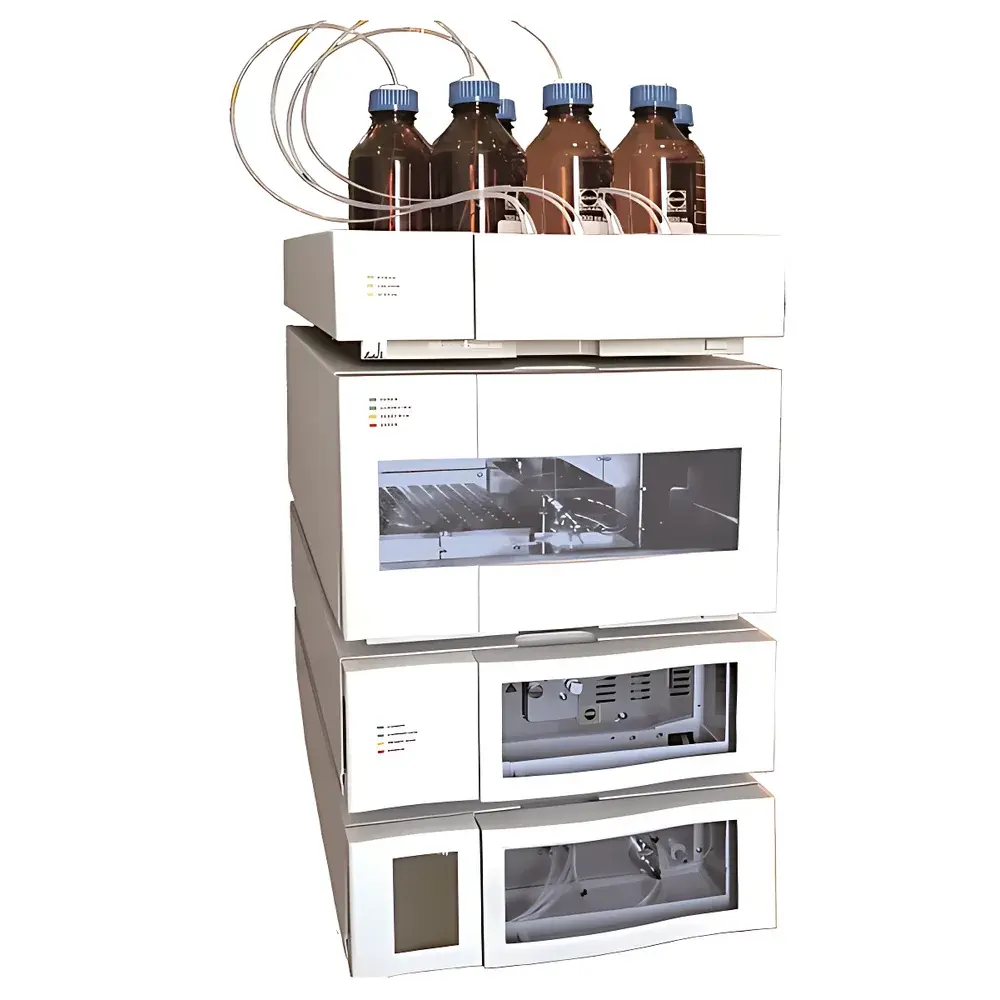
LABA AA9800 Series Fully Automated Amino Acid Analyzer
| Brand | LABA |
|---|---|
| Origin | USA |
| Manufacturer Type | Authorized Distributor |
| Origin Category | Imported Instrument |
| Model | AA9800 Series |
| Price Range | USD 70,000–100,000 |
| Analyzer Type | Post-Column Derivatization |
| Pump Flow Rate | 0.001–10.000 mL/min |
| Maximum Pump Pressure | 6000 psi |
| Autosampler Injection Volume | 0.1–500 µL |
| Autosampler Temperature Control | 4–40 °C |
| Post-Column Reactor Temperature Range | Ambient to 200 °C |
| Detection Wavelengths | 440 nm and 570 nm |
| Flow Cell Volume | 10 µL |
Overview
The LABA AA9800 Series Fully Automated Amino Acid Analyzer is a high-precision, post-column derivatization (PCD) liquid chromatography system engineered for quantitative and qualitative analysis of both free and hydrolyzed amino acids in complex biological, pharmaceutical, food, and clinical matrices. Based on the well-established ninhydrin-based PCD principle, the instrument separates amino acids on a dedicated cation-exchange column under precisely controlled pH, ionic strength, and temperature gradients, followed by high-efficiency thermal derivatization with ninhydrin reagent in a sealed, continuously flowing reaction coil. The resulting chromophores—Ruhemann’s purple (λmax ≈ 570 nm) for primary α-amino acids and yellow iminium species (λmax ≈ 440 nm) for secondary amines such as proline—are quantified via dual-wavelength photometric detection. This architecture ensures robust baseline stability, high reproducibility across multi-day runs, and compliance with pharmacopeial methods including USP , EP 2.2.57, and AOAC Official Method 994.12.
Key Features
- Integrated inert gas (N2 or Ar) purging for all buffer and ninhydrin reagent reservoirs to prevent oxidation and ensure long-term reagent stability
- PEEK-fluidic pathway throughout the entire flow path—including pump heads, valves, reactors, and detectors—to eliminate metal-catalyzed degradation and ensure compatibility with all 20 proteinogenic amino acids plus non-standard analogs (e.g., hydroxyproline, γ-aminobutyric acid)
- Variable-volume autosampling (0.1–500 µL) with zero carryover and no sample loss, enabled by positive-displacement syringe technology and programmable needle wash cycles
- Onboard vacuum degasser integrated into the solvent delivery module, eliminating manual degassing and reducing baseline noise
- Dual-wavelength photometric detection at 440 nm and 570 nm using matched tungsten-halogen lamps and thermoelectrically stabilized flow cells (10 µL volume), enabling simultaneous quantification of proline and standard amino acids without re-injection
- Programmable column and reactor temperature control (column: ambient–90 °C; reactor: ambient–200 °C) with gradient capability for method optimization and improved resolution of structurally similar residues (e.g., leucine/isoleucine, valine/threonine)
- Self-diagnostic firmware with real-time pressure monitoring, leak detection, temperature deviation alerts, and automatic shutdown upon out-of-spec condition
- Automated post-run reactor flush protocol with configurable solvent composition and volume to prevent residue buildup and extend reactor coil lifetime
Sample Compatibility & Compliance
The AA9800 accommodates diverse sample types—including tissue hydrolysates, plasma/serum, fermentation broths, infant formula digests, and plant extracts—without requiring pre-column derivatization or solid-phase cleanup in most cases. Sample preparation follows standardized acid hydrolysis (6 M HCl, 110 °C, 22–24 h) or enzymatic digestion protocols validated per ISO 13903:2005 and AOAC 992.16. All hardware and software components are designed to support GLP and GMP environments: audit trails, user access levels, electronic signatures, and data integrity features align with FDA 21 CFR Part 11 requirements. System qualification documentation (IQ/OQ/PQ) templates and calibration standards traceable to NIST SRM 2389a (Amino Acid Standard Solution) are provided.
Software & Data Management
Control and data acquisition are managed via LABA ChromoSoft v5.x, a Windows-based platform compliant with ICH M7 and ASTM E2500-12 guidelines. The software supports method development wizards, sequence scheduling, peak integration with customizable baselines and retention time windows, and automated report generation in PDF, CSV, and XML formats. Raw chromatograms and processed results are stored in a relational database with full versioning, time-stamped metadata, and role-based permissions. Export modules enable direct transfer to LIMS systems via ASTM E1467-compliant interfaces or secure SFTP.
Applications
- Quality control of parenteral nutrition formulations and amino acid infusions (USP monographs)
- Stability-indicating assays for biopharmaceuticals and recombinant proteins
- Nutritional profiling of dairy, cereal, and plant-based proteins per FAO/WHO scoring criteria
- Clinical diagnostics of inborn errors of metabolism (e.g., phenylketonuria, maple syrup urine disease)
- Metabolomics studies requiring absolute quantification of free amino acid pools in cell lysates and biofluids
- Validation of enzymatic hydrolysis efficiency in proteomics workflows
FAQ
What derivatization chemistry does the AA9800 employ?
It uses classical ninhydrin-based post-column derivatization under controlled temperature and residence time, optimized for sensitivity and selectivity across all primary and secondary α-amino acids.
Is the system compatible with ortho-phthalaldehyde (OPA) or fluorenylmethyloxycarbonyl chloride (FMOC) pre-column methods?
No—the AA9800 is purpose-built for ninhydrin PCD and does not support pre-column derivatization chemistries due to fundamental differences in fluidic architecture and detector configuration.
Can the instrument be integrated into an existing laboratory network with centralized data archiving?
Yes—ChromoSoft supports domain authentication, SQL Server backend deployment, and HL7/FHIR-compatible export for enterprise-level data federation.
What maintenance intervals are recommended for the reactor coil and separation column?
Reactor coils typically require replacement every 12–18 months under routine use; columns are rated for ≥2000 injections when operated within specified pH (2.0–4.5) and temperature limits.
Does the system meet regulatory requirements for pharmaceutical release testing?
Yes—when deployed with validated methods and qualified accessories, the AA9800 satisfies ICH Q2(R2) validation parameters and supports submission-ready analytical data packages.





