
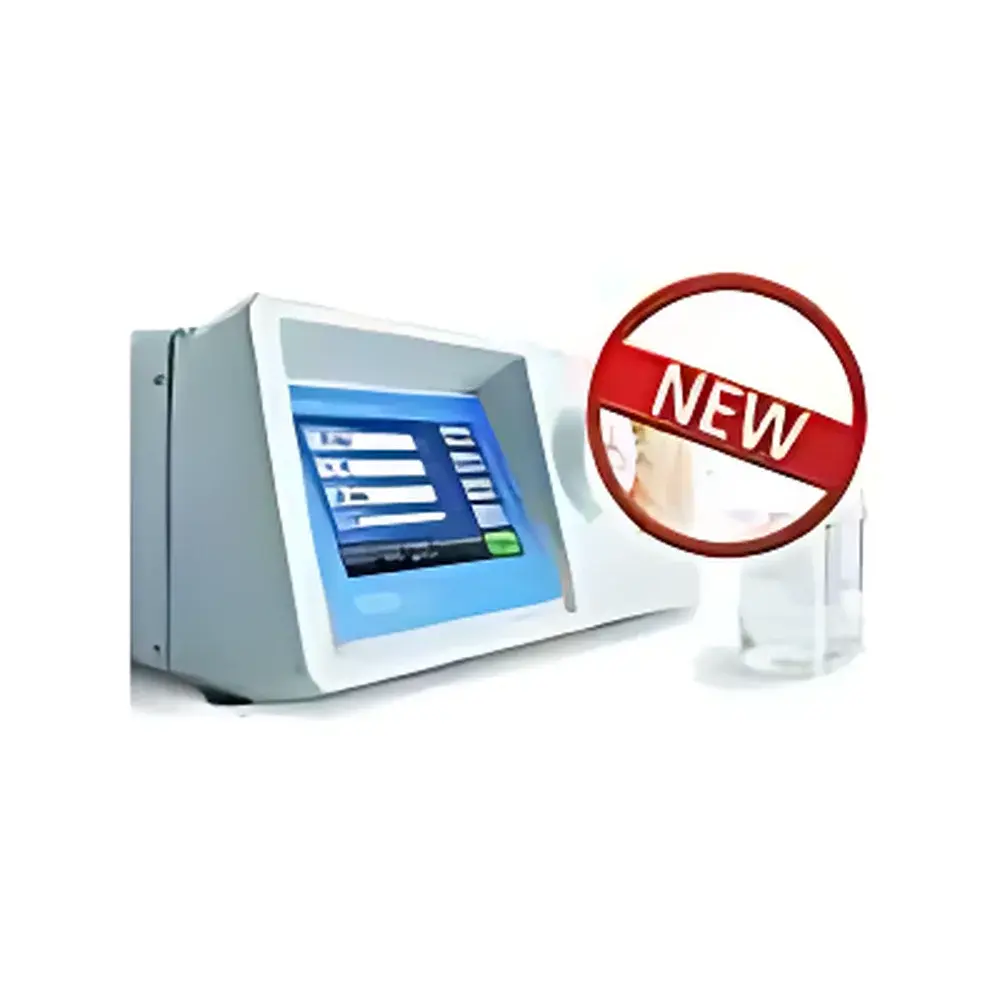
Schmidt+Haensch EDM-ρ High-Precision Digital Density Meter
| Brand | Schmidt+Haensch (S+H) |
|---|---|
| Origin | Germany |
| Model | EDM-ρ |
| Measurement Range | 0–3 g/cm³ |
| Density Repeatability | ±1 × 10⁻⁵ g/cm³ |
| Temperature Range | 0–90 °C |
| Temperature Repeatability | ±0.003 °C |
| Density Sensitivity | ±5 × 10⁻⁵ g/cm³ |
| Temperature Sensitivity | ±0.02 °C |
| Measurement Time | ~30 s |
| Minimum Sample Volume | 1 mL |
| Integrated Bubble Detection | Yes |
| Automatic Viscosity Compensation | Yes |
| Integrated Pressure & Humidity Sensors | Yes |
| Display | 5.7" color touchscreen |
| Interfaces | RS232, RS422, 1× USB, memory card slot |
| Power Supply | 90–132 V / 190–264 V AC, 50/60 Hz |
| Dimensions (L×H×W) | 374 × 236 × 454 mm |
| Weight | ~20 kg |
| Compliance | USP <841>, Ph. Eur. 2.2.5, ASTM D1298, ASTM D4052, ISO 12185, DIN 51757, FDA 21 CFR Part 11 (with optional Aquisys®2008 software), GLP/GMP-ready |
Overview
The Schmidt+Haensch EDM-ρ is a high-precision digital density meter engineered for rapid, traceable, and thermally stable measurement of liquid density and derived concentration values. It operates on the oscillating U-tube principle—a well-established hydrodynamic method in metrology—where the sample-filled quartz U-tube acts as a resonant oscillator; its natural frequency correlates directly with the mass of the contained fluid, enabling calculation of density with exceptional accuracy. Developed by Schmidt+Haensch—a German manufacturer with over 145 years of expertise in optical and physical property instrumentation—the EDM-ρ integrates advanced temperature control, real-time viscosity compensation, and automated bubble detection to eliminate operator-dependent variability. Its design adheres to international pharmacopoeial and industrial standards, making it suitable for regulated environments requiring audit trails, calibration integrity, and long-term stability.
Key Features
- High-resolution density measurement across 0–3 g/cm³ with repeatability of ±1 × 10⁻⁵ g/cm³—meeting or exceeding requirements of USP , Ph. Eur. 2.2.5, and ISO 12185
- Integrated Peltier-controlled thermostatic system ensuring precise temperature regulation from 0 °C to 90 °C (±0.003 °C repeatability)
- Automatic viscosity correction algorithm compensates for damping effects in high-viscosity samples without manual intervention
- Real-time acoustic bubble detection prevents erroneous readings caused by entrapped air or incomplete filling
- Onboard pressure and relative humidity sensors support environmental condition logging for metrological traceability
- 5.7-inch full-color resistive touchscreen interface with intuitive navigation and multilingual UI support (English, German, French, Spanish, Chinese)
- Robust mechanical architecture featuring a vibration-damped base and precision-machined quartz U-tube sensor housed in an aluminum alloy chassis
Sample Compatibility & Compliance
The EDM-ρ accommodates a broad spectrum of liquid matrices—including volatile solvents, viscous oils, aqueous electrolytes, and aggressive reagents—without degradation of performance or sensor drift. Its 1 mL minimum sample requirement reduces material consumption while maintaining statistical reliability. The instrument complies with key regulatory frameworks: ASTM D4052 (standard test method for density of petroleum products), ASTM D1298 (API gravity), ISO 12185 (crude oil and liquid petroleum products), and DIN 51757 (density of petroleum products). When paired with the optional Aquisys®2008 software suite, the system supports 21 CFR Part 11 compliance through electronic signatures, role-based access control, and immutable audit trails—fully aligned with GLP and GMP documentation practices.
Software & Data Management
Data acquisition, calibration management, and report generation are handled via embedded firmware and optional PC-based Aquisys®2008 software. All measurements include timestamped metadata: temperature, ambient pressure, humidity, operator ID, calibration status, and raw oscillation frequency. Export formats include CSV, PDF, and XML for LIMS integration. Calibration routines support up to five-point multi-point verification using certified reference materials traceable to NIST or PTB standards. Firmware updates are delivered via USB or memory card, with version history and change logs retained in internal non-volatile memory. Network connectivity is available via optional Ethernet module (not standard).
Applications
- Pharmaceutical & Biotechnology: Density-based assay validation, excipient concentration monitoring, solvent purity verification, and QC release testing per ICH Q5, Q7, and Q9 guidelines
- Food & Beverage: Alcohol content determination (ethanol/water mixtures), Brix and Plato calculations for juices, wines, and syrups, and mineral water mineralization profiling
- Petrochemical & Lubricants: Crude oil API gravity, biodiesel (FAME) density certification, lubricant oxidation stability tracking, and asphalt binder grading
- Chemical Manufacturing: Acid/base concentration control (e.g., H₂SO₄, NaOH), solvent recovery efficiency, surfactant formulation consistency, and polymer solution characterization
- Environmental & Waste Management: Wastewater solids loading estimation, pesticide formulation density screening, and liquid fertilizer nutrient concentration verification
FAQ
What is the fundamental measurement principle of the EDM-ρ?
It uses the oscillating U-tube method, where the resonant frequency of a precisely machined quartz tube filled with sample correlates inversely with its density—calculated via calibrated frequency-to-density algorithms.
Does the EDM-ρ require external calibration standards for routine use?
Yes—daily verification with at least two certified reference liquids (e.g., air and water) is recommended per ISO/IEC 17025; full recalibration is advised annually or after mechanical shock.
Can the EDM-ρ measure slurries or suspensions?
No—it is designed exclusively for homogeneous, particle-free liquids; suspended solids may obstruct the U-tube or damage the sensor.
Is temperature equilibration time included in the stated 30-second measurement cycle?
No—the ~30 s duration refers only to oscillation acquisition and computation; thermal stabilization time depends on sample initial temperature and setpoint delta (typically 2–8 minutes).
How is data integrity ensured during power interruption?
All active measurements and calibration records are written to non-volatile flash memory before confirmation; unsaved changes are discarded upon unexpected shutdown.



