
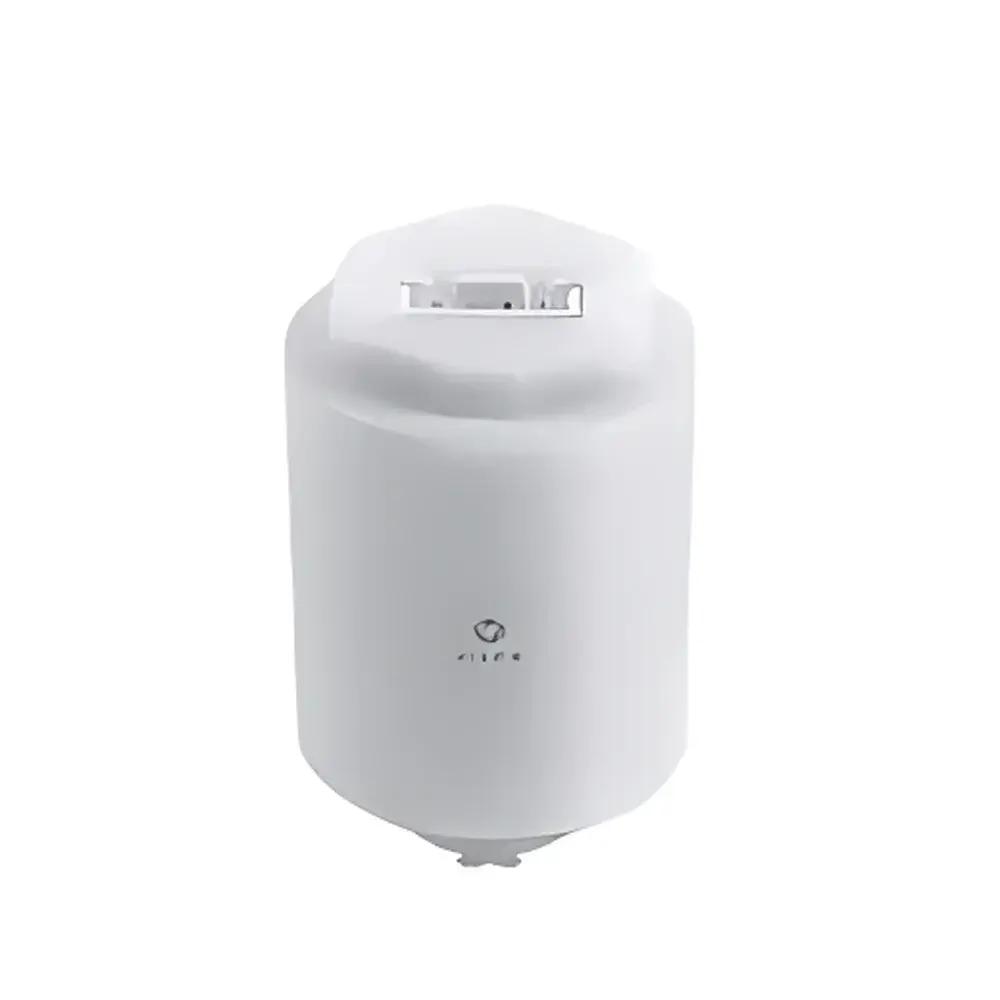
Cubic Gasboard-8500V Ultrasonic Oxygen Sensor
| Brand | Cubic |
|---|---|
| Origin | Hubei, China |
| Manufacturer Type | Authorized Distributor |
| Origin Category | Domestic (China) |
| Model | Gasboard-8500V |
| Price | USD 149 (FOB) |
| Detection Principle | Ultrasonic Time-of-Flight (TOF) |
| Measurement Range | 20.5–100% O₂ (binary gas mixtures) |
| Accuracy | ±3% FS @ 5–45°C |
| Resolution | 0.1% O₂ |
| Response Time | <15 s (T90) |
| Operating Temp. | 5–50°C |
| Humidity Range | 0–95% RH (non-condensing) |
| Storage Temp. | −20–50°C |
| Supply Voltage | DC 4.75–12.5 V |
| Avg. Current Draw | <35 mA |
| Output Signal | 0–2500 mV analog |
| Dimensions | 46 × 29.3 × 29.3 mm (L×W×D) |
Overview
The Cubic Gasboard-8500V is an industrial-grade ultrasonic oxygen sensor engineered for continuous, high-stability measurement of oxygen concentration in binary gas mixtures—primarily air/O₂ and N₂/O₂ systems. Unlike electrochemical or paramagnetic sensors, the Gasboard-8500V employs ultrasonic time-of-flight (TOF) measurement, leveraging the temperature- and pressure-dependent speed of sound in gases. Since the speed of sound varies predictably with O₂ mole fraction in a two-component system, the sensor calculates concentration by precisely measuring transit time differences across a fixed acoustic path. This principle eliminates sensor drift associated with consumable electrodes or magnetic susceptibility interference, delivering inherently stable output over extended operational lifetimes. Designed as a drop-in upgrade to the Gasboard-7500 series, the 8500V integrates full-temperature-range compensation (5–45°C) and enhanced signal conditioning for use in demanding medical and industrial environments—including high-flow respiratory support systems where real-time O₂ verification is critical for patient safety and regulatory compliance.
Key Features
- Ultrasonic TOF detection principle—no consumables, no zero-gas calibration required, long-term stability without recalibration
- Full-scale temperature compensation across 5–45°C ambient range, ensuring consistent accuracy independent of thermal fluctuations
- Fast T90 response time of <15 seconds—enabling dynamic monitoring in rapidly changing gas streams
- High-resolution analog output (0–2500 mV) with 0.1% O₂ resolution, compatible with standard PLCs, DAQ systems, and embedded controllers
- Compact form factor (46 × 29.3 × 29.3 mm) optimized for integration into space-constrained medical devices and portable analyzers
- Low power consumption: average current draw <35 mA at 5 VDC, suitable for battery-backed or energy-efficient platforms
- Robust mechanical design rated for continuous operation in non-condensing environments up to 95% RH
Sample Compatibility & Compliance
The Gasboard-8500V is validated exclusively for binary gas mixtures where the second component exhibits significantly different molecular mass and heat capacity than oxygen—most commonly nitrogen (N₂), argon (Ar), or helium (He). It is not intended for use in multi-component gas streams, humidified medical air containing aerosols or condensate, or corrosive atmospheres (e.g., Cl₂, SO₂, NH₃). The sensor complies with IEC 61000-6-2 (immunity) and IEC 61000-6-4 (emissions) for industrial environments. While not certified to ISO 80601-2-12 (respiratory equipment) or FDA 510(k) out-of-box, its performance characteristics align with functional requirements specified in ISO 8573-7 (compressed air purity) and ASTM D6245 (oxygen analysis in inert gas blanketing). Users integrating this sensor into Class II medical devices must perform full system-level validation per IEC 62304 and maintain traceable calibration records under GLP/GMP frameworks.
Software & Data Management
As a standalone analog transducer, the Gasboard-8500V does not include onboard firmware, Bluetooth, or digital communication protocols (e.g., UART, I²C). Its 0–2500 mV linear output maps directly to 20.5–100% O₂, enabling straightforward integration with existing data acquisition infrastructure. For traceable measurements, users are advised to pair the sensor with a calibrated 16-bit ADC and implement software-side temperature compensation using the provided lookup table or polynomial coefficients (available in the technical datasheet). When deployed in regulated environments, the analog signal chain must be documented per FDA 21 CFR Part 11 requirements—specifically addressing input validation, audit trail generation, and electronic signature controls if used in electronic batch records or QC release workflows.
Applications
- Medical respiratory equipment: Real-time O₂ concentration monitoring in ventilators, anesthesia machines, and high-flow nasal cannula (HFNC) systems
- Industrial inerting and blanketing: O₂ level verification in nitrogen-purged storage tanks, reactors, and semiconductor process chambers
- Controlled atmosphere packaging (CAP): In-line verification of modified atmosphere compositions during food packaging
- Lab-scale gas blending systems: Feedback control for precision O₂/N₂ mixers used in cell culture and combustion simulation
- Environmental test chambers: Continuous O₂ monitoring in hypoxic/hyperoxic exposure studies compliant with ISO 17025-accredited labs
FAQ
Can the Gasboard-8500V measure oxygen in ambient air?
No. Its calibration and algorithm assume a binary gas matrix. Ambient air contains ~78% N₂, 21% O₂, and ~1% Ar/CO₂/H₂O—making it a multi-component mixture outside the sensor’s valid operating domain.
Is humidity compensation built into the sensor?
The device includes hardware-based temperature compensation but does not actively correct for water vapor partial pressure. Operation is limited to non-condensing conditions (0–95% RH); prolonged exposure to condensate will impair acoustic coupling and invalidate readings.
What is the recommended calibration protocol?
Factory calibration uses traceable NIST-certified O₂/N₂ standards at 25°C and 1 atm. Field verification requires dual-point calibration with certified 21% and 100% O₂ in N₂ at the target operating temperature—per ISO 17025 procedures.
Does the sensor require periodic maintenance or replacement?
No scheduled maintenance is required. Lifespan exceeds 5 years under continuous operation within spec; end-of-life is indicated by >5% deviation from reference gas readings after re-zeroing.
Related Products







