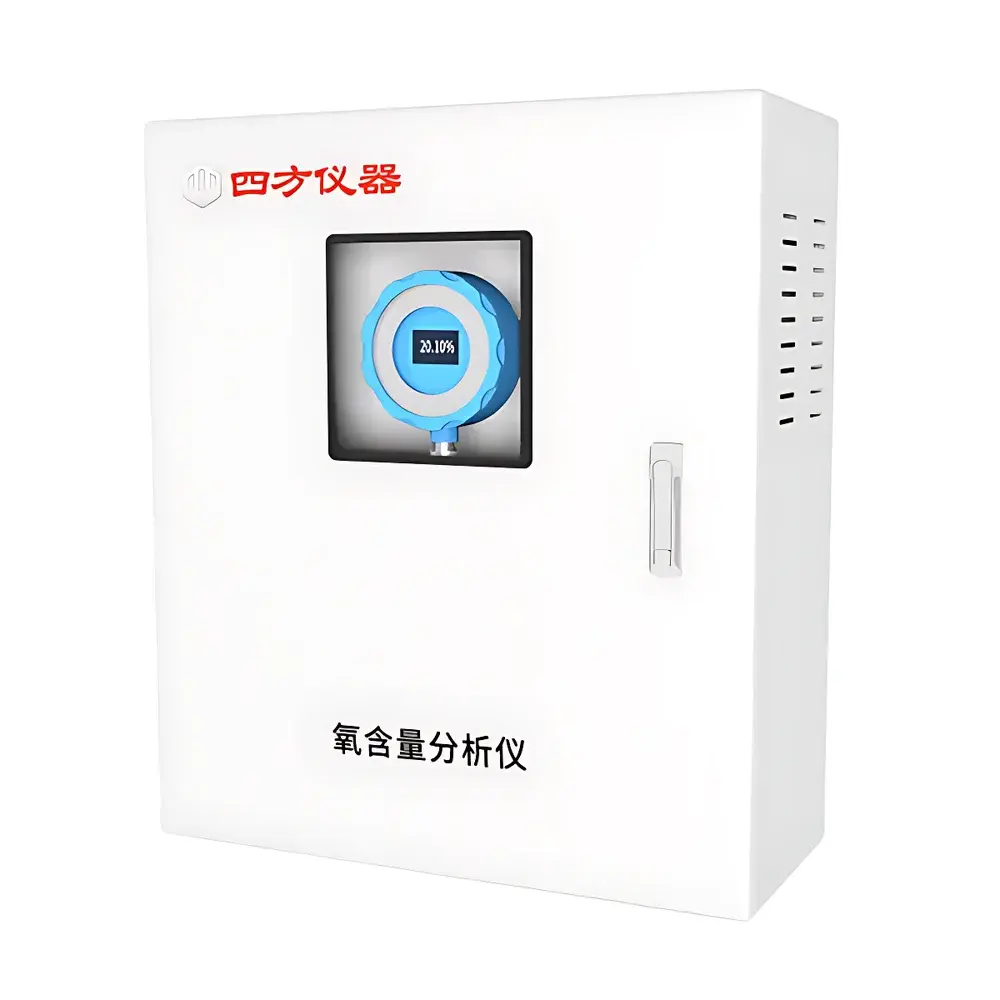
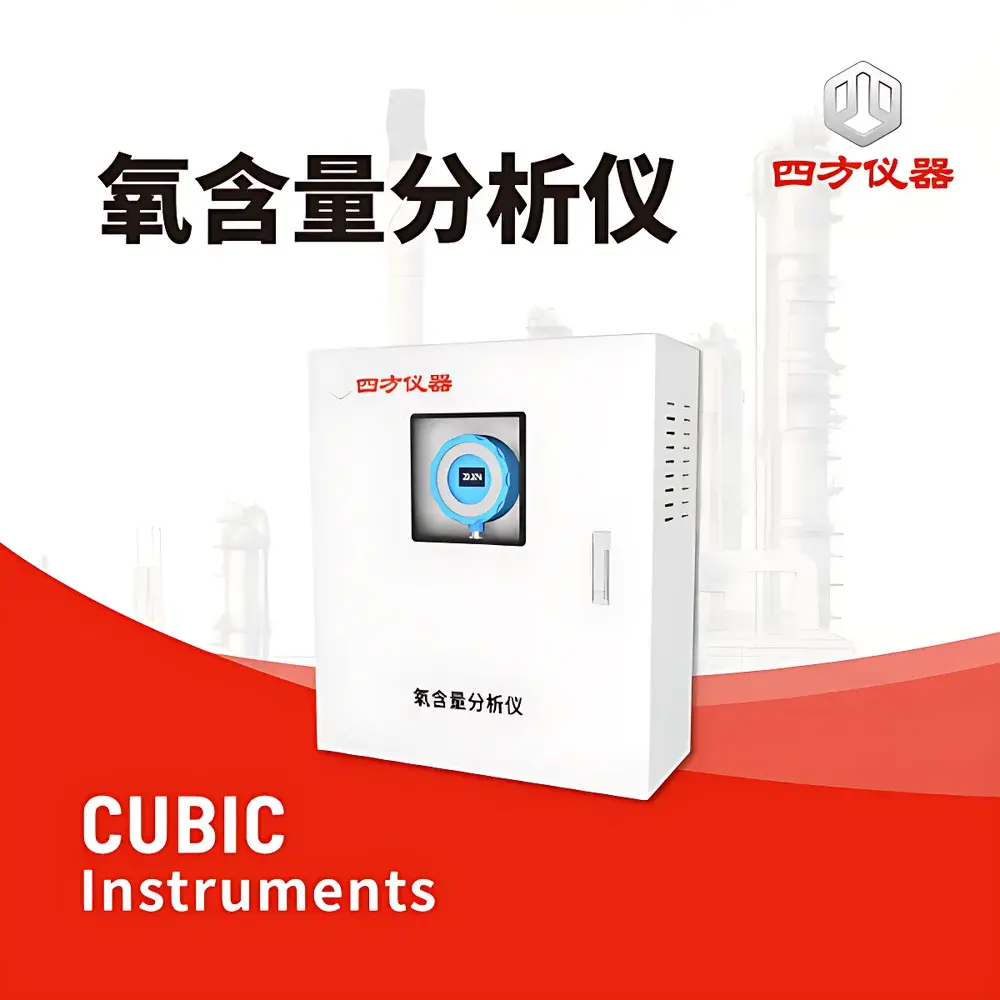
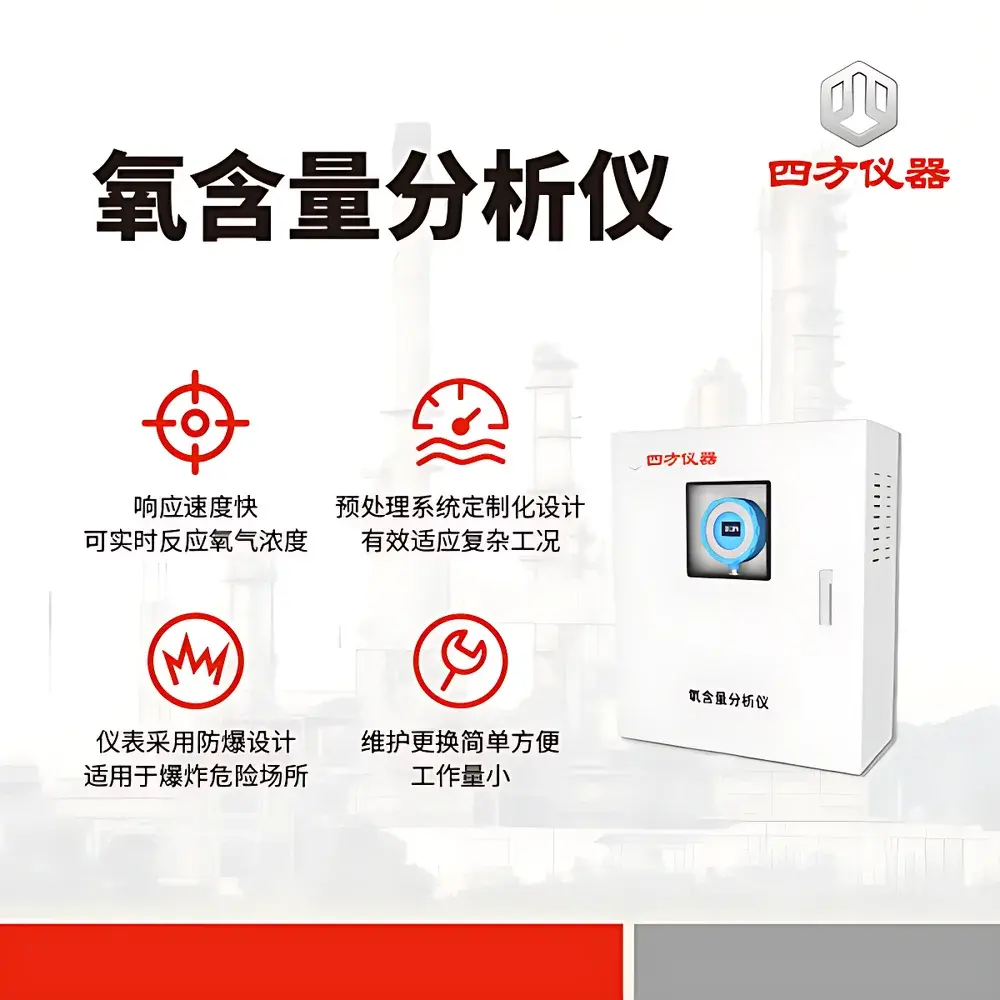
CUBIC INSTRUMENTS Centrifuge Oxygen Analyzer
| Brand | CUBIC INSTRUMENTS |
|---|---|
| Origin | Hubei, China |
| Sensor Type | Electrochemical (ECD) |
| Measurement Ranges | 0–1% O₂ / 0–5% O₂ / 0–25% O₂ |
| Accuracy | ≤ ±2% FS |
| Repeatability | ≤ ±1% FS |
| Linearity Error | ≤ ±1% FS |
| Resolution | 0.1% (for 0–25% range) or 0.01% (for 0–1% range) |
| Response Time (T90) | < 30 s |
| Explosion Protection Rating | Ex db IIC T6 Gb |
| Operating Temperature | −20 to +60 °C |
| Operating Humidity | 0–98% RH (non-condensing) |
| Output Signal | RS485 (standard, Modbus RTU protocol) or RS232 (optional) |
| Power Supply | 24 VDC or 220 VAC |
Overview
The CUBIC INSTRUMENTS Centrifuge Oxygen Analyzer is an intrinsically safety-engineered in-situ process analyzer designed for continuous, real-time monitoring of dissolved or headspace oxygen concentration inside centrifuges, batch reactors, and closed-loop chemical synthesis vessels. It operates on the principle of electrochemical (ECD) sensing—utilizing a three-electrode amperometric cell with temperature-compensated diffusion-limited current measurement—to deliver stable, low-drift quantification of O₂ across multiple calibrated ranges (0–1%, 0–5%, or 0–25% v/v). Unlike optical or paramagnetic analyzers, ECD-based detection provides high selectivity for molecular oxygen in inert or reactive atmospheres without cross-sensitivity to CO₂, N₂, or common solvents. The instrument is engineered specifically for hazardous area deployment in pharmaceutical, agrochemical, fine chemical, and dye manufacturing facilities where oxygen accumulation poses explosion risk per NFPA 484 and ATEX Directive 2014/34/EU. Its core function extends beyond passive measurement: integrated logic enables direct actuation of nitrogen purge valves upon user-defined O₂ threshold exceedance, forming a critical layer of Process Safety Management (PSM) compliant with OSHA 1910.119.
Key Features
- Explosion-proof enclosure certified to Ex db IIC T6 Gb per IEC 60079-0/-1/-7, suitable for Zone 1/Zone 2 gas hazardous locations.
- Dual-range sensor architecture with auto-ranging firmware support—enables seamless switching between high-resolution (0.01% resolution at 0–1% range) and broad-spectrum (0.1% resolution at 0–25% range) operation.
- Onboard programmable relay outputs for direct interlocking with nitrogen supply solenoids, emergency venting systems, or PLC shutdown circuits.
- Configurable alarm thresholds with visual (LED status indicators) and digital (Modbus register flag) notification; all alarms include time-stamped event logging.
- Robust pre-conditioning module optional for sample streams containing condensable vapors, particulates, or corrosive byproducts—includes heated sampling line, particulate filter, and moisture trap.
- Low-maintenance sensor design: field-replaceable ECD cells with documented calibration intervals ≥ 6 months under typical process conditions.
Sample Compatibility & Compliance
The analyzer accommodates gaseous samples from pressurized or vacuum-rated centrifuge chambers and jacketed reactors operating within −20 to +60 °C ambient and up to 98% RH non-condensing humidity. It is compatible with nitrogen-purged, argon-blanketed, and hydrogen-inerted environments typical in catalytic hydrogenation or lithiation processes. All wetted materials—including sensor housing, diffusion membrane, and sampling interface—are constructed from 316L stainless steel and PTFE to resist corrosion from organic solvents (e.g., THF, DMF, acetone), acidic vapors (HCl, SO₂), and halogenated intermediates. The device complies with electromagnetic compatibility standards IEC 61326-1 (industrial environment) and functional safety requirements aligned with IEC 61508 SIL 2 for safety-related control functions. Documentation packages support FDA 21 CFR Part 11 compliance when deployed with validated Modbus data acquisition systems.
Software & Data Management
Configuration and diagnostics are performed via ASCII command set over RS485 (Modbus RTU default) or RS232 (optional), enabling integration into DCS, SCADA, or MES platforms without proprietary drivers. Each unit stores >10,000 timestamped measurement records onboard, including O₂ concentration, sensor temperature, signal stability index, and alarm history. Data export is supported via Modbus function codes 03 (read holding registers) and 04 (read input registers); historical logs can be retrieved using standard polling scripts. Firmware supports remote parameter updates and includes audit-trail functionality—every configuration change is logged with operator ID, timestamp, and previous/updated values—supporting GLP/GMP traceability requirements. Calibration certificates (as-built) and sensor lifetime tracking are embedded in device memory and accessible via diagnostic registers.
Applications
- Real-time O₂ monitoring during solvent recovery and crystallization steps in API manufacturing to prevent peroxide formation and thermal runaway.
- Inerting verification in high-speed centrifuges handling pyrophoric catalysts (e.g., Raney nickel, sodium borohydride slurries).
- Batch reactor headspace analysis prior to exothermic addition steps (e.g., nitration, diazotization) to ensure O₂ remains below LEL thresholds.
- Continuous validation of nitrogen blanket integrity in dye synthesis reactors exposed to air ingress during charging or sampling.
- Process qualification support for ICH Q5C stability studies requiring controlled oxidative stress environments.
FAQ
What sensor technologies does this analyzer support?
It utilizes electrochemical (ECD) sensors as standard; zirconia-based variants are available upon request for high-temperature (>200 °C) applications.
Can the analyzer operate in vacuum environments?
Yes—when equipped with vacuum-rated sampling fittings and differential pressure compensation, it maintains accuracy down to 10 mbar absolute pressure.
Is third-party calibration certification included?
Factory calibration is traceable to NIST-standard gas mixtures; ISO/IEC 17025-accredited calibration certificates are available as an add-on service.
How is sensor drift compensated during long-term operation?
Automatic baseline correction is performed during zero-gas exposure cycles; manual span adjustment is supported via dry air or certified span gases.
Does the unit support redundant sensor configurations?
Dual-sensor hot-swap modules are available for critical applications requiring 2oo3 voting logic or continuous availability during maintenance.