CUBIC INSTRUMENTS GasTDL-3100 In-Situ Tunable Diode Laser Oxygen Analyzer
| Brand | CUBIC INSTRUMENTS |
|---|---|
| Origin | Hubei, China |
| Model | GasTDL-3100 |
| Sensor Type | Tunable Diode Laser (TDLAS) |
| Measurement Ranges | H₂S: 0–100 ppm / 0–5000 ppm |
| O₂ | 0–5 %vol (customizable up to 100 %vol) |
| CO | 0–100 %vol |
| CO₂ | 0–100 %vol |
| CH₄ | 0–20 %vol |
| Accuracy | ≤ ±1 % FS |
| Repeatability | ≤ ±1 % FS |
| Resolution | 0.01 %vol |
| Response Time (T90) | ≤ 1 s |
| Explosion Protection | Exd II CT6 Gb / Ex tb IIIC T80°C Db |
| Power Supply | 24 V DC, 24 W |
| Ambient Temperature | −20 to +60 °C |
| Purge Gas | Industrial nitrogen, 0.3–0.8 MPa |
| Communication | RS485, RS232 |
| Analog Outputs | 2 × 4–20 mA |
| Digital Outputs | 3 × relay |
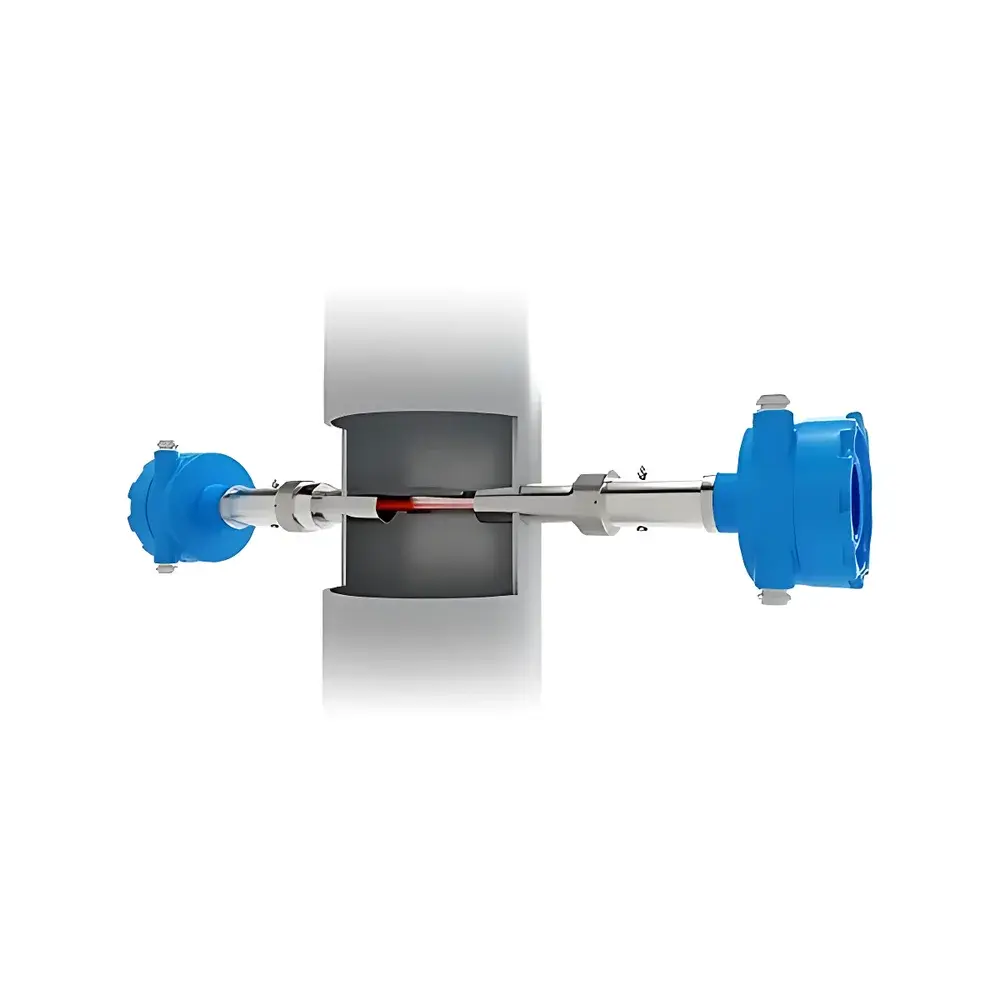
| Installation | In-situ (transmission path) |
Overview
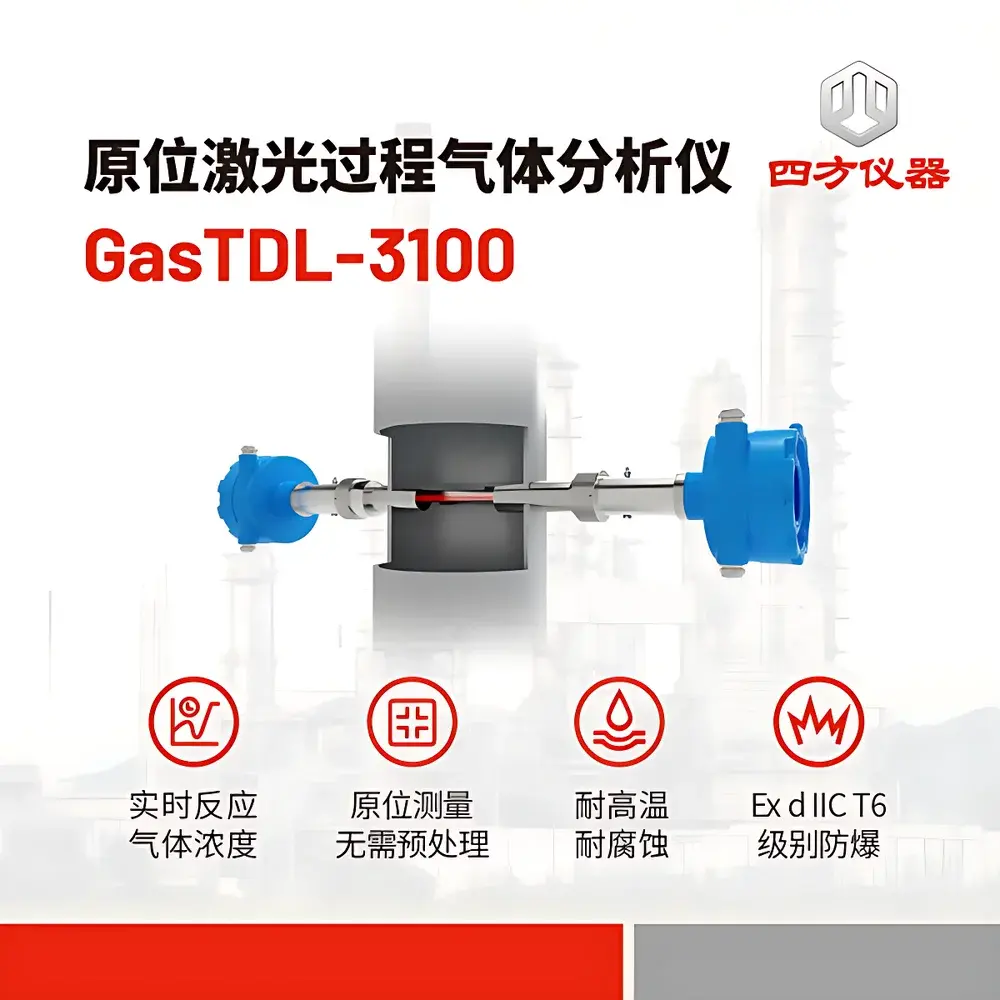
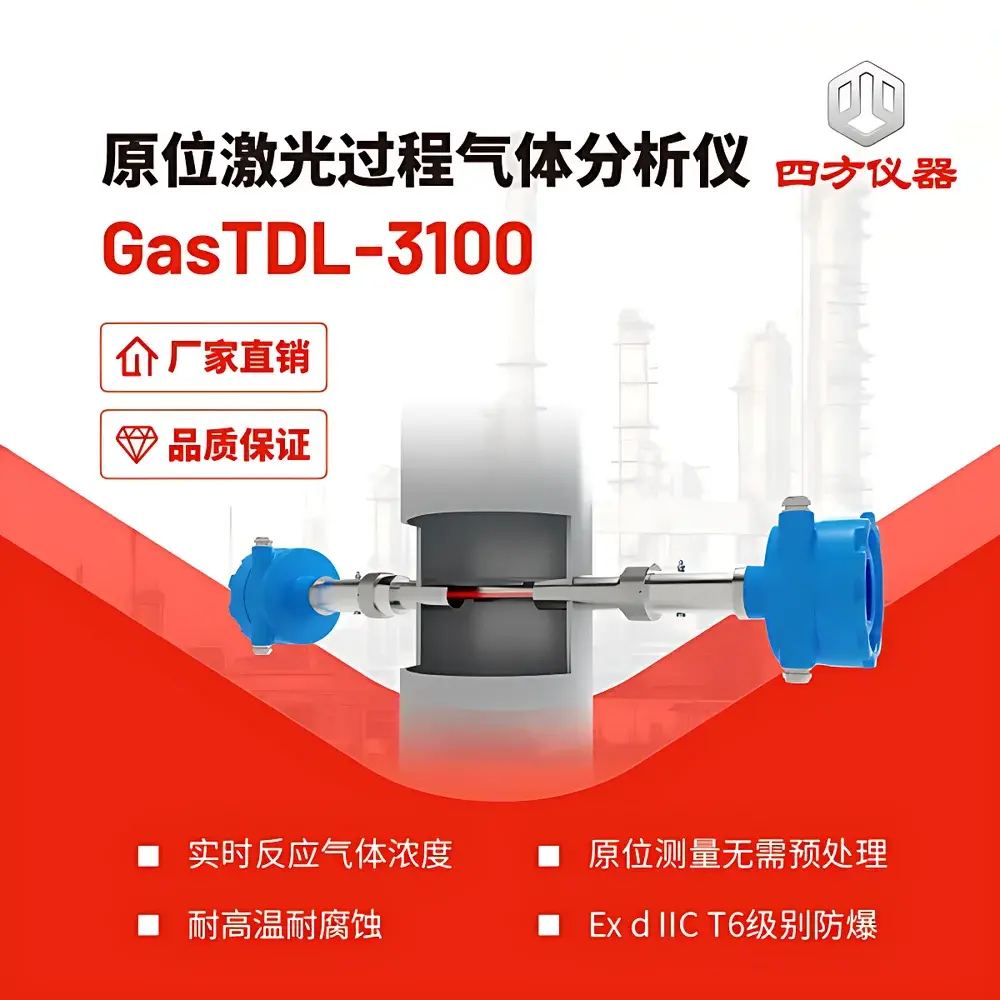
The CUBIC INSTRUMENTS GasTDL-3100 is an in-situ tunable diode laser absorption spectroscopy (TDLAS)-based optical gas analyzer engineered for real-time, high-fidelity oxygen concentration monitoring in demanding industrial process environments. Unlike extractive sampling systems—where gas transport delays, condensation losses, and catalytic surface interactions compromise data integrity—the GasTDL-3100 performs direct, non-contact measurement across the process stream using a dual-beam transmission configuration. Its core principle relies on wavelength-scanned near-infrared (NIR) laser absorption at precisely targeted molecular absorption lines (e.g., O₂ at ~760 nm), enabling species-selective quantification with minimal spectral interference. Designed for continuous operation in combustion control, inerting verification, furnace atmosphere management, and safety-critical blanketing applications, the instrument delivers sub-second dynamic response without calibration drift induced by mechanical wear or consumable components.
Key Features
- TDLAS-based detection ensures inherent selectivity for O₂ (and optional co-measured gases: H₂S, CO, CO₂, CH₄), eliminating cross-sensitivity from background matrix gases such as N₂, H₂O vapor, CO₂ (when measuring O₂), or hydrocarbons.
- True in-situ installation eliminates sample extraction, conditioning, and transport lines—removing associated latency, adsorption artifacts, filter clogging, and maintenance overhead.
- Optical path design supports robust performance under extreme conditions: continuous operation at flue gas temperatures up to 1200 °C (with optional high-temp probe), particulate-laden streams (>10 g/m³), saturated humidity, and corrosive atmospheres (e.g., HCl, SO₂).
- Intrinsically safe and explosion-proof architecture complies with Exd II CT6 Gb (flameproof enclosure) and Ex tb IIIC T80°C Db (dust ignition protection), certified for Zone 1/21 hazardous locations per IEC 60079 series.
- Zero-moving-parts optical head with hermetically sealed laser diode and photodetector modules ensures long-term stability, >5-year mean time between failures (MTBF), and zero routine recalibration requirements.
- Integrated temperature-compensated signal processing corrects for thermal lensing and detector responsivity drift, maintaining ≤±1 % FS accuracy across the full operating ambient range (−20 to +60 °C).
Sample Compatibility & Compliance
The GasTDL-3100 is validated for direct measurement of O₂ in complex industrial matrices including syngas, blast furnace top gas, cement kiln exhaust, biomass boiler flue gas, and chemical reactor off-gas. Its TDLAS methodology meets the fundamental metrological requirements of ISO 14040 (LCA boundary definition for emission monitoring), ASTM D6522 (standard test method for determination of oxygen in gaseous fuels), and EN 15267-3 (QAL1 certification framework for automated measuring systems). For regulated industries—including pharmaceutical manufacturing (FDA 21 CFR Part 11-compliant data logging via optional software module), petrochemical refining (API RP 500/505 zoning alignment), and power generation (IEC 61511 functional safety integration)—the analyzer supports audit-ready traceability through timestamped analog/digital outputs and configurable event logging.
Software & Data Management
Local configuration and diagnostics are performed via embedded web interface (HTTPS-enabled) accessible over Ethernet or RS485 Modbus TCP/RTU. The onboard firmware implements real-time spectral fitting algorithms (least-squares Voigt profile deconvolution) and automatic baseline correction using reference channel normalization. All analog outputs (2 × 4–20 mA) support HART 7 protocol for digital superimposition of diagnostic status, span verification flags, and laser health metrics. Optional CUBIC DataHub™ software enables centralized fleet monitoring, trend analysis with ISO/IEC 17025-aligned uncertainty propagation modeling, and export to CSV, OPC UA, or PI System-compatible formats. Audit trails record all parameter changes, zero/span events, and firmware updates with user ID and UTC timestamps—fully compliant with GLP and GMP data integrity expectations.
Applications
- Combustion optimization in coal-, oil-, and gas-fired boilers via real-time O₂ trim control to minimize excess air and NOₓ formation.
- Inerting validation during tank cleaning, solvent recovery, and powder handling to maintain O₂ < 8 %vol for explosion prevention (NFPA 652, IEC 60079-29-1).
- Quality assurance in heat treatment furnaces (e.g., carburizing, annealing) where precise O₂ partial pressure governs surface metallurgy.
- Process safety interlock triggering for rapid nitrogen purge initiation upon O₂ excursion beyond setpoints (SIL 2-capable when integrated with certified SIS).
- Environmental compliance reporting for continuous emissions monitoring systems (CEMS) under EPA Method 3A or EN 14181 QAL2/QAL3 validation protocols.
FAQ
Can the GasTDL-3100 measure oxygen at 100% volume concentration?
Yes—while standard configuration covers 0–5 %vol for high-sensitivity low-oxygen applications (e.g., inerting), the optical path length and laser power can be optimized for full-scale 0–100 %vol measurement with maintained ≤±1 % FS accuracy.
Is sample conditioning required for high-moisture gas streams?
No—TDLAS is inherently immune to water vapor interference when targeting isolated O₂ absorption lines; no chiller, dryer, or permeation membrane is needed, even at 100% relative humidity.
How is alignment maintained in vibrating or thermally expanding ducts?
The dual-beam collimated optical design incorporates passive auto-alignment compensation via kinematic mounting and thermal expansion-matched housing materials, verified per ISO 10110-7 for beam pointing stability (<5 µrad/°C drift).
Does the analyzer support third-party SCADA integration?
Yes—native Modbus TCP/RTU, optional OPC UA server, and configurable 4–20 mA outputs ensure seamless integration with Siemens Desigo, Honeywell Experion, ABB 800xA, and Emerson DeltaV systems.
What maintenance intervals are recommended?
None beyond annual visual inspection of optical windows and purge gas filter replacement; the absence of moving parts, consumables, or electrochemical cells eliminates scheduled calibration or sensor replacement.
Related Products