
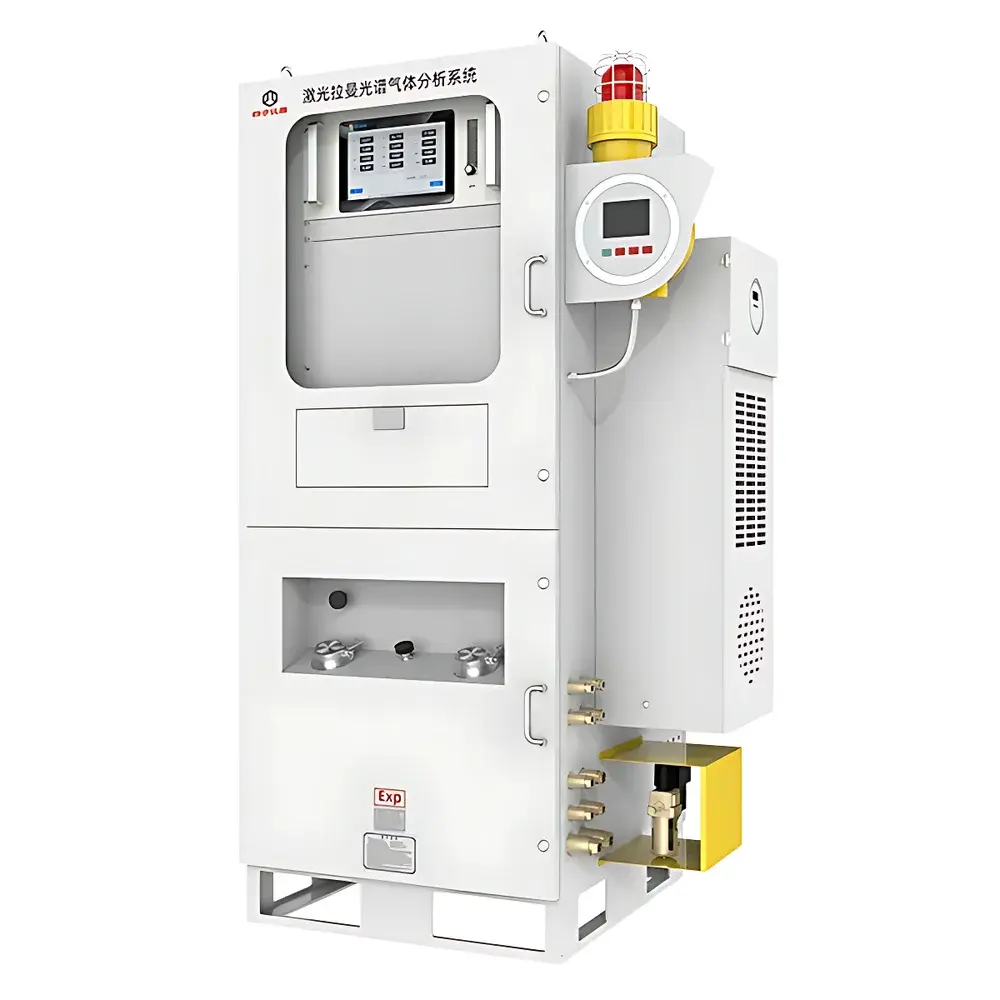
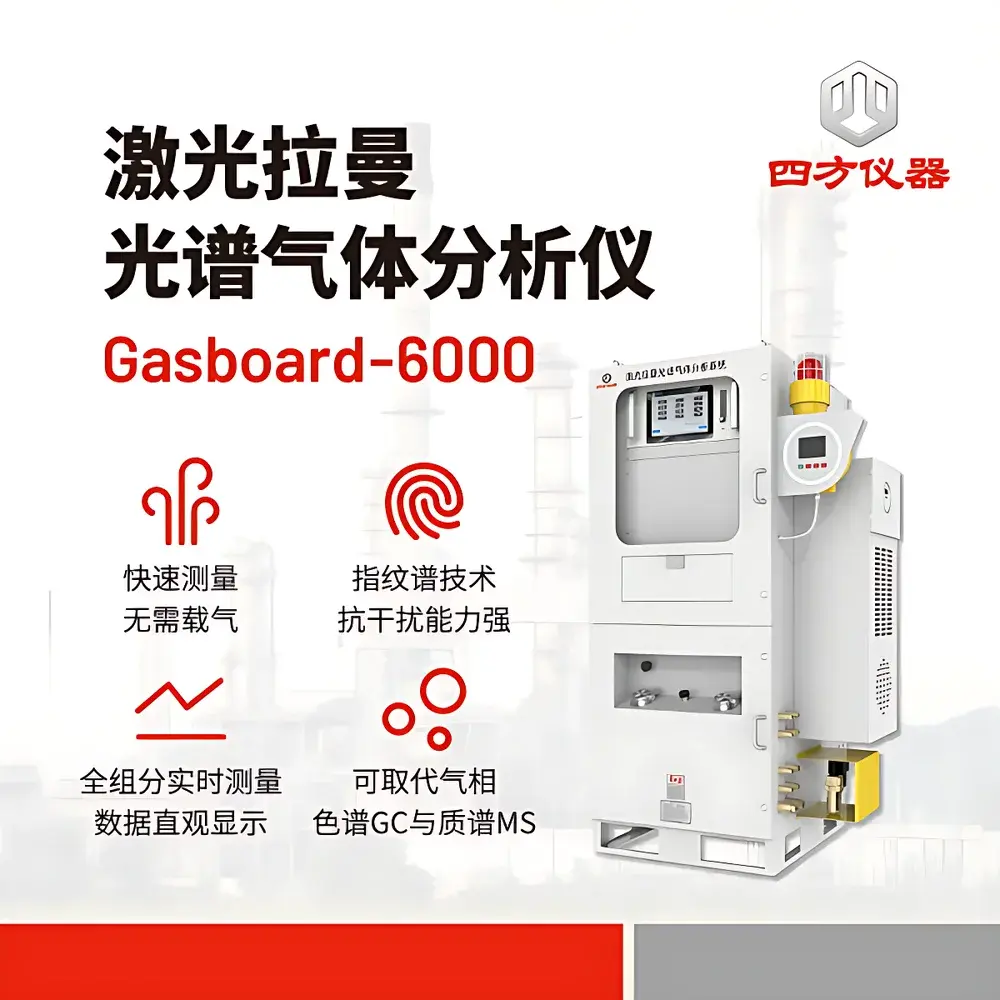
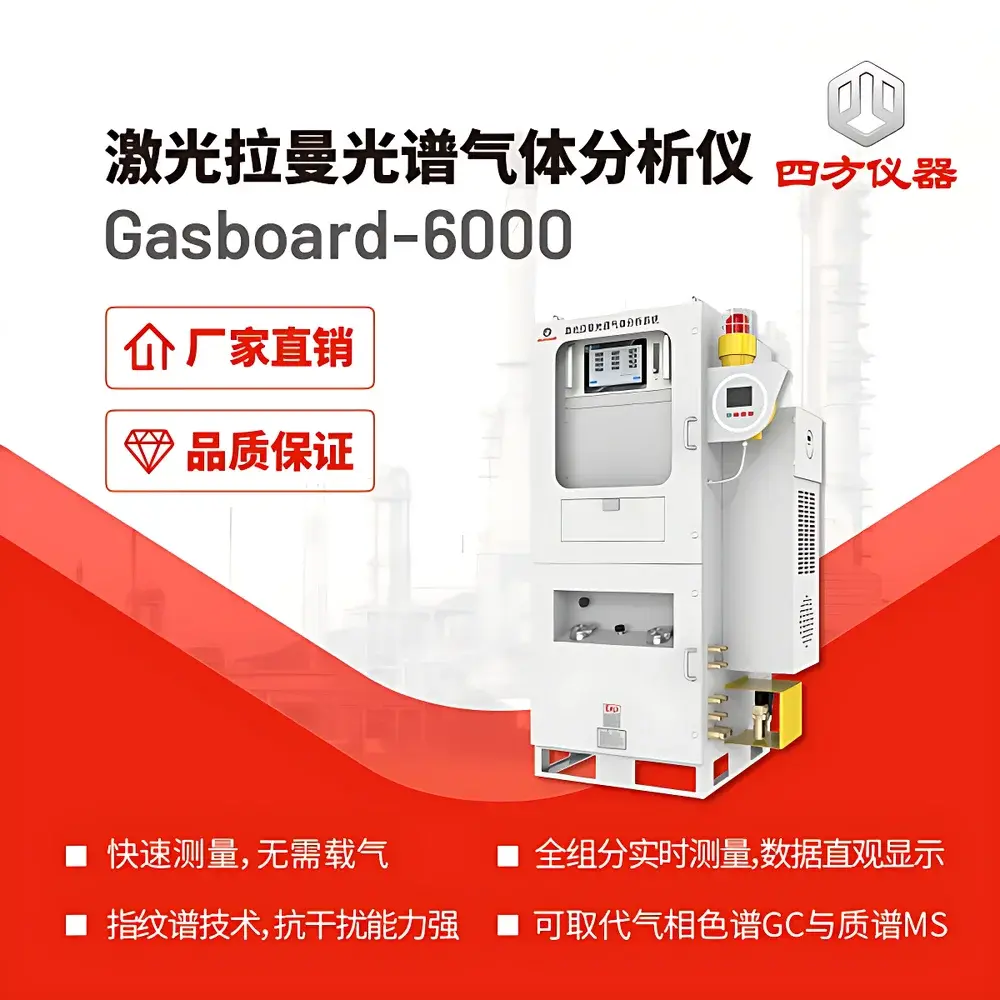
CUBIC INSTRUMENTS LRGA-6000 Laser Raman Gas Analyzer for Coal Chemical Industry
| Brand | CUBIC INSTRUMENTS |
|---|---|
| Origin | Hubei, China |
| Model | LRGA-6000 |
| Spectrometer Type | Grating-Based Raman Spectrometer |
| Spectral Range | 400–700 nm |
| Spectral Resolution | 0.01% |
| Spatial Resolution | 1 µm (lateral), 2 µm (axial) |
| Minimum Wavenumber | 10 cm⁻¹ |
| Spectral Repeatability | ≤1% (dependent on configured measurement range) |
| Measurement Range | 0–10% to 0–100% (gas concentration, full-scale) |
| Linearity Error | ≤±1% F.S. |
| Response Time | ≤30 s |
| Dimensions | 1000 × 800 × 1780 mm |
Overview
The CUBIC INSTRUMENTS LRGA-6000 is a purpose-engineered laser Raman gas analyzer designed for continuous, real-time compositional analysis of multi-component process gases in demanding coal chemical industrial environments. It operates on the fundamental principle of spontaneous Raman scattering: monochromatic laser light (typically 532 nm or 785 nm, depending on configuration) interacts with molecular vibrational modes in the sample gas, generating inelastically scattered photons whose frequency shifts—measured in wavenumbers (cm⁻¹)—serve as unique spectral fingerprints for each chemical species. Unlike absorption-based techniques such as NDIR, Raman spectroscopy inherently detects homonuclear diatomic molecules (e.g., N₂, O₂, H₂), which lack permanent dipole moments and are therefore invisible to infrared methods. The LRGA-6000 leverages high-efficiency grating spectrometry, optimized optical filtering, and low-noise CCD detection to resolve overlapping Raman bands in complex gas matrices—enabling simultaneous quantification of up to 12 components without chromatographic separation or carrier gas dependency.
Key Features
- Multi-component real-time analysis: Simultaneous detection and quantification of CO, CO₂, H₂, CH₄, C₂H₆, C₃H₈, H₂S, N₂, O₂, C₂H₄, C₂H₂, and H₂O vapor in a single spectrum acquisition cycle
- Zero-carrier-gas operation: Eliminates reliance on helium, nitrogen, or hydrogen carrier gases—reducing operational cost, safety risk, and infrastructure complexity
- Automated baseline correction and air purging calibration: Integrated pneumatic control system performs periodic zero-point validation using ambient air or certified reference gas, minimizing long-term signal drift
- Gas concentration normalization algorithm: Compensates for pressure and temperature fluctuations via real-time environmental monitoring inputs (optional PT sensors), ensuring robust quantification under variable process conditions
- Industrial-grade mechanical architecture: IP65-rated enclosure, reinforced optical bench, and shock-dampened detector mount engineered for vibration-prone locations (e.g., near compressors, gasifiers, or synthesis reactors)
- Touchscreen HMI with embedded Linux OS: 10.1-inch capacitive display supports intuitive navigation, alarm configuration, trend visualization, and local data export (CSV, PDF)
Sample Compatibility & Compliance
The LRGA-6000 is validated for direct analysis of raw, hot, humid, and particulate-laden process streams common in coal gasification, syngas conditioning, ammonia synthesis loops, and coke oven off-gas systems. Sample conditioning is minimal: standard configurations include heated sampling lines (up to 180 °C), Teflon-lined filters (1 µm), and thermoelectrically cooled gas cells to suppress condensation. All wetted materials comply with ASTM B117 salt-spray resistance requirements and ISO 8502-3 surface cleanliness standards. While not intrinsically certified for Zone 1/21 hazardous areas, the analyzer may be deployed in classified zones when installed within an IECEx-certified pressurized enclosure (ATEX/IECEx compliant housing available as optional accessory). Data integrity aligns with GLP/GMP expectations through configurable audit trails, user-level access control (admin/operator/viewer), and timestamped calibration logs.
Software & Data Management
The embedded CUBIC RamanView™ software provides full spectral acquisition, multivariate curve fitting (using constrained non-negative least squares), and stoichiometric concentration calculation per IUPAC-recommended Raman cross-section databases. Raw spectra and processed results are stored locally on dual-redundant SSDs (256 GB each) with automatic rollover and remote retrieval via Ethernet (TCP/IP) or optional 4G LTE modem. OPC UA server support enables seamless integration into DCS/SCADA platforms (e.g., Siemens Desigo, Honeywell Experion, Emerson DeltaV). For regulatory compliance, optional 21 CFR Part 11 add-on module delivers electronic signatures, immutable audit logs, and role-based permission enforcement—meeting FDA and EMA requirements for pharmaceutical-grade gas monitoring applications.
Applications
- Coal-to-gas plants: Real-time syngas composition monitoring (H₂/CO ratio control), sulfur compound tracking (H₂S, COS), and tar precursor detection (C₂H₂, C₆H₆)
- Ammonia and urea synthesis: In-line verification of purge gas composition, inert buildup (Ar, CH₄), and residual oxygen levels to prevent catalyst oxidation
- Steelmaking off-gas recovery: Quantification of blast furnace top gas (CO, CO₂, N₂, H₂) for energy valorization and emissions reporting
- Petrochemical feedstock analysis: Rapid speciation of cracked gas mixtures (C₁–C₄ hydrocarbons, H₂, H₂S) prior to fractionation
- Environmental compliance: Continuous stack monitoring of combustion byproducts (CO, NO, SO₂ proxy via H₂S oxidation state tracking) and fugitive methane emissions
FAQ
Does the LRGA-6000 require periodic recalibration with certified gas standards?
Yes—while automated air purging maintains zero stability, span calibration using traceable multi-component gas standards is recommended every 90 days for critical process control applications. Calibration intervals may be extended to 180 days under stable operating conditions, subject to internal verification protocols.
Can the LRGA-6000 detect water vapor (H₂O) quantitatively in high-humidity streams?
Yes—the instrument includes a dedicated 3650 cm⁻¹ Raman band deconvolution channel optimized for H₂O quantification across 0–40% v/v, with compensation for rotational Raman interference from N₂ and O₂.
Is spectral library customization supported for proprietary gas mixtures?
Yes—users may import custom reference spectra (in .spc or .jdx format) and train new quantitative models via the offline RamanModeler™ desktop application, with validation against laboratory GC-MS or FTIR reference data.
What is the minimum detectable concentration for H₂S in a nitrogen background?
At standard temperature and pressure (25 °C, 1 atm), the limit of detection (LOD) for H₂S is 25 ppmv (3σ criterion), verified per ISO 11843-2:2000 using repeated blank measurements.
How is laser safety managed during routine maintenance?
The 532 nm excitation source is Class 3B (IEC 60825-1:2014), interlocked with the sample chamber door; laser emission ceases automatically upon lid opening, and a visible red alignment beam remains active only during service mode under technician authentication.




