
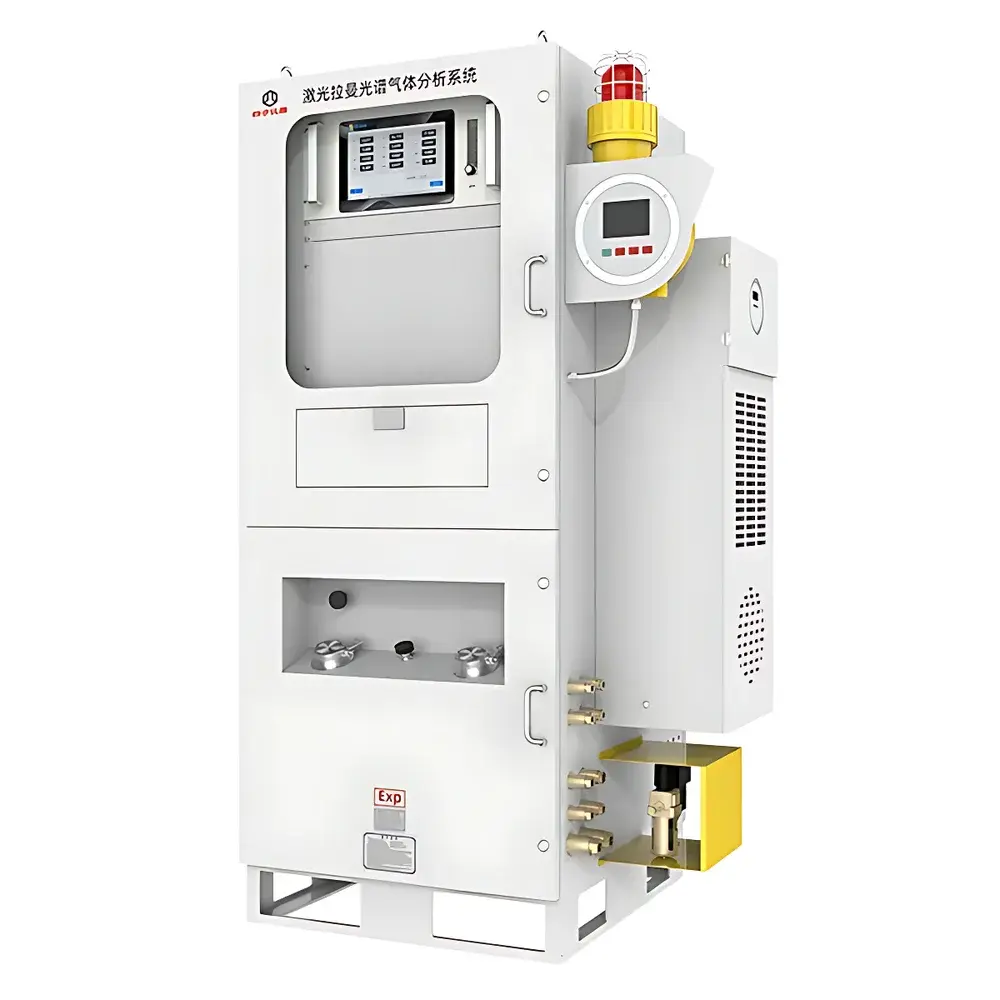
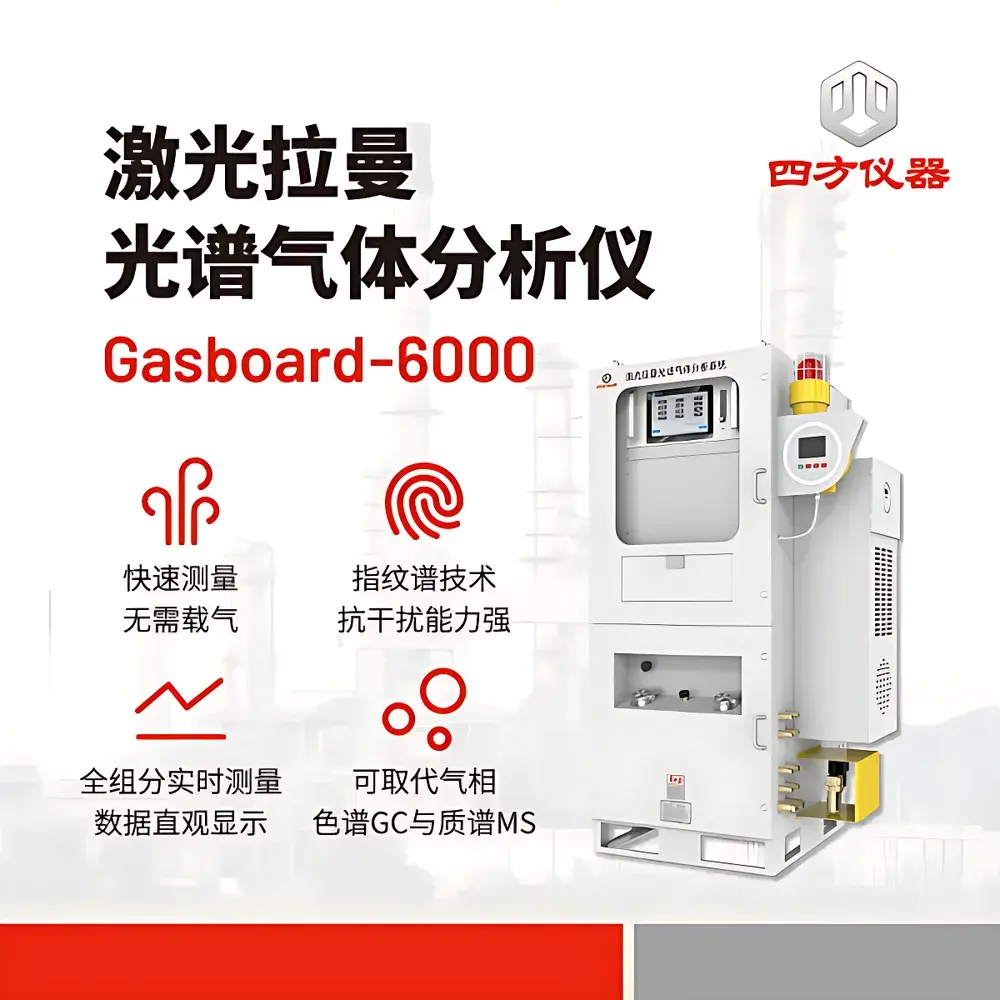
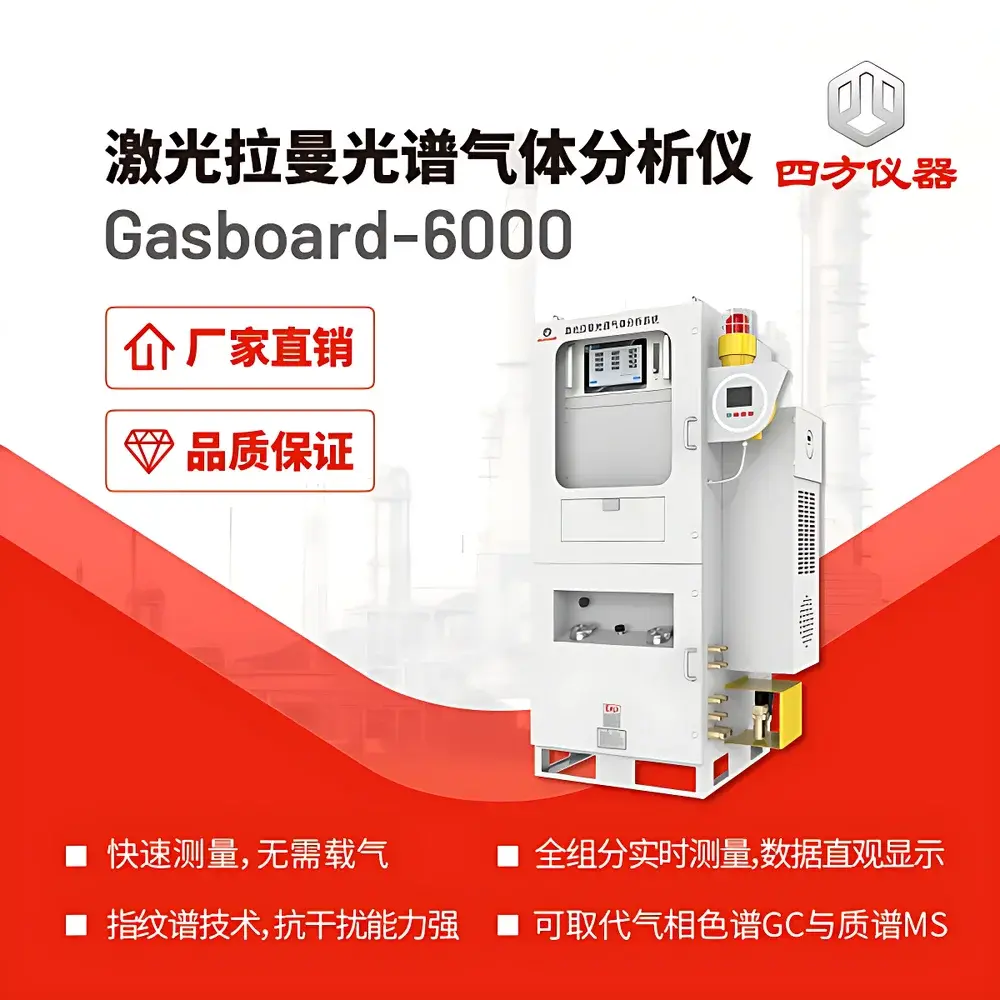
CUBIC INSTRUMENTS LRGA-6000 Laser Raman Gas Analyzer for Oil & Gas Applications
| Brand | CUBIC INSTRUMENTS |
|---|---|
| Origin | Hubei, China |
| Model | LRGA-6000 |
| Spectrometer Type | Grating-based Raman Spectrometer |
| Spectral Range | 400–700 nm |
| Spectral Resolution | 0.01% |
| Spatial Resolution | 1 µm (lateral), 2 µm (axial) |
| Minimum Wavenumber | 10 cm⁻¹ |
| Spectral Repeatability | ≤1% (dependent on configured measurement range) |
| Measurement Range | 0–10% to 0–100% (gas concentration, full-scale) |
| Linearity Error | ≤±1% F.S. |
| Response Time | ≤30 s |
| Dimensions | 1000 × 800 × 1780 mm |
Overview
The CUBIC INSTRUMENTS LRGA-6000 is a purpose-engineered laser Raman gas analyzer designed for continuous, real-time compositional analysis of multi-component gas streams in oil & gas production, transmission, refining, and associated industrial processes. It operates on the fundamental principle of inelastic light scattering—Raman spectroscopy—where monochromatic laser excitation induces vibrational mode transitions in molecular bonds, generating wavelength-shifted scattered photons whose spectral positions and intensities are uniquely characteristic of each gas species. Unlike absorption-based techniques such as NDIR or tunable diode laser spectroscopy, Raman detection is inherently sensitive to homonuclear diatomic molecules (e.g., N₂, O₂, H₂), enabling comprehensive quantification of natural gas matrices without reliance on calibration gases for every component. The LRGA-6000 employs high-efficiency optical filtering, thermoelectrically stabilized CCD detection, and fiber-coupled probe configurations to deliver robust performance under field conditions—including ambient temperature fluctuations, vibration, and variable sample pressure.
Key Features
- Multi-gas simultaneous quantification: Capable of resolving and quantifying ≥12 components in a single spectrum acquisition—including CH₄, C₂H₆, C₃H₈, CO, CO₂, H₂, N₂, O₂, H₂S, C₂H₄, C₃H₆, and H₂O vapor—without chromatographic separation or carrier gas.
- Sub-30-second response time: Full-spectrum acquisition, baseline correction, peak deconvolution, and concentration calculation completed within ≤30 seconds from sample introduction.
- Auto-calibration architecture: Integrated purge-air reference cycle enables drift compensation at user-defined intervals (e.g., hourly or per-shift), eliminating manual zero/span adjustments and ensuring long-term measurement stability.
- Gas-concentration normalization algorithm: Compensates for pressure, temperature, and total gas density variations using real-time process inputs (optional PT sensor integration), maintaining accuracy across dynamic flow conditions.
- Zero consumables design: No carrier gases, columns, filaments, or replaceable optical filters required—reducing total cost of ownership and minimizing operational downtime.
- Industrial-grade enclosure: IP65-rated housing with optional ATEX/IECEx Zone 2 certification support; operating ambient temperature range: −10 °C to +50 °C.
Sample Compatibility & Compliance
The LRGA-6000 is validated for direct analysis of raw, unfiltered, and humidified gas samples typical of upstream wellhead effluents, pipeline transmission streams, refinery fuel gas headers, and flare gas monitoring points. It tolerates particulate loadings up to 5 mg/m³ and dew points down to −20 °C without condensation-induced signal attenuation. Sample conditioning is limited to standard heated sample lines (120 °C) and particulate filtration (1 µm). The instrument complies with ISO 10438-3 (petroleum industry gas analysis standards), supports audit-ready data logging aligned with 21 CFR Part 11 requirements (electronic signatures, audit trails, role-based access control), and is compatible with GLP/GMP-compliant validation protocols including IQ/OQ/PQ documentation packages.
Software & Data Management
Control and analysis are executed via the embedded RamanView™ v4.x platform—a Linux-based, touchscreen-optimized interface supporting multilingual operation (English, Spanish, Arabic, Chinese). All spectra are stored with full metadata (timestamp, PT conditions, calibration status, operator ID). Raw spectral files (.spc, .csv) and processed reports (.pdf, .xlsx) are exportable via USB, Ethernet, or Modbus TCP. Optional cloud synchronization enables remote diagnostics, firmware updates, and centralized fleet monitoring. Data integrity safeguards include cyclic redundancy checksums, write-once storage partitions, and configurable automatic backup to network-attached storage (NAS).
Applications
- Natural gas custody transfer verification: Real-time CH₄/C₂₊ hydrocarbon ratio, heating value (HHV/LHV), and Wobbe index calculation per ISO 6976.
- Wellhead gas composition profiling: Continuous monitoring of H₂S, CO₂, and inert gas content for corrosion risk assessment and processing optimization.
- Flare gas recovery system control: Quantification of combustible fraction (CH₄ + C₂H₆ + C₃H₈) to optimize vapor recovery unit (VRU) setpoints.
- Refinery fuel gas balancing: Dynamic allocation of hydrogen, methane, and light hydrocarbons across combustion and hydrogenation units.
- Sour gas treatment plant monitoring: Real-time tracking of H₂S removal efficiency across amine absorbers and Claus reactors.
- Biogas upgrading verification: CH₄/CO₂ ratio confirmation pre- and post-membrane/PSA purification stages.
FAQ
Does the LRGA-6000 require external calibration gases for routine operation?
No. The instrument uses an internal air-purge reference cycle for automated zero-point stabilization and relies on factory-characterized cross-section libraries for quantitative analysis. Periodic verification with certified gas standards (recommended annually) satisfies ISO/IEC 17025 traceability requirements.
Can it measure hydrogen (H₂) and nitrogen (N₂) simultaneously with hydrocarbons?
Yes. Raman scattering intensity for H₂ (4155 cm⁻¹) and N₂ (2331 cm⁻¹) is orders of magnitude higher than their IR absorption cross-sections, enabling precise, interference-free quantification even at low concentrations (detection limit: 0.1% v/v at 1 atm, 25 °C).
Is the system compatible with hazardous area installation?
The base unit is rated for non-hazardous locations. For Zone 2 / Class I Div 2 deployment, optional explosion-proof enclosures and intrinsically safe fiber-optic probe variants are available upon request and subject to regional certification (ATEX, UKCA, IECEx).
How is spectral interference from water vapor managed?
The software applies adaptive water vapor subtraction using a dynamically updated reference spectrum acquired during purge cycles, minimizing residual baseline distortion without requiring physical drying of the sample stream.
What maintenance schedule is recommended?
Optical alignment verification every 12 months; laser diode output power check every 6 months; annual full-system performance validation using NIST-traceable gas standards. No consumables replacement is required.
Related Products






