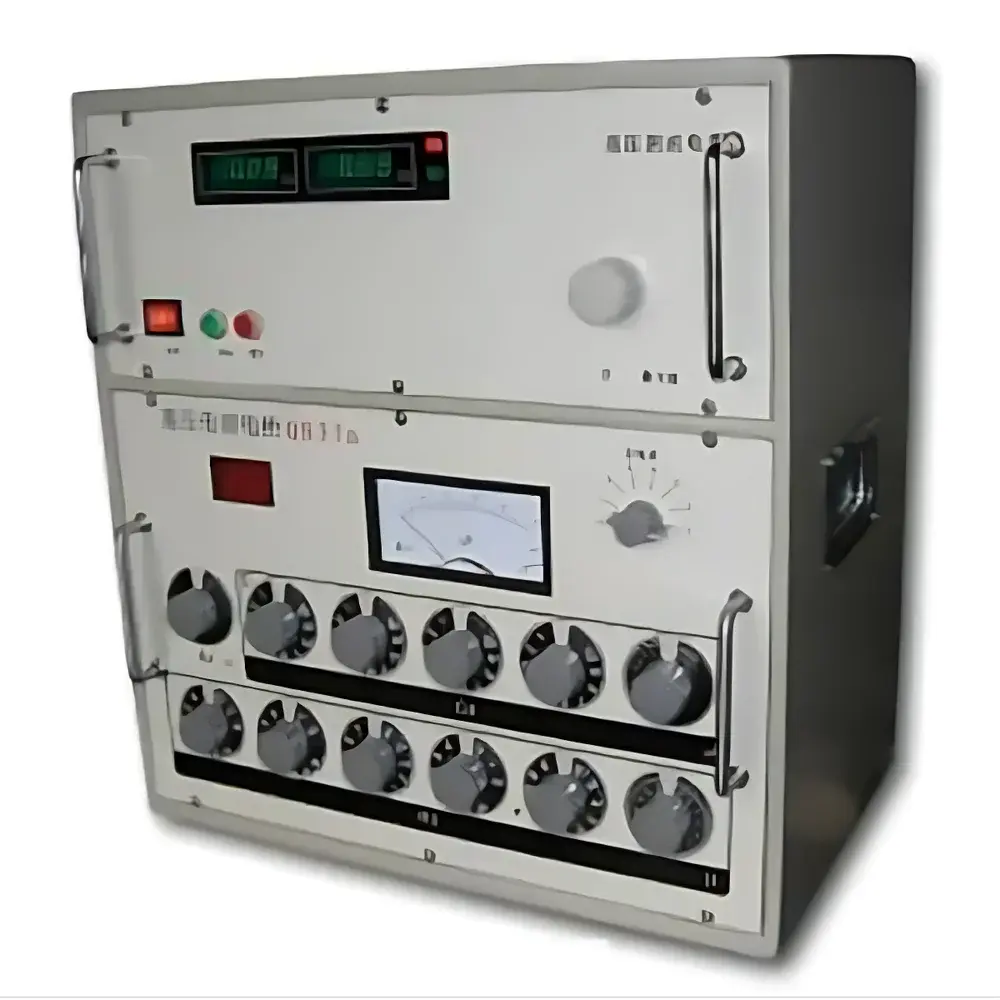
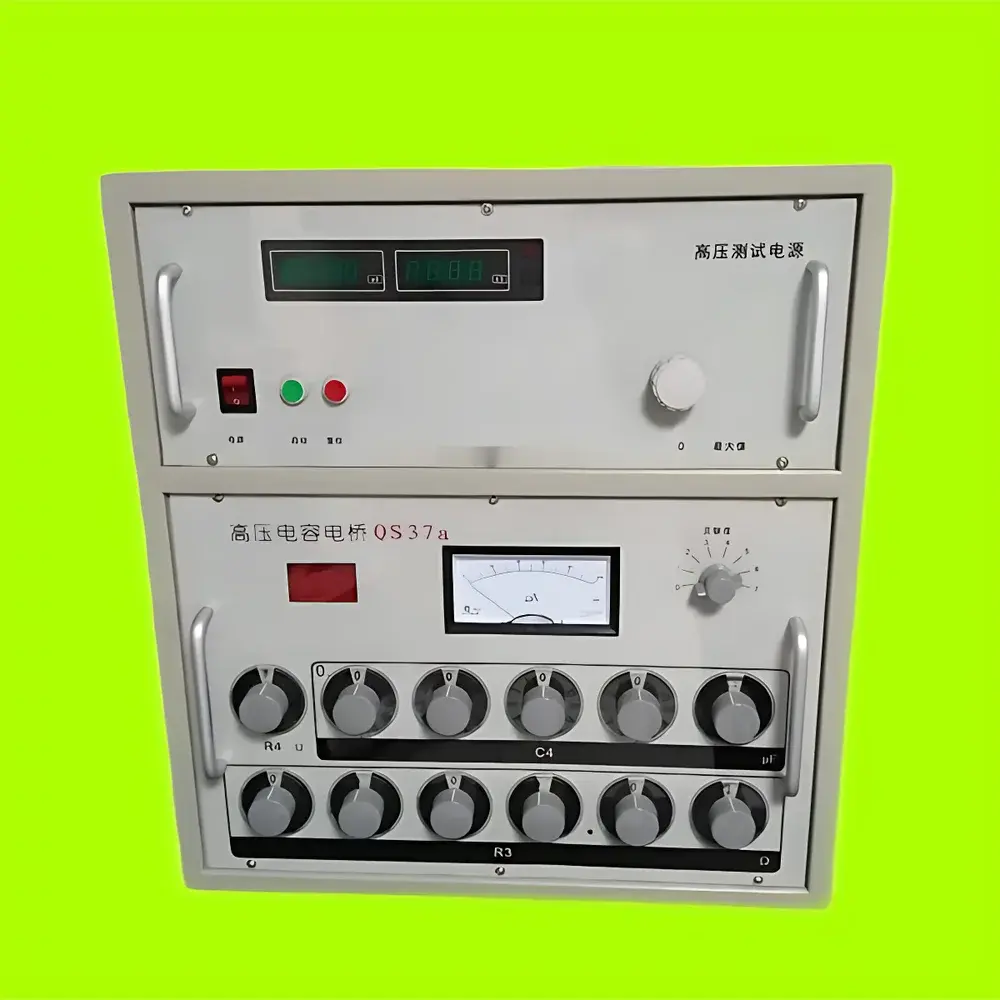
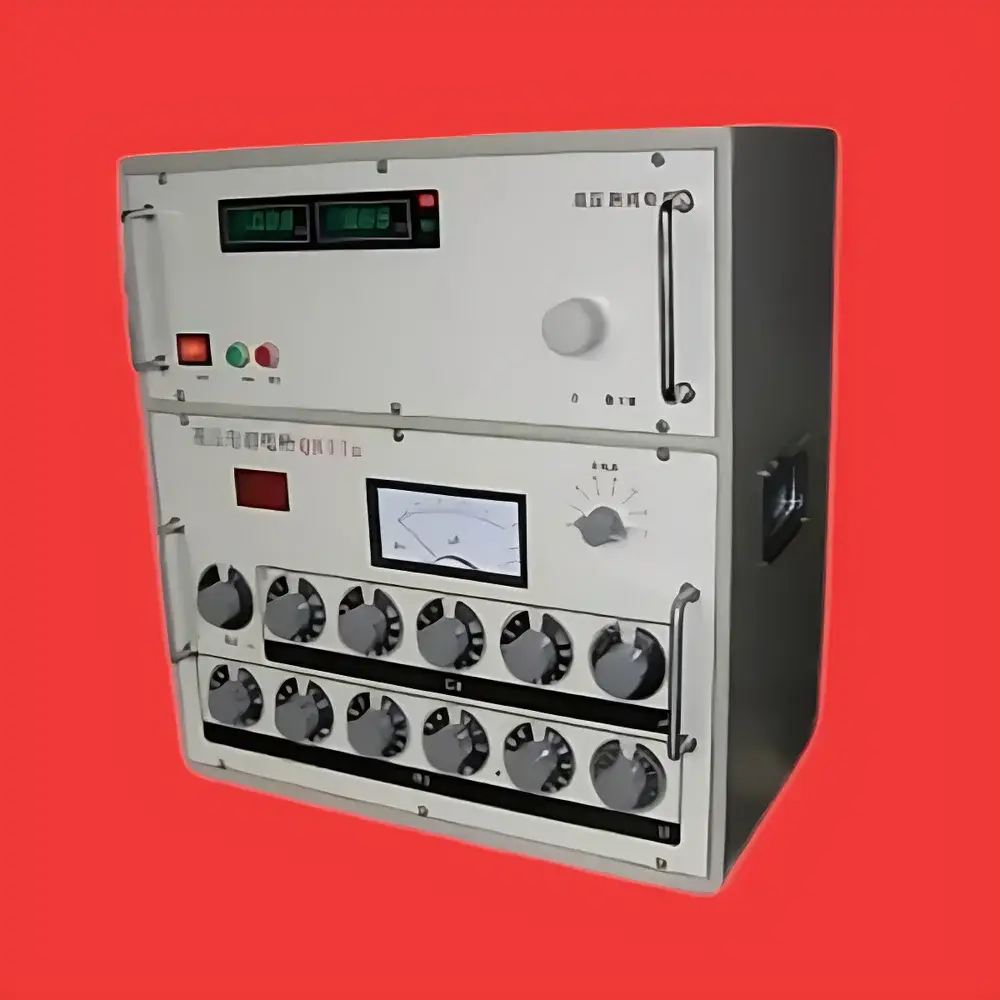
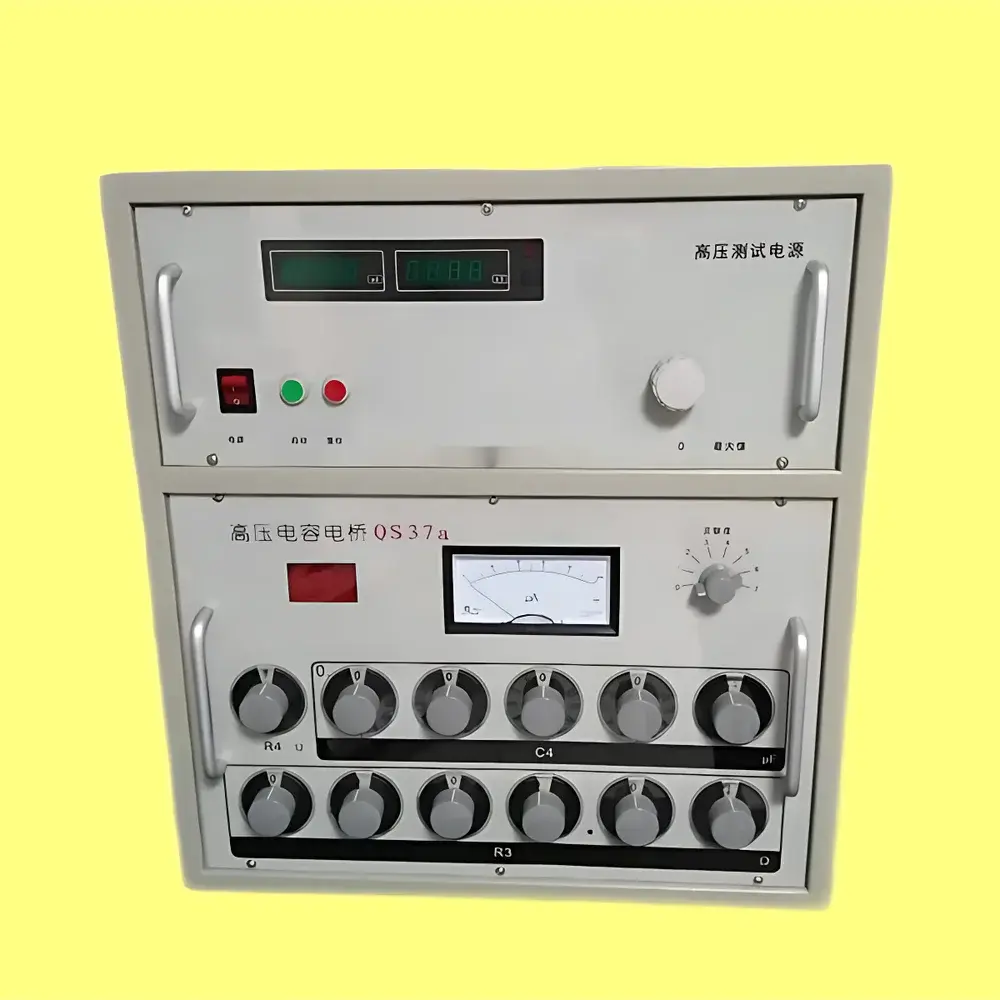
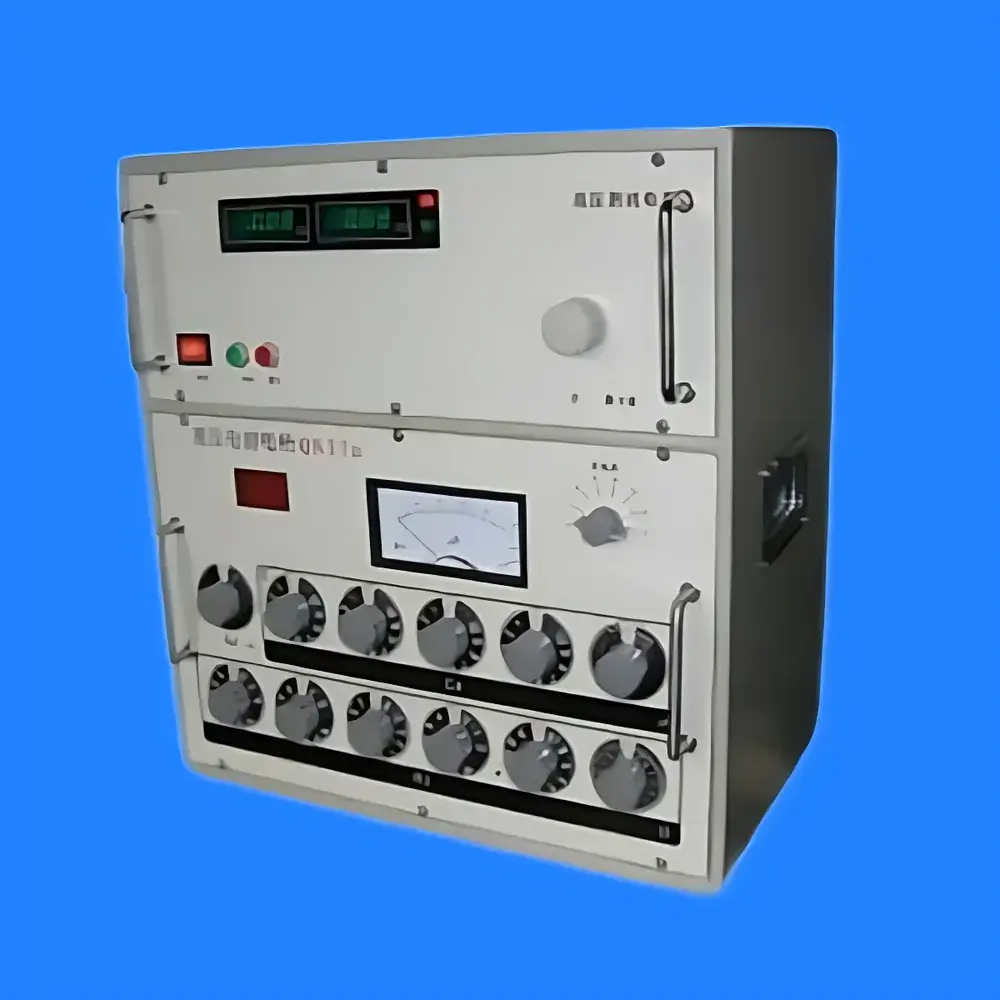
Red Sun Instrument HRDQ-37 Glass Dielectric Constant High-Voltage Schering Bridge
| Brand | Red Sun Instrument |
|---|---|
| Origin | Hebei, China |
| Manufacturer Type | Authorized Distributor |
| Country of Origin | China |
| Model | HRDQ-37 |
| Price | USD 5,300 (FOB) |
| Compliance | GB 1409, GB 5654, GB/T 1693, ASTM D150-1998(2004) |
| Max Test Voltage | 10 kV AC (40–70 Hz) |
| Standard Capacitor | 100 pF built-in |
| Accuracy Class | Capacitance Ratio ±0.001%, tanδ ±0.5% |
| Measurement Method | Current-Comparator-Based Schering Bridge with Magnetic-Flux Balance Null Detection |
| Input/Output Terminals | HD, HS, LD, LS + Shielded Guard Pairs |
Overview
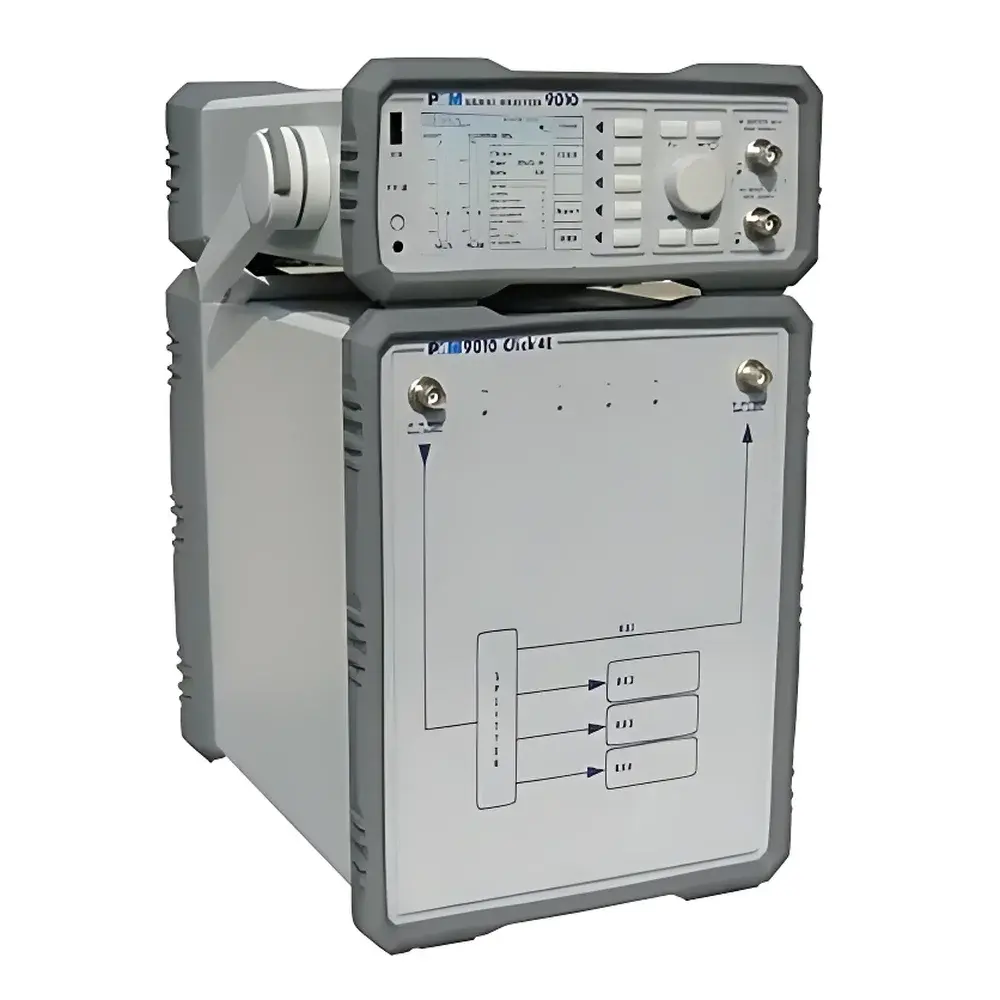
The Red Sun Instrument HRDQ-37 Glass Dielectric Constant High-Voltage Schering Bridge is a precision metrological instrument engineered for the accurate determination of dielectric permittivity (εr) and dissipation factor (tanδ) in solid insulating materials—particularly glass, ceramics, polymer films, and composite dielectrics—under controlled high-voltage AC excitation. It implements the classical Schering bridge topology, enhanced with a current-comparator ratio arm architecture that achieves exceptional stability and phase fidelity. Unlike conventional variable-capacitor or transformer-ratio bridges, the HRDQ-37 utilizes magnetically balanced flux synthesis to generate precise quadrature-phase reference signals without active amplification in its core null-detection path—making it inherently immune to harmonic distortion and thermal drift within its specified operating envelope. The instrument integrates a digitally regulated 0–2500 V AC high-voltage source (extendable to 10 kV via external HV supply), a traceable 100 pF internal standard capacitor, and fully shielded four-terminal-pair (4TP) measurement terminals compliant with IEC 60250 and ASTM D150 Annex A3 requirements for low-loss dielectric characterization.
Key Features
- Current-comparator-based ratio arm with magnetic-flux balance null detection for sub-0.001% capacitance ratio accuracy and ±0.5% tanδ resolution at 50/60 Hz
- Four-terminal-pair (4TP) measurement interface: HD (high-side current drive), HS (high-side voltage sense), LD (low-side current drive), LS (low-side voltage sense), each with dedicated guard/shield connections to minimize stray capacitance and ground-loop interference
- Built-in 100 pF NIST-traceable standard capacitor; optional external standard capacitor interface for extended range calibration per IEC 61000-4-30 and JJG 563–2004
- Digital HV power supply (0–2500 V, 40–70 Hz) with RMS-regulated output, ≤3% amplitude uncertainty and ≤5% THD
- Compliance with national and international standards: GB 1409 (China), GB 5654 (liquid & solid insulation testing), GB/T 1693 (glass dielectric testing), and ASTM D150-1998(2004)
- Thermal drift compensation: error contribution from ambient temperature variation (±10°C) limited to ≤1/3 of basic error limit per JJG 563–2004 §3.3
Sample Compatibility & Compliance
The HRDQ-37 is validated for use with rigid and semi-rigid dielectric specimens including optical glass plates (e.g., BK7, fused silica), borosilicate tubing, alumina substrates, epoxy-matrix composites, and polyimide films. Specimen geometry must conform to standardized electrode configurations defined in ASTM D150 §7.2 (guarded electrode, unguarded electrode, or concentric ring arrangements). All measurements require strict adherence to grounding protocols outlined in IEC 61000-4-8 to suppress electromagnetic interference. The instrument meets mandatory safety requirements per JJG 563–2004 §4.3: insulation resistance ≥100 MΩ between HV terminals and chassis, withstanding 15 kV / 1 min AC dielectric strength test. Its design supports GLP-compliant audit trails when operated with calibrated external HV sources and certified reference capacitors.
Software & Data Management
While the HRDQ-37 operates as a standalone analog-nulling bridge, its terminal configuration enables seamless integration with third-party data acquisition systems supporting IEEE 488.2 (GPIB) or USB-TMC interfaces (via optional adapter module). Raw balance point data—including residual voltage magnitude, phase angle deviation, and applied test voltage—is recordable at up to 10 Hz sampling rate. For regulatory submissions (e.g., FDA 21 CFR Part 11, ISO/IEC 17025), users are advised to pair the bridge with validated software platforms that provide electronic signatures, version-controlled calibration logs, and automatic uncertainty propagation per GUM (JCGM 100:2008). Internal hardware-level shielding and guarded cabling ensure measurement integrity even in shared laboratory environments with mixed-frequency EMI sources.
Applications
- Quality control of optical glass blanks for lens manufacturing (εr uniformity mapping across diameter)
- Development and qualification of high-voltage insulators for power transmission equipment
- Research on aging mechanisms in dielectric coatings under accelerated humidity-temperature-voltage stress (HAST)
- Validation of space-grade materials per ECSS-Q-ST-70-02C (spacecraft dielectric loss specifications)
- Calibration transfer between national metrology institutes (NMIs) and accredited labs using primary standards traceable to NIM or NIST
FAQ
What is the maximum recommended test frequency for accurate tanδ measurement?
The HRDQ-37 is optimized for 40–70 Hz operation per JJG 563–2004 and ASTM D150. At frequencies above 1 kHz, measurement uncertainty increases significantly due to parasitic inductance in test leads; use of precision coaxial fixtures—not Kelvin clips—is mandatory.
Can the bridge measure samples with surface contamination or moisture absorption?
No. Surface conductivity from humidity or ionic residues introduces systematic error in tanδ. Specimens must be preconditioned per ASTM D257 §8.3 (24 h at 23°C/50% RH) and cleaned with anhydrous isopropanol prior to electrode contact.
Is the built-in 100 pF standard capacitor suitable for calibrating external reference capacitors?
Yes—provided the external unit is rated for ≥10 kV and has documented traceability to a national standard. Calibration must follow JJG 563–2004 §5.1.2.1 using combined uncertainty evaluation (k = 2).
Does the instrument support automated balancing?
No. The HRDQ-37 employs manual null adjustment via precision potentiometers, ensuring full operator control over convergence criteria and eliminating algorithmic bias in critical metrology workflows.
What environmental conditions are required for compliance with JJG 563–2004?
Ambient temperature: 20 ±2°C; relative humidity: 45–75%; AC mains: 220 V ±5%, 50 Hz ±0.2 Hz; magnetic field <0.5 A/m; electrostatic field <100 V/m. Preconditioning time: ≥24 h before verification.