
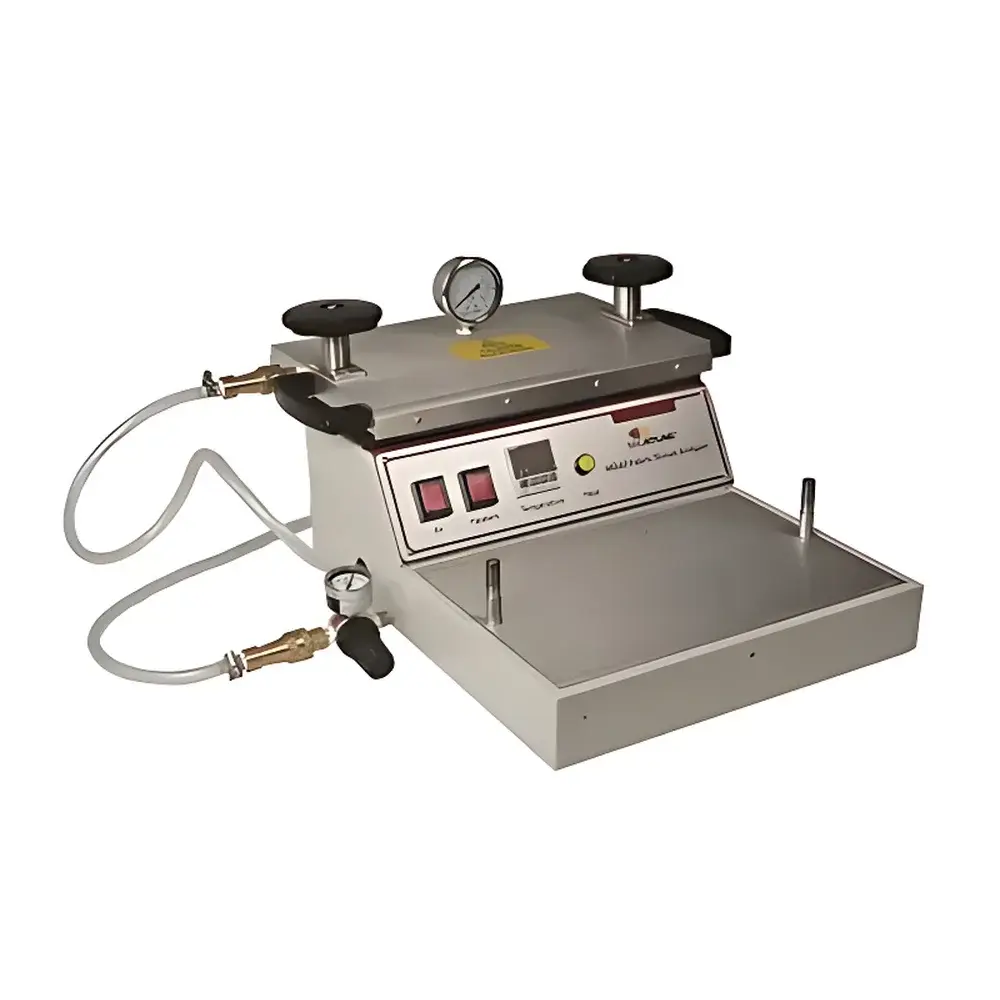
SDL Atlas M242 Fabric Defect Analyzer
| Brand | SDL Atlas |
|---|---|
| Origin | Guangdong, China |
| Manufacturer Type | Manufacturer |
| Origin Category | Domestic |
| Model | M242 |
| Pricing | Upon Request |
Overview
The SDL Atlas M242 Fabric Defect Analyzer is an industry-specific instrumentation system engineered for objective, standardized assessment of surface-level structural and process-induced defects in woven, knitted, and nonwoven textiles. Unlike subjective visual inspection methods, the M242 employs a thermoplastic embedding protocol—utilizing controlled heat, pressure, and cooling cycles—to encapsulate fabric specimens within optically clear polystyrene resin films. This physical stabilization eliminates confounding variables such as color variation, yarn luster, surface pile, or weave geometry, enabling high-contrast, monochromatic imaging of topographic irregularities. The resulting resin-embedded sample serves as a permanent, dimensionally stable reference medium suitable for both qualitative documentation and quantitative defect mapping under standardized illumination and magnification conditions. The instrument operates on the principle of optical contrast enhancement via refractive index matching and surface relief replication—a methodology widely adopted in textile quality assurance laboratories compliant with ISO 105-X12, ASTM D5034, and AATCC Test Method 135.
Key Features
- Thermoplastic embedding module with programmable temperature ramping (up to 180 °C), hydraulic compression (0–10 MPa adjustable), and regulated cooling rate to ensure consistent resin flow and bubble-free encapsulation.
- Dedicated polystyrene resin formulation optimized for textile fiber compatibility—minimizing shrinkage, thermal degradation, or interfacial delamination during curing.
- Integrated sample holder with precision alignment guides to maintain fabric orientation and prevent shear distortion during molding.
- Modular design supporting post-embedding analysis using standard stereo microscopes, digital imaging stations, or automated image analysis platforms (e.g., ImageJ-compatible workflows).
- Compliance-ready documentation suite including batch logs, process parameter records, and resin lot traceability—supporting GLP-aligned audit trails per ISO/IEC 17025 requirements.
Sample Compatibility & Compliance
The M242 accommodates fabric specimens up to 150 mm × 150 mm with thicknesses ranging from 0.1 mm (sheer voiles) to 4.5 mm (heavy upholstery or technical laminates). It is validated for natural fibers (cotton, wool, silk), regenerated cellulose (viscose, lyocell), synthetics (polyester, nylon, acrylic), and blended constructions—including coated, laminated, or metallized substrates. All resin formulations meet RoHS Directive 2011/65/EU restrictions on hazardous substances. The embedding procedure is referenced in ISO 13934-1 Annex B for tensile specimen preparation and aligns with AATCC TM179 guidelines for dimensional stability evaluation of resin-embedded textile standards.
Software & Data Management
While the M242 itself is a hardware-based embedding platform (not a digital imaging system), it integrates seamlessly into digital QA ecosystems. Embedded samples are compatible with third-party image acquisition software supporting TIFF/RAW export, spatial calibration via stage micrometers, and defect annotation layers (e.g., NIST-traceable scale bars). Metadata—including embedding date, temperature profile, pressure duration, and operator ID—is recorded manually or via optional USB-connected logging modules. For regulated environments, users may implement electronic lab notebooks (ELNs) or LIMS interfaces that enforce 21 CFR Part 11-compliant user authentication, audit trails, and electronic signatures when archiving defect reports derived from M242-prepared specimens.
Applications
- Objective grading of barre, streaking, and shading defects arising from dyeing inconsistencies or uneven chemical application in continuous pad-dry-cure lines.
- Root-cause analysis of weaving/knitting faults—including broken ends, float defects, or tension-related misalignment—by isolating structural morphology from chromatic interference.
- Validation of finishing uniformity (e.g., calendering, sanforizing, flame retardant application) through comparative surface topology analysis pre- and post-treatment.
- Development and verification of new fabric constructions where traditional inspection fails due to high pattern complexity or low-contrast surface features.
- Training and calibration of human inspectors using standardized, artifact-free reference samples generated reproducibly across shifts and facilities.
FAQ
Does the M242 include built-in imaging or analysis software?
No—the M242 is a specimen preparation system only. Imaging and defect quantification require external optical equipment and compatible software.
Can synthetic fibers with low melting points be embedded without deformation?
Yes—temperature and dwell time parameters are fully configurable; protocols for polyester or polypropylene use reduced peak temperatures (≤130 °C) and shorter compression cycles to prevent thermal distortion.
Is the polystyrene resin supplied with the instrument?
Resin kits (including catalyst, mold release agent, and curing trays) are available as consumables under SDL Atlas part numbers M242-RESIN-KIT-10 and M242-RESIN-KIT-50.
What maintenance is required for long-term operational reliability?
Routine cleaning of heating platens and pressure plates with ethanol; annual calibration of temperature sensors and load cells by authorized SDL Atlas service engineers.
How does the M242 support compliance with textile testing accreditation standards?
It enables traceable, repeatable specimen preparation—fulfilling ISO/IEC 17025 clause 7.2.2 (method validation) and supporting documented evidence of measurement uncertainty reduction in visual assessment procedures.





