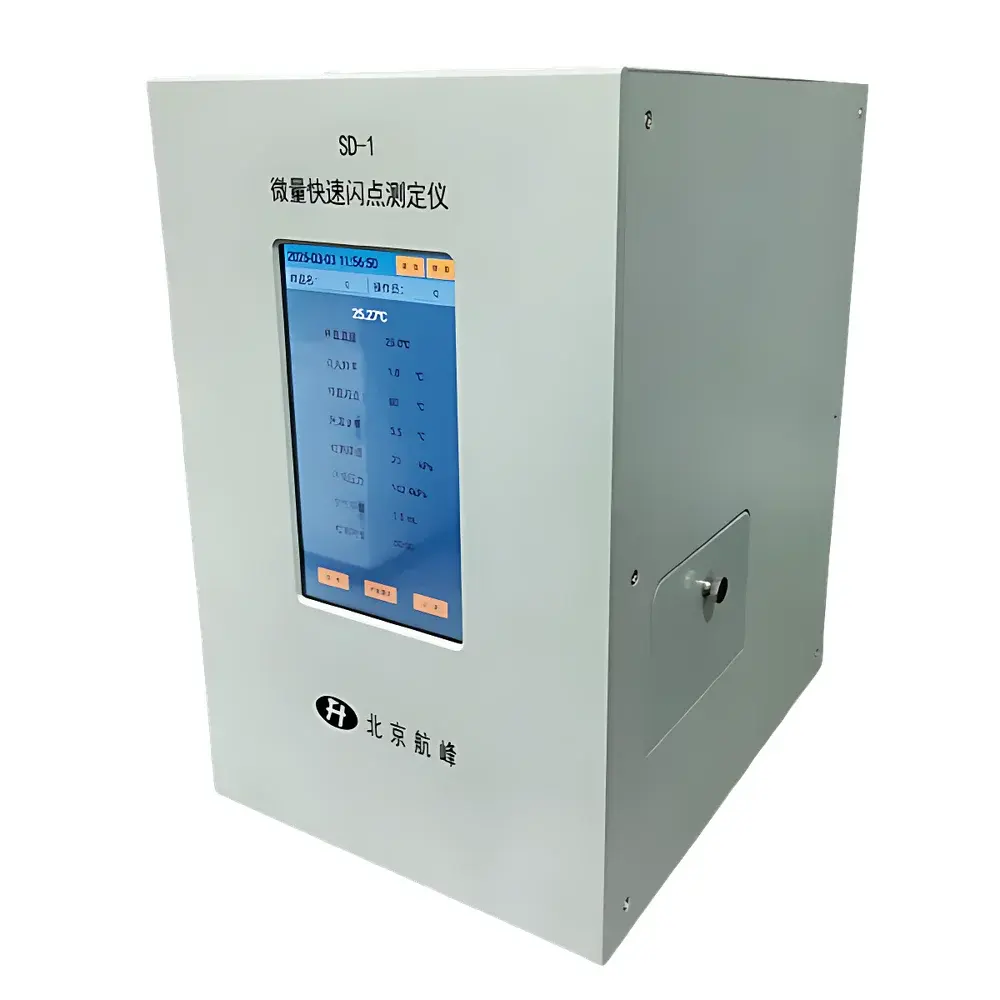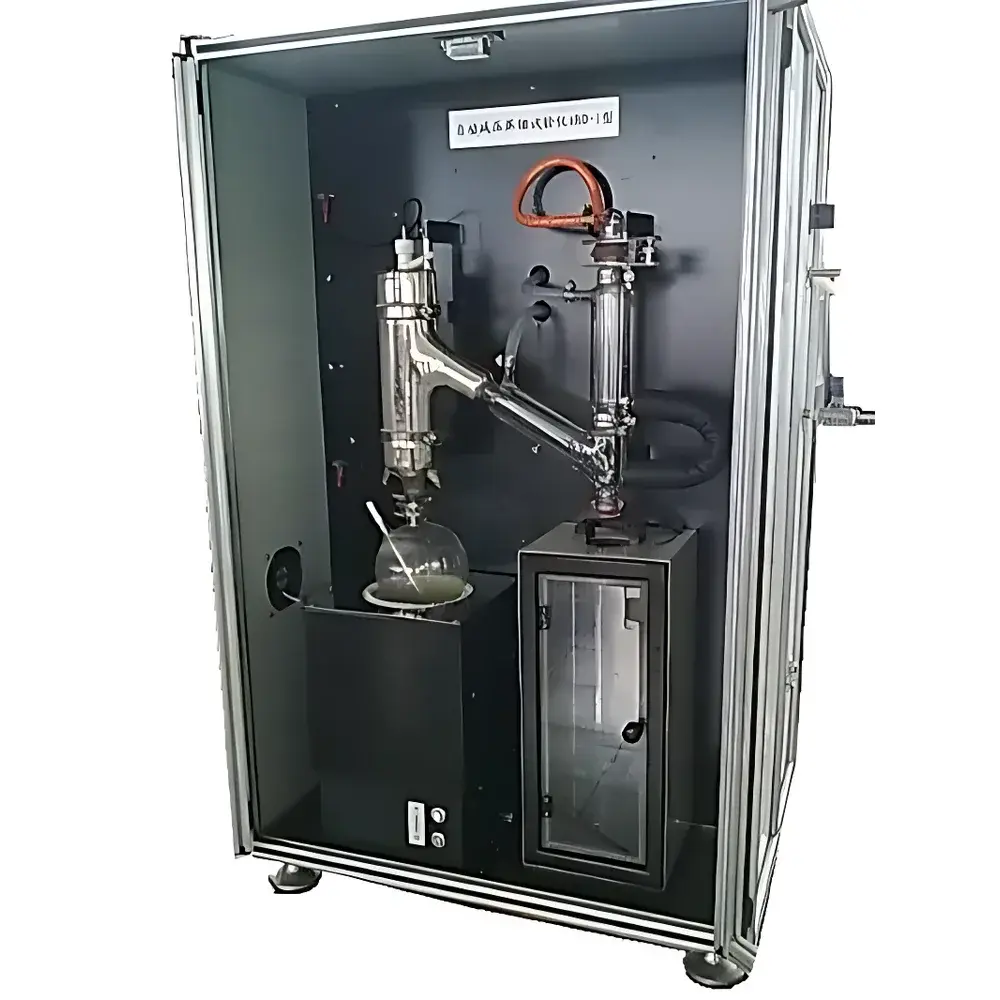
Xufeng XF-1160 Automated Reduced-Pressure Distillation Apparatus for Petroleum Products
| Brand | Xufeng |
|---|---|
| Origin | Shanghai, China |
| Model | XF-1160 |
| Standards Compliance | ASTM D1160, GB/T 9168 |
| Temperature Range | 0–400 °C (0.1 °C resolution) |
| Distillate Rate Control | 2–9 mL/min (adjustable in 0.5 mL/min increments) |
| Vacuum Control Accuracy | ±1% of setpoint |
| Condenser Temp Control | 30–90 °C (electric heating) |
| Cold Trap Cooling | Integrated compressor-based refrigeration |
| Detection Method | Photoelectric detection for initial boiling point (IBP) and liquid level tracking |
| Heating System | Ni-Cr resistance heater (1 kW, 220 V AC) with forced-air cooling |
| Data Interface | RS-232C serial port |
| Power Supply | 220 V AC, 50/60 Hz, 1500 W |
| Dimensions (W×D×H) | 700 × 750 × 580 mm |
| Weight | ~75 kg |
Overview
The Xufeng XF-1160 Automated Reduced-Pressure Distillation Apparatus is an engineered solution for precise determination of distillation characteristics of petroleum products under controlled vacuum conditions. It operates on the fundamental principle of fractional vaporization under sub-atmospheric pressure—enabling accurate measurement of initial boiling point (IBP), final boiling point (FBP), and intermediate recovery volumes across defined temperature intervals. Designed to fully comply with ASTM D1160 (“Standard Test Method for Distillation of Petroleum Products at Reduced Pressure”) and GB/T 9168 (“Determination of Reduced-Pressure Distillation Characteristics of Petroleum Products”), the instrument delivers high reproducibility for heavy fractions—including lubricating oils, residual fuels, and vacuum gas oils—where atmospheric distillation would induce thermal cracking or decomposition. Its integrated microprocessor-controlled architecture governs all critical parameters—including vacuum regulation, condenser temperature, cold trap performance, and distillate rate—ensuring consistent test execution across operator shifts and laboratory environments.
Key Features
- Full automation of ASTM D1160 and GB/T 9168 test protocols via embedded Windows-based control interface with color LCD display
- PID-regulated vacuum control system with ±1% accuracy across the operational pressure range, ensuring stable vapor-phase equilibrium during distillation
- High-resolution photoelectric detection for IBP and real-time liquid-level tracking, eliminating manual endpoint estimation errors
- Programmable distillate collection rate (2–9 mL/min, adjustable in 0.5 mL/min steps) with PID-driven flow stabilization
- Dual-stage heating strategy—separate initial and final temperature setpoints—to compensate for heater aging and thermal lag, maintaining consistent IBP and FBP repeatability
- Integrated safety monitoring: automatic flame detection and suppression, plus foam onset and collapse recognition to prevent overflow or column flooding
- Compressor-cooled cold trap (−20 °C typical operating base) paired with electrically heated condenser (30–90 °C range) for optimal vapor condensation efficiency
- Onboard temperature and pressure correction algorithms compliant with standard reference tables (e.g., ASTM D1298, ISO 91-1), applied in real time without external calculation
- RS-232C serial interface supporting bidirectional data exchange with LIMS or laboratory informatics platforms
- Configurable termination logic: end test upon reaching specified endpoint temperature, total distillate volume, or completion of full ASTM-defined recovery schedule
Sample Compatibility & Compliance
The XF-1160 accommodates samples with boiling ranges extending up to 400 °C at reduced pressure, including vacuum residua, deasphalted oils, and high-boiling hydrocarbon fractions unsuitable for ASTM D86 or D2887 analysis. All hardware and software functions are validated against the procedural requirements of ASTM D1160 and GB/T 9168, including mandatory vacuum calibration traceability, temperature sensor accuracy verification (via Pt100 platinum resistance thermometers), and distillate volume measurement uncertainty limits. The system supports GLP-aligned operation through audit-trail-capable event logging (start/stop times, parameter deviations, alarm triggers), and its digital output interface facilitates integration into 21 CFR Part 11–compliant environments when paired with validated third-party data acquisition software.
Software & Data Management
The embedded control software provides menu-driven test setup across 20 preconfigured method templates, each storing complete parameter sets—including ramp rates, hold durations, vacuum profiles, and condenser temperature gradients. Real-time graphical display includes dual-axis plotting of temperature vs. cumulative distillate volume, with overlay capability for comparative runs. All raw and corrected data—including uncorrected temperatures, barometric pressure, observed vacuum levels, and volumetric recovery—are stored in CSV format. Standard A4 color inkjet printing outputs include full test metadata, annotated distillation curve, statistical summary (IBP, 10%, 50%, 90%, FBP), and system diagnostic logs. Export functionality enables direct import into Excel, MATLAB, or chromatographic data systems for further statistical modeling or refinery yield correlation.
Applications
- Refinery process optimization: characterization of vacuum tower side-stream cuts and bottoms for heat balance modeling
- Fuel specification compliance: verification of vacuum gas oil (VGO) cut points prior to FCC feed preparation
- Lubricant base stock grading: assessment of volatility distribution per API 1509 or ASTM D2500
- Research on thermal stability: evaluation of distillation behavior under varying vacuum profiles to assess cracking propensity
- Quality assurance of heavy feedstocks: batch-to-batch consistency checks for asphaltic residuals and bitumen precursors
- Regulatory reporting: generation of certified distillation data for customs classification (HS Code 2710) and environmental reporting (EPA Method 1664)
FAQ
Does the XF-1160 meet ASTM D1160’s requirement for vacuum measurement uncertainty?
Yes—the integrated absolute pressure transducer is factory-calibrated against NIST-traceable references, and the system applies real-time barometric correction per ASTM D1078 Annex A1.
Can the instrument perform pressure corrections automatically during testing?
Yes—temperature and pressure corrections are computed onboard using ASTM D1250-derived algorithms and applied to all reported boiling points without user intervention.
Is the cold trap capable of maintaining stable sub-zero temperatures throughout extended tests?
The hermetically sealed compressor-based refrigeration unit sustains ≤−15 °C at the cold trap surface for >8 hours under continuous load, verified per IEC 61000-4-11.
How is data integrity ensured during power interruption?
Non-volatile flash memory retains all active test parameters and partial results; resumption occurs from last valid data point upon reboot.
What maintenance routines are recommended for long-term vacuum system reliability?
Monthly inspection of O-rings, quarterly calibration of pressure sensor, and annual replacement of desiccant in the vacuum line filter—documented in the included GLP-compliant maintenance log template.
Related Products