
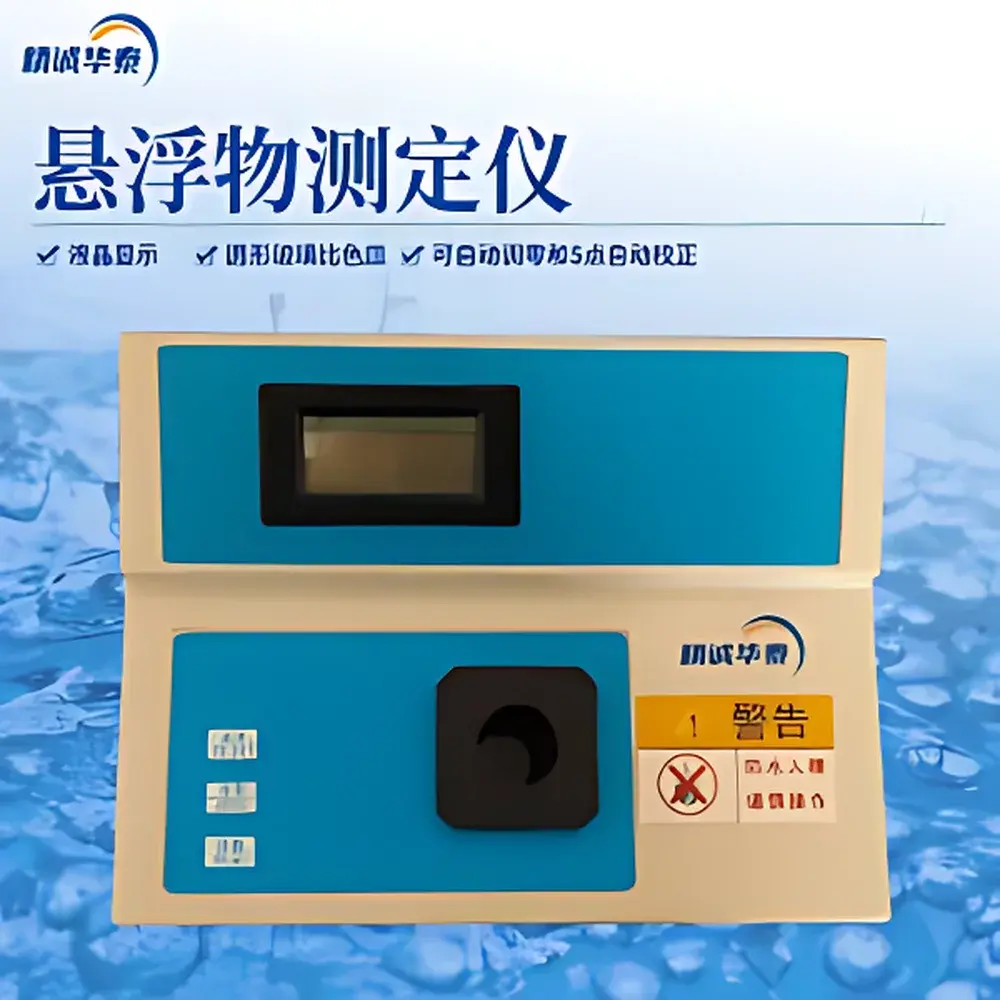
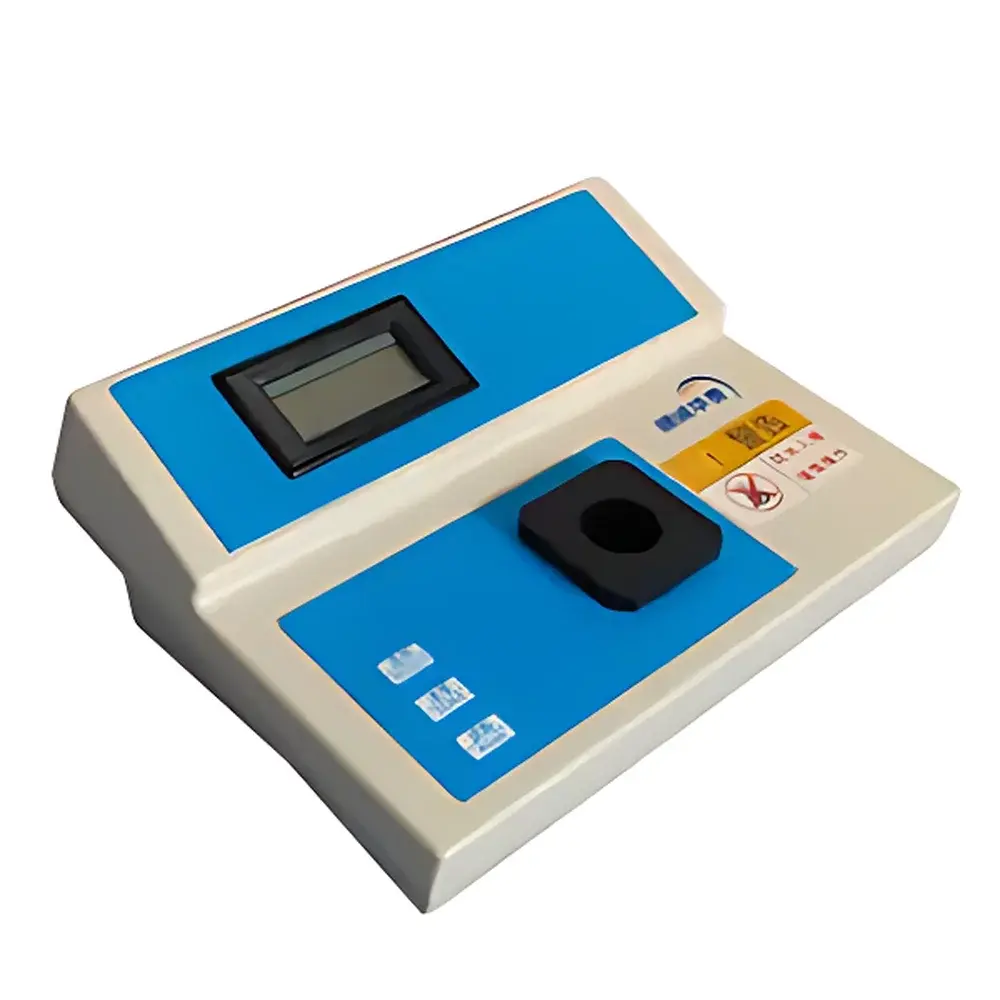
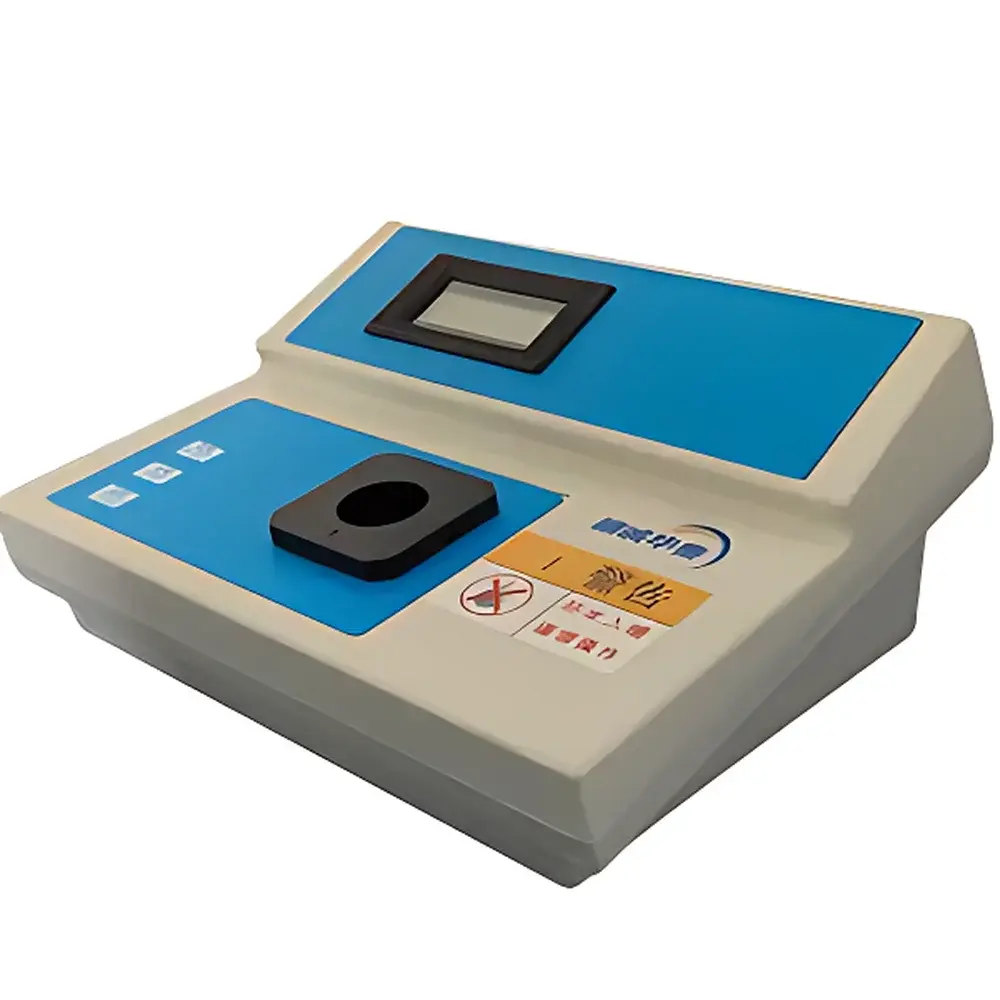
Jingcheng Huatai YN/SS-2Z Portable Suspended Solids Analyzer
| Brand | Jingcheng Huatai |
|---|---|
| Origin | Beijing, China |
| Model | YN/SS-2Z |
| Instrument Type | Portable |
| Measurement Range | 0–100 ppm |
| Minimum Display Resolution | 0.01 ppm |
| Repeatability | ≤2% |
| Accuracy | ≤±5% FS |
| Power Adapter | AC 220 V, 50 Hz |
| Compliance | Designed for field-deployable water quality monitoring per standard turbidimetric principles |
Overview
The Jingcheng Huatai YN/SS-2Z Portable Suspended Solids Analyzer is a compact, battery-operated optical instrument engineered for rapid, on-site quantification of suspended solids (SS) in aqueous samples using turbidimetric measurement principles. It operates on the fundamental photometric relationship between light attenuation—caused by scattering and absorption from insoluble particulate matter—and the concentration of suspended solids in transparent or semi-transparent liquid matrices. Unlike gravimetric methods requiring filtration, drying, and weighing, the YN/SS-2Z delivers immediate SS concentration readings in parts per million (ppm), making it suitable for routine surveillance at wastewater influent/effluent points, distribution networks, process streams, and environmental sampling sites. Its optical architecture employs a fixed-wavelength LED light source and a matched photodetector to ensure consistent signal acquisition under variable ambient lighting conditions. The device complies with core methodological expectations outlined in ISO 7027 (water quality — determination of turbidity) and serves as a practical surrogate for SS estimation where direct gravimetric analysis is impractical due to time, resource, or logistical constraints.
Key Features
- Integrated microprocessor-based control system with touch-sensitive keypad and backlit LCD display for intuitive operation in low-light field environments.
- Optimized optical path utilizing precision-ground quartz cuvettes (round, 10 mm pathlength) with optically flat, scratch-resistant surfaces to minimize scattering artifacts and enhance measurement reproducibility.
- Automatic zero calibration and five-point auto-calibration routine across the full 0–100 ppm range; supports both automatic range switching and manual override for targeted resolution.
- Embedded non-linear curve-fitting algorithm and digital signal smoothing to mitigate noise from minor sample heterogeneity or transient air bubbles.
- Non-volatile memory retains factory-installed calibration curves and user-defined calibration data—even after power loss—ensuring continuity during extended field deployments.
- Energy-efficient design powered via internal rechargeable battery (charged using included 220 V / 50 Hz AC adapter), enabling >8 hours of continuous operation per charge.
Sample Compatibility & Compliance
The YN/SS-2Z is validated for use with clarified or lightly turbid water samples—including municipal wastewater, industrial effluents, surface water, and process rinse waters—provided color interference remains minimal (e.g., absorbance at 650 nm < 0.1 AU). Samples containing high dissolved organic content, intense natural coloration (e.g., humic-rich groundwater), or emulsified oils may require pretreatment or comparative validation against gravimetric reference methods (ISO 11923). While not certified to GLP or GMP standards out-of-the-box, its audit-ready calibration log, traceable zero/check point verification, and stable baseline performance support integration into QA/QC workflows compliant with ISO/IEC 17025–accredited laboratories. Documentation includes full electrical safety compliance per GB 4793.1 (Chinese equivalent to IEC 61010-1) and RoHS-conformant material declarations.
Software & Data Management
The analyzer operates autonomously without external software dependency. All calibration parameters, measurement timestamps (where enabled via optional firmware update), and operator-defined batch IDs are stored internally. Data export capability is available through optional USB-to-serial interface modules (sold separately), facilitating CSV-formatted output compatible with LIMS platforms and statistical process control (SPC) tools. Firmware updates—delivered via secure manufacturer portal—support enhanced data logging intervals, expanded calibration point storage, and improved temperature compensation algorithms. Audit trail functionality meets basic FDA 21 CFR Part 11 readiness requirements when paired with controlled access protocols and electronic signature validation procedures implemented at the institutional level.
Applications
- Routine monitoring of primary clarifier effluent and secondary treatment discharge in municipal wastewater plants.
- Process control in food & beverage facilities—e.g., monitoring suspended yeast or starch particles in fermentation broth or rinse water.
- Compliance screening for industrial discharge permits (e.g., EPA NPDES, local environmental bureau reporting thresholds).
- Field assessment of sediment resuspension events in rivers, reservoirs, and stormwater retention basins.
- Pre-screening tool in pharmaceutical clean-in-place (CIP) validation to verify absence of residual particulates in rinse cycles.
FAQ
How does the YN/SS-2Z differ from a turbidity meter?
It uses identical optical principles but is calibrated specifically against suspended solids reference standards (e.g., formazin or kaolin suspensions traceable to NIST SRM 2100B), not turbidity units (NTU/FNU). Correlation to gravimetric SS requires site-specific validation.
Can the instrument measure colored samples accurately?
High color intensity introduces positive bias due to additional light absorption; users should perform parallel gravimetric analysis to establish correction factors for routinely colored matrices.
What maintenance is required for long-term stability?
Daily cleaning of quartz cuvettes with deionized water and lint-free wipes; quarterly verification of zero stability and calibration curve linearity using certified reference standards.
Is the device suitable for regulatory reporting?
It serves as a qualified screening tool; final compliance reporting must reference gravimetric SS measurements per ISO 11923 or APHA Standard Method 2540D unless local authority accepts turbidimetric correlation with documented R² ≥ 0.95.
Does the analyzer support temperature compensation?
Basic firmware includes fixed-temperature (25 °C) compensation; advanced versions offer real-time NTC thermistor input for dynamic correction across 5–40 °C operating range.
Related Products







