
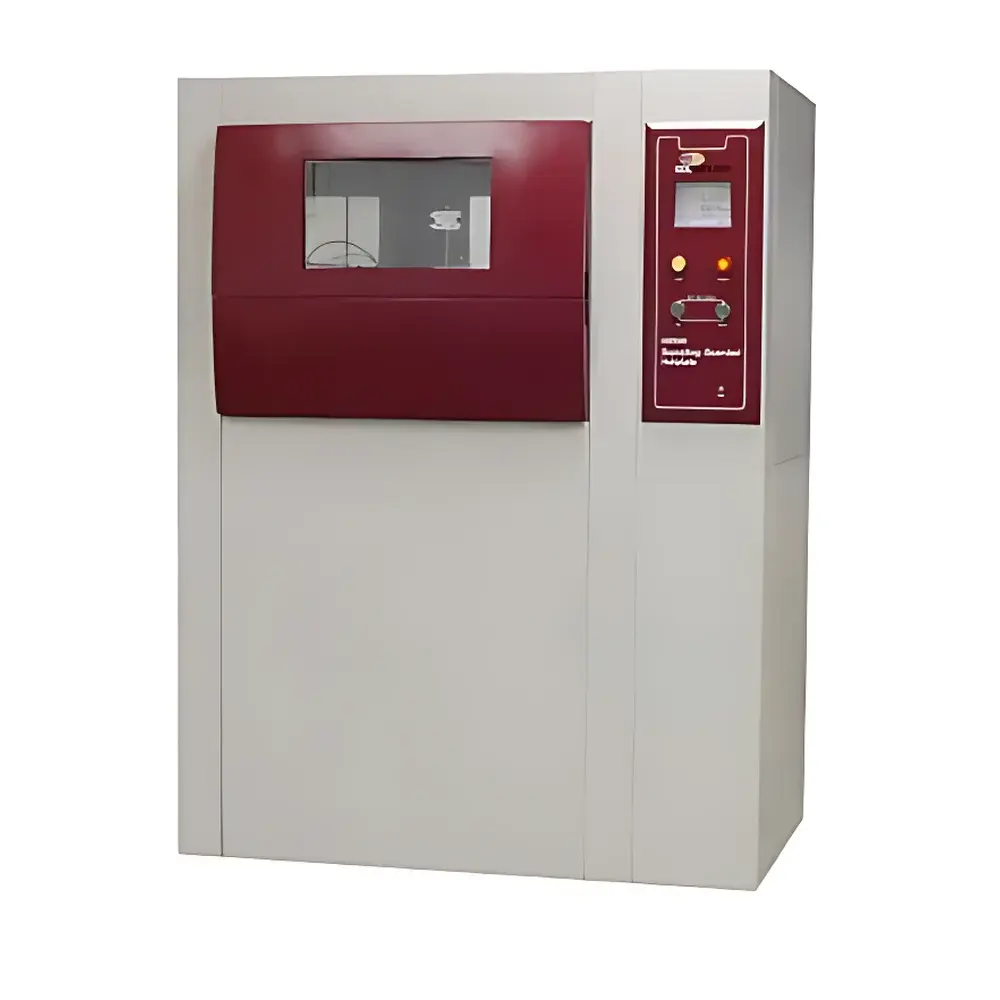
SDL Atlas M259B Thermal and Moisture Resistance Tester
| Brand | SDL Atlas |
|---|---|
| Origin | Shenzhen, China |
| Manufacturer Type | Manufacturer |
| Origin Category | Domestic (China) |
| Model | M259B |
| Price Range | USD 14,000 – 42,000 |
Overview
The SDL Atlas M259B Thermal and Moisture Resistance Tester is a precision-engineered instrument designed for objective quantification of thermal resistance (Rct) and evaporative resistance (Ret) of textiles and flexible materials under controlled climatic conditions. Based on the standardized “sweating hot plate” principle defined in ISO 11092, ASTM F1868, and GB/T 11048, the system replicates human skin thermophysiology using a regulated heated porous bronze plate—commonly referred to as a “skin model.” The test method measures heat flux and evaporative water vapor transfer across a conditioned fabric specimen mounted between the heated plate and a climate-controlled air stream. Rct reflects insulation against dry heat loss, while Ret quantifies resistance to moisture vapor transmission—two critical parameters for evaluating thermal comfort, protective clothing performance, and functional apparel efficacy.
Key Features
- Triple-zone independently heated plate assembly (test plate, guard plate, base plate), each maintained at a stable temperature between 33 °C and 36 °C with ±0.1 °C stability
- Sintered porous bronze heating and guard plates—engineered to replicate skin surface geometry, wettability, and thermal mass characteristics
- Motor-driven vertical positioning system ensures precise, repeatable sample contact pressure and parallel alignment of the heating surface
- Integrated air velocity sensor positioned directly above the test specimen (range: 0.05–1.0 m/s, accuracy ±0.02 m/s)
- Climate chamber with active control and real-time monitoring of ambient air temperature (±0.2 °C), relative humidity (±1.5% RH), and airflow uniformity
- Full-color TFT display with intuitive touch interface for parameter setup, real-time curve visualization, and status indication (green/red LED feedback for compliance with test condition thresholds)
- Maximum specimen size: 250 mm × 250 mm; maximum thickness: 70 mm
Sample Compatibility & Compliance
The M259B accommodates woven, knitted, nonwoven, laminated, and coated fabrics—including flame-retardant, waterproof-breathable membranes, insulated composites, and medical barrier materials. It supports standardized conditioning per ISO 139 (standard atmosphere: 20 °C ± 2 °C, 65% RH ± 4% RH) and executes tests in full accordance with ISO 11092:2014, ASTM F1868–22 (Method A & B), EN 342, EN 343, and GB/T 11048–2018. All thermal and humidity sensors are NIST-traceable and calibrated annually per ISO/IEC 17025 requirements. The system architecture supports GLP-compliant operation, including audit-trail-enabled user authentication, electronic signatures, and immutable data logging.
Software & Data Management
The instrument is supplied with dedicated Windows-based control and analysis software pre-installed on an integrated laptop. The software enables full remote configuration of test protocols, real-time plotting of Rct/Ret convergence curves, automatic endpoint detection per standard criteria, and export of raw sensor time-series data (CSV, Excel). Data files include metadata such as operator ID, calibration certificate IDs, environmental chamber logs, and timestamped thermal/humidity profiles. The software complies with FDA 21 CFR Part 11 requirements for electronic records and signatures when configured with role-based access control and digital audit trail activation.
Applications
- Development and quality assurance of outdoor, sportswear, and military uniforms requiring balanced thermal insulation and moisture management
- Evaluation of personal protective equipment (PPE), including chemical-resistant suits and firefighting ensembles, per NFPA 1971 and EN 469
- R&D of smart textiles with phase-change materials (PCMs) or hydrophilic/hydrophobic gradients
- Validation of textile breathability claims for regulatory submissions (e.g., CE marking, Health Canada medical device classification)
- Comparative benchmarking of membrane technologies (e.g., Gore-Tex®, eVent®, Sympatex®) under identical climatic boundary conditions
- Academic research in textile physics, human thermal modeling, and ergonomics of wearable systems
FAQ
What standards does the M259B support out-of-the-box?
ISO 11092, ASTM F1868 (Methods A and B), EN 342, EN 343, and GB/T 11048 — all implemented with embedded protocol logic and auto-calculated pass/fail criteria.
Is the sintered bronze plate replaceable and recalibratable?
Yes — the porous bronze plates are field-replaceable service components; full system recalibration (including heat flux transducers and RH/temperature sensors) is performed by authorized SDL Atlas service engineers using certified reference standards.
Can the M259B operate unattended overnight?
Yes — the system includes hardware watchdog timers, thermal cut-off protection, and software-based job queuing with email notification upon completion or fault detection.
Does the software support multi-user environments with permission levels?
Yes — administrator, technician, and viewer roles are configurable; all actions are logged with timestamps, user IDs, and IP addresses for audit readiness.
What maintenance is required for long-term measurement stability?
Quarterly verification of air velocity and RH sensor drift; annual full calibration; biannual cleaning of porous bronze surfaces with ultrasonic degreasing and deionized water rinse — documented in the included Maintenance Logbook.




