
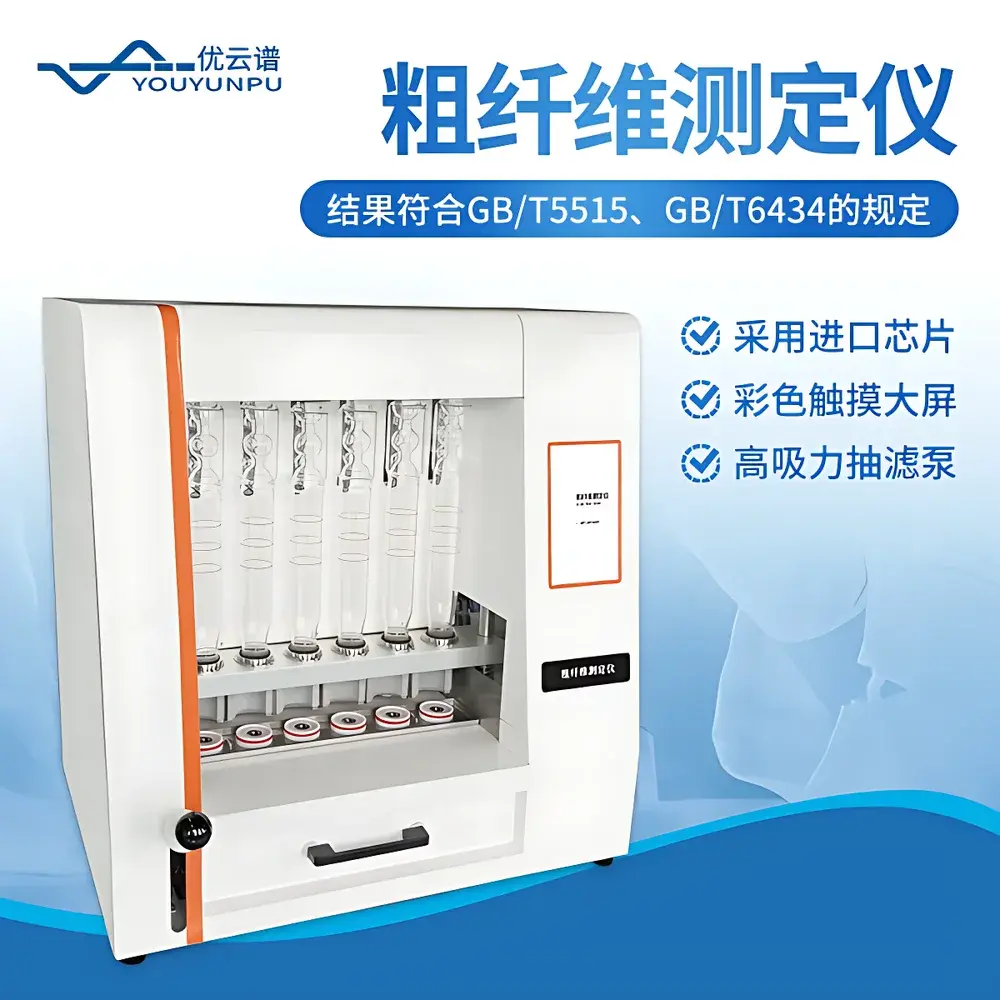
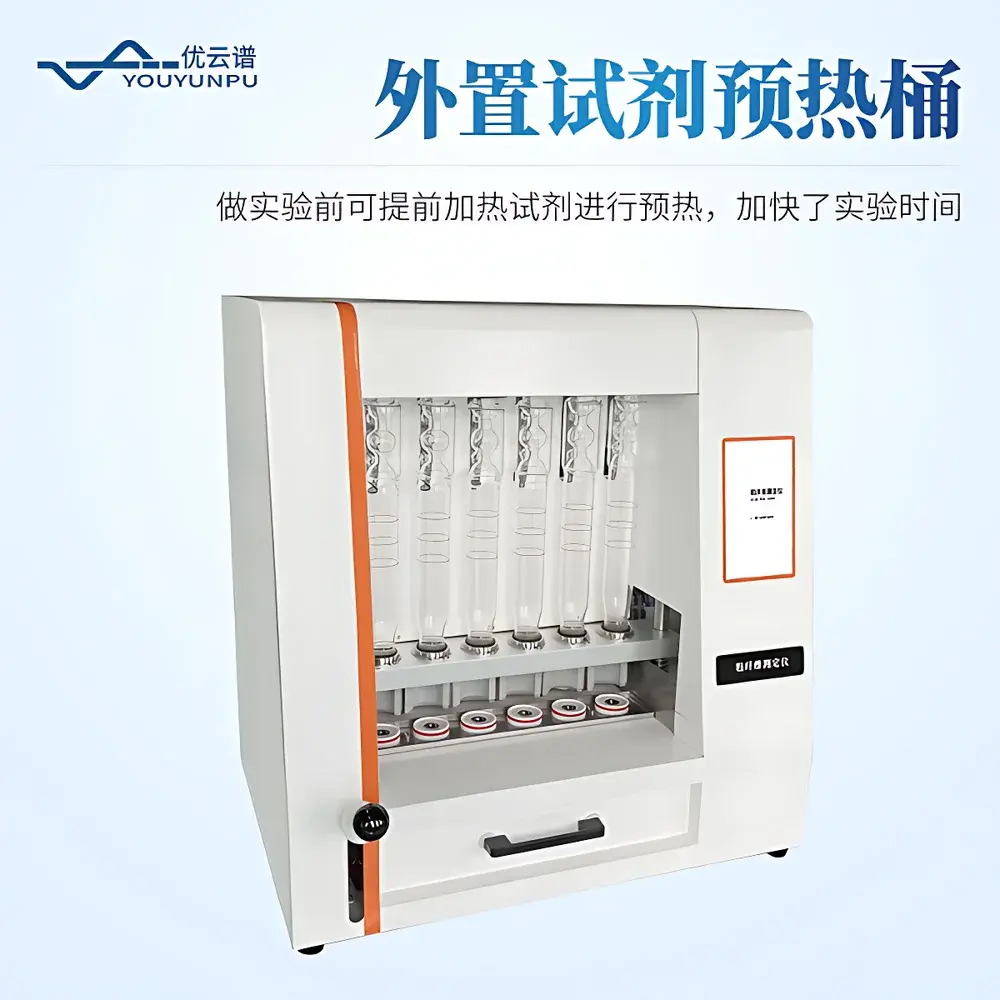
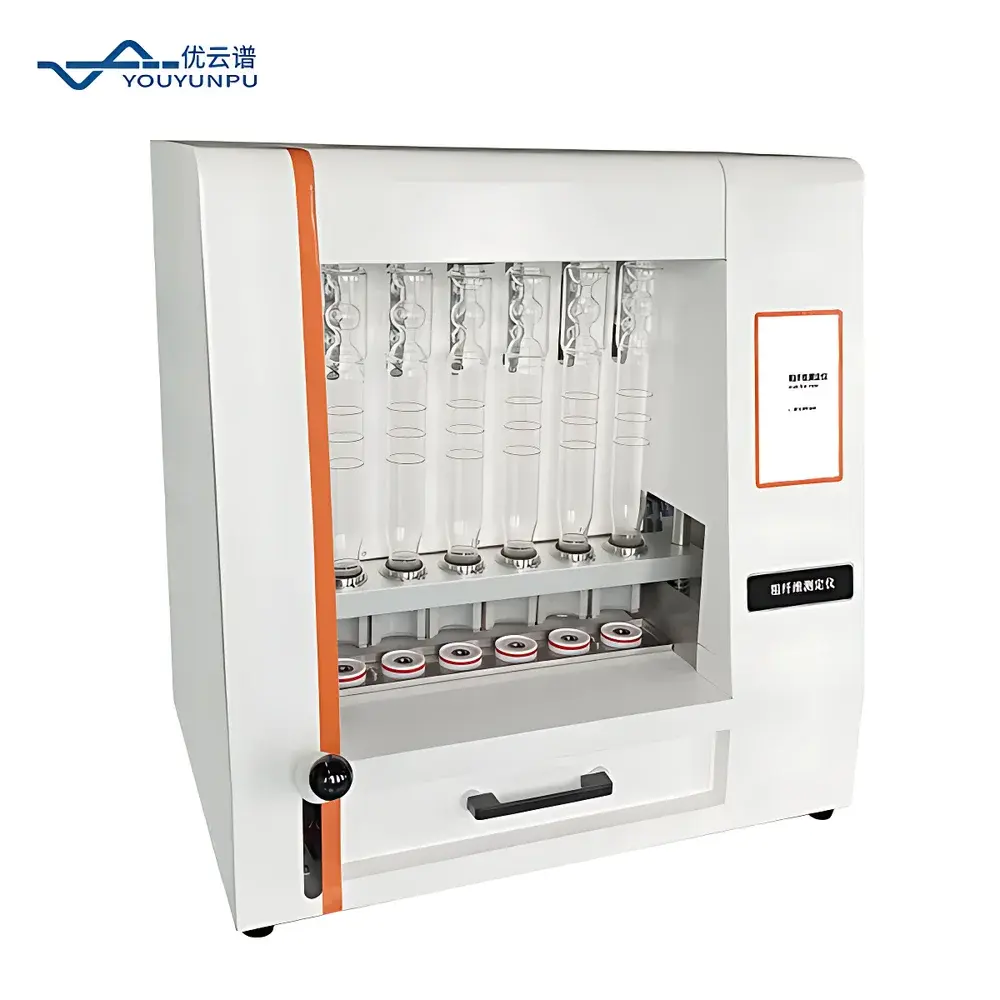
Youyunpu YP-CXW Automated Crude Fiber Analyzer
| Brand | Youyunpu |
|---|---|
| Origin | Shandong, China |
| Manufacturer Type | Direct Manufacturer |
| Country of Origin | China |
| Model | YP-CXW |
| Price | USD 3,500 (FOB Qingdao) |
Overview
The Youyunpu YP-CXW Automated Crude Fiber Analyzer is a fully integrated benchtop instrument engineered for precise, standardized determination of crude fiber and detergent fiber fractions in agricultural and biological matrices. It operates on the classical acid–alkali digestion principle—commonly referred to as the Weende method for crude fiber and the Van Soest detergent fiber system for neutral detergent fiber (NDF), acid detergent fiber (ADF), and acid detergent lignin (ADL). The system automates sequential high-temperature hydrolysis steps: first with dilute sulfuric acid (1.25% H₂SO₄), followed by sodium hydroxide (1.25% NaOH), including controlled heating, reagent dosing, reflux digestion, vacuum-assisted filtration, and multi-stage washing—all within a sealed, corrosion-resistant reaction chamber. This eliminates manual handling variability while ensuring thermal stability, consistent dwell time, and reproducible residue recovery—critical for compliance with official methods such as AOAC 962.09, ISO 6865:2000, and GB/T 5515–2022 (determination of crude fiber in cereals and cereal products) and GB/T 6434–2022 (crude fiber in feedstuffs).
Key Features
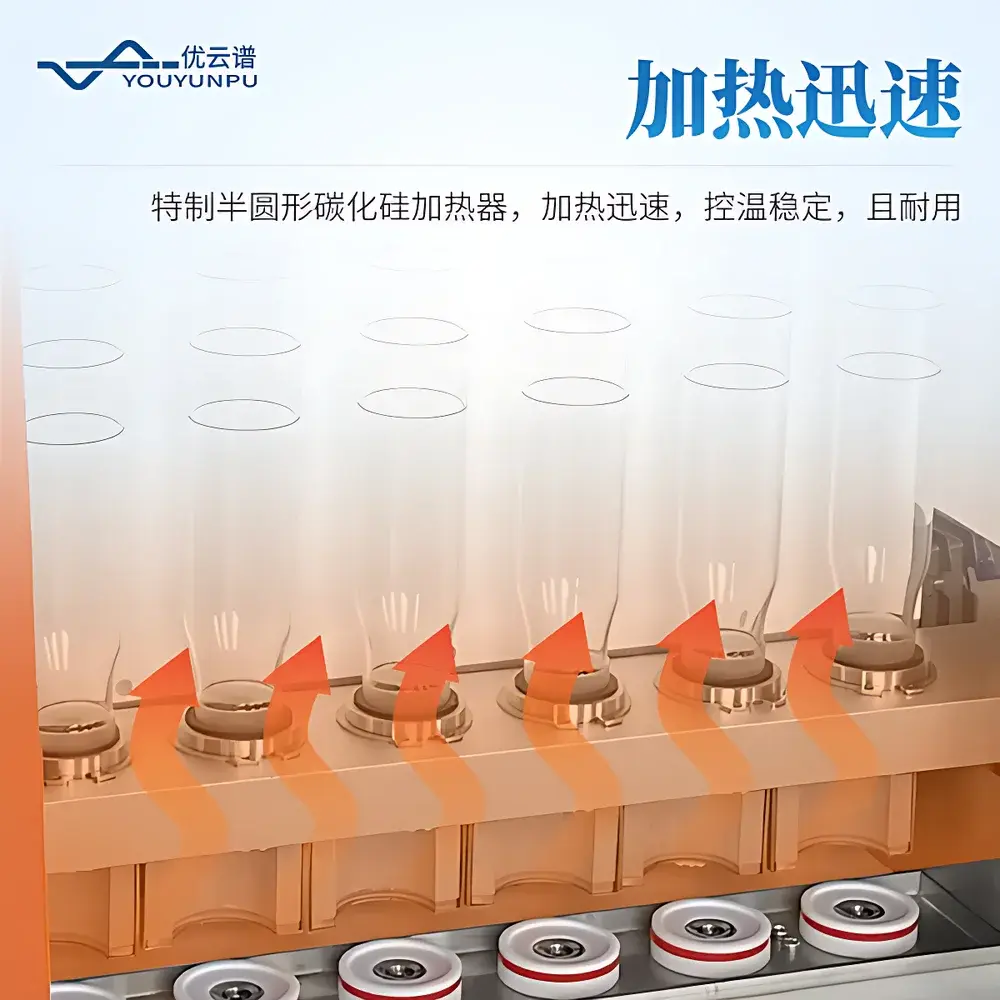
- Fully automated digestion cycle: programmable acid/alkali sequence, temperature control (up to 100 °C ± 1 °C), and timed reflux (0–120 min per stage)
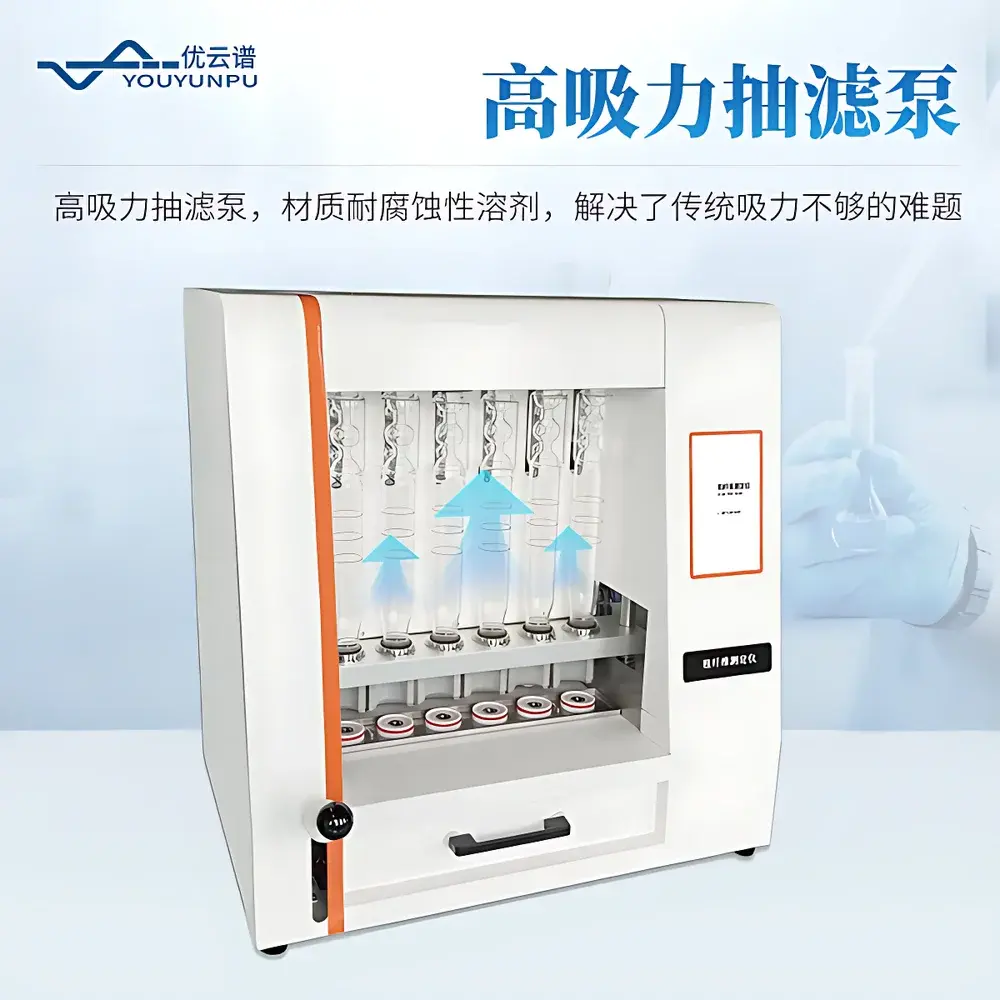
- Integrated vacuum filtration module with stainless-steel filter crucibles (G3 sintered glass or ceramic frit options available)
- Corrosion-resistant fluid path: PTFE-coated valves, borosilicate glass digestion vessels, and chemically inert tubing compatible with strong acids and bases
- Self-contained reagent delivery: dual independent reservoirs for H₂SO₄ and NaOH solutions, with precision peristaltic pumps (±2% volumetric accuracy)
- Thermal safety architecture: overtemperature cutoff, pressure-relief venting, and real-time thermal monitoring with audible/visual alerts
- Modular design compliant with ISO/IEC 17025 laboratory infrastructure requirements; footprint optimized for standard fume hood installation (W × D × H: 580 × 520 × 420 mm)
Sample Compatibility & Compliance
The YP-CXW accepts ground, homogenized solid samples ranging from 0.5 g to 2.0 g (dry weight basis), including forage grasses, compound feeds, soybean meal, corn silage, cereal bran, bakery by-products, and botanical extracts. It supports method adaptation for NDF (with α-amylase and sodium sulfite), ADF (with heat-stable amylase omission), and ADL (post-ADF residue ignition at 550 °C in external muffle furnace). All procedural parameters—including digestion temperature, reagent concentration, filtration vacuum level (−85 kPa nominal), and wash volume (3 × 25 mL hot deionized water)—are configurable to align with AOAC, USDA–ARS, and national standard protocols. Instrument validation documentation includes factory calibration certificates traceable to NIST standards, and full audit trails satisfy GLP and ISO/IEC 17025 data integrity requirements.
Software & Data Management
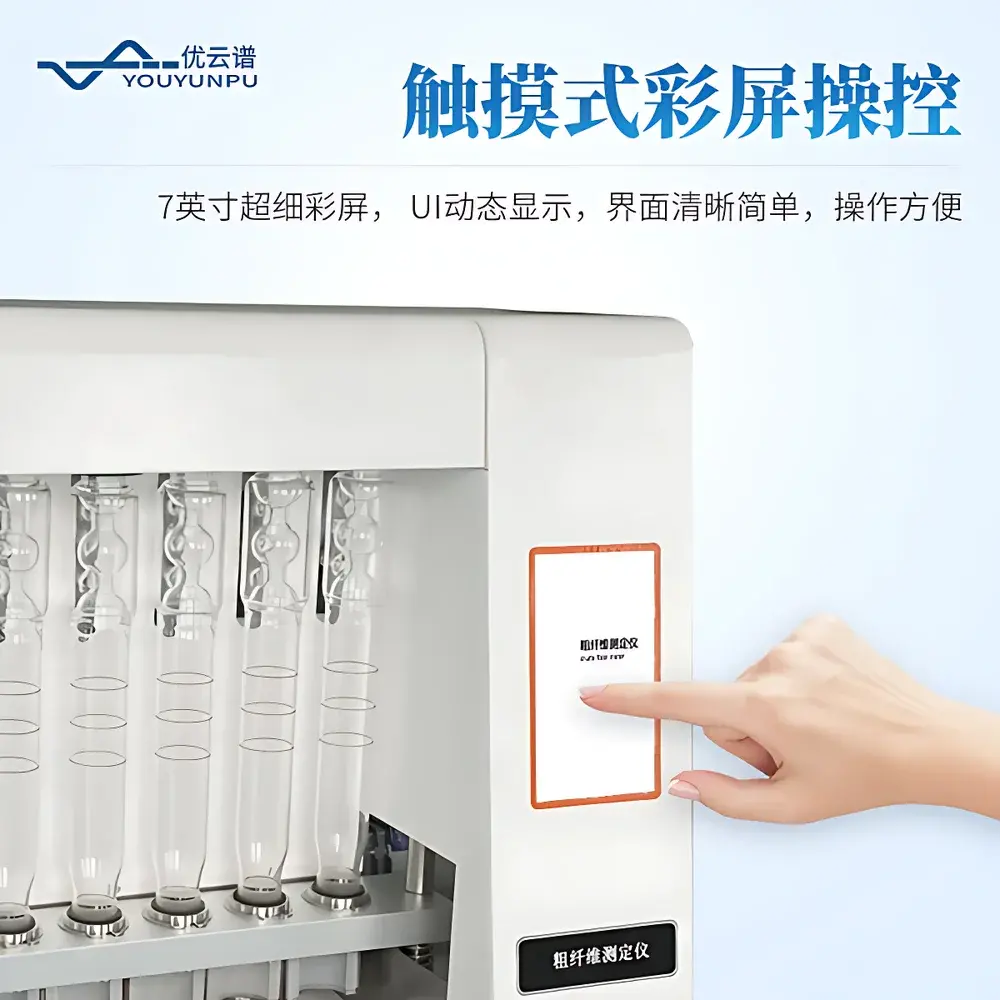
The embedded control interface runs Youyunpu FiberControl v3.2 firmware, offering touchscreen operation with multilingual support (English, Spanish, Chinese). Each run logs timestamped metadata: sample ID, operator, method template, reagent lot numbers, thermal profile, filtration duration, and final crucible mass (when paired with optional analytical balance integration via RS232/USB). Raw data export is supported in CSV and XML formats for LIMS interoperability. For regulated environments, optional 21 CFR Part 11-compliant software add-on provides electronic signatures, role-based access control, and immutable audit trails—fully validated for feed quality assurance and contract research laboratories.
Applications
- Feed formulation labs: routine crude fiber screening for compliance with EU Regulation (EC) No 767/2009 and AAFCO nutrient profiles
- Forage testing services: NDF/ADF ratio calculation for ruminant digestibility modeling (e.g., NRC 2001 dairy models)
- Grain inspection agencies: verification of labeling claims under GB 1351 (wheat), GB 1353 (corn), and GB/T 10361 (oats)
- Food ingredient suppliers: fiber content verification in functional food matrices (e.g., resistant starch blends, prebiotic fibers)
- Academic research: comparative fiber fractionation studies across cultivars, processing conditions, or fermentation treatments
FAQ
What digestion standards does the YP-CXW natively support?
It is pre-configured for GB/T 5515, GB/T 6434, AOAC 962.09, and ISO 6865. Custom method templates can be uploaded for regional or internal SOPs.
Is ash correction included in the crude fiber calculation?
Yes—the instrument prompts post-digestion ashing step (550 °C, 2–3 h) and integrates ash-corrected mass into final % crude fiber output.
Can the system handle viscous or high-lipid samples like distillers’ grains?
With optional lipid extraction (Soxhlet or accelerated solvent extraction) prior to fiber analysis, yes; the YP-CXW itself does not perform defatting but accommodates pre-treated samples.
What maintenance intervals are recommended?
Daily: rinse fluid paths with deionized water; quarterly: replace peristaltic pump tubing and inspect gasket integrity; annually: full metrological verification by authorized service center.
Does the analyzer include validation documentation for regulatory submissions?
Yes—factory IQ/OQ documentation, calibration records, and method verification reports (per AOAC guidelines) are provided with each unit.







