
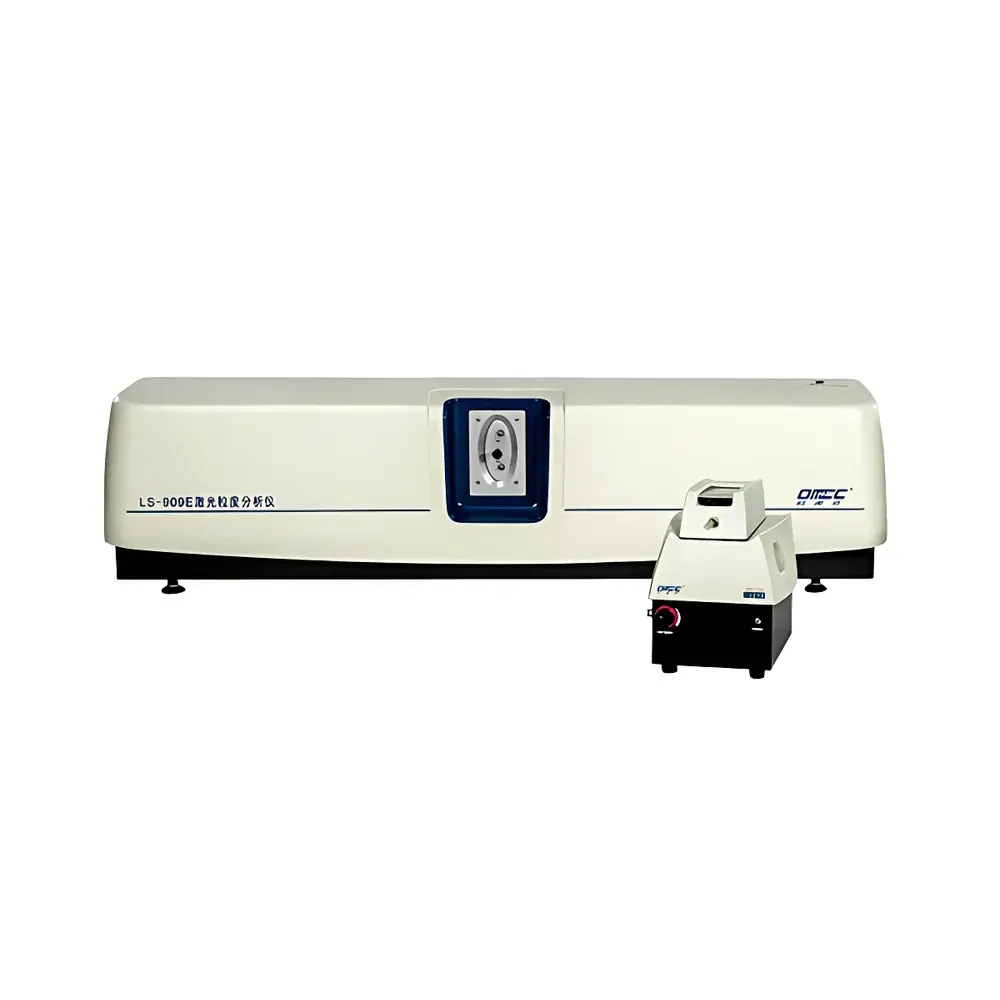
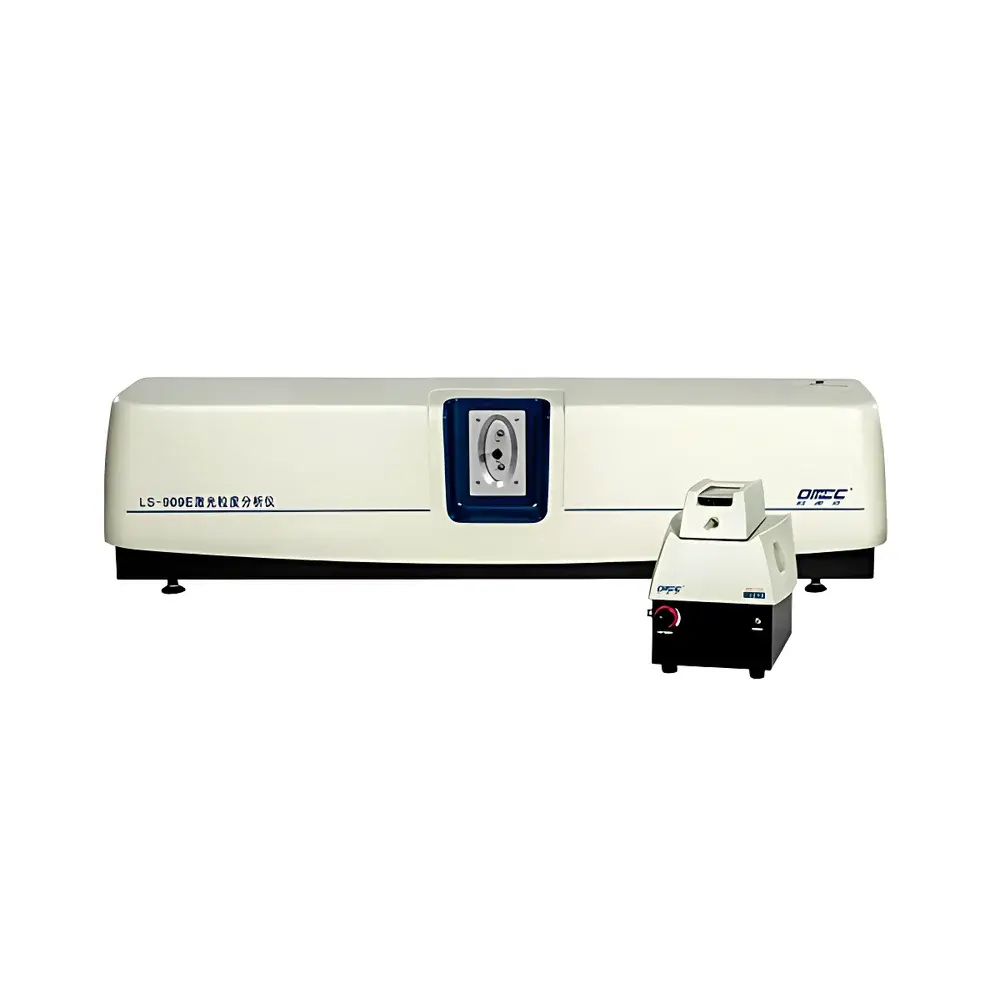
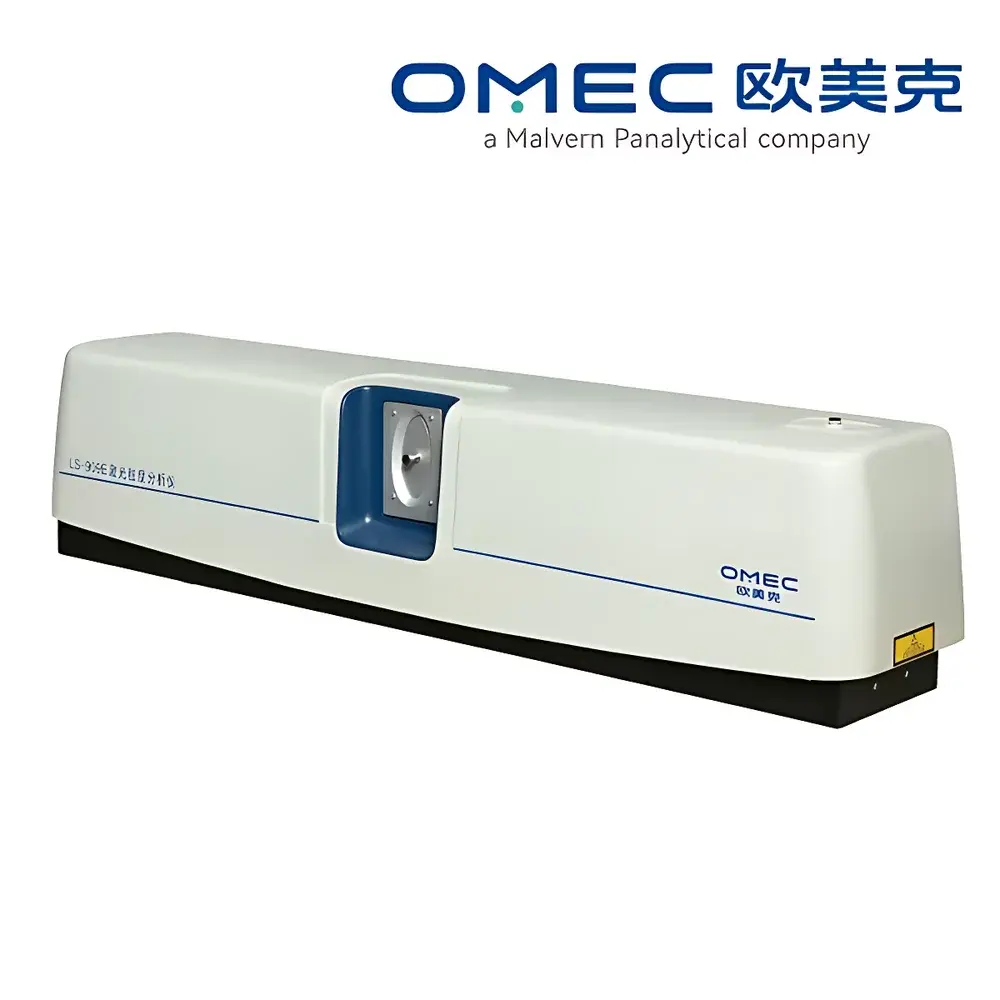
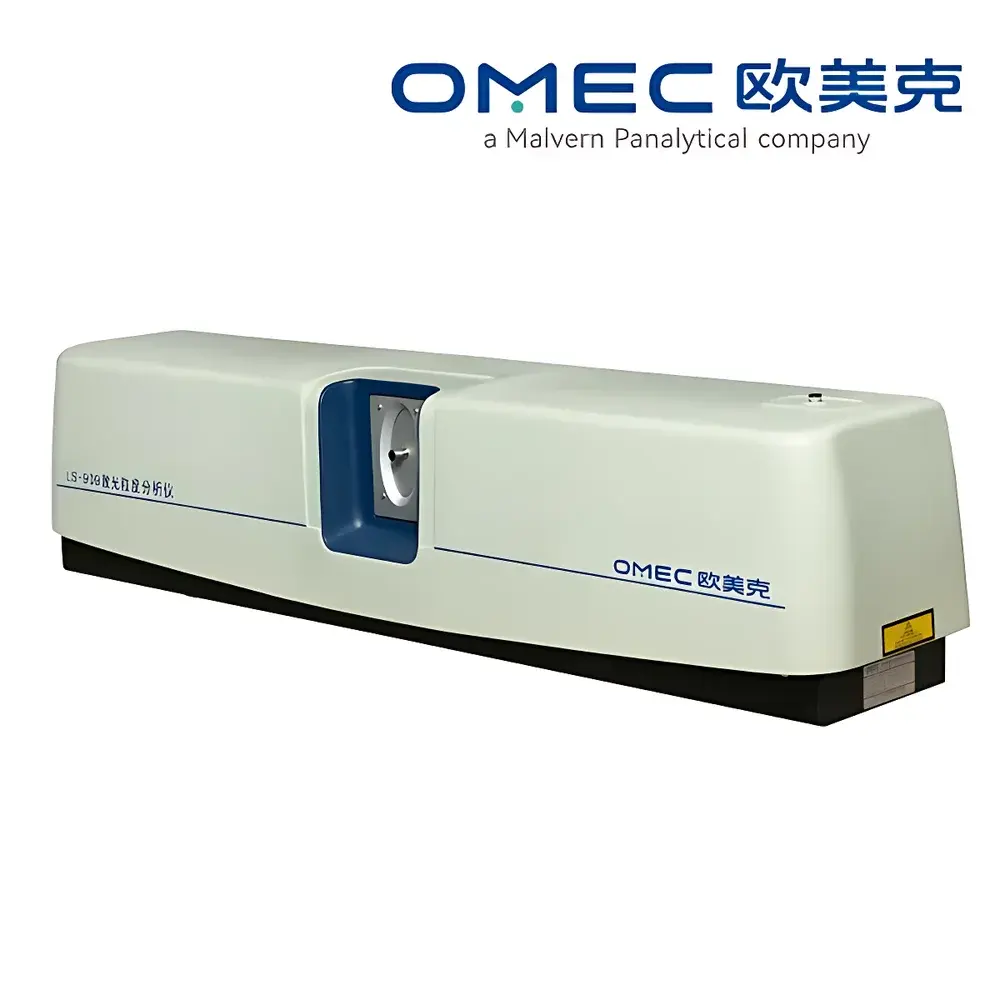
OMEC LS-909E High-Performance Dry-Dispersion Laser Particle Size Analyzer
| Brand | OMEC |
|---|---|
| Origin | Guangdong, China |
| Manufacturer Type | Manufacturer |
| Origin Category | Domestic |
| Model | LS-909E |
| Pricing | Upon Request |
| Dispersion Method | Dry Dispersion |
| Instrument Type | Laboratory Laser Particle Size Analyzer |
| Measurement Range | 0.1–3000 µm |
| Repeatability | <0.5% |
| Measurement Time | 1–2 min |
| Measurement Principle | Full-Range Mie Scattering Theory |
| Sample Introduction | Automated Dry Feeding |
| Optical Source | Imported He-Ne Laser (λ = 632.8 nm, Power >2.0 mW) |
| Detector Channels | 87 (Frontal, Sideward, Large-Angle, Multi-Backward) |
| ADC Resolution | 18-bit |
| Sampling Rate | 10 kHz |
| Alignment System | Intelligent Auto-Alignment (Precision: ±0.2 µm) |
| Environmental Operating Range | 5–35 °C, RH <85% |
| Power Requirements | 200–240 V AC, 50 Hz (Host: 60 W |
| Dispersion System | 2000 W) |
| Dimensions (L×W×H) | 1320 × 340 × 360 mm (Host) |
Overview
The OMEC LS-909E High-Performance Dry-Dispersion Laser Particle Size Analyzer is an advanced laboratory-grade instrument engineered for precise, reproducible particle size distribution (PSD) analysis of dry powders in inert gas environments. It operates on the physical principle of laser light scattering—specifically, full-range Mie scattering theory—which enables rigorous quantitative interpretation of angular intensity distributions of scattered light from particles suspended in a laminar gas stream. Unlike simplified Fraunhofer approximations, Mie theory accounts for particle refractive index, absorption, and wavelength-dependent phase effects, making the LS-909E suitable for both monomodal and broad-distribution samples across diverse material classes—including metal oxides, pharmaceutical excipients, catalysts, ceramics, and battery electrode materials. Its optical architecture integrates a long-focal-length (556 mm) Fourier transform lens, multi-dimensional detector array (87 channels), and high-stability He-Ne laser source (632.8 nm, >2.0 mW), collectively extending the measurable range to 0.1–3000 µm while preserving resolution at sub-micron and coarse ends.
Key Features
- Optimized single-lens Fourier-transform optical path with minimal reflective/refractive surfaces—reducing background noise and enhancing signal-to-noise ratio.
- Three-dimensional detector layout: frontal, sideward, large-angle, and multi-backward photodiode arrays—all precisely positioned on the Fourier focal plane for comprehensive angular coverage.
- Intelligent auto-alignment system with ±0.2 µm positional accuracy, enabling rapid optical centering without manual intervention and ensuring measurement repeatability across sessions.
- 18-bit analog-to-digital conversion with 10 kHz sampling rate and dynamic background compensation—delivering high-fidelity light energy capture and extended dynamic range.
- DPF-110 dry dispersion module featuring piezoelectric ceramic-controlled feed acceleration (0–12 G), continuously adjustable dispersion pressure (0.5–6 bar), and real-time monitoring of obscuration and negative pressure.
- Hermetically sealed dry-feed window with quartz interface and airflow protection—minimizing contamination, reducing maintenance frequency, and extending optical component service life.
- Modular mechanical design with aluminum baseplate and integrated dust/water shielding—supporting stable operation in standard laboratory environments (5–35 °C, RH <85%).
Sample Compatibility & Compliance
The LS-909E is validated for use with free-flowing, non-agglomerating dry powders requiring dispersion in compressed air or nitrogen. Its DPF-110 feeder accommodates sample masses as low as 10 mg and supports materials with densities up to 8 g/cm³ and hardness values compatible with alumina dispersion tubing. The system complies with fundamental metrological requirements outlined in ISO 13320:2020 (Particle size analysis — Laser diffraction methods) and supports traceable calibration using NIST-traceable PSL and silica standards. While not certified to FDA 21 CFR Part 11 out-of-the-box, its software architecture permits configuration for audit trail logging, electronic signature integration, and user-access control—enabling alignment with GLP and GMP documentation practices when deployed in regulated QC laboratories.
Software & Data Management
The embedded Windows-based analysis software provides SOP-driven workflow automation, including auto-alignment initiation, dispersion parameter sequencing, and post-run cleaning cycles. It supports multiple report templates—generic PSD, sieve-equivalent, percentile-based, statistical comparison, and custom-defined layouts—with export options to PDF, Excel (.xlsx), Word (.docx), and plain-text formats. Raw scattering data and processed distributions are stored in structured binary archives with metadata tagging (operator ID, timestamp, instrument ID, material ID). The optical database includes over 200 preloaded complex refractive indices (real + imaginary components); users may define custom optical models for opaque, absorbing, or anisotropic particles. All reports retain full traceability of analysis parameters—including laser power history, detector gain settings, and background subtraction profiles.
Applications
The LS-909E serves critical quality control and R&D functions across industries where dry powder characterization directly impacts performance: pharmaceutical solid dosage form development (e.g., inhalable APIs, tablet granules), additive manufacturing feedstock qualification (metal and polymer powders), catalyst support grading, cement and mineral filler optimization, and advanced battery cathode/anode material screening. Its ability to resolve fine fractions (1000 µm) makes it particularly valuable for failure analysis—such as identifying mill contamination, agglomeration artifacts, or sintering-induced coarsening. In research settings, the instrument supports method development for ISO/IEC 17025-accredited testing laboratories seeking scope expansion into dry-dispersion laser diffraction.
FAQ
What particle size range is validated for dry dispersion on the LS-909E?
The instrument achieves reliable measurement from 0.1 µm to 1400 µm under dry dispersion conditions, with extended reporting up to 3000 µm based on extrapolated scattering models.
Does the system support compliance with regulatory data integrity standards?
Yes—the software architecture supports configurable audit trails, role-based access control, and electronic signature workflows, enabling alignment with FDA 21 CFR Part 11 and EU Annex 11 requirements when implemented with appropriate IT governance controls.
How is optical alignment maintained during routine operation?
The intelligent auto-alignment mechanism uses motorized actuators and real-time centroid tracking of the primary laser beam, completing re-centering in under 15 seconds with sub-micron precision—no user tools or manual adjustments required.
Can the LS-909E analyze cohesive or electrostatically charged powders?
While optimized for free-flowing materials, optional accessories—including ionized air nozzles and vibration-enhanced feed modules—can be integrated to improve dispersion stability for challenging samples; method validation per ISO 13320 is recommended prior to routine use.
Is raw scattering data accessible for third-party reprocessing?
Yes—full 87-channel intensity vs. scattering angle datasets are saved in open binary format with documented headers, permitting external analysis using MATLAB, Python, or proprietary inversion algorithms.



