
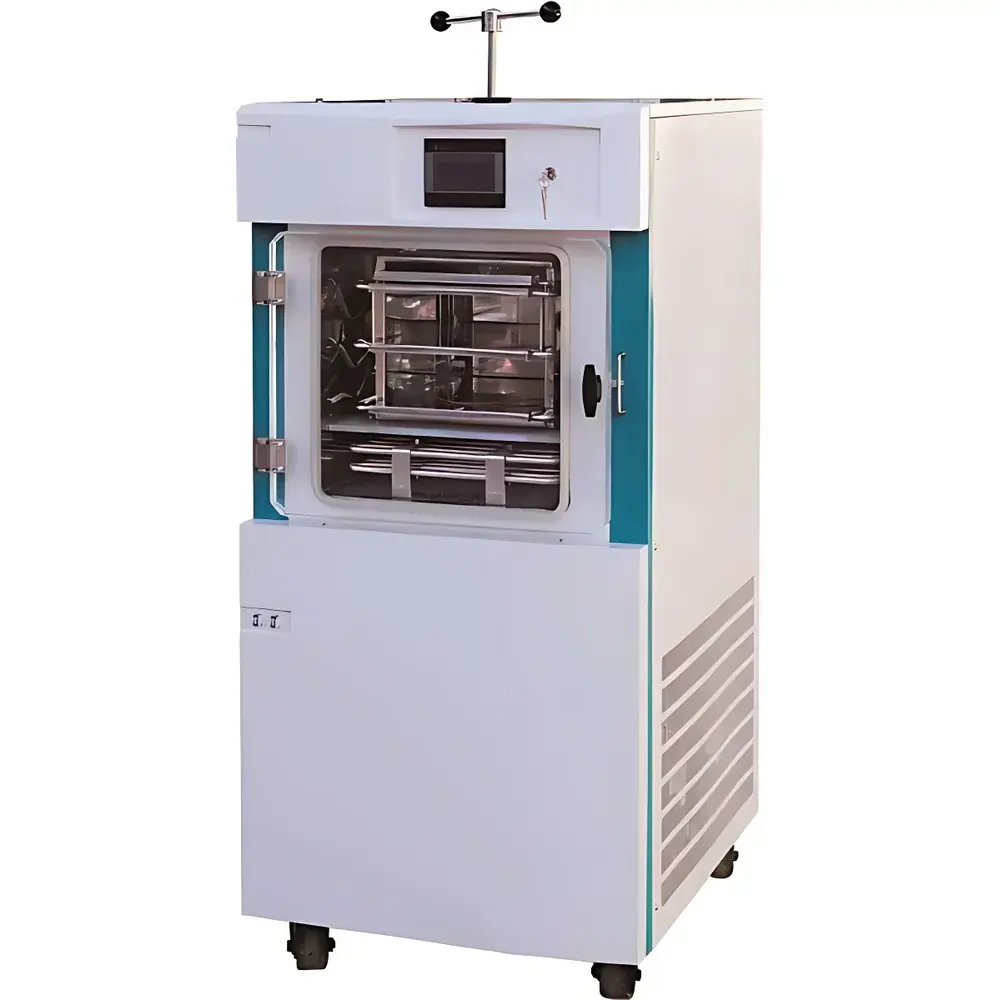
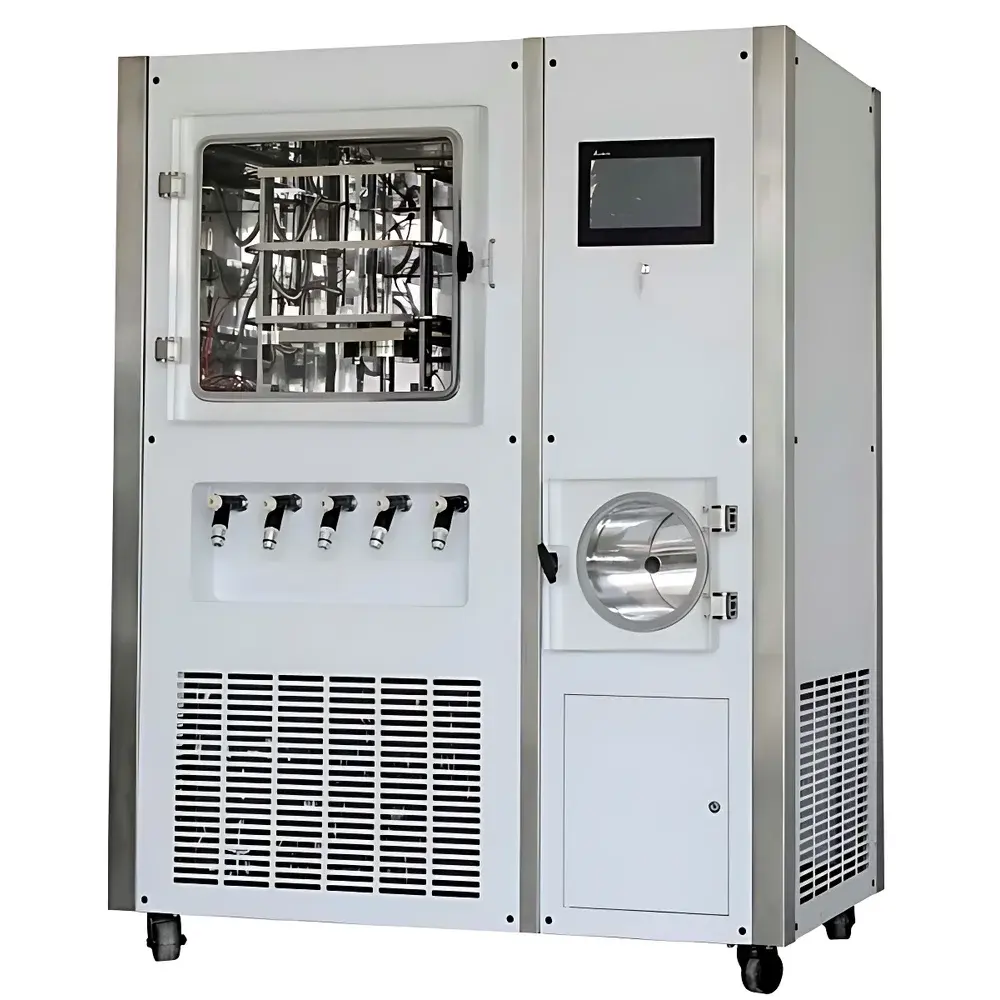
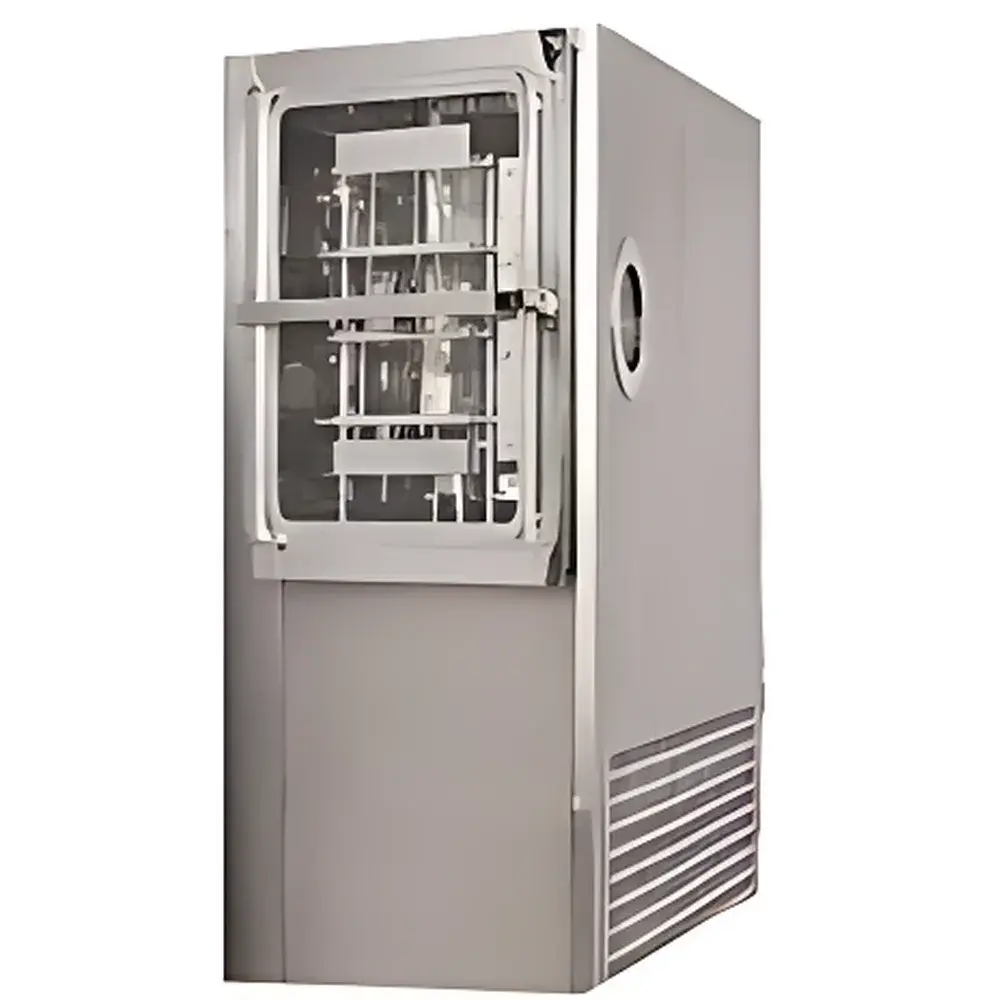
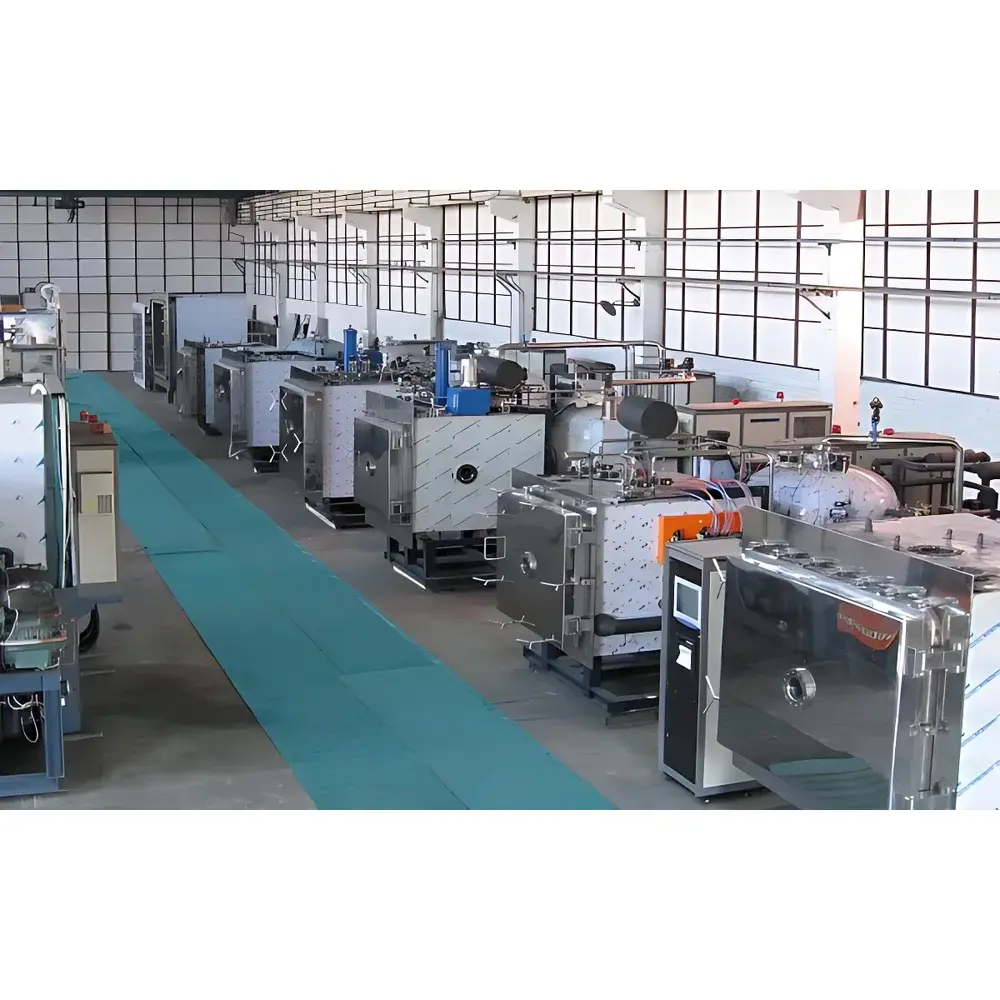
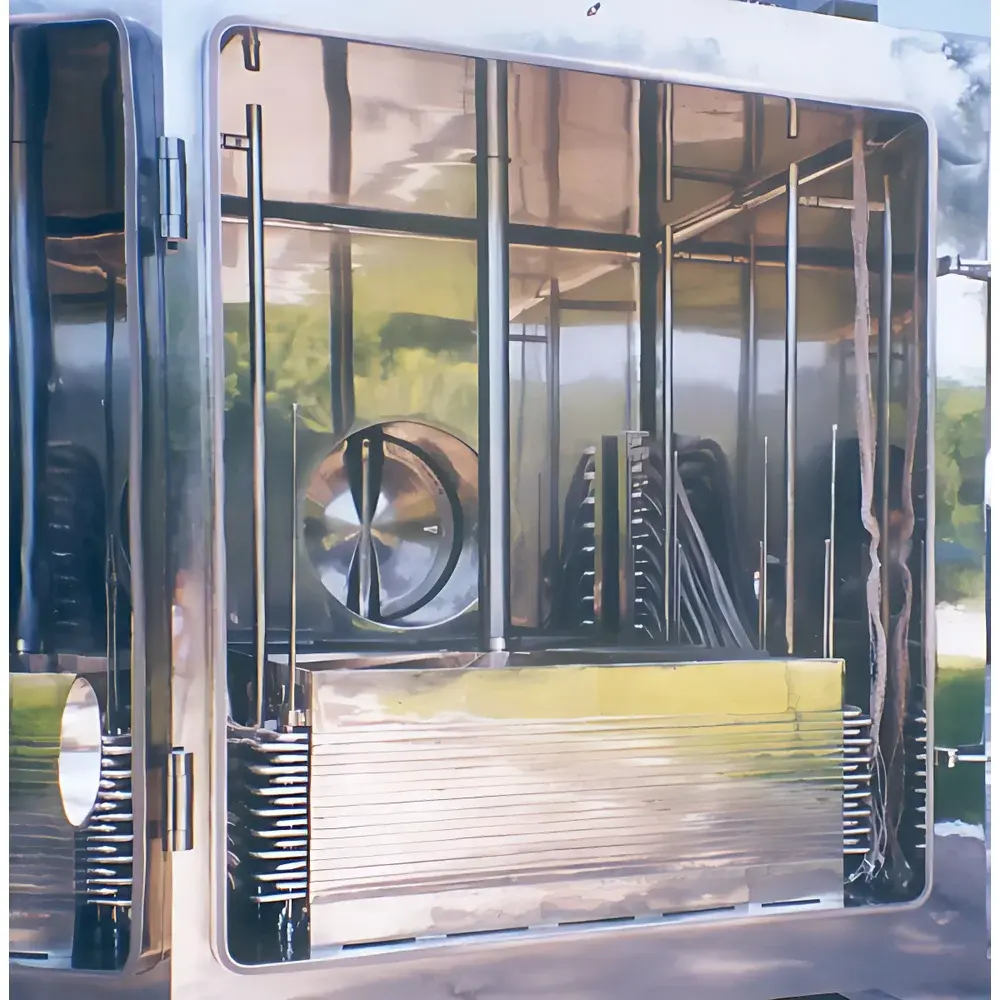
BIOCOOL Pilot2-4M Silicone Oil-Based Pilot-Scale Freeze Dryer
| Brand | BIOCOOL |
|---|---|
| Origin | Beijing, China |
| Manufacturer Type | Authorized Distributor |
| Country of Origin | China |
| Model | Pilot2-4M (Silicone Oil Heated/Cooled Shelf Type) |
| Instrument Type | Standard Shelf-Type Freeze Dryer |
| Application Scope | Pilot-Scale Processing |
| Lyophilization Area | 0.2 m² |
| Ultimate Vacuum | <3 Pa |
| Condensate Capacity (24 h) | 4 kg/24 h |
| Cold Trap Temperature | <−80 °C |
| Shelf Temperature Range (Empty Load) | ≤ −50 °C to +80 °C |
| Shelf Dimensions | 375 mm × 270 mm |
| Number of Shelves | 2 working shelves + 1 radiation shelf |
| Shelf Spacing | 78 mm |
| Installed Power | 1.8 kW |
| Cooling Water Flow (Air-Cooled Configuration) | ~3 m³/h |
| Overall Dimensions (W×D×H) | 660 × 850 × 1440 mm (+140 mm for stoppering unit) |
| Net Weight | ~180 kg |
| Noise Level | ≤70 dB(A) |
| Compliance | GB/T 5226.1–1996 (Electrical Safety of Machinery), ISO 22000 & ISO 9001 aligned design practices |
Overview
The BIOCOOL Pilot2-4M is a silicone oil-heated and cooled pilot-scale freeze dryer engineered for reproducible, scalable lyophilization process development under controlled thermal and vacuum conditions. Designed around the fundamental principles of sublimation-based dehydration—where ice is removed directly from frozen product via primary drying under deep vacuum—the system integrates a dual-shelf architecture with an auxiliary radiation shelf to ensure uniform heat transfer across vial arrays during both freezing and drying stages. Its 0.2 m² effective shelf area supports batch sizes typical of early-phase clinical manufacturing and formulation optimization, including ≥400 units of 22 mm serum vials or up to 2 kg of liquid feedstock per cycle. The cold trap achieves ≤−80 °C under no-load conditions, enabling efficient water vapor capture even during high-moisture-content cycles, while the ultimate vacuum level of <3 Pa ensures low-residual pressure essential for stable primary drying kinetics and minimized product collapse.
Key Features
- Silicone oil-based shelf temperature control system offering precise, stable, and uniform thermal management from ≤−50 °C to +80 °C (empty load), critical for optimized freezing ramp profiles and controlled product temperature during secondary drying.
- Dual active shelves plus one passive radiation shelf configuration enhances thermal homogeneity across the entire lyophilization surface, reducing inter-vial variability in residual moisture and cake structure.
- High-capacity cold trap (≤−80 °C) with 4 kg/24 h condensation capacity accommodates extended drying cycles without performance degradation or ice bridging.
- Compact footprint (660 × 850 × 1440 mm + 140 mm stoppering module) and air-cooled operation (~3 m³/h airflow requirement) simplify facility integration without dedicated chilled water infrastructure.
- Compliance-ready mechanical design adhering to GB/T 5226.1–1996 for electrical safety and incorporating fail-safe interlocks, pressure relief mechanisms, and validated vacuum integrity protocols.
- Robust stainless-steel chamber and shelf construction with electropolished surfaces meet basic hygienic design expectations for non-sterile pilot environments and support routine cleaning validation.
Sample Compatibility & Compliance
The Pilot2-4M is compatible with standard pharmaceutical glassware including 10–30 mL serum vials, trays for bulk powder processing, and custom aluminum pans. It supports both manual and semi-automated loading/unloading workflows and is routinely deployed in pre-GMP development laboratories conducting DOE-based lyophilization cycle development. While not certified for full cGMP production, its engineering aligns with foundational elements of FDA 21 CFR Part 11 data integrity expectations when paired with compliant data logging systems. Design documentation includes traceable material certifications and conforms to ISO 9001 quality management frameworks. All electrical components comply with GB/T 5226.1–1996, ensuring safe operation in shared laboratory spaces.
Software & Data Management
The system operates via an integrated programmable logic controller (PLC) with a 7-inch HMI touchscreen interface supporting multi-step cycle programming, real-time parameter monitoring (shelf temp, chamber pressure, cold trap temp), and alarm history logging. Cycle data—including timestamps, setpoints, actual values, and event flags—is exportable in CSV format for offline analysis. Optional Ethernet connectivity enables integration with centralized LIMS or MES platforms for audit-trail-enabled data archiving. When configured with third-party compliant software packages, the system supports electronic signatures, user access levels, and change control logs consistent with GLP/GMP-aligned documentation practices.
Applications
- Formulation screening and stability assessment of biologics, vaccines, and small-molecule APIs under varying freezing rates and annealing conditions.
- Pilot-scale cycle development prior to transfer to commercial-scale freeze dryers, including mapping of critical process parameters (CPPs) such as shelf temperature, chamber pressure, and primary drying time.
- Residual moisture content optimization studies using gravimetric and Karl Fischer correlation methods.
- Process characterization for regulatory submissions (e.g., FDA IND/IMPD dossiers) requiring demonstration of robustness and scalability.
- Training platform for process engineers and QC technicians in lyophilization fundamentals, equipment operation, and troubleshooting common issues like meltback or incomplete drying.
FAQ
What is the maximum batch size supported by the Pilot2-4M?
It accommodates up to 400 units of 22 mm serum vials or approximately 2 kg of liquid feedstock per cycle, based on standard fill volumes and vial spacing.
Does the system support automatic stoppering?
Yes—the mechanical stoppering unit extends 140 mm above the main cabinet and operates under vacuum with adjustable force calibration for consistent seal integrity.
Is the cold trap temperature verified under load or no-load conditions?
The ≤−80 °C specification refers to no-load performance; under typical operational loads, cold trap temperature stabilizes between −72 °C and −78 °C depending on total sublimation rate and ambient cooling capacity.
Can this unit be validated per IQ/OQ protocols?
Yes—BIOCOOL provides factory-verified calibration certificates for all critical sensors (PT100 shelf probes, capacitance manometer, thermocouples), and the system’s modular architecture supports third-party qualification against user-defined acceptance criteria.
What maintenance intervals are recommended for long-term reliability?
Vacuum pump oil replacement every 500 operating hours, cold trap defrosting after each 3–5 cycles depending on ice accumulation, and annual verification of shelf temperature uniformity and vacuum leak rate (<0.1 Pa·min⁻¹).



