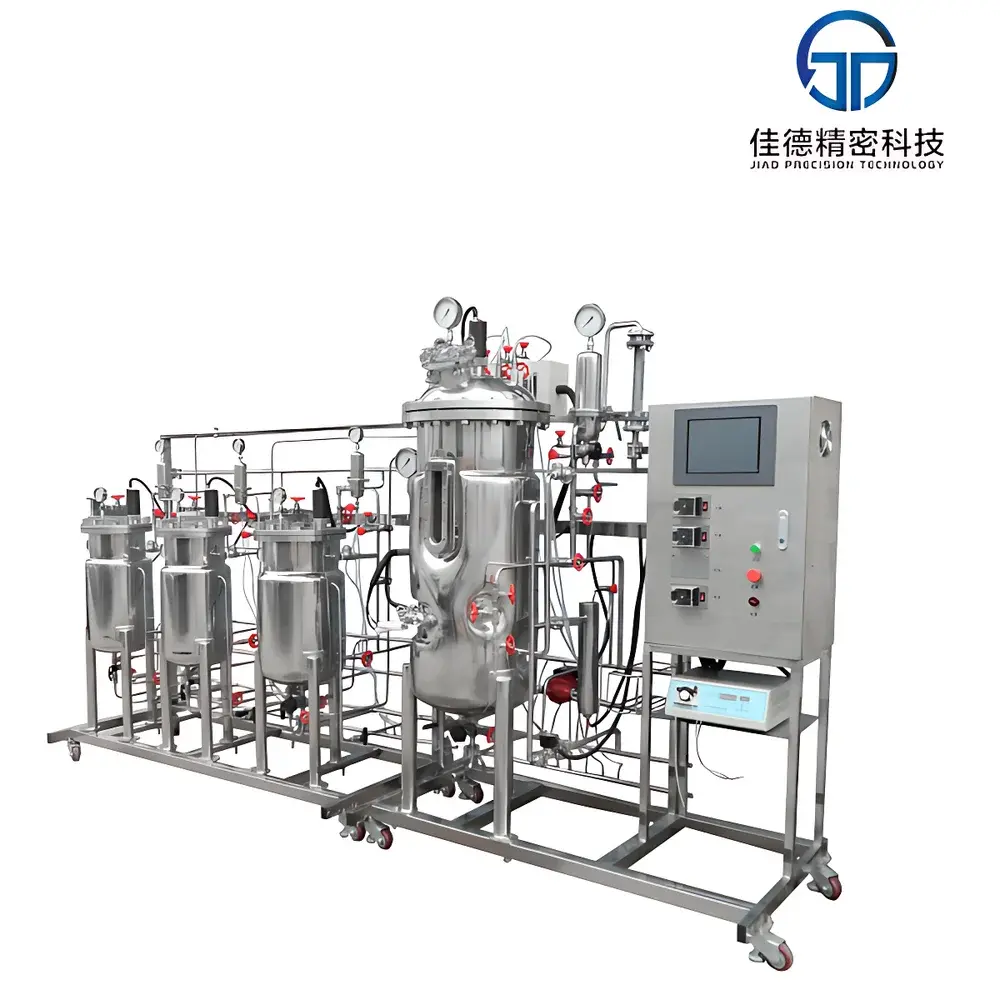
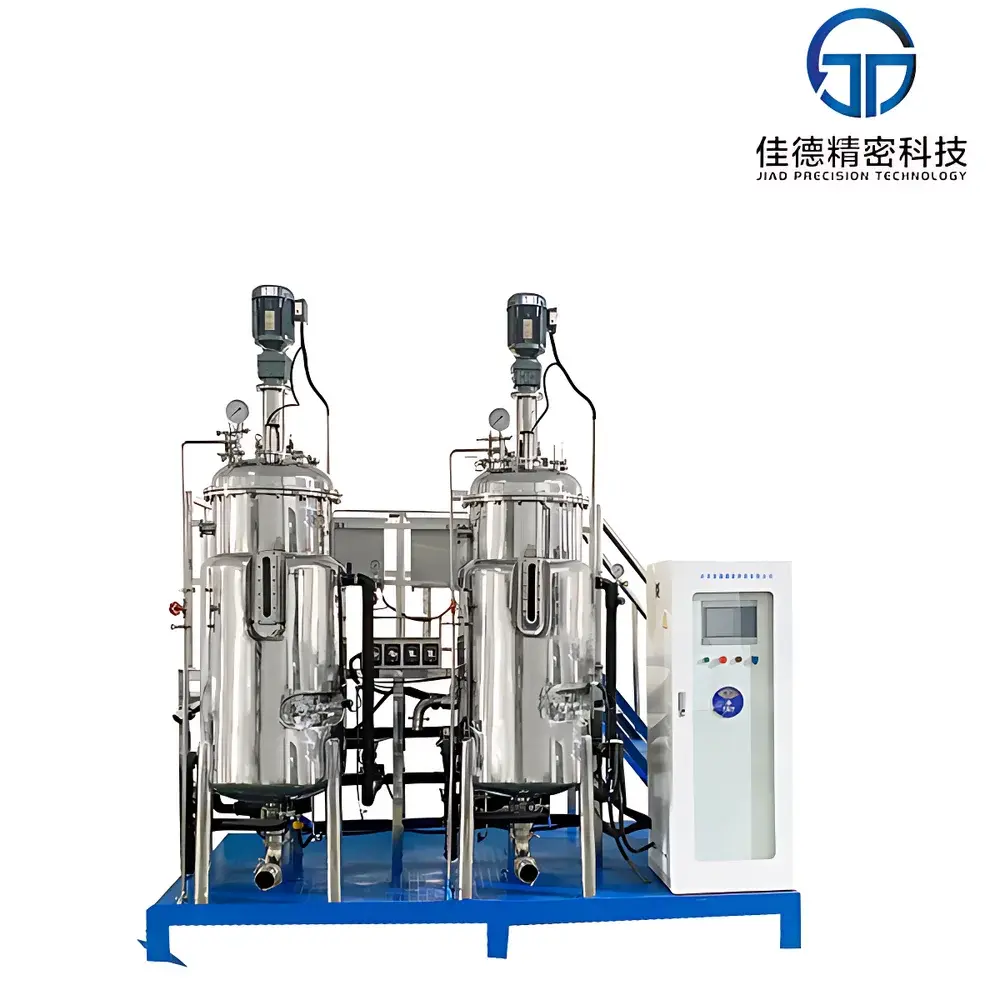
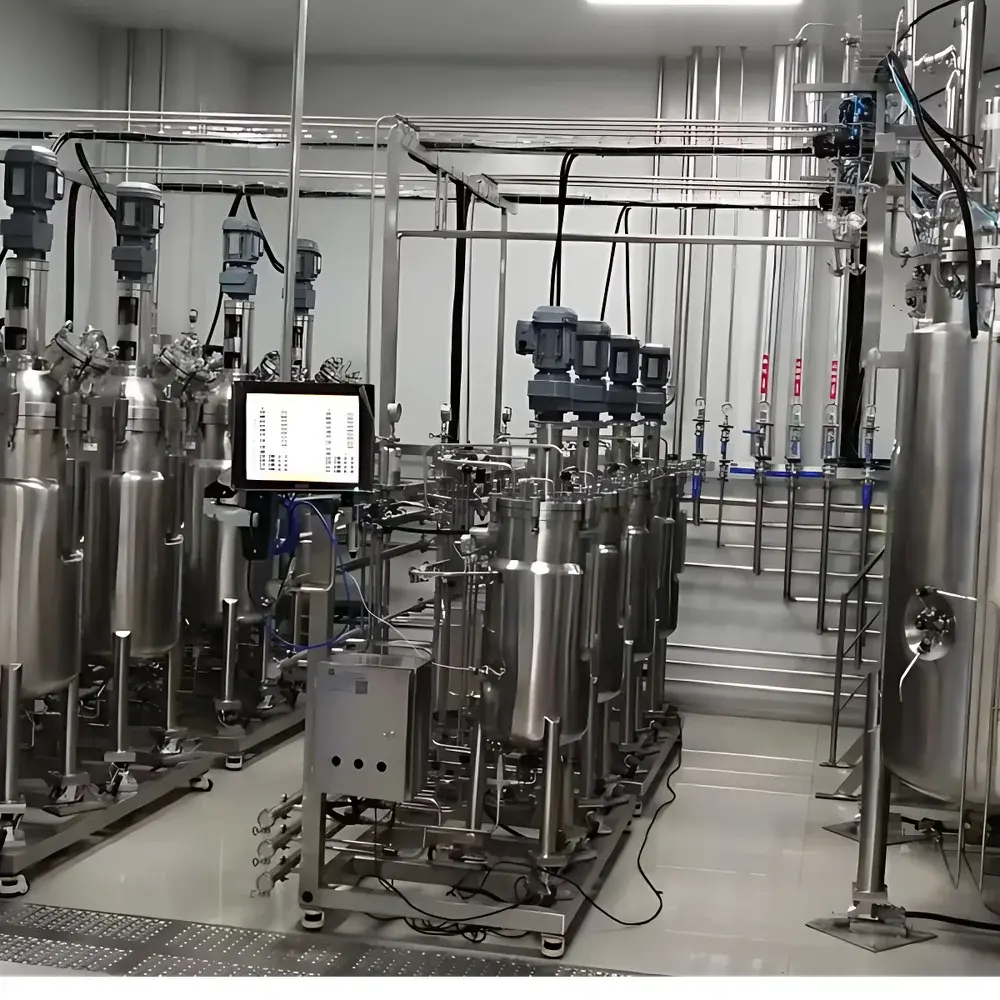
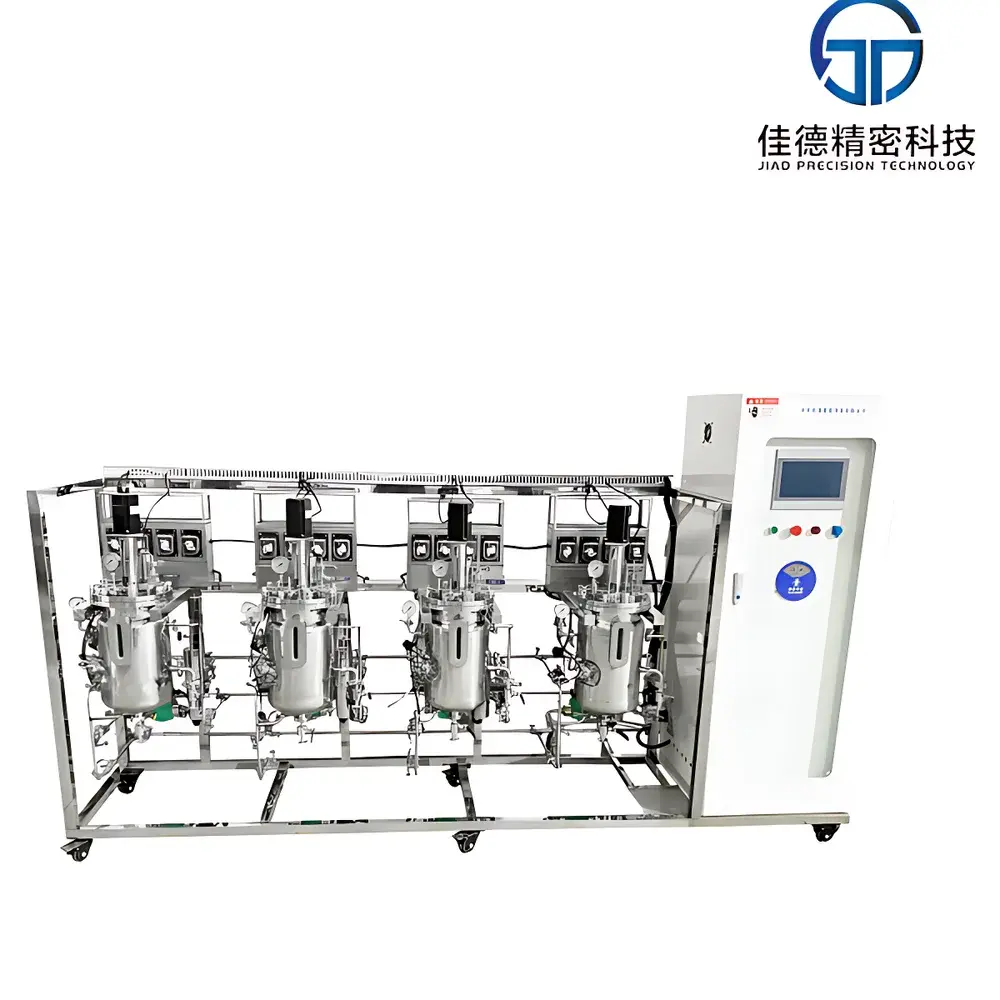
JiaD JD-SFM-10-100-100L Multi-Stage Stainless Steel Fermenter
| Brand | JiaD |
|---|---|
| Origin | Beijing, China |
| Manufacturer Type | Direct Manufacturer |
| Origin Category | Domestic (China) |
| Model | JD-SFM-10-100-100L |
| Price Range | USD 7,000–70,000 (FOB) |
| Vessel Volume | Customizable (10–100 L working volume) |
| Aeration System | Mechanical Stirring with Sterile Air Supply |
| pH Control Range | 2.00–10.00, Accuracy: ±0.01 |
| Dissolved Oxygen (DO) Control Range | 0–100%, Accuracy: ±3% |
| Temperature Control Range | 5–85 °C, Stability: ±0.2 °C |
Overview
The JiaD JD-SFM-10-100-100L is a modular, multi-stage stainless steel fermenter engineered for reproducible microbial, yeast, and mammalian cell culture under controlled bioprocess conditions. Designed around the principles of sterile operation, scalable process transfer, and regulatory-compliant monitoring, this system implements a robust Couette-type mechanical agitation architecture coupled with integrated gas exchange, thermal management, and electrochemical feedback control. Its core function is to maintain physicochemical homogeneity—pH, dissolved oxygen (DO), temperature, agitation rate, and foam level—within tightly defined operational windows across batch, fed-batch, and continuous cultivation modes. The vessel’s geometry, impeller configuration, and sparging design conform to established scale-up correlations (e.g., constant power/volume or constant tip speed), enabling reliable transition from lab-scale optimization to pilot-scale validation.
Key Features
- High-integrity vessel construction using electropolished ASTM A240 UNS S31603 (SUS316L) stainless steel, with internal/external surface roughness Ra ≤ 0.4 µm per ASME BPE-2022 standards—minimizing biofilm adhesion and facilitating CIP/SIP compatibility.
- Top-mounted direct-coupled mechanical drive with John Crane (UK) dual-cartridge mechanical seal, rated for continuous operation at 50–1000 rpm (±1% setpoint accuracy); AC inverter-driven motor eliminates lubrication requirements and ensures torque stability across load variations.
- Integrated sterilizable sensor suite: Hamilton Arc or Mettler Toledo InPro series pH and DO electrodes (autoclavable, 121 °C/30 min), Pt100 RTD for temperature, and pressure transducer—all mounted via sanitary tri-clamp fittings compliant with ISO 2858 and DIN 11851.
- Dual-mode temperature regulation: jacketed water bath with electric heating and external cooling loop (compatible with chiller units), achieving ±0.2 °C setpoint stability across 5–85 °C operating range.
- Automated process control via embedded bioprocess controller with real-time PID algorithms for pH (2.00–12.00, ±0.05), DO (0–150%, ±3%), foam suppression (PID-driven peristaltic dosing), and feeding (volumetrically calibrated peristaltic pumps with event-triggered or time-scheduled protocols).
- Modular expansion capability: optional integration of exhaust gas O2/CO2 analyzers (paramagnetic/NDIR), load-cell-based mass measurement, additional feed channels, and digital pressure regulation with safety relief valve.
Sample Compatibility & Compliance
The JD-SFM-10-100-100L supports aerobic and microaerobic cultivation of bacteria (e.g., E. coli, Bacillus spp.), yeasts (Saccharomyces cerevisiae, Pichia pastoris), filamentous fungi, and anchorage-dependent or suspension-adapted mammalian cells (e.g., CHO, HEK293). All wetted materials comply with USP Class VI and FDA 21 CFR Part 11-ready data logging when paired with validated fermentation software. The system meets ISO 13485 design controls for medical device-related biomanufacturing and supports GLP/GMP documentation workflows—including electronic audit trails, user access levels, and change management logs. Sterilization-in-place (SIP) is validated per EN 285 for steam cycles up to 121 °C/30 min; air filtration utilizes 0.02 µm hydrophobic PTFE membranes meeting ASTM F838-22 bacterial retention requirements.
Software & Data Management
The fermenter operates with JiaD BioControl Suite—a Windows-based SCADA platform supporting local HMI operation and remote web-accessible monitoring via encrypted HTTPS. Data acquisition occurs at 1 Hz minimum resolution, with timestamped storage of all analog inputs (pH, DO, T, RPM, pressure, flow), digital events (pump actuation, alarm triggers), and calculated parameters (OUR, CER, RQ). Raw datasets export in CSV and .mat formats; trend visualization includes overlay plots, derivative analysis, and deviation alerts. For regulated environments, optional 21 CFR Part 11 compliance packages include electronic signatures, role-based permissions, and immutable database archiving with SHA-256 checksum verification.
Applications
- Strain screening and media optimization in early-stage bioprocess development
- Fed-batch production of recombinant proteins, enzymes, and organic acids (e.g., citric acid, lactic acid)
- Scale-down modeling of commercial bioreactors for QbD-based process characterization
- Microbial consortia studies requiring precise redox potential and nutrient gradient control
- Teaching laboratories for hands-on instruction in bioreactor engineering, mass transfer fundamentals, and kinetic modeling (Monod, Luedeking-Piret)
- Contract development and manufacturing organizations (CDMOs) performing tech transfer for clinical-phase biologics
FAQ
Is the system suitable for anaerobic fermentation?
Yes—by replacing sterile air with nitrogen or argon gas supply and configuring DO control to operate in cascade mode with gas blending, the system supports strict anaerobic cultivation (O2 < 1 ppm). Optional dissolved hydrogen (H2) sensing is available.
Can the controller interface with third-party PLCs or MES systems?
Yes—the BioControl Suite provides OPC UA server functionality and Modbus TCP/IP communication ports, enabling bidirectional integration with Siemens S7, Rockwell Allen-Bradley, or cloud-based manufacturing execution platforms.
What validation documentation is provided?
Each unit ships with Factory Acceptance Test (FAT) report, material traceability certificates (MTRs) for all wetted parts, calibration certificates for sensors (NIST-traceable), and IQ/OQ templates aligned with Annex 15 and WHO TRS 986 guidelines.
How is cleaning-in-place (CIP) implemented?
The system supports automated CIP via programmable peristaltic recirculation loops, conductivity-based endpoint detection, and temperature-controlled caustic/acid rinse sequences—all configurable within the BioControl Suite without external scripting.
Is remote troubleshooting supported?
Yes—secure remote desktop access (AES-256 encrypted) is enabled upon customer authorization, allowing JiaD application engineers to diagnose controller firmware, sensor diagnostics, and I/O module status in real time.