
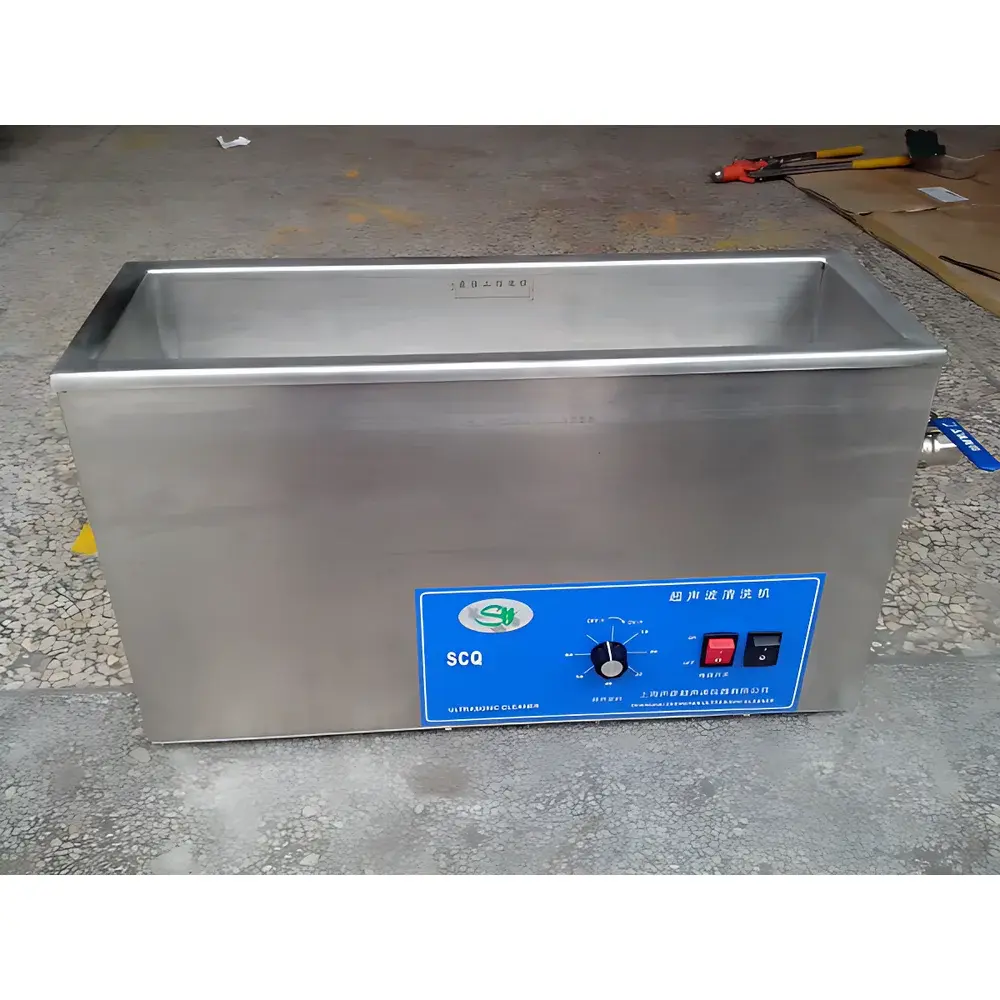
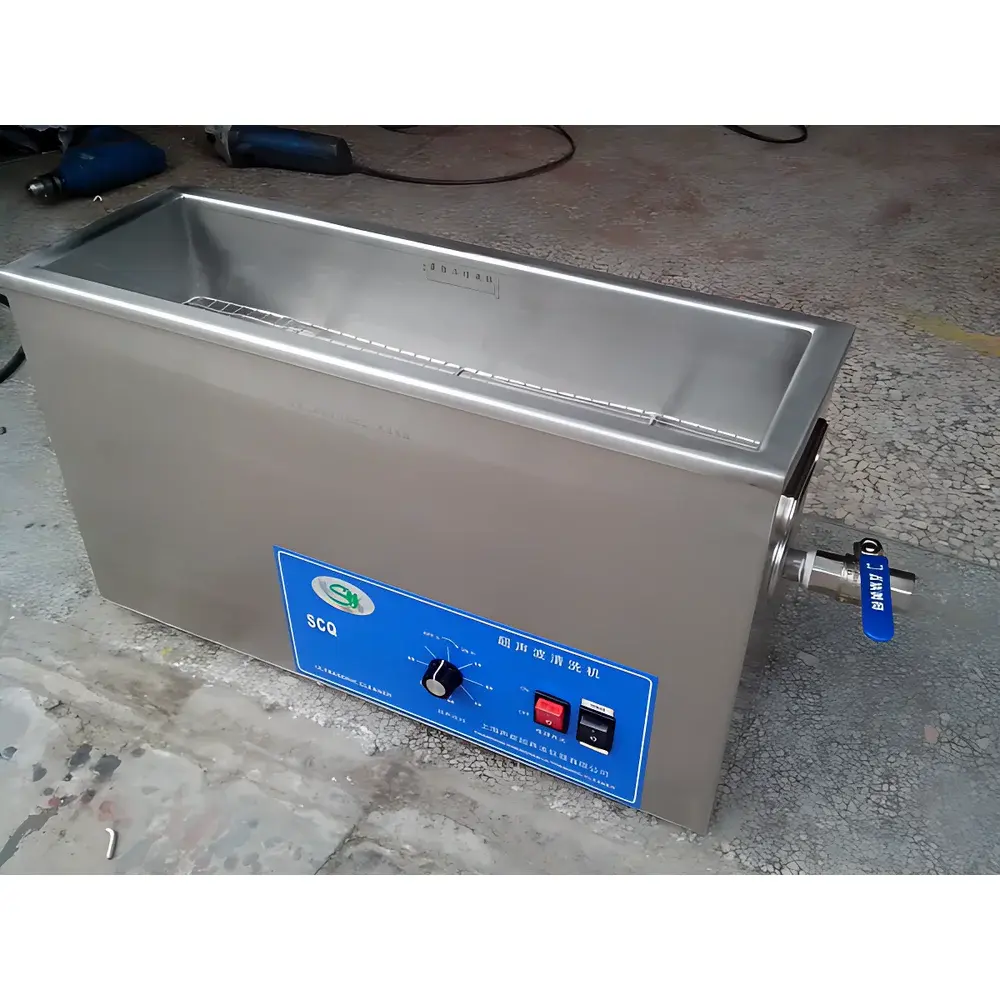
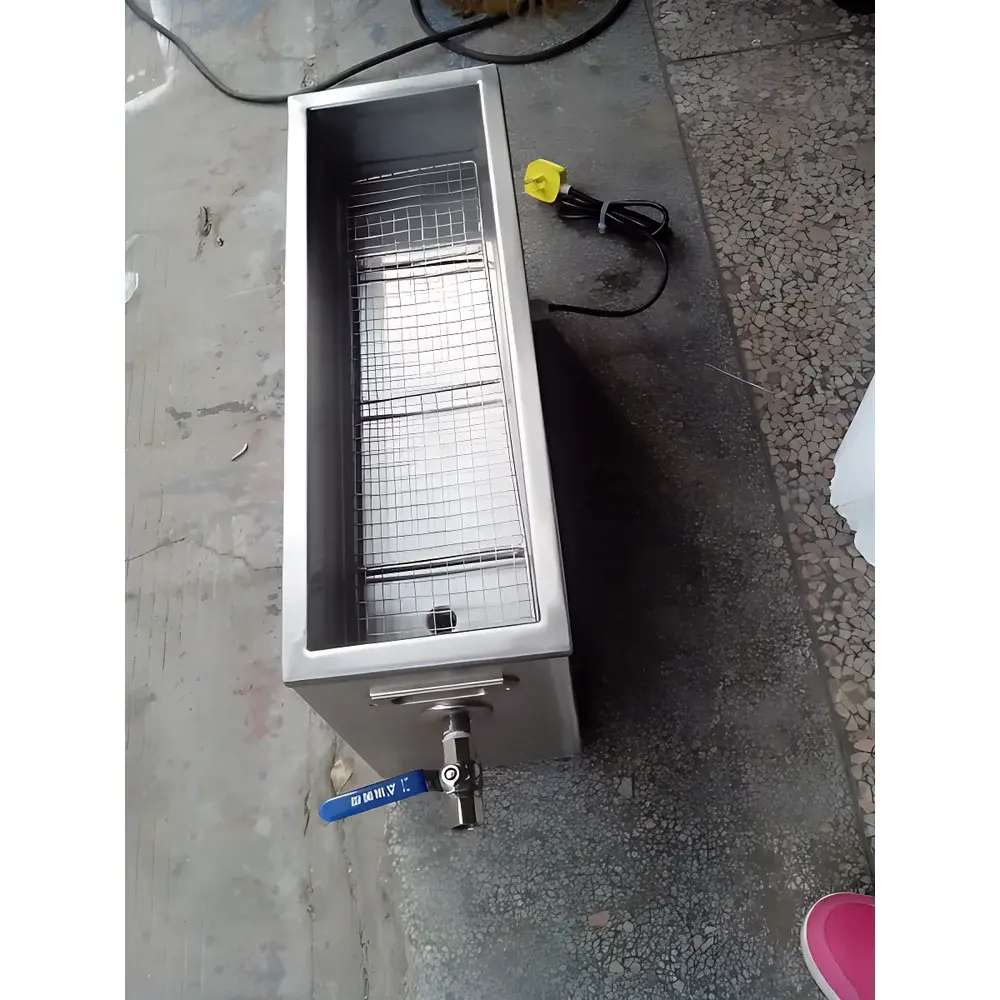
SYC Sycs SCQ-4201C Benchtop Ultrasonic Cleaner with Adjustable Frequency, Heating & Digital Control
| Brand | SYC Sycs |
|---|---|
| Origin | Shanghai, China |
| Model | SCQ-4201C |
| Tank Capacity | 8 L |
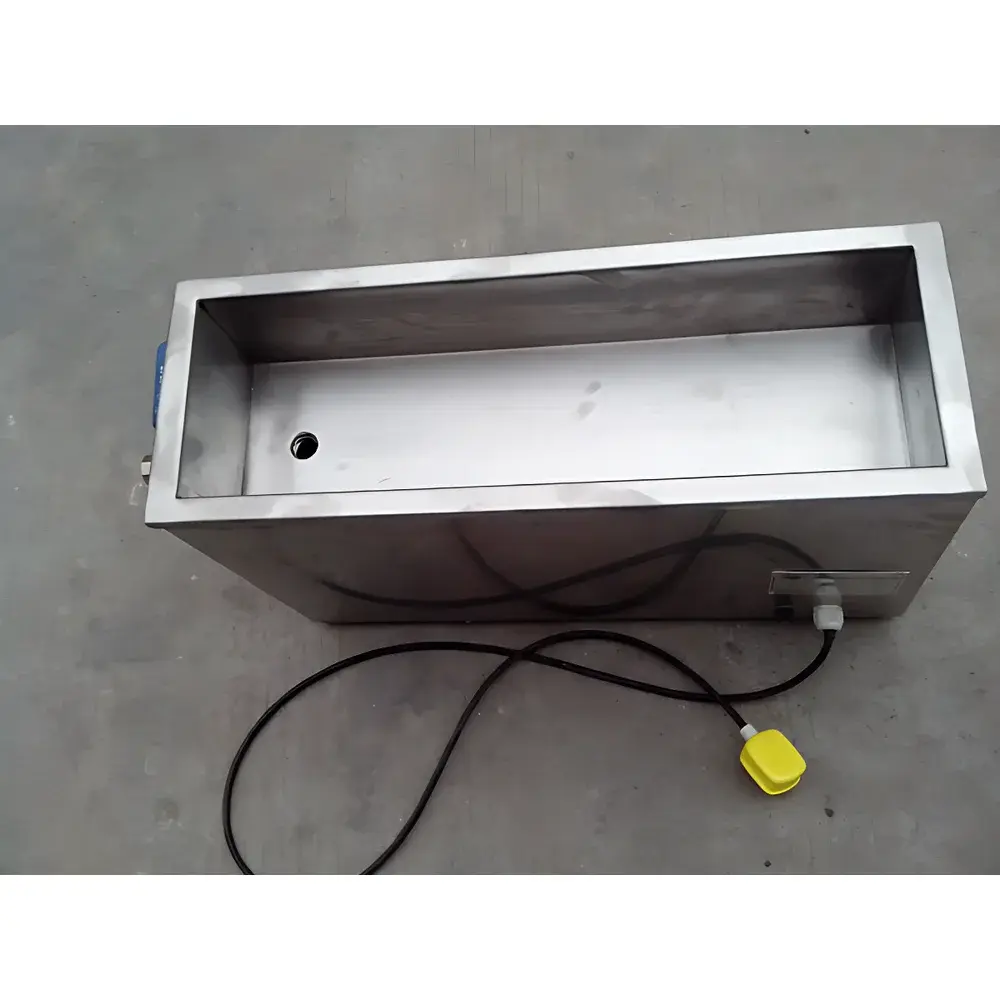
| Internal Tank Dimensions | 500 × 135 × 100 mm |
| Selectable Ultrasonic Frequencies | 25 / 28 / 40 / 60 / 80 / 100 / 120 kHz |
| Ultrasonic Power Output | 250 W (adjustable 10–100%) |
| Heating Power | 600 W |
| Temperature Range | Ambient to 80 °C (max. 100 °C per spec sheet) |
| Timer Range | 1–600 min |
| Insulated Lid | Included |
| Manual Drain Port | Yes |
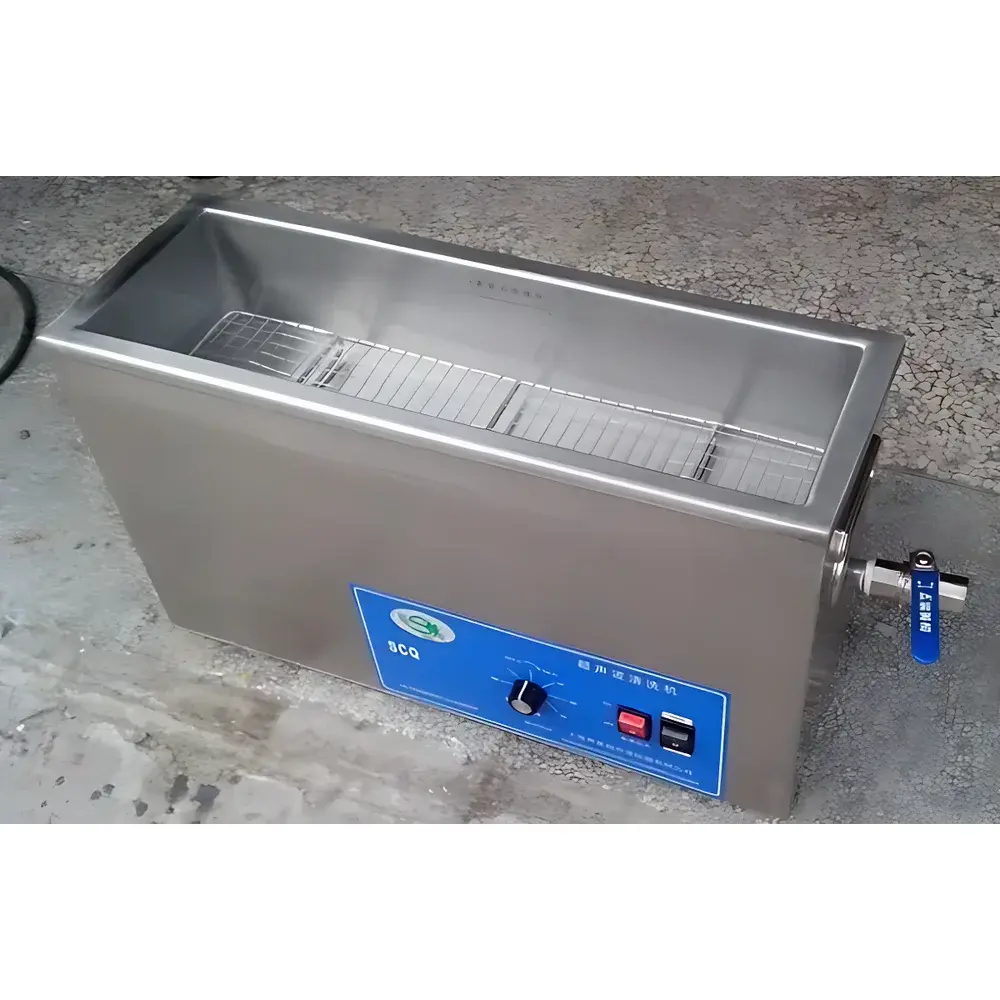
| Rack Included | Yes |
| Power Supply | 220 V AC, 50 Hz |
Overview
The SYC Sycs SCQ-4201C is a digitally controlled, benchtop ultrasonic cleaner engineered for precision cleaning, degassing, emulsification, homogenization, and solvent-based extraction in regulated laboratory environments. It operates on the principle of cavitation—where high-frequency acoustic energy generates transient microbubbles in liquid media that collapse violently, producing localized pressures exceeding 1000 atm and temperatures above 5000 K at the bubble interface. This physical mechanism enables non-contact, residue-free removal of particulate contaminants, organic films, metal oxides, and tightly adhered biological residues from complex geometries—including narrow-bore glassware, microfluidic components, optical lenses, and delicate instrumentation parts—without mechanical abrasion or hazardous chemical exposure.
Unlike manual scrubbing or aggressive acid/base treatments—which pose safety risks, introduce cross-contamination, and compromise surface integrity—the SCQ-4201C delivers reproducible, operator-independent cleaning validated across ISO 13485 and ASTM D2603 (Standard Test Method for Sonic Shear Stability of Lubricating Oils). Its modular frequency selection allows optimization for diverse sample matrices: lower frequencies (25–40 kHz) maximize cavitation intensity for heavy particulates and metallic debris; higher frequencies (60–120 kHz) provide gentler yet highly uniform energy distribution ideal for MEMS devices, semiconductor wafers, and cell culture vessels.
Key Features
- Digital microprocessor control with intuitive LCD interface for independent parameter programming: frequency selection, ultrasonic power (10–100% stepless adjustment), heating setpoint (ambient to 80 °C), and timer (1–600 minutes)
- Seven selectable ultrasonic frequencies (25 / 28 / 40 / 60 / 80 / 100 / 120 kHz) to match application-specific requirements—from robust industrial degreasing to ultra-gentle biomolecule preservation
- Stainless steel 304 tank (500 × 135 × 100 mm internal dimensions) with reinforced ultrasonic transducer mounting for long-term acoustic coupling stability and corrosion resistance
- Integrated 600 W PTC heating system with ±1 °C temperature accuracy and overheat protection circuitry compliant with IEC 61000-4-2 ESD immunity standards
- Acoustically damped insulated lid reduces ambient noise to <55 dB(A) and minimizes solvent evaporation during extended cycles
- Manual drain valve located at tank base enables safe, spill-free solution exchange without tilting or lifting
- Adjustable stainless steel mesh basket with handle ensures secure positioning of fragile items and facilitates rapid retrieval post-cycle
Sample Compatibility & Compliance
The SCQ-4201C accommodates a broad spectrum of laboratory substrates: borosilicate glassware (vials, cuvettes, pipettes), stainless steel tools, titanium implants, silicon wafers, ceramic filters, and polymer-based microplates. It supports aqueous, ethanol-, isopropanol-, and acetone-based cleaning baths—compatible with USP and environmental control guidelines for sterile compounding areas when used with validated cleaning protocols. All electrical components meet CE marking requirements under Directive 2014/30/EU (EMC) and 2014/35/EU (LVD). While not inherently FDA 21 CFR Part 11–compliant due to lack of audit-trail firmware, the unit may be integrated into GLP/GMP workflows via external logging systems when paired with calibrated thermocouples and time-stamped cycle documentation.
Software & Data Management
This model operates via embedded firmware without PC connectivity or proprietary software. All operational parameters are stored locally in non-volatile memory and retained after power cycling. For traceability in quality-controlled labs, users may manually record cycle logs—including date/time stamp, selected frequency, power %, temperature setpoint, duration, and bath composition—in accordance with ISO/IEC 17025 clause 7.7 (Control of Records). Optional external USB data loggers (e.g., Omega OM-DAQPRO-5300) can monitor real-time bath temperature and current draw when interfaced via analog output modules—enabling retrospective validation of thermal stability and energy consistency across batches.
Applications
- Labware Decontamination: Removal of dried protein residues, agarose gels, and salt crystals from electrophoresis tanks, centrifuge rotors, and HPLC sample vials
- Instrument Maintenance: Cleaning of LC-MS ion sources, GC injectors, and atomic absorption nebulizers without disassembly
- Material Science Prep: Degassing of nanoparticle suspensions prior to TEM grid preparation or spin-coating
- Pharmaceutical R&D: Solvent-assisted extraction of active pharmaceutical ingredients (APIs) from botanical matrices under controlled thermal conditions
- Medical Device Reuse: Pre-sterilization cleaning of reusable surgical instruments per AAMI ST79:2017 Annex B.3.2 recommendations
- Electronics QA: Residue-free removal of flux residues from PCB assemblies prior to AOI inspection
FAQ
Is the SCQ-4201C suitable for cleaning delicate optical components such as microscope slides or fiber optic connectors?
Yes—when operated at 80–120 kHz with reduced power (20–40%) and low-temperature aqueous detergent solutions, it effectively removes sub-micron dust and fingerprint oils without surface pitting or coating delamination.
Can this unit be used with flammable solvents like acetone or ethanol?
Only in well-ventilated fume hoods with strict adherence to NFPA 30 and local fire codes; heating function must remain disabled, and no ignition sources—including ultrasonic transducers rated for Class I, Division 1 environments—should be present.
Does the unit include calibration documentation or factory certification?
No factory calibration certificate is supplied; however, the temperature sensor is traceable to NIST standards, and users may perform in-house verification using a calibrated PT100 probe per ISO/IEC 17025 section 6.5.
What maintenance is required to ensure long-term acoustic performance?
Monthly inspection of transducer bonding integrity, quarterly descaling of heater elements with 5% citric acid solution, and biannual replacement of the tank’s silicone gasket to prevent leakage-induced impedance mismatch.
Is remote monitoring or Ethernet/RS-232 connectivity available?
Not natively supported; the SCQ-4201C is a standalone instrument designed for manual operation in cost-sensitive academic and QC laboratories where network integration is not mandated by regulatory scope.



