
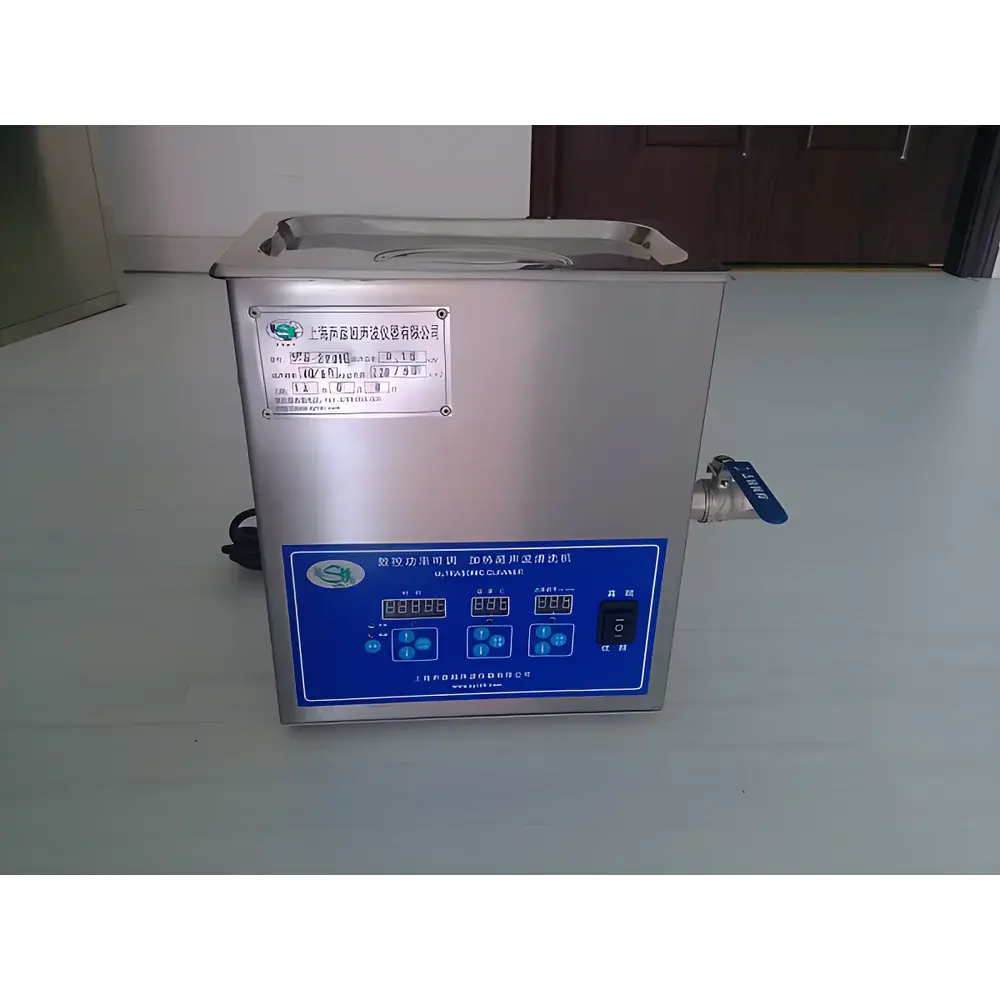
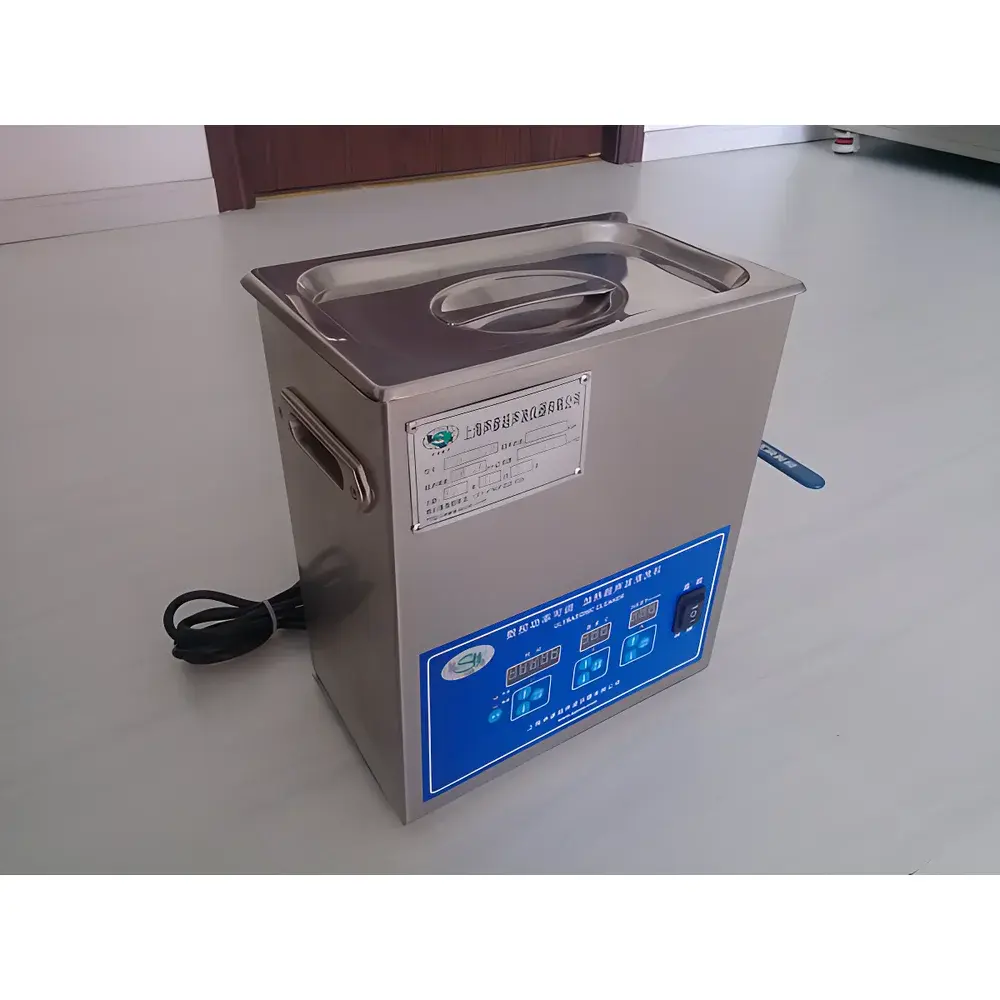
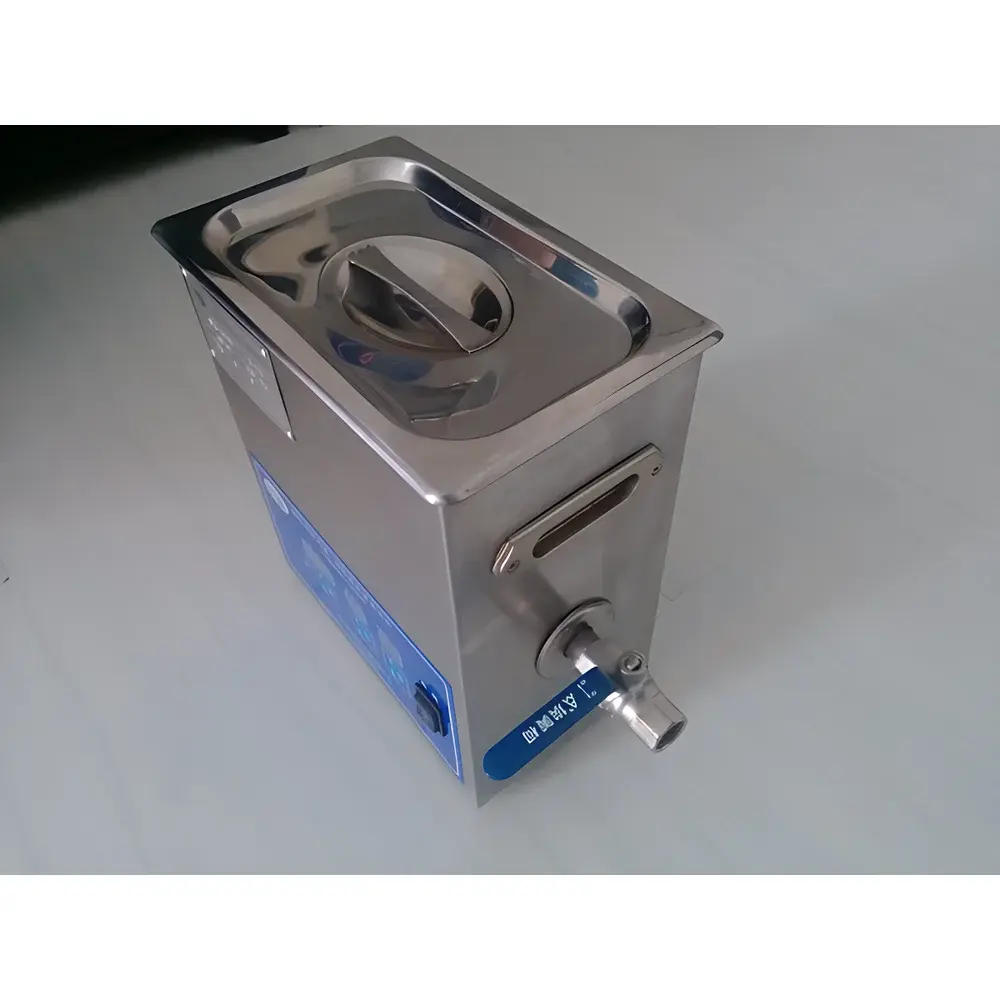
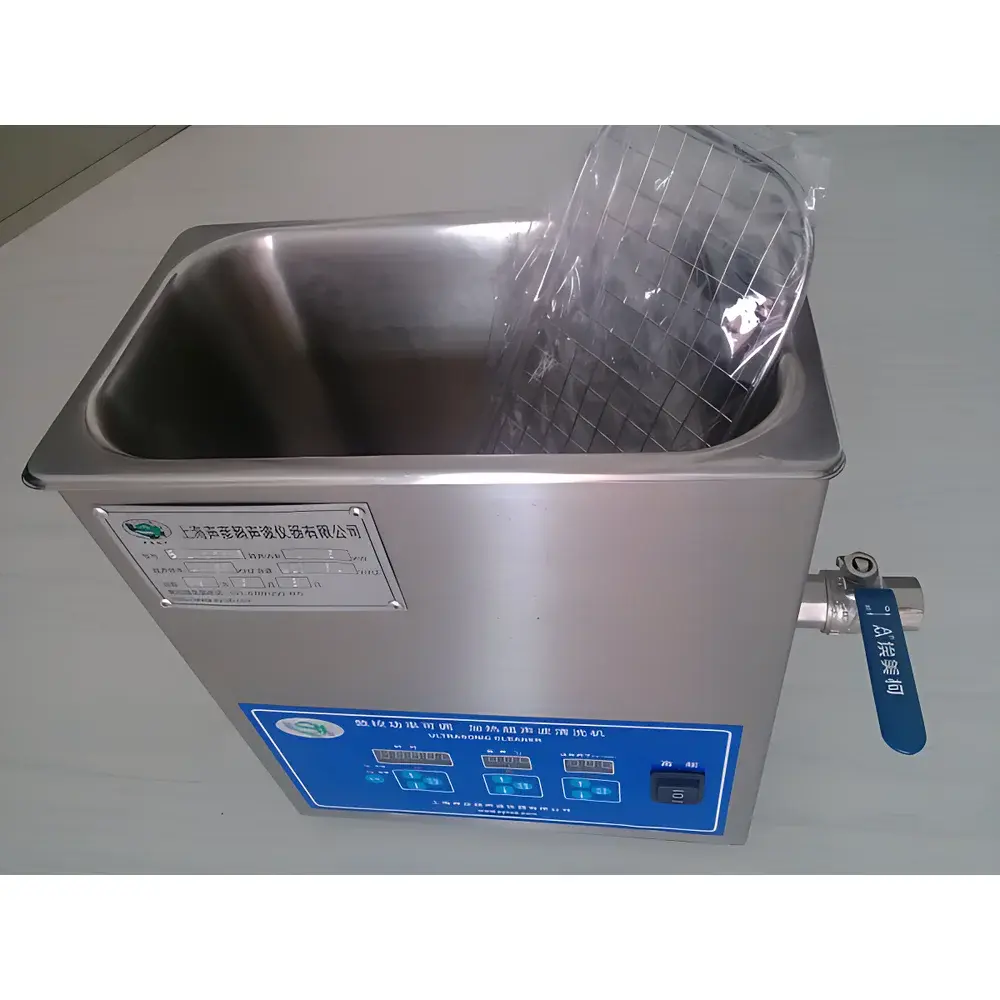
SYC Sycs SCQ-250B5 Dual-Frequency Benchtop Ultrasonic Cleaner
| Brand | SYC (Sycs) |
|---|---|
| Origin | Shanghai, China |
| Model | SCQ-250B5 |
| Capacity | 5 L |
| Ultrasonic Frequencies | 25/40 kHz, 28/40 kHz, 28/60 kHz |
| Ultrasonic Power | 180 W |
| Power Adjustment Range | 10–100% |
| Heating Power | 600 W |
| Temperature Control Range | Ambient to 100 °C |
| Timer Range | 1–600 min |
| Lid | Sound-dampening cover included |
| Drain | Manual valve |
| Tank Dimensions (L×W×H) | 300 × 150 × 100 mm |
| Construction | SUS304 stainless steel tank and basket |
| Safety Features | Overload and overheat protection |
| Compliance | Designed for GLP-compliant laboratory environments |
Overview
The SYC SCQ-250B5 is a dual-frequency benchtop ultrasonic cleaner engineered for precision cleaning, degassing, emulsification, and surface decontamination in regulated laboratory and light industrial settings. It operates on the principle of acoustic cavitation—where high-frequency sound waves generate microscopic vacuum bubbles in liquid media that collapse violently upon contact with solid surfaces, dislodging particulate contaminants, organic residues, oils, oxides, and biofilms without mechanical abrasion. Its dual-frequency capability (selectable 25/40 kHz, 28/40 kHz, or 28/60 kHz modes) enables optimization across diverse sample types: lower frequencies deliver higher energy for robust particle removal from machined metals and heavily soiled components; higher frequencies provide finer resolution for delicate optics, semiconductor wafers, and microfluidic devices. With a 5 L working volume housed in a corrosion-resistant SUS304 stainless steel tank, the SCQ-250B5 supports reproducible, traceable cleaning protocols under ambient-to-100 °C temperature control and digitally adjustable timing (1–600 min), making it suitable for routine QC/QA workflows and method development in pharmaceutical, biomedical, and materials science laboratories.
Key Features
- Dual-frequency ultrasonic generator with selectable modes (25/40 kHz, 28/40 kHz, 28/60 kHz) for application-specific cavitation intensity and bubble size distribution
- 180 W ultrasonic power output with continuous 10–100% linear adjustment—enabling fine-tuned energy delivery to prevent sample damage during sensitive cleaning tasks
- Integrated 600 W heating system with PID-controlled temperature regulation (ambient to 100 °C), supporting thermally enhanced cleaning and solvent activation
- SUS304 stainless steel tank and mesh basket—resistant to chlorinated solvents, acidic/basic solutions, and repeated thermal cycling; superior to industry-standard SUS201/SUS202 alternatives in long-term corrosion resistance
- Sound-dampening hinged lid with safety interlock—reduces airborne noise to ≤55 dB(A) at 1 m distance and prevents solvent evaporation during extended cycles
- Digital timer with memory function and automatic shutdown—ensures protocol consistency and eliminates operator-dependent timing errors
- Overload and overheat protection circuitry—monitors transducer load and bath temperature in real time to prevent component failure and ensure operational continuity
- Manual drain valve with integrated hose fitting—facilitates rapid, spill-free solution exchange between cleaning batches
Sample Compatibility & Compliance
The SCQ-250B5 accommodates a broad range of sample geometries and material classes—including glassware (vials, cuvettes, pipette tips), metal components (surgical instruments, calibration standards, precision gears), optical elements (lenses, prisms, fiber optic connectors), and polymeric substrates (microtiter plates, filtration membranes). Its cavity geometry (300 × 150 × 100 mm internal dimensions) permits immersion of standard laboratory fixtures while maintaining uniform acoustic field distribution. The unit is designed to support compliance with ISO 13485 (medical device manufacturing), USP (cleaning validation of lab equipment), and ASTM D4297 (standard guide for ultrasonic cleaning of metal parts). While not FDA 21 CFR Part 11–certified out-of-the-box, its parameter logging capability (time, temperature, frequency, power) can be integrated into validated electronic lab notebooks (ELNs) for audit-ready documentation under GLP/GMP frameworks.
Software & Data Management
The SCQ-250B5 features an embedded microcontroller-based interface with LED display and tactile membrane keypad—optimized for glove-compatible operation in cleanroom and biosafety cabinet environments. All critical parameters (frequency mode, power level, set temperature, elapsed time, remaining time) are displayed simultaneously. Though it does not include PC connectivity or proprietary software, its deterministic digital control architecture ensures repeatable execution of SOP-defined cleaning cycles. Users may document operational logs manually or integrate cycle metadata (e.g., batch ID, operator initials, lot number) via external LIMS using standardized timestamped records. Firmware supports firmware revision tracking and diagnostic self-test routines accessible via service mode.
Applications
- Pharmaceutical labs: Cleaning and depyrogenation of volumetric flasks, HPLC vials, and stainless-steel reactor components prior to sterility testing
- Medical device manufacturing: Removal of machining oils and polishing compounds from orthopedic implants and endoscopic instrument channels
- Electronics R&D: Degreasing of PCB assemblies prior to solder mask application and residue analysis
- Materials science: Debubbling ceramic slurries, dispersing nanomaterials in suspension, and activating catalyst supports
- Optics fabrication: Particle-free cleaning of coated mirrors and laser gain media without surface scratching
- Academic research: Standardized cleaning of TEM grids, AFM probes, and microfluidic chips prior to surface characterization
- Quality control labs: Validation of cleaning efficacy per ASTM F312–22 (standard test method for ultrasonic cleaning performance)
FAQ
What is the recommended cleaning solution for general laboratory use?
Deionized water or low-foaming, non-corrosive aqueous detergents (e.g., Alconox® Liquinox® or Tergazyme®) are preferred for most applications. Avoid halogenated solvents unless explicitly approved for use with SUS304 tanks.
Can this unit be used for sterilization?
No. Ultrasonic cleaning removes bioburden but does not achieve sterility. It is a prerequisite step before autoclaving, ethylene oxide treatment, or hydrogen peroxide plasma sterilization.
Is the tank depth sufficient for submerging tall glassware?
With a 100 mm internal height, the SCQ-250B5 accommodates standard 100 mm culture tubes and 50 mL centrifuge tubes upright; taller vessels require angled placement or partial immersion.
How often should the transducer array be serviced?
Under normal use (≤4 hrs/day), no scheduled maintenance is required. Visual inspection of tank integrity and periodic verification of cavitation uniformity (using aluminum foil test per ASTM E1753) are recommended quarterly.
Does the unit comply with electromagnetic compatibility (EMC) standards for laboratory environments?
Yes—it meets IEC 61326-1:2013 Class A emission limits and basic immunity requirements for non-medical electrical equipment operating in laboratory settings.



