
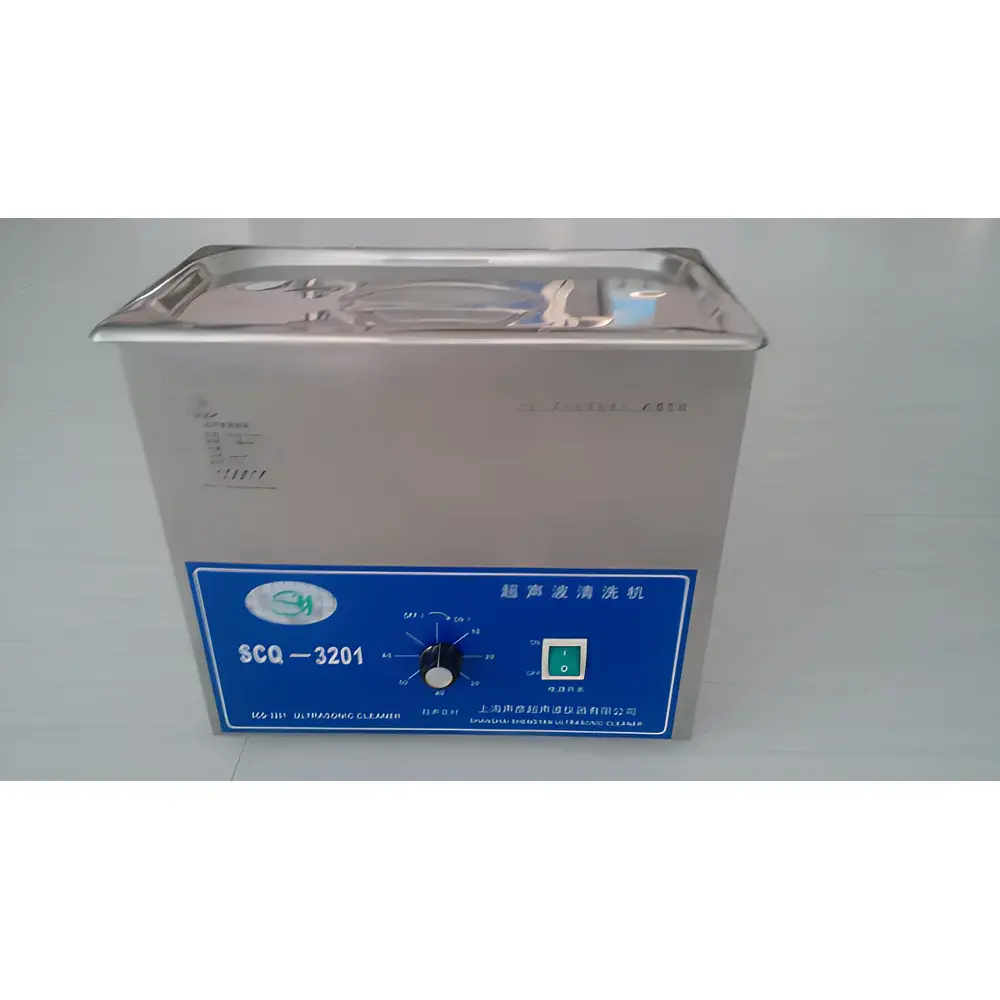
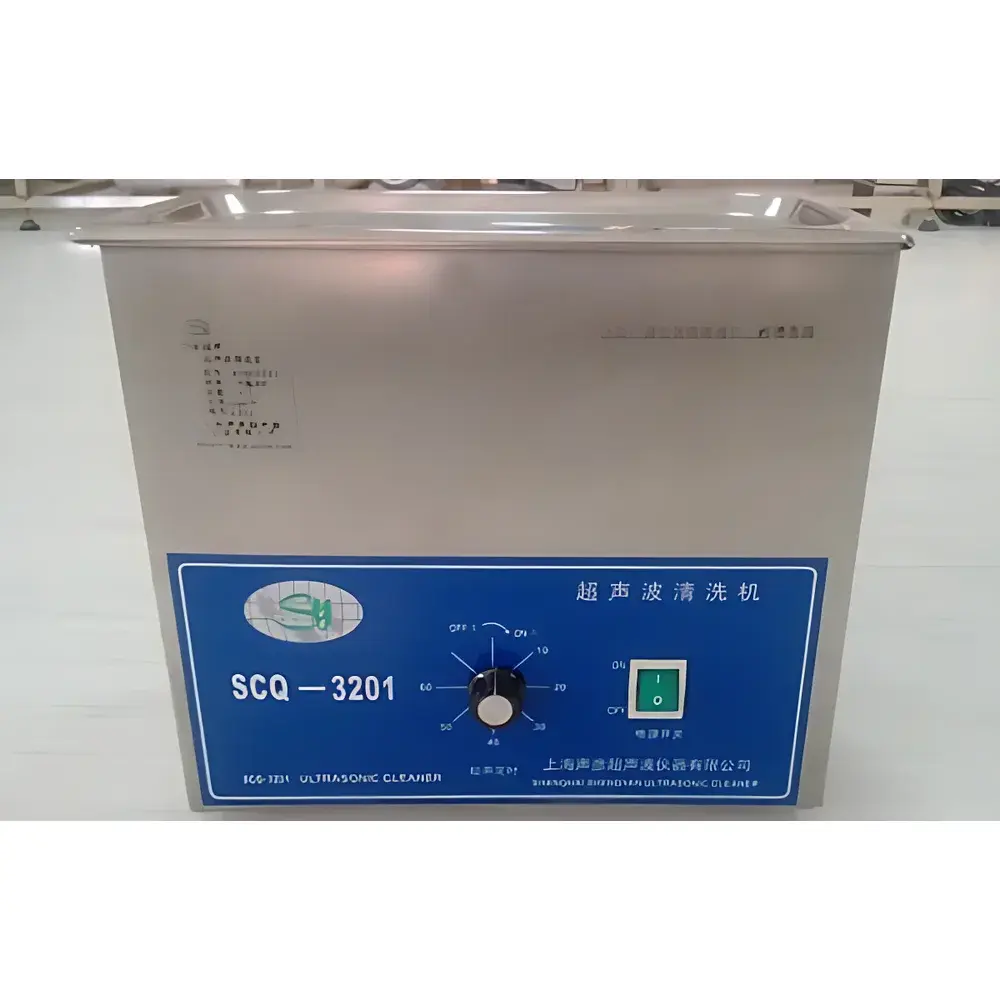
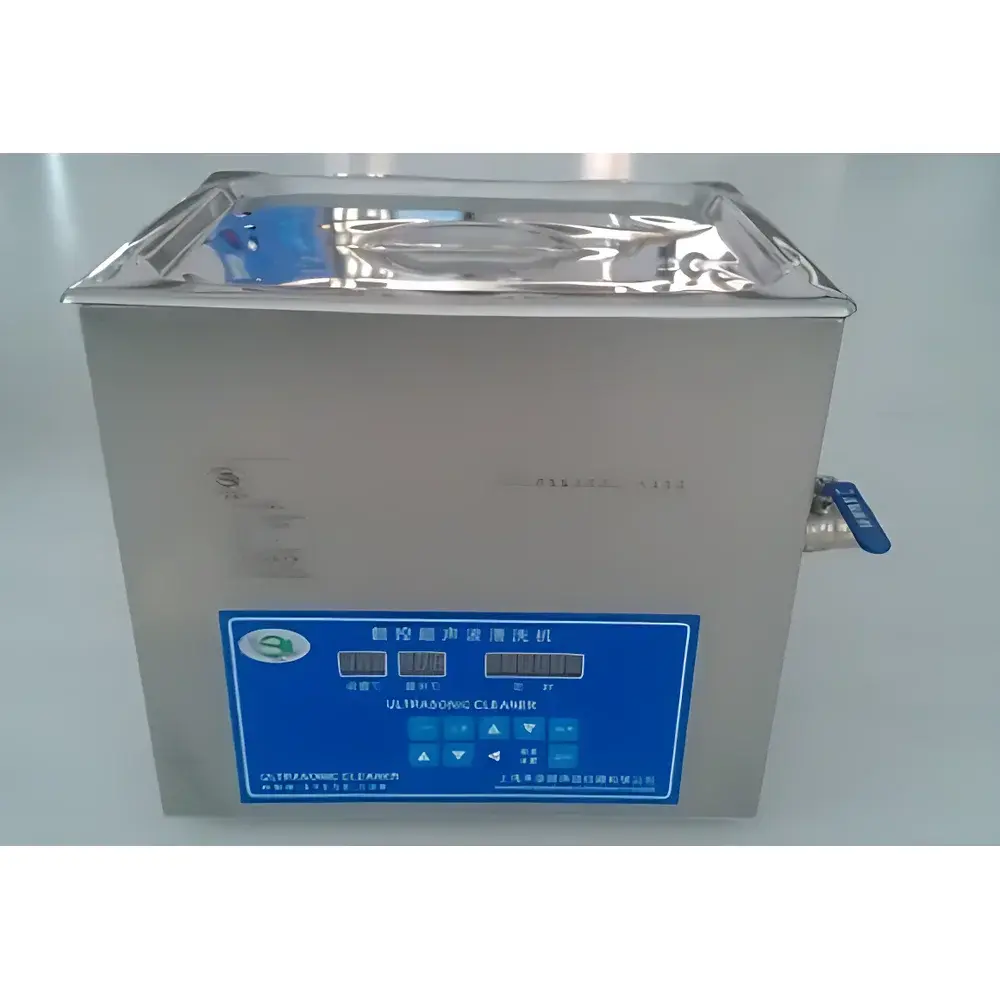
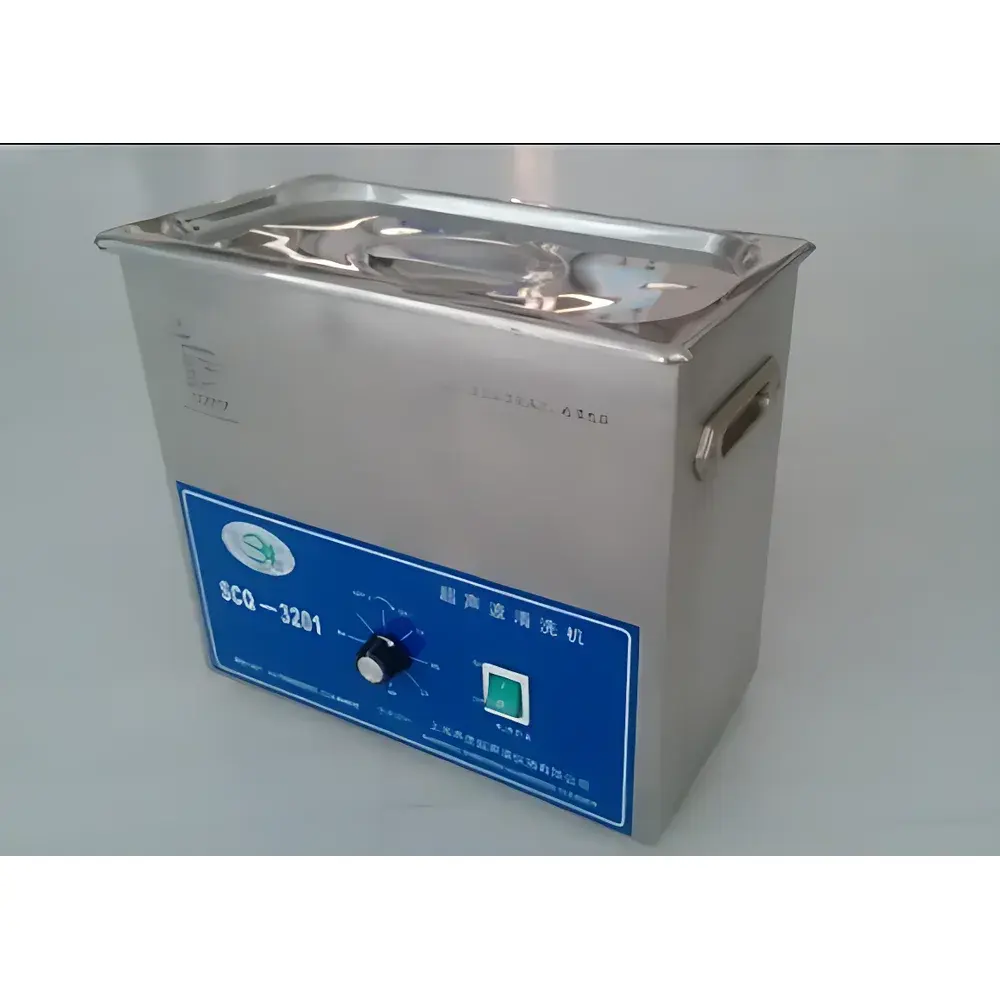
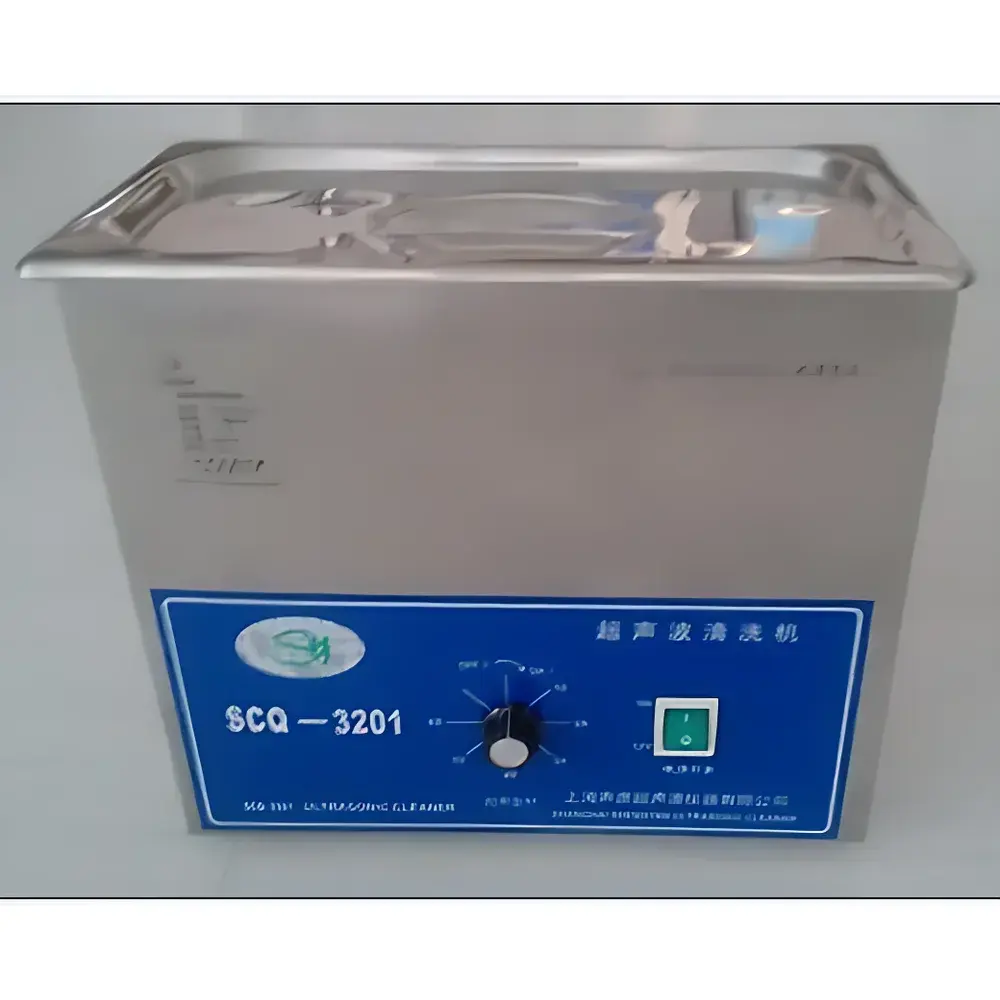
SYC Sycs SCQ-3201 Benchtop Ultrasonic Cleaner
| Brand | SYC Sycs |
|---|---|
| Origin | Shanghai, China |
| Model | SCQ-3201 |
| Tank Capacity | 6 L |
| Ultrasonic Frequency Options | 25 kHz / 40 kHz / 60 kHz |
| Ultrasonic Power Output | 200 W |
| Power Adjustment | Fixed |
| Temperature Control | Not equipped |
| Timer Range | 1–60 min (adjustable) |
| Sound-Dampening Lid | Included |
| Drainage | Manual valve |
| Construction | Stainless steel tank and housing (304 SS) |
| Transducer Mounting | Hybrid adhesive + TIG welding for long-term bond integrity |
Overview
The SYC Sycs SCQ-3201 is a compact, high-intensity benchtop ultrasonic cleaner engineered for precision cleaning of delicate and complex laboratory components. It operates on the principle of acoustic cavitation—where high-frequency sound waves generate microscopic vacuum bubbles in the cleaning solution that rapidly collapse, producing localized shockwaves and micro-jets capable of dislodging contaminants from surfaces, crevices, blind holes, and porous structures without mechanical contact. Designed for routine use in analytical, quality control, and research laboratories, the SCQ-3201 delivers consistent energy distribution across its 6 L stainless steel tank (300 × 150 × 150 mm internal dimensions), making it suitable for glassware, metal parts, optical elements, electronic assemblies, and reusable medical instruments. Its fixed 200 W power output and triple-frequency selection (25 kHz, 40 kHz, or 60 kHz) allow users to optimize cleaning efficacy based on substrate sensitivity and contaminant type—lower frequencies favor aggressive particle removal (e.g., oxides, machining residues), while higher frequencies provide gentler yet highly effective cleaning for fragile optics or microelectromechanical systems (MEMS).
Key Features
- Robust 304 stainless steel construction: Full-welded tank and enclosure ensure corrosion resistance, structural rigidity, and long-term reliability under repeated solvent exposure.
- Triple-frequency transducer system: Factory-configurable selection among 25 kHz (high-energy cavitation), 40 kHz (balanced performance), and 60 kHz (fine-particle removal with reduced surface stress).
- Precision digital timer: Adjustable from 1 to 60 minutes with automatic shutdown—enabling reproducible cleaning cycles compliant with SOP-driven workflows.
- Integrated sound-dampening lid: Reduces airborne noise by ≥15 dB(A) and minimizes solvent evaporation during operation.
- Standard stainless steel mesh basket: Facilitates uniform part immersion and simplifies handling of small or irregularly shaped items.
- Manual drain valve: Enables controlled, spill-free solution disposal without tilting or lifting the unit.
- No built-in heater or temperature regulation: Maintains compatibility with temperature-sensitive solvents (e.g., acetone, isopropanol, aqueous enzymatic formulations) and avoids thermal degradation of labware or samples.
Sample Compatibility & Compliance
The SCQ-3201 accommodates a broad range of laboratory substrates—including borosilicate glassware (vials, cuvettes, pipette tips), stainless steel tools (tweezers, forceps, scalpel handles), aluminum and brass fixtures, quartz optics, silicon wafers, PCBs, and non-porous polymer components (e.g., PTFE, polypropylene). It is not recommended for use with soft metals (e.g., solder, zinc alloys), unsealed ceramics, or adhesively bonded assemblies where cavitation may compromise integrity. While the unit itself carries no CE, UL, or FDA certification, its design aligns with general laboratory safety practices outlined in ISO/IEC 17025:2017 (Clause 6.4 on equipment suitability) and supports GLP-compliant cleaning validation when integrated into documented cleaning protocols. Users are advised to validate cleaning efficacy per ASTM D4897-16 (Standard Practice for Cleaning Laboratory Glassware) or internal SOPs using residue testing (e.g., TOC, conductivity, visual inspection).
Software & Data Management
The SCQ-3201 is a standalone electromechanical device with no embedded microprocessor, network interface, or data logging capability. All operational parameters are set manually via front-panel controls, ensuring electromagnetic compatibility in sensitive instrumentation environments (e.g., near NMR spectrometers or electron microscopes) and eliminating cybersecurity or software validation concerns. This analog architecture supports 21 CFR Part 11 compliance in regulated settings when paired with external procedural documentation—timer settings are recorded manually in lab notebooks or electronic batch records, and cleaning cycle execution is verified through operator sign-off. No firmware updates, password protection, or audit trail functionality is provided, consistent with Class I laboratory equipment per IEC 61010-1.
Applications
- Analytics & Sample Prep: Removal of organic residues from HPLC vials, GC liners, and autosampler needles; decontamination of filtration membranes and syringe filters.
- Electronics & Microfabrication: Degreasing of PCBs pre-soldering; cleaning of MEMS sensors, wafer carriers, and probe station components.
- Optics & Metrology: Particle-free cleaning of interferometer mirrors, laser cavity optics, and calibration standards without surface scratching.
- Medical Device Reuse: Pre-sterilization cleaning of reusable surgical instruments (e.g., laparoscopic trocars, dental burs) in accordance with AAMI ST79:2017 guidelines.
- Archaeology & Conservation: Gentle removal of soil matrix and corrosion products from metal artifacts prior to XRF or SEM-EDS analysis.
- Education & Training Labs: Standardized cleaning of student-used glassware and metal apparatus under instructor supervision.
FAQ
Is the SCQ-3201 compatible with flammable solvents?
Yes—provided the unit is operated in a well-ventilated fume hood and all ignition sources (e.g., open flames, unshielded electrical contacts) are excluded. The absence of heating elements reduces fire risk compared to heated ultrasonic cleaners.
Can frequency be changed during operation?
No. Frequency selection is performed at time of installation or service and remains fixed during use. Units are configured for one of the three available frequencies (25/40/60 kHz) prior to shipment.
What maintenance is required for long-term reliability?
Routine cleaning of the tank interior with mild detergent and periodic inspection of the drain valve seal are recommended. Transducer integrity is verified annually via impedance measurement or cavitation intensity mapping using calibrated hydrophones.
Does the unit meet IP rating requirements for wet environments?
It carries no formal IP rating. Installation must comply with local electrical codes for laboratory equipment—placement away from floor-level water exposure and connection via GFCI-protected circuits is strongly advised.



