
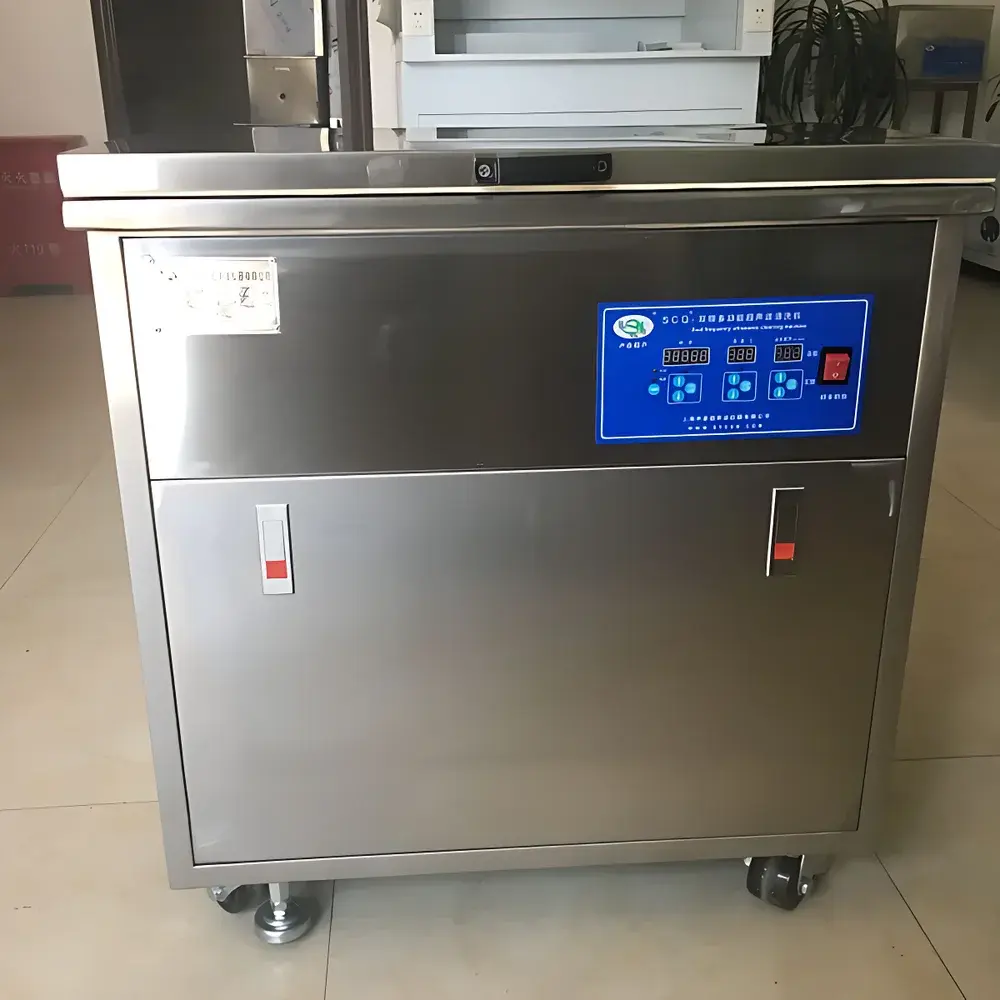
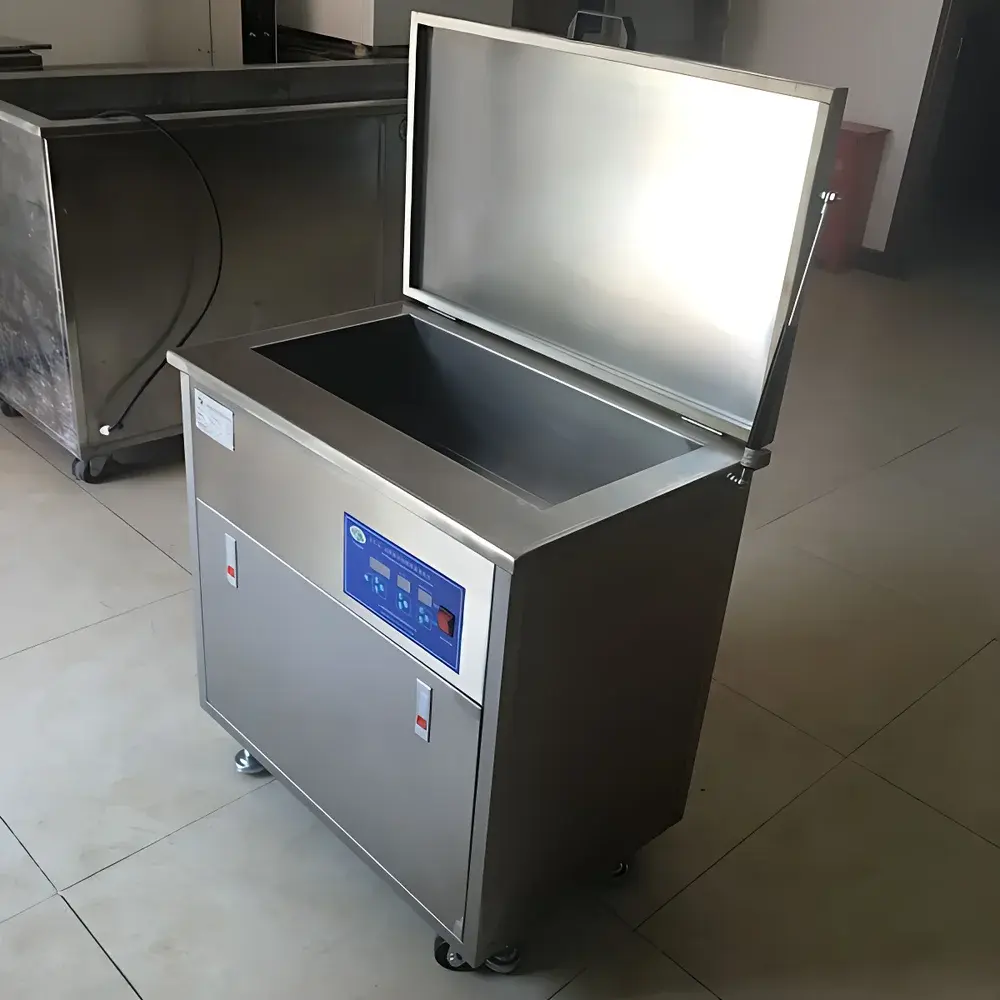
SYCSCQ-145092 Ultrasonic Homogenizer & Cleaner
| Brand | SYCS (Shengyan Ultrasonics) |
|---|---|
| Origin | Shanghai, China |
| Model | SCQ-145092 |
| Capacity | 81 L |
| Ultrasonic Frequency | 40 kHz |
| Ultrasonic Power | 250 W |
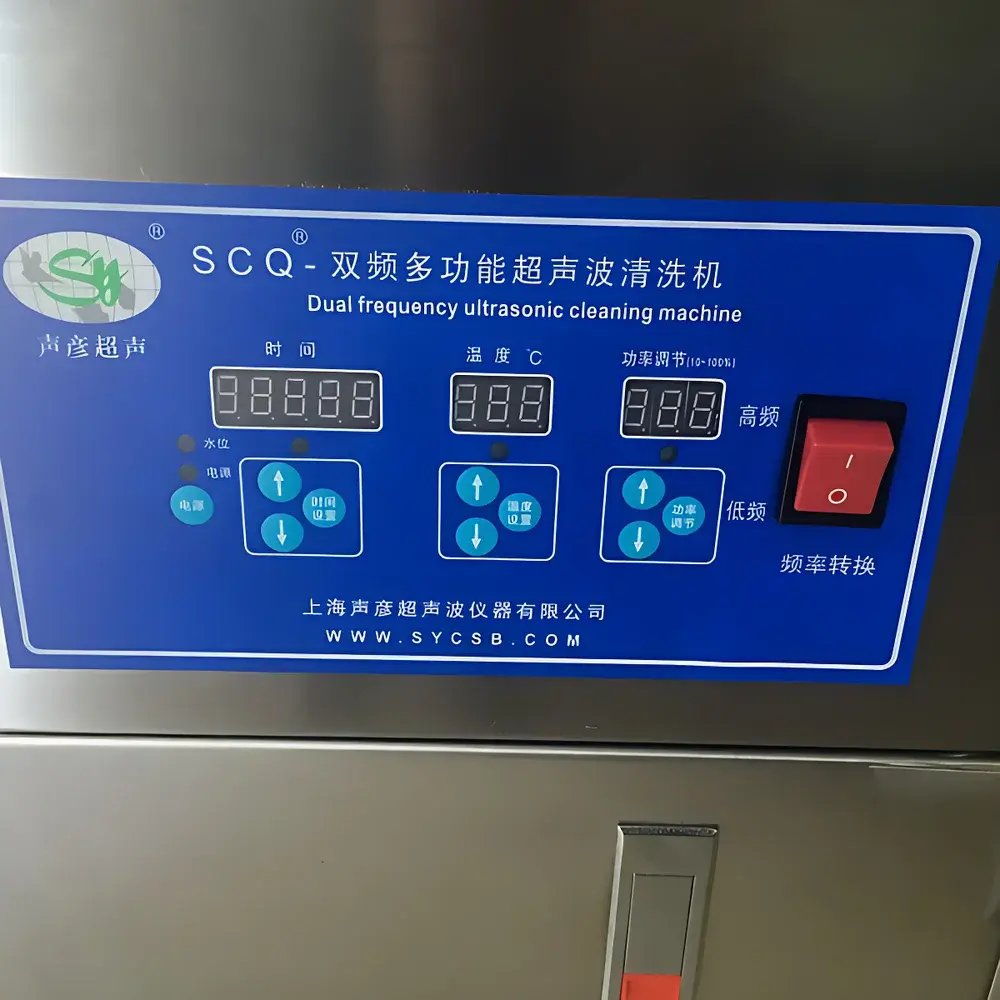
| Power Adjustment | Yes |
| Temperature Control Range | Ambient to 80 °C |
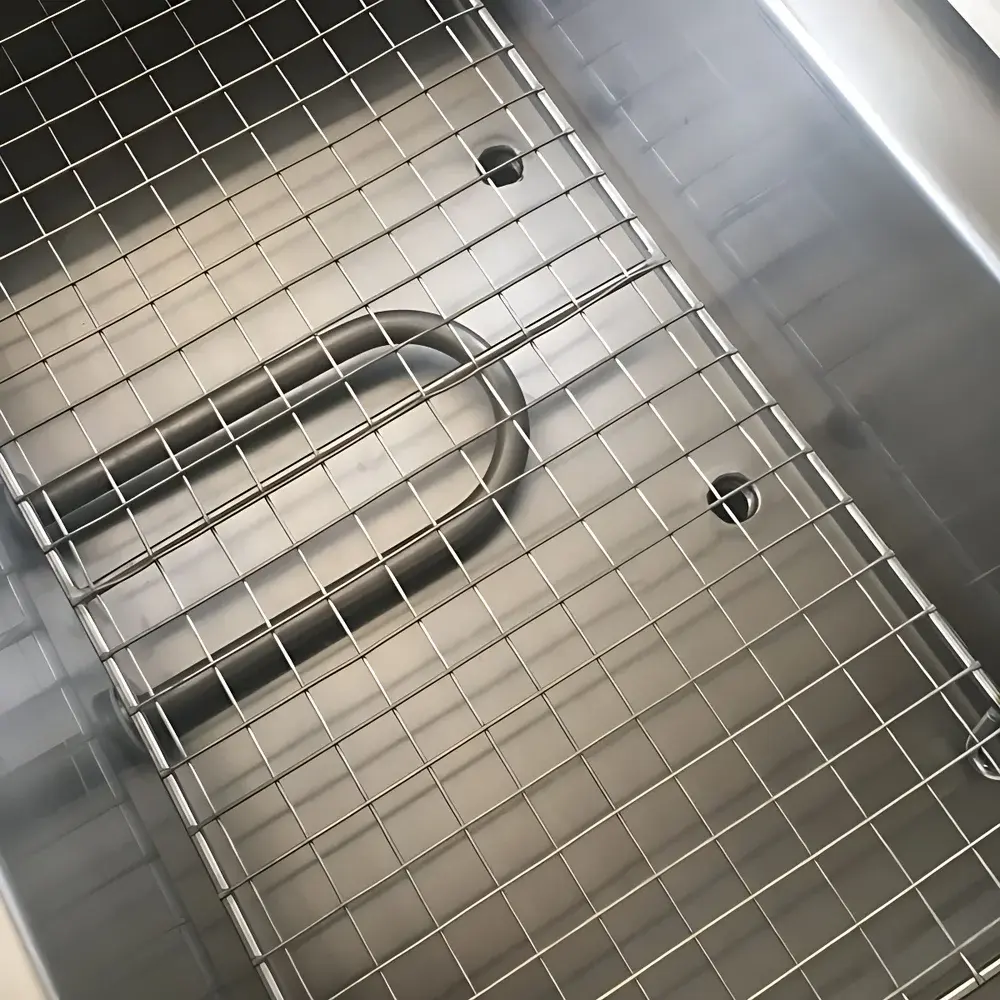
| Heating Power | 600 W |
| Timer Range | 1–600 min |
| Insulated Lid | Included |
| Drain Valve | Manual |
| Tank Dimensions (L×W×H) | 500 × 150 × 100 mm |
| Tank Material | Full SUS304 Stainless Steel |
| Rack Included | Yes |
| Power Supply | 220 V / 50 Hz |
| Instrument Type | General-Purpose Ultrasonic Processing System |
Overview
The SYCSCQ-145092 Ultrasonic Homogenizer & Cleaner is a dual-function laboratory system engineered for precision ultrasonic processing and high-efficiency cleaning. Unlike conventional standalone ultrasonic cleaners, this integrated platform combines controlled cavitation-based homogenization with robust tank-based cleaning—enabling consistent sample preparation across biotechnology, pharmaceutical R&D, food science, and industrial quality control workflows. Its operational principle relies on piezoelectric transduction at 40 kHz, generating alternating compression and rarefaction cycles in the liquid medium. During rarefaction, microbubbles nucleate and grow; during compression, they collapse violently—producing localized shockwaves, microstreaming, and shear forces sufficient to disrupt cellular membranes, disperse aggregates, emulsify suspensions, and remove particulate contaminants from surfaces. The full SUS304 stainless-steel tank (500 × 150 × 100 mm internal dimensions) ensures chemical resistance, structural integrity, and compliance with GLP laboratory hygiene standards.
Key Features
- Dual-mode operation: switch seamlessly between homogenization (using immersion probe or cup-horn configuration) and tank-based ultrasonic cleaning without hardware reconfiguration
- Adjustable ultrasonic power output (0–250 W) with real-time digital feedback for reproducible energy delivery
- Precise temperature regulation from ambient to 80 °C via integrated 600 W heating element and PT100 sensor, critical for heat-sensitive biological samples and enzymatic reactions
- Programmable timer (1–600 minutes) with auto-shutdown and audible alert, supporting unattended overnight protocols
- Acoustically insulated lid with safety interlock prevents operator exposure to airborne ultrasound and minimizes ambient noise (≤65 dB(A) at 1 m)
- Manual drain valve and removable stainless-steel mesh rack facilitate rapid solution exchange and ergonomic handling of fragile glassware or multi-well plates
- Compliant with IEC 61000-6-3 (EMC emission limits) and IEC 61010-1 (safety requirements for electrical equipment for measurement, control, and laboratory use)
Sample Compatibility & Compliance
The SYCSCQ-145092 accommodates a broad range of sample formats—including Eppendorf tubes, centrifuge bottles, Petri dishes, surgical instruments, chromatography columns, and custom fixtures—within its 81 L tank volume. For homogenization, compatibility extends to tissue homogenates (e.g., liver, muscle), microbial lysates, nanoparticle dispersions, and viscous emulsions when used with optional horn probes or cup horns. All wetted parts are fabricated from medical-grade SUS304 stainless steel, eliminating leaching risks and enabling autoclave-compatible cleaning validation. The system supports documentation traceability per FDA 21 CFR Part 11 when paired with external validated data loggers, and its thermal and timing parameters align with ASTM D2603 (standard test method for sonic shear stability of hydraulic fluids) and ISO 13485 Annex C for cleaning process validation in medical device manufacturing environments.
Software & Data Management
While the SYCSCQ-145092 operates via an intuitive front-panel interface with LED display, it is designed for integration into networked lab environments. Optional RS-232/USB communication modules enable remote parameter setting, real-time monitoring of bath temperature and elapsed time, and export of timestamped operational logs (CSV format). These logs include start/stop timestamps, setpoints, actual measured values, and fault codes—supporting audit-ready records for ISO/IEC 17025-accredited laboratories. Firmware updates are performed via secure USB drive, ensuring long-term maintainability and regulatory alignment without vendor dependency.
Applications
- Biological sample preparation: cell lysis, DNA/RNA extraction, organelle isolation, and subcellular fractionation under controlled thermal conditions
- Pharmaceutical QC: cleaning verification of vials, syringes, and filter housings per USP and PDA Technical Report No. 29
- Food & beverage testing: removal of biofilm residues from sampling tools prior to microbiological analysis (ISO 6887-1)
- Nanomaterial synthesis: deagglomeration of metal oxide nanoparticles (TiO₂, SiO₂) and carbon nanotubes in aqueous or organic media
- Materials science: degassing of resin precursors, surface activation of polymers prior to coating, and post-print cleaning of additive-manufactured metal components
FAQ
Can this unit be used for both cleaning and homogenization simultaneously?
No—homogenization requires focused acoustic energy delivery via a probe or cup horn, while cleaning relies on uniform tank-wide cavitation. The system supports sequential mode selection but not concurrent operation.
Is the 81 L capacity the total volume or usable working volume?
The 81 L refers to the gross internal tank volume; the recommended maximum fill level is 75 L to ensure optimal cavitation distribution and prevent overflow during active sonication.
Does the unit comply with electromagnetic compatibility (EMC) requirements for use in shared laboratory spaces?
Yes—it meets IEC 61000-6-3 Class B emission limits and includes filtered AC input to minimize interference with adjacent analytical instrumentation such as HPLC detectors or mass spectrometers.
What maintenance intervals are recommended for long-term reliability?
Transducer performance should be verified quarterly using a calibrated hydrophone or calorimetric method; stainless-steel tank surfaces require weekly passivation with nitric acid solution per ASTM A967 to sustain corrosion resistance.
Can third-party software control the timer and temperature functions?
Yes—via optional serial or USB interface, compatible with LabVIEW, Python (pySerial), and MATLAB instrument control toolboxes for automated protocol scripting and integration into LIMS workflows.



