
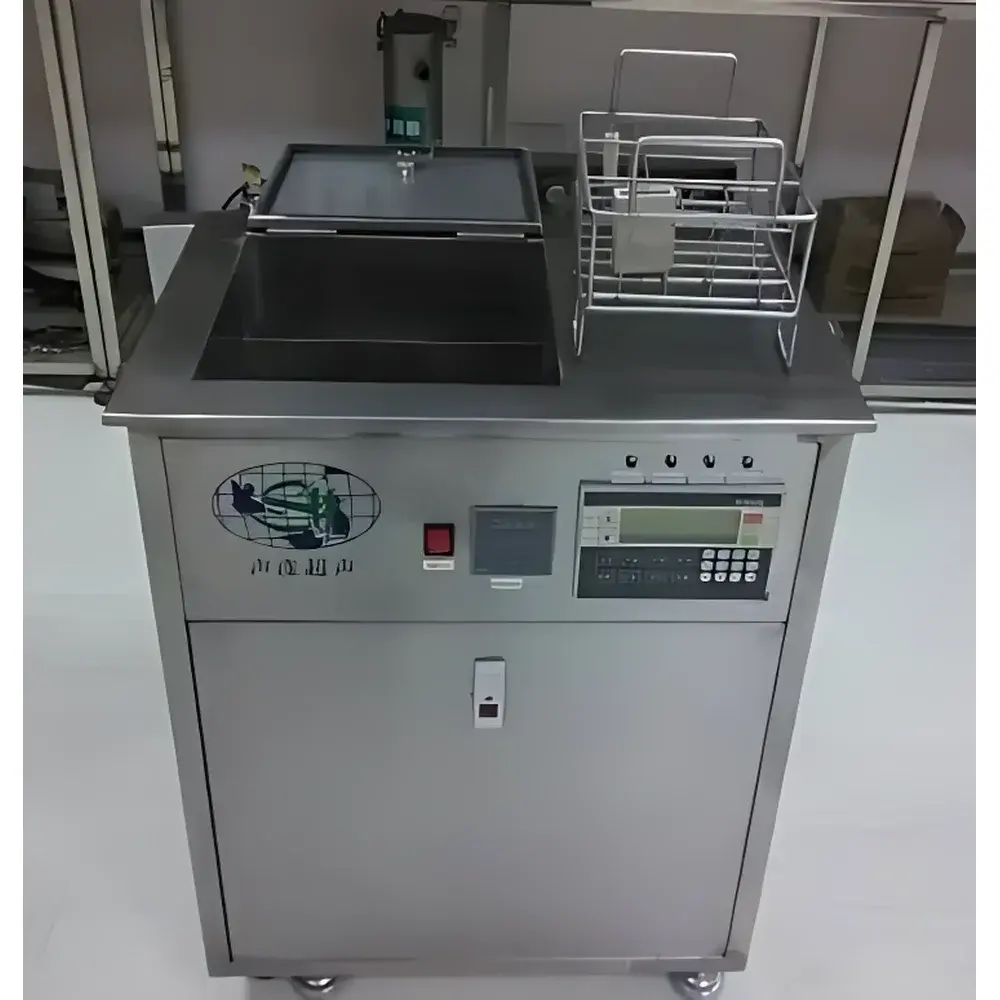
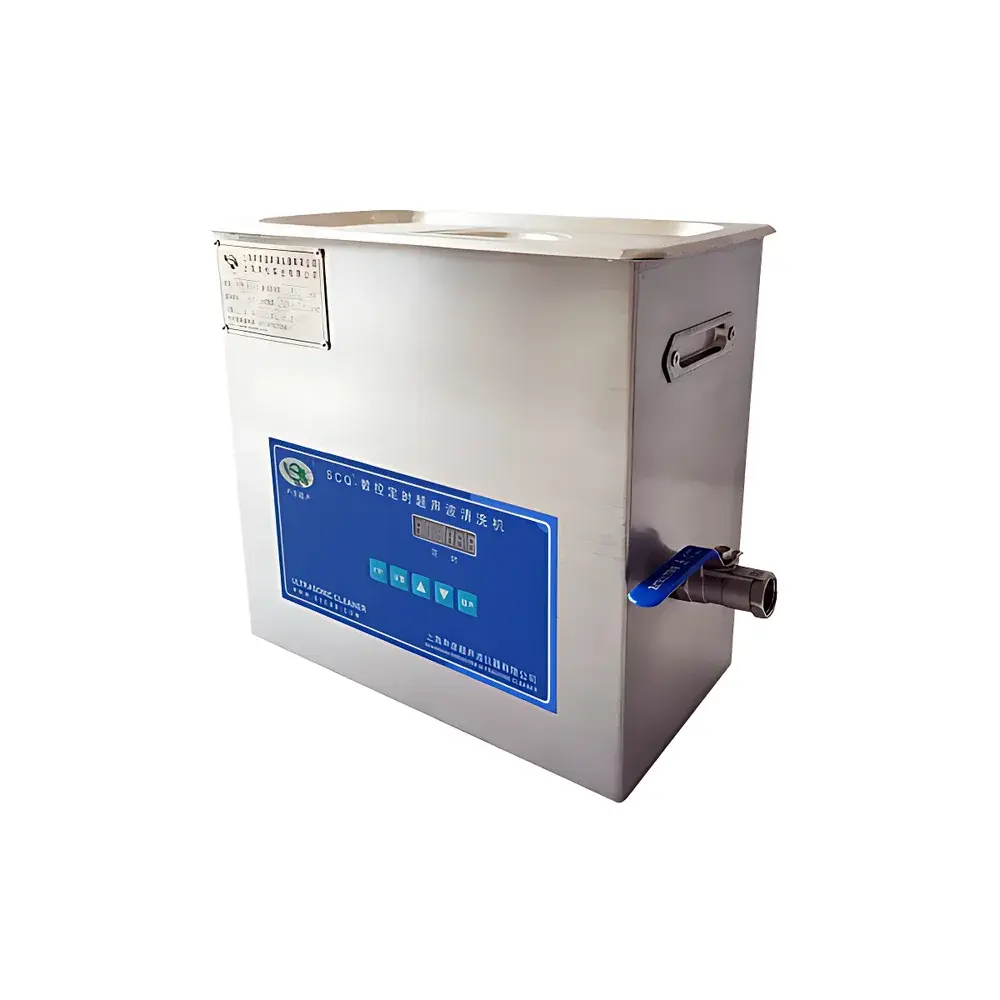
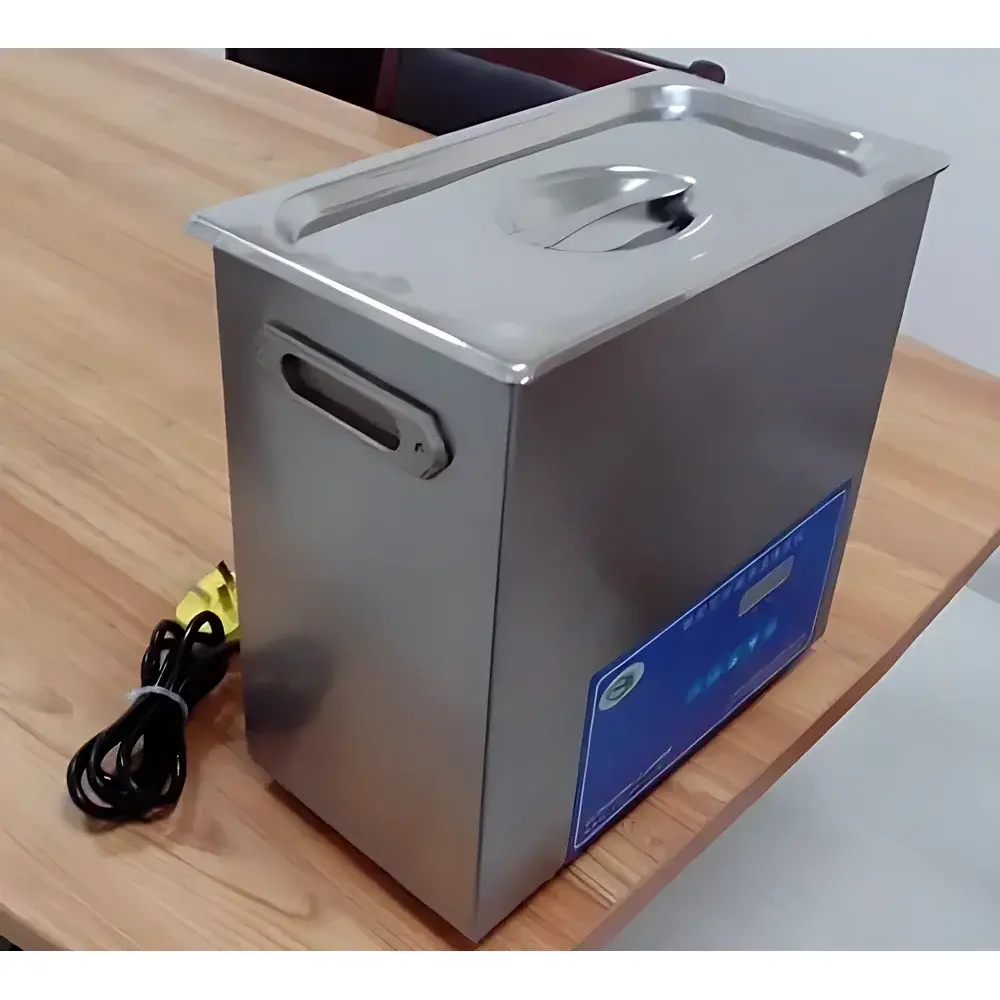
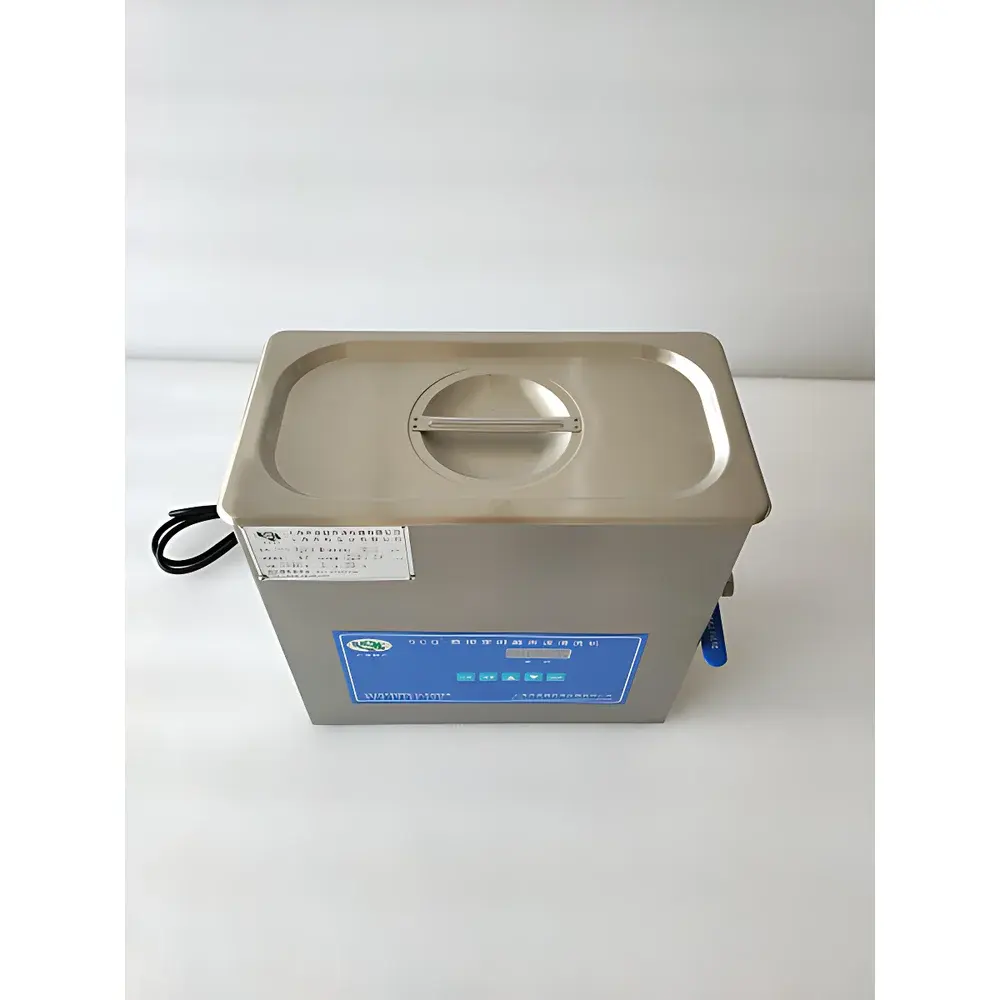
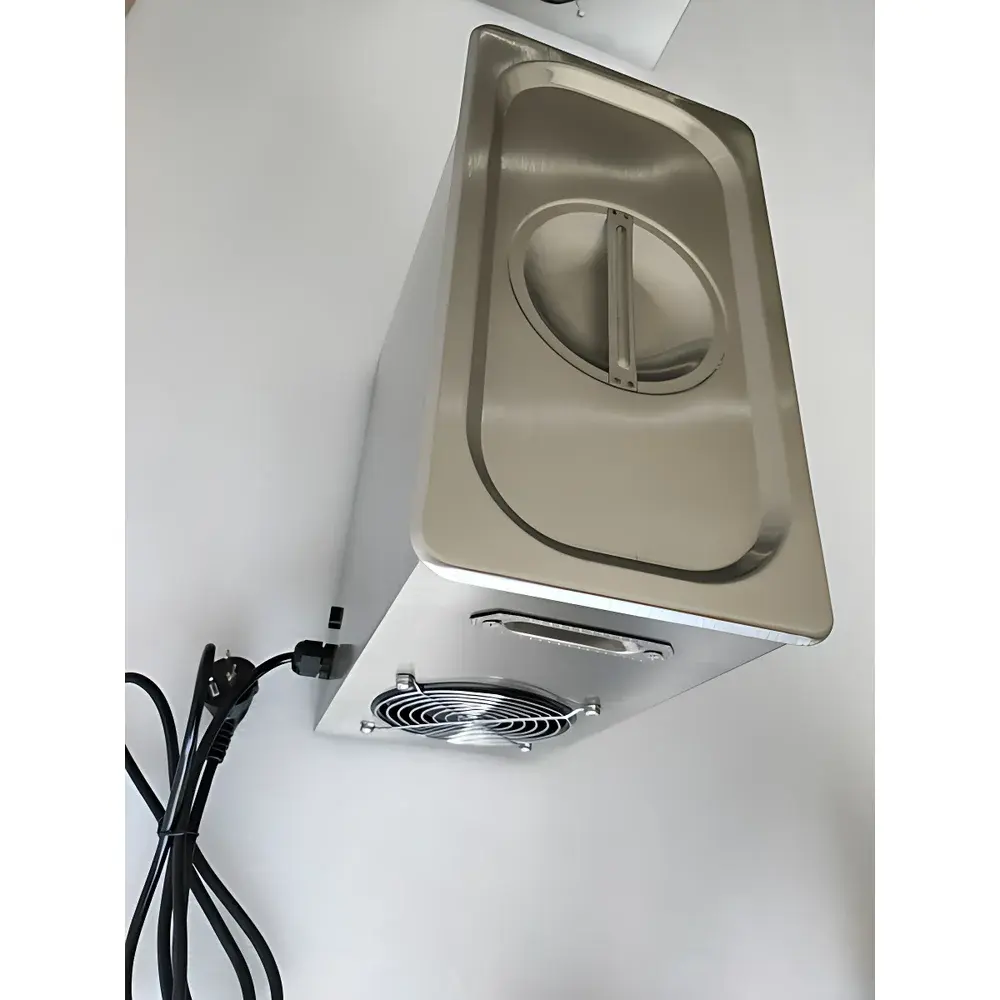
SYC Sycs SCQ-3201A Benchtop Ultrasonic Cleaner
| Brand | SYC Sycs |
|---|---|
| Origin | Shanghai, China |
| Model | SCQ-3201A |
| Tank Capacity | 6 L |
| Ultrasonic Frequency | 40 kHz |
| Ultrasonic Power Output | 200 W |
| Adjustable Timer | Yes (1–600 min) |
| Lid with Sound-Dampening Design | Yes |
| Drain Port | Yes |
| Heating Function | Not Available |
| Power Input | 220 VAC, 50 Hz |
| Internal Tank Dimensions | 300 × 150 × 150 mm |
| Construction | Full Stainless Steel (304 Grade) |
| Type | General-Purpose Benchtop Ultrasonic Cleaner |
Overview
The SYC Sycs SCQ-3201A is a compact, digitally controlled benchtop ultrasonic cleaner engineered for precision cleaning of delicate and complex components in laboratory, industrial, and clinical environments. It operates on the principle of acoustic cavitation: high-frequency sound waves (40 kHz) generate microscopic vacuum bubbles in the cleaning solution, which collapse violently upon contact with surfaces—producing localized energy sufficient to dislodge particulate contaminants, organic residues, oils, oxides, and biofilms without mechanical abrasion or chemical aggression. Unlike manual scrubbing or immersion soaking, this physical cleaning mechanism ensures uniform treatment across all wetted surfaces—including blind holes, crevices, threads, and microstructures—making it indispensable for applications where geometry limits conventional cleaning efficacy.
Key Features
- Benchtop footprint with full 304 stainless steel tank (300 × 150 × 150 mm internal dimensions) and corrosion-resistant housing for long-term durability in demanding lab settings.
- Digital timer control (1–600 minutes) with audible end-of-cycle alert, enabling reproducible process validation and integration into standardized cleaning protocols.
- Integrated sound-dampening lid reduces operational noise to ≤55 dB(A) at 1 m distance, meeting occupational safety guidelines for continuous use in shared laboratory spaces.
- Standard drain port facilitates rapid solution exchange and residue removal—critical for multi-step cleaning sequences involving rinse, solvent, and deionized water baths.
- No built-in heater; compatible with temperature-controlled external water baths or ambient-temperature cleaning solutions optimized for sensitive substrates (e.g., optical lenses, polymer-based medical devices).
- Fixed-frequency 40 kHz transducer array delivers consistent cavitation intensity across the entire tank volume, ensuring high repeatability between cycles and across instruments.
Sample Compatibility & Compliance
The SCQ-3201A accommodates a broad range of sample types and materials, including but not limited to: glassware (vials, cuvettes, pipette tips), metal components (surgical instruments, watch parts, filters), ceramics (crucibles, chromatography columns), plastics (non-porous polypropylene or PTFE fixtures), and delicate optics (lens mounts, fiber optic connectors). Its non-contact, non-thermal cleaning action preserves dimensional integrity and surface finish—validated per ISO 13485 for pre-sterilization cleaning of reusable Class IIa/IIb medical devices. While the unit itself does not carry CE or UL certification, its electrical design complies with IEC 61010-1 for laboratory equipment safety. When used with validated cleaning agents (e.g., alkaline, enzymatic, or low-foaming neutral detergents), the system supports adherence to ASTM D4925 (standard guide for ultrasonic cleaning) and USP (cleaning and sterilization of pharmaceutical equipment).
Software & Data Management
As a standalone analog-digital hybrid instrument, the SCQ-3201A does not incorporate embedded software, network connectivity, or electronic data logging. All operational parameters are set manually via front-panel push-button interface. This architecture aligns with GLP/GMP environments where simplicity, auditability, and minimal firmware dependencies are prioritized. Users may document cleaning cycles manually in laboratory notebooks or integrate timer logs into LIMS via external timestamped entries. For regulated applications requiring 21 CFR Part 11 compliance, third-party hardware timers with electronic signature capability can be deployed upstream of the unit’s power supply to provide traceable, tamper-evident cycle records.
Applications
- Electronics Manufacturing: Removal of flux residues, solder paste, and particulate contamination from PCBs, SMT components, and semiconductor wafers prior to inspection or coating.
- Optical & Metrology Labs: Particle-free cleaning of interferometer mirrors, spectrometer gratings, and calibration standards without micro-scratching or film degradation.
- Clinical & Dental Settings: Pre-cleaning of reusable endoscopes, orthodontic tools, and impression trays before thermal disinfection or autoclaving—reducing bioburden per ISO 15883-1.
- Academic & Research Facilities: Routine decontamination of centrifuge rotors, electrophoresis combs, and microfluidic chips; effective for removing PCR inhibitors from nucleic acid isolation consumables.
- Jewelry & Precision Instrument Maintenance: Gentle restoration of fine metalwork, gemstone settings, and antique chronometer mechanisms without polishing compound residue.
FAQ
Is the ultrasonic frequency adjustable on the SCQ-3201A?
No—the SCQ-3201A operates exclusively at 40 kHz. While some models in the SCQ series offer selectable frequencies (25/40/60 kHz), this variant uses a fixed 40 kHz transducer optimized for general-purpose contaminant removal with balanced penetration depth and cavitation density.
Can the unit be used with flammable solvents?
No—this model lacks explosion-proof construction or vapor recovery systems. Only aqueous or water-miscible, non-flammable cleaning solutions (e.g., pH-neutral surfactants, enzymatic formulations) are permitted per IEC 61010-1 Clause 10.2.
Does the stainless steel tank include a protective coating or passivation layer?
Yes—the 304 stainless steel tank undergoes electropolishing and citric acid passivation during manufacturing to enhance corrosion resistance and minimize metallic ion leaching into cleaning solutions.
What is the expected service life of the transducers under normal laboratory use?
With proper maintenance (avoiding dry operation, using appropriate degassed solutions, and periodic descaling), transducer assemblies typically exceed 10,000 operating hours—equivalent to ~5 years of daily 8-hour usage.
Is technical support available for method development or validation assistance?
SYC Sycs provides application notes and basic protocol templates; however, method-specific validation (e.g., residue limit testing, bioburden reduction studies) must be conducted by the end user in accordance with their internal quality system requirements.



